
Table of Contents
- Why Choose an Equipment Broker Alternative for Selling Heavy Machinery
- Top Heavy Equipment Alternatives for Sellers: Quick Comparison
- Heavy Equipment Consignment: How It Works for Maximum Returns
- Best Heavy Equipment Auction Sites for Reaching Global Buyers
- Equipment Broker Services: What They Offer and Why They Matter
- How to Sell Heavy Equipment Online: Platform Features Compared
- Pricing and Fees: What You'll Actually Pay on Each Platform
- Niche Platforms for Specialized Equipment Sales
- Seller Tools and Features That Drive Faster Sales
- Legal and Tax Considerations When Selling Across Platforms
- Which Platform Should You Choose for Your Equipment Sale
- Conclusion: Finding Your Ideal Equipment Selling Solution
Heavy Equipment Alternatives for Sellers in 2026
Last Updated: July 30, 2026
Why Choose an Equipment Broker Alternative for Selling Heavy Machinery
When construction contractors, fleet managers, and agricultural business owners need to sell surplus equipment, they face a critical decision: handle the sale alone or work with a specialized broker. Why use a Heavy Equipment Broker instead of listing on a single marketplace or attempting to sell privately? The answer lies in reach and efficiency.
When you sell heavy equipment through a single channel, you're competing with thousands of other listings for buyer attention. Your excavator, dozer, or truck sits in a crowded marketplace where pricing pressure is intense and sales timelines stretch unpredictably. Contractors browsing one platform won't see your equipment if you list elsewhere. Equipment rental companies operate in different channels than agricultural buyers. This fragmentation means qualified buyers never find your equipment.
Ironmartonline addresses this fragmentation by using nine specialized web-based selling platforms simultaneously. Rather than hoping a single marketplace surfaces your equipment to qualified buyers, a multi-platform approach distributes your listing across channels where each buyer segment actively searches. Your heavy equipment gets exposure across auction sites, consignment marketplaces, niche equipment exchanges, and direct-buyer networks.
The efficiency gains compound. One listing process. One inspection. One set of photos. But nine channels of distribution.
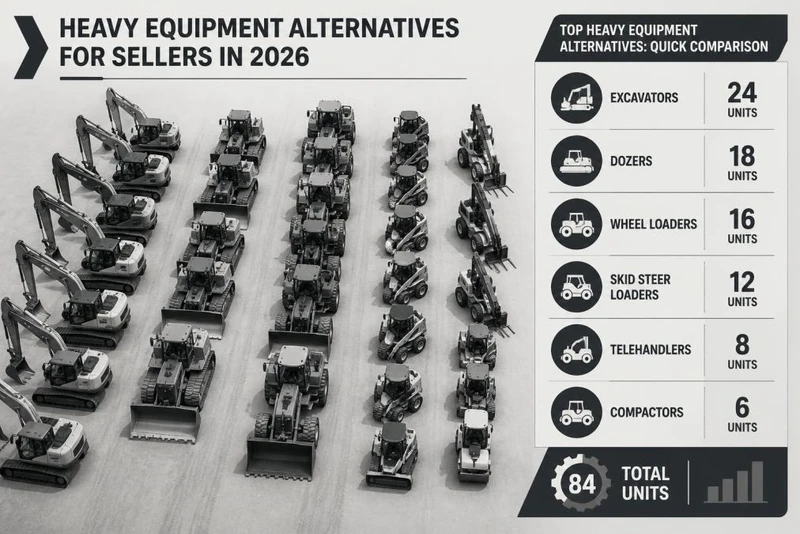
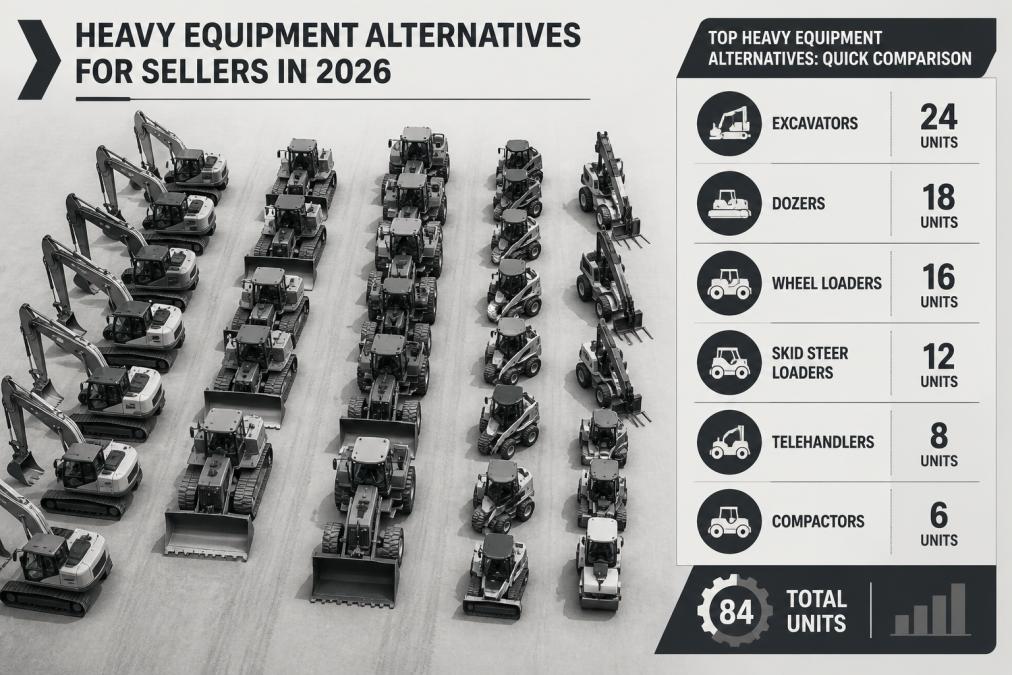
Top Heavy Equipment Alternatives for Sellers: Quick Comparison
The heavy equipment marketplace has fragmented significantly over the past five years. Unlike consumer e-commerce, where Amazon dominates, equipment selling requires multiple specialized platforms to reach different buyer segments effectively. Ritchie Bros. Auctioneers commands the global auction space with a 2.3 million-strong buyer base spanning 150+ countries. IronPlanet offers detailed inspection reports and multiple selling formats. Equipment Trader provides budget-friendly listing options for individual sellers. My Little Salesman combines online and print advertising for broader reach. Proxibid hosts both online and in-person auctions. GovPlanet specializes in government and military surplus. eBay's Business & Industrial category offers massive reach to casual buyers. Rock & Dirt targets construction and agricultural sectors specifically.
Each platform serves a distinct seller need. Auction-based platforms work best when you have high-value equipment and want competitive bidding to drive price discovery. Listing-fee platforms appeal to individual sellers who want to retain the full sale price and manage negotiations directly. The choice depends on your equipment type, sale timeline, and comfort level managing the sales process.
| Platform | Selling Model | Best For | Key Advantage |
|---|---|---|---|
| Ritchie Bros. | Commission-based | High-value equipment, global reach | 2.3M buyer network |
| IronPlanet | Commission-based | Inspection-backed sales | IronClad Assurance® reports |
| Equipment Trader | Listing fee | Individual sellers, small ops | No commissions |
| My Little Salesman | Listing fee | Multi-channel exposure | Online + print advertising |
| Proxibid | Commission-based | Auctioneers, consignors | Online bidding network |
| GovPlanet | Commission-based | Government surplus | Specialized buyer base |
| eBay Business & Industrial | Listing fee + commission | Casual/diverse buyers | Massive audience |
| Rock & Dirt | Listing fee | Construction/agricultural | Niche industry focus |
Ironmartonline differentiates itself by eliminating the need to choose. Rather than forcing sellers to pick one platform and hope it reaches their target buyer, Ironmartonline distributes listings across nine specialized channels simultaneously. This approach addresses a fundamental problem with single-platform selling: buyer fragmentation. By listing across multiple platforms at once, Ironmartonline ensures your equipment gets in front of every relevant buyer segment without multiplying your workload.
Heavy Equipment Consignment: How It Works for Maximum Returns
Consignment selling transfers risk and effort from the seller to the broker. Instead of selling equipment you own to a buyer, you place equipment with a broker who finds the buyer on your behalf. The broker handles marketing, inspections, negotiations, and logistics. You receive payment only after the sale closes, minus the broker's commission.
Consignment works best when your equipment is in good condition and has clear resale value. The broker invests marketing resources only when confident the equipment will sell. They inspect thoroughly, photograph professionally, and position strategically across distribution channels. Experienced brokers know which platforms attract which buyer segments and price equipment competitively to maximize final returns.
The consignment timeline varies significantly. Equipment in high demand can sell within 30-60 days. Equipment in lower demand or requiring repairs might take 90-180 days. Seasonal factors matter too. Spring and summer see higher construction activity and equipment purchases. Winter demand drops sharply in northern regions.
The consignment advantage becomes clear when you factor in your opportunity cost. Managing a sale independently requires photographing equipment, writing descriptions, responding to inquiries, scheduling inspections, negotiating prices, and arranging transportation. This process consumes 20-40 hours even for straightforward sales. A broker's ability to sell equipment faster, by reaching more qualified buyers through multiple channels, directly translates to reduced carrying costs that often exceed the commission paid.
Best Heavy Equipment Auction Sites for Reaching Global Buyers
Auction-based selling creates competitive bidding environments where multiple qualified buyers compete for your equipment. This competition drives prices upward. When three contractors bid against each other for a specific dozer model, prices rise above what a single negotiated sale would achieve.
Ritchie Bros. Auctioneers dominates global equipment auctions with a 2.3 million active buyer base spanning 150+ countries. Their selling models offer flexibility: sellers can choose straight commission, gross guarantee, or outright purchase. This flexibility appeals to sellers with different risk tolerances and cash flow needs.
IronPlanet specializes in online auctions with detailed inspection reports called IronClad Assurance®. These reports build buyer confidence by documenting equipment condition transparently. Equipment with detailed condition reports consistently sells faster and at higher prices than equipment with minimal documentation.
GovPlanet focuses specifically on government and military surplus equipment. If your equipment has government origins or military specifications, GovPlanet's specialized audience provides significant advantages.
Proxibid operates both online and in-person auction formats, allowing sellers to choose the venue that best suits their equipment type and buyer expectations. In-person auctions work well for high-value equipment where buyers want to inspect condition firsthand. Online auctions expand reach to distant buyers.
The auction advantage extends beyond price discovery. Auctions create urgency. Bidders know the auction closes at a specific time, creating psychological pressure to bid competitively. A typical auction cycle takes 7-14 days. Negotiated sales often take 30-60 days.
Equipment Broker Services: What They Offer and Why They Matter
Equipment brokers operate differently than marketplace platforms. A marketplace provides a listing service; you post equipment and negotiate directly. A broker actively sells your equipment on your behalf. This distinction matters enormously. Marketplace platforms are passive; brokers are active.
Professional equipment brokers provide several services beyond basic listing. They conduct pre-sale inspections, identifying mechanical issues and maintenance history that affect pricing. They develop professional marketing materials with high-quality photographs and detailed condition reports. They research comparable equipment sales to price competitively. They manage buyer inquiries, schedule inspections, and facilitate negotiations. They arrange transportation logistics once a sale closes.
A Heavy Equipment Broker like Ironmartonline differs from traditional single-channel brokers by using nine specialized platforms simultaneously. Rather than listing your equipment on one auction site and hoping it reaches the right buyer, a Heavy Equipment Broker distributes your listing across multiple channels, each attracting different buyer segments. A contractor searching Ritchie Bros. sees your equipment. A rental company bidding on IronPlanet finds it. A fleet manager browsing Equipment Trader discovers it. An agricultural buyer checking Rock & Dirt locates it.
The efficiency advantage compounds across multiple listings. Managing sales on nine separate platforms would require logging into each site, uploading photos separately, and tracking bids across multiple auctions. A Heavy Equipment Broker consolidates this complexity into a single workflow. One listing process. One set of photos. One description. But nine channels of distribution.
How to Sell Heavy Equipment Online: Platform Features Compared
Online equipment selling requires understanding which platform features matter most for your specific equipment type and sale goals. Different platforms emphasize different capabilities.
Auction-focused platforms like Ritchie Bros. and IronPlanet emphasize bidding mechanics, reserve prices, and auction timing. These features matter when your primary goal is price discovery through competitive bidding.
Listing-based platforms like Equipment Trader and My Little Salesman emphasize search functionality, filtering, and direct buyer contact. Detailed specifications help buyers find exactly what they need. These platforms work well when your equipment has unique specifications that appeal to specific buyer segments.
Specialized platforms like Rock & Dirt and GovPlanet emphasize niche buyer communities. These platforms provide access to concentrated buyer pools with high purchase intent.
Multi-channel platforms like My Little Salesman combine online and print advertising. Buyers discover equipment through the website, but also through printed catalogs mailed to contractor associations and equipment rental companies.
Professional tools matter significantly. High-quality photo galleries with multiple angles and 360-degree views help buyers assess condition without seeing equipment in person. Detailed condition reports documenting mechanical condition and maintenance history build buyer confidence. Comparable pricing tools help buyers verify fair pricing. Contact management systems consolidating inquiries from multiple channels reduce administrative burden.
Pricing and Fees: What You'll Actually Pay on Each Platform
Understanding fee structures is essential before committing to a selling platform. Fees directly impact your net proceeds.
Auction-based platforms typically charge commission-based fees. Ritchie Bros. and IronPlanet charge commission on final sale price for sellers, though rates vary based on equipment value and market conditions. Higher-value equipment often qualifies for lower commission percentages.
Listing-based platforms typically charge flat or monthly fees rather than commissions. Equipment Trader offers individual listings or monthly packages. My Little Salesman offers monthly plans with discounts for multiple listings or longer commitment periods. Rock & Dirt pricing is described as affordable. These flat-fee models appeal to sellers who want to retain 100% of the sale price and manage negotiations directly.
eBay's Business & Industrial category offers free listings for the first 250 per month, with insertion fees thereafter. Final value fees apply to the total sale price for heavy equipment.
The fee structure comparison reveals a fundamental trade-off. Commission-based platforms invest heavily in marketing, buyer acquisition, and sales support. They're motivated to maximize your final sale price because their commission depends on it. Flat-fee platforms provide listing infrastructure but minimal marketing support. You're responsible for driving buyer interest.
For most sellers, the relevant calculation is net proceeds after fees, not gross sale price. Calculate net proceeds (sale price minus fees) rather than gross sale price when comparing platforms.
Niche Platforms for Specialized Equipment Sales
Specialized equipment sometimes requires specialized selling channels. Generic platforms work adequately for common equipment types. But specialized equipment benefits from niche platforms with concentrated buyer communities.
Forestry Trader specializes in forestry equipment, harvesters, skidders, and log loaders. Buyers on Forestry Trader are specifically seeking forestry equipment and understand forestry-specific specifications.
Boom and Bucket specializes in cranes, aerial lifts, and specialized attachment equipment. Buyers understand crane specifications and lift capacities.
Machinery Trader focuses on agricultural equipment, tractors, combines, and planting equipment. Agricultural buyers have specific needs for horsepower ratings, implement compatibility, and fuel efficiency.
The niche platform advantage depends on equipment specificity. Generic equipment doesn't benefit significantly from niche platforms. Specialized equipment benefits significantly from niche platforms where concentrated buyer communities actively search.
Ironmartonline's nine-platform approach incorporates niche channels appropriate to your equipment type. Rather than forcing your forestry equipment onto a general construction platform, Ironmartonline distributes it across channels where forestry buyers actively search.
Seller Tools and Features That Drive Faster Sales
Modern equipment platforms provide sophisticated tools that directly impact sales speed and final prices.
Photo quality matters significantly. Professional photography with multiple angles, zoom capability, and 360-degree views helps buyers assess condition without seeing equipment in person. Poor photos suggest equipment condition issues and reduce buyer confidence.
Condition reports and inspection documentation build buyer trust. Detailed reports documenting mechanical condition, maintenance history, and known issues help buyers make confident purchasing decisions. Platforms like IronPlanet's IronClad Assurance® reports provide third-party verification that buyers trust.
Comparable pricing tools help buyers verify fair pricing. Buyers using these tools gain confidence in pricing fairness. Sellers using these tools can price competitively and avoid overpricing that extends sales timelines.
Search filtering and specification tools help buyers find exactly what they need. Detailed specifications in your listing help buyers find your equipment through these filters.
Contact management systems consolidate inquiries from multiple channels. When selling across multiple platforms, consolidated dashboards that aggregate inquiries reduce administrative burden and ensure no buyer inquiries fall through cracks.
Listing management tools allow you to post once and distribute across multiple channels. Rather than logging into each platform separately, you upload photos once and write descriptions once. The tool distributes across multiple platforms.
Ironmartonline's nine-platform approach incorporates these tools across its distribution channels. Professional photography, detailed condition reports, comparable pricing research, and consolidated inquiry management are all built into the brokerage service.
Legal and Tax Considerations When Selling Across Platforms
Equipment sales involve legal and tax implications that vary by sale type, buyer location, and equipment classification.
Sales tax obligations vary by buyer location and equipment classification. Sales to in-state buyers typically trigger sales tax obligations. Sales to out-of-state buyers may or may not trigger sales tax depending on state regulations. Consulting with a tax professional before selling ensures you understand your specific obligations.
Income tax implications apply to all equipment sales. The difference between your equipment's cost basis and final sale price represents taxable gain or loss. Tracking cost basis carefully and consulting with a tax professional ensures you report equipment sales correctly.
Section 1231 property rules apply to equipment held for business purposes. Equipment held for more than one year and used in business typically qualifies for Section 1231 treatment, which can result in favorable tax rates. Consulting with a tax professional helps you understand whether your equipment qualifies.
Depreciation recapture applies when you sell equipment that you've claimed depreciation deductions on. Understanding depreciation recapture rules ensures you calculate your tax liability correctly.
Title and ownership documentation must be clear and transferable. Ensuring you have all required documentation and that it clearly establishes your ownership prevents sales delays and buyer disputes.
International sales involve additional complexity. If you sell equipment to international buyers, you may need to handle export documentation and customs declarations. Understanding your platform's international capabilities matters if you want to reach global buyers.
Liability considerations apply during the sales process. Ensuring your lot is safe for inspections and that you have appropriate liability insurance protects you from injury claims. Documenting equipment condition thoroughly protects you from post-sale disputes.
Which Platform Should You Choose for Your Equipment Sale
Selecting the right platform depends on evaluating your specific situation against platform strengths. No single platform works best for all sellers and all equipment types.
Choose auction-based platforms (Ritchie Bros., IronPlanet, Proxibid) when you have high-value equipment and want competitive bidding to drive price discovery. Auctions work best when multiple qualified buyers are interested in your equipment type. Timeline expectations: 7-14 days from listing to sale close.
Choose listing-based platforms (Equipment Trader, My Little Salesman, Rock & Dirt) when you want to minimize fees and manage the sales process yourself. These platforms work best for equipment with clear market value where you're confident in your pricing. Timeline expectations: 30-90 days depending on equipment type and market conditions.
Choose specialized platforms (Forestry Trader, Boom and Bucket, Machinery Trader, GovPlanet) when you have equipment with specific buyer communities. Specialized platforms concentrate buyer interest among people actively searching for your equipment type. Timeline expectations: 14-45 days depending on equipment specialization and market demand.
Choose multi-channel approaches (Ironmartonline, My Little Salesman's print + online combination) when you want maximum exposure across multiple buyer segments. Multi-channel distribution increases the probability that qualified buyers find your equipment.
For most sellers, a hybrid approach works best. List on one primary platform matching your equipment type and sale goals. Add secondary listings on complementary platforms to increase exposure. This combination provides both competitive auction pricing and broader marketplace exposure.
The key calculation is net proceeds after fees, not gross sale price. Evaluate platforms based on final net proceeds, accounting for likely sale prices on each platform based on their buyer reach and market positioning.
Conclusion: Finding Your Ideal Equipment Selling Solution
Selling heavy equipment successfully requires matching your equipment type, sale timeline, and comfort level with the right selling channel. The equipment marketplace has fragmented across multiple specialized platforms, each attracting different buyer segments and offering distinct advantages.
Ironmartonline addresses this fragmentation by using nine specialized web-based selling platforms simultaneously. Rather than forcing you to choose between auction reach, listing affordability, or specialized buyer communities, Ironmartonline distributes your equipment across channels where each buyer segment actively searches. Your dozer gets exposure through auction platforms attracting contractors, listing platforms attracting individual buyers, and specialized platforms attracting equipment dealers. This multi-platform distribution dramatically increases the probability that qualified buyers find your equipment at competitive prices.
The efficiency advantage matters significantly. Managing sales across nine separate platforms would require logging into each site individually, uploading photos separately, and tracking inquiries through different messaging systems. Ironmartonline consolidates this complexity into a single workflow. One listing process. One set of professional photos. One detailed condition report. But nine channels of distribution reaching millions of potential buyers globally and locally. This efficiency allows sellers to access multi-platform reach without multiplying their workload.
Frequently Asked Questions
What are the main differences between equipment broker services and auction sites?
Equipment broker services like Ironmartonline leverage multiple web-based selling platforms to reach millions of buyers globally, handling the listing and marketing process for you. Auction sites focus on competitive bidding events. Brokers typically offer more personalized service and broader reach across platforms, while auctions create urgency through bidding. Brokers work well for individual sellers and fleet managers seeking hassle-free sales without contracts, whereas auctions suit sellers who want guaranteed buyer competition and potentially higher prices.
How do heavy equipment consignment services work, and what should I expect?
Consignment services list your equipment on their platforms and sell it on your behalf, taking a commission or fee when sold. You retain ownership until purchase. The service handles marketing, buyer inquiries, and transaction logistics. Timeline varies, some equipment sells within weeks, others take months depending on equipment type, condition, and market demand. Consignment is ideal if you lack time to manage the sale yourself but want professional exposure to a wide buyer network.
What fees should I expect when selling heavy equipment online?
Fees vary significantly by platform. Commission-based platforms (Ritchie Bros., IronPlanet) typically charge 7-10% or negotiable rates. Listing-fee platforms (Equipment Trader, My Little Salesman) charge flat monthly or per-listing fees ranging from $25 to $229. Some platforms like Ironmartonline advertise no hidden fees. Always request a detailed fee breakdown before listing. Compare total cost impact: a 10% commission on a $50,000 sale equals $5,000, while monthly listing fees may total less or more depending on your sale timeline.
How long does it typically take to sell heavy equipment on these platforms?
Sale timelines depend on equipment type, condition, pricing, and market demand. Heavy excavators and dozers typically sell within 30-90 days on established platforms. Specialized or niche equipment may take longer. Platforms with broader reach and multiple selling channels (like those using consignment and auction sites simultaneously) often accelerate sales. Pricing competitively and providing detailed photos, specifications, and maintenance history speeds up buyer interest and closing.
Are there free or low-cost alternatives for selling used heavy equipment?
eBay's Business & Industrial category offers 250 free listings monthly, then charges per listing thereafter. Craigslist and Facebook Marketplace have minimal or no fees but reach local buyers only. Rock & Dirt and Equipment Trader offer affordable listing packages without commission. However, free or cheap platforms typically provide less marketing support, smaller buyer networks, and require you to manage negotiations directly. Paid platforms and brokers often deliver faster sales and higher prices despite fees, making them better long-term value.
Ready to sell your heavy equipment to a global audience without juggling multiple platforms? Join Our Email List to learn how Ironmartonline's nine-platform distribution approach connects your equipment with millions of qualified buyers, eliminates hidden fees, and closes sales faster than single-channel alternatives.
This article was written using GrandRanker