

Table of Contents
- Why Use an Equipment Broker to Maximize Excavator Depreciation Recovery
- What Is Excavator Depreciation and Why It Matters
- Year-Over-Year Excavator Depreciation Rates
- Excavator Resale Value Factors That Drive Price
- Heavy Equipment Depreciation Schedule and Tax Implications
- How Operating Hours and Maintenance History Affect Value
- Calculating Your Excavator's Residual Value
- Strategies to Minimize Depreciation and Maximize Resale Returns
- Frequently Asked Questions
Last Updated: September 27, 2026
Why Use an Equipment Broker to Maximize Excavator Depreciation Recovery
When you're holding surplus excavators or heavy equipment, understanding excavator depreciation value becomes critical to your bottom line. Excavators typically experience a 25-35% drop in original value during the first three years of ownership, according to Junhe Excavator's 2026 price guide. That steep depreciation curve means timing your sale matters enormously. But here's the question most equipment owners never ask: why use a Heavy Equipment Broker like Ironmartonline to manage that sale instead of handling it alone?
The answer comes down to market access and execution speed. A broker with nine specialized web-based selling platforms reaches millions of potential buyers globally and locally, something a single listing on a general marketplace cannot replicate. You're not just posting your excavator; you're distributing it across channels specifically built for heavy equipment buyers who are actively searching. Ironmartonline's approach eliminates the friction: no contracts, no hidden fees, no months of waiting for the right buyer to find your listing buried among thousands of others.
Most equipment owners underestimate how much their excavator's residual value depends on reaching the right buyer at the right moment. HVI App's depreciation analysis found that identical excavators can vary in resale value by 60-80% based purely on maintenance history and operational care. A broker's job is to position your machine in front of buyers who value what you've maintained, not discount hunters browsing classified ads. Below, we'll walk through how excavator depreciation actually works, what factors drive resale prices, and how to calculate your equipment's real residual value before listing.
What Is Excavator Depreciation and Why It Matters
Excavator depreciation is the predictable loss of an excavator's market value over time due to wear, technological obsolescence, and market demand shifts. It's not a theoretical concept, it directly impacts your capital recovery and fleet replacement budgets.
The depreciation curve for excavators follows a specific pattern. HVI App's equipment depreciation schedule shows that excavators lose 15-20% of their original value in year one alone, followed by 8-10% annual depreciation through years 2-5. After that, the curve flattens, but the machine continues to lose value. Understanding this trajectory helps you plan acquisition and disposal timing strategically.
Why does this matter? Because 40-50% of an excavator's total value is lost within the first three years of operation. That's not a minor detail, it's the difference between breaking even on equipment and taking a significant loss. Fleet managers who track excavator depreciation value can time trade-ins, plan capital expenditures, and negotiate better pricing when they understand the actual residual value their machines will command.
Depreciation isn't linear or uniform across all machines. Brand reputation, maintenance records, operating hours, and technological features all influence how fast value erodes. A well-maintained CAT or Komatsu excavator holds value better than lesser-known manufacturers. This is why selling through a broker who understands these value drivers, rather than hoping a generic buyer appreciates your machine's condition, directly affects your net proceeds.
Year-Over-Year Excavator Depreciation Rates
The steepest depreciation occurs in years 1-3, and the numbers are specific. According to Junhe Excavator's 2026 market analysis, crawler excavators experience a 32% depreciation rate during the first three years. Breaking that down: a $250,000 excavator loses roughly $83,000 in value by the end of year three.
Here's the year-by-year breakdown:
| Year | Annual Depreciation Rate | Cumulative Value Loss |
|---|---|---|
| Year 1 | 15-20% | 15-20% |
| Year 2 | 8-10% | 23-30% |
| Year 3 | 8-10% | 31-40% |
| Years 4-5 | 6-8% annually | 43-56% cumulative |
| Years 6-10 | 4-6% annually | 59-74% cumulative |
The key insight: most of your equipment's value loss happens before year four. If you're holding an excavator past the three-year mark without a clear operational reason, you're watching residual value decline faster than use improvements justify. This is where timing your sale, ideally through a broker with immediate access to qualified buyers, becomes financially critical.
Heavy Duty Yard's 2026 equipment guide confirms that major brands like CAT and Komatsu demonstrate stronger value retention compared to other manufacturers, sometimes holding 10-15% more value at the three-year mark. This brand-specific retention becomes especially important when you're selling through channels that attract buyers who understand quality differences.
Excavator Resale Value Factors That Drive Price
Not all excavators depreciate at the same rate. Several factors create significant variance in residual value, and understanding these is essential before listing your equipment. The most impactful drivers have evolved as fleet management technology advances.
Operating hours remain the primary price signal. An excavator with 4,000 hours over five years commands a different price than one with 12,000 hours in the same timeframe. Buyers calculate hourly wear and tear, and high-hour machines face steeper discounts. However, the interpretation of those hours is shifting. Modern excavators equipped with telematics systems (GPS tracking, idle-time monitoring, load-cycle data) now provide buyers with granular operational intelligence that older hour-meter-only machines cannot. An excavator with 6,000 documented hours split evenly between active digging and light positioning work sells for 15-25% more than one with 6,000 hours of heavy continuous operation, but only if that telematics data is available to the buyer. Machines without telematics face a "data penalty" in resale value because buyers cannot verify operational intensity and must assume worst-case wear patterns.
Service history is increasingly critical to resale value. Rhinoceros Equipment's 2026 valuation research notes that documented maintenance records are becoming more important to resale value than chronological age. An older excavator with complete service records often sells for more than a newer machine with spotty maintenance. This documentation becomes even more valuable when paired with telematics records showing consistent maintenance intervals aligned with actual machine usage rather than calendar-based guessing.
Attachment compatibility and included attachments directly influence depreciation curves in ways most sellers overlook. An excavator sold with a quick-coupler system and industry-standard attachments (standard bucket, thumb, breaker) holds value better than an identical machine with proprietary or obsolete attachment systems. More importantly, machines sold with high-value attachments (hydraulic tiltrotators, specialized buckets, grapples) experience slower depreciation because the buyer acquires a complete, ready-to-deploy system. A $280,000 excavator with a $35,000 tiltrotator attachment depreciates differently than the same machine sold bare, the attachment-inclusive package often commands a 10-18% resale premium because it eliminates the buyer's need for immediate capital expenditure on tooling.
Technological features matter more than many owners realize. Modern excavators with telematics, GPS tracking, fuel-efficient engines, and automated bucket positioning hold value better than older models lacking these systems. Buyers increasingly value remote monitoring capabilities and fuel economy, especially in fleet applications where operational efficiency directly impacts profitability. Machines manufactured within the last 5-7 years with integrated telematics systems command 12-20% resale premiums over equivalent-age machines without this capability, even when total operating hours are identical.
Ownership model history affects depreciation in ways rarely discussed. An excavator purchased new and operated by a single owner with documented maintenance typically holds 8-12% more value than an identical machine that was leased, then sold at lease-end, then resold multiple times. Buyers perceive single-owner, purchase-history machines as lower-risk because operational practices are consistent and documented. Conversely, machines with multiple ownership transfers or lease-to-own transitions face steeper discounts (5-15%) because buyers cannot verify operational consistency across different operators and maintenance philosophies.
Market demand volatility affects pricing significantly. Construction activity, equipment rental rates, and new equipment availability all influence what buyers will pay for used machines. A broker monitoring multiple regional markets can time your sale to coincide with demand peaks rather than listing when inventory is high and competition is fierce. Seasonal demand peaks in spring and early summer typically yield 8-15% higher resale values than winter listings for identical machines.
Environmental regulation compliance increasingly influences obsolescence risk. Excavators manufactured before 2014 (pre-Tier 4 Final emission standards) face growing restrictions in certain markets and may be ineligible for rental fleet deployment in regulated regions. Machines meeting current Tier 4 Final or Stage V standards command 15-25% resale premiums in environmentally regulated markets because they avoid future compliance costs and regulatory risk. This factor will accelerate as emission standards tighten, making older machines progressively harder to place.
Heavy Equipment Depreciation Schedule and Tax Implications
For tax purposes, the IRS assigns excavators a five-year recovery period under MACRS (Modified Accelerated Cost Recovery System). However, real-world depreciation life typically spans 8-12 years, creating a gap between tax deductions and actual market value.
Here's why this matters: you can claim accelerated depreciation on your tax returns during the first five years, but your excavator's actual useful life extends well beyond that window. A $300,000 excavator might generate $60,000 in year-one tax deductions under MACRS, but its actual market value drop is closer to $45,000-$60,000 depending on condition and hours.
Understanding this distinction helps you plan capital expenditure timing and replacement cycles. If you're managing a fleet, aligning your equipment disposal schedule with tax depreciation schedules can optimize both your tax position and your residual value recovery. Selling through a broker who understands these timing considerations ensures you're not leaving money on the table by selling at tax-disadvantaged moments. Maintaining peak operational efficiency also requires monitoring bucket teeth replacement frequency to prevent premature wear that diminishes the overall resale value of your machinery.
The book value your accountant calculates (based on MACRS depreciation) rarely matches the actual resale value your equipment will bring. This is why working with a Heavy Equipment Broker that tracks real market prices across thousands of transactions gives you accurate pricing intelligence that beats generic valuation tools.
How Operating Hours and Maintenance History Affect Value
Operating hours are the most transparent value indicator in the heavy equipment market. A 2,000-hour excavator commands a significantly higher price than an 8,000-hour machine of the same age and model. Buyers calculate remaining useful life based on hours, making this metric more important than calendar age. However, the way hours are measured and documented has fundamentally changed with modern telematics integration.
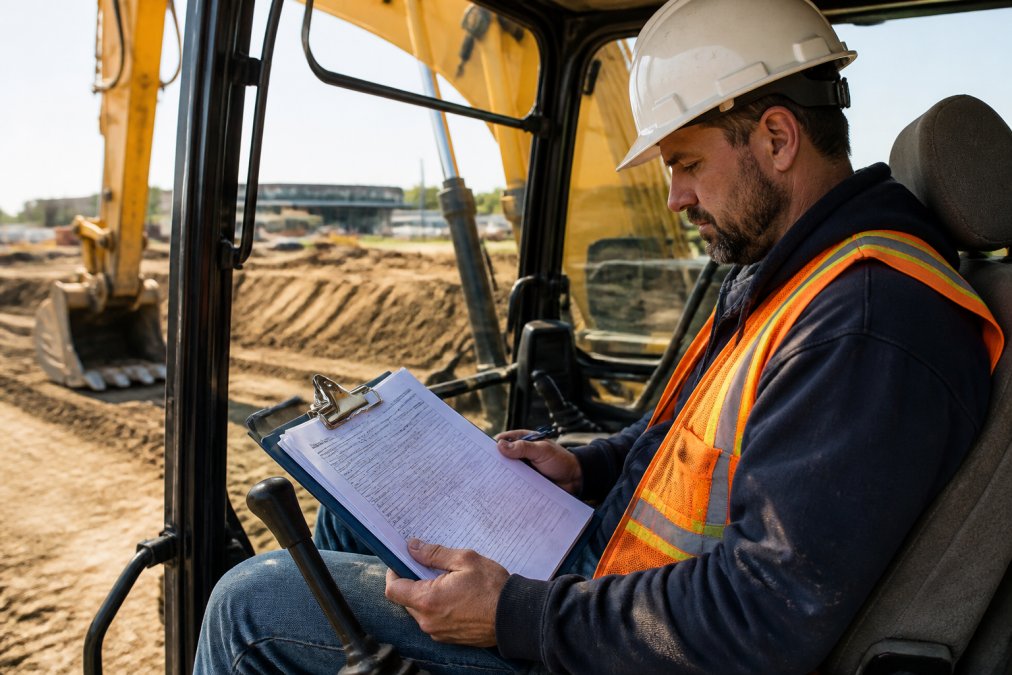
The hour-meter advantage is fading. Traditional hour meters show total machine runtime, but they don't distinguish between active work and idle time. A machine with 6,000 hours might have spent 4,000 hours digging and 2,000 hours idling in standby, a critical difference for wear prediction. Excavators with integrated telematics systems now log idle hours separately, load cycles, hydraulic pressure profiles, and fuel consumption patterns. When you list an excavator with telematics data, buyers can see the actual operational intensity of those hours. An excavator with 6,000 hours and documented telematics showing 70% active-work time sells for 18-25% more than an identical machine with 6,000 hours and no telematics data (where buyers assume worst-case 50% idle time). This data transparency has become a measurable value driver.
Maintenance history can offset high hours, but only if documented correctly. An 8,000-hour excavator with complete service records, new undercarriage, and recent hydraulic system overhaul often sells for more than a 4,000-hour machine with no documentation and deferred maintenance. Buyers understand that preventative maintenance extends asset life, while neglect accelerates deterioration. However, the quality and specificity of maintenance documentation now matters as much as the fact of maintenance itself.
Generic maintenance claims ("regularly serviced") are worth far less than itemized documentation: specific dates, parts replaced, technician credentials, and alignment with manufacturer service intervals. When maintenance records show that fluid changes occurred at 500-hour intervals, filters were replaced on schedule, and major components (hydraulic cylinders, undercarriage) were inspected and serviced on predictable cycles, buyers can calculate remaining useful life with confidence. This specificity justifies 12-20% resale premiums over machines with vague maintenance histories.
Track and disclose idle time separately. Equipment sitting unused still depreciates due to seal degradation, corrosion, battery issues, and hydraulic fluid oxidation. Machines with consistent, documented operational use sell faster and command higher prices than those with erratic usage patterns. If your excavator spent 18 months in storage during a market downturn, disclose this honestly, but pair it with evidence of pre-storage preservation (fluid flushing, battery maintenance, protective covers). Buyers distinguish between machines that were idle due to market conditions (acceptable) and machines that were neglected during downtime (value-destroying). Transparent disclosure of downtime periods, combined with documentation of preservation measures, actually builds credibility and can offset some of the depreciation penalty.
Modern maintenance documentation strategies. The most valuable maintenance records now include:
- Service interval logs with specific dates, hours at service, and work performed
- Parts receipts and invoices showing OEM or equivalent-quality replacement parts
- Fluid analysis reports (if available) showing hydraulic fluid condition and remaining service life
- Photographic evidence of major work (undercarriage replacement, hydraulic system overhaul, bucket teeth replacement)
- Operator logs showing daily usage patterns and any anomalies or repairs performed
- Telematics export data (if equipped) showing idle-time breakdown, load cycles, and fuel consumption trends
When you list through a broker, these records become your selling toolkit. Brokers who understand how to present maintenance documentation, not just claim it exists, can justify asking prices 15-30% higher than machines with identical hours but poor documentation.
The depreciation impact of deferred maintenance. Conversely, machines with known deferred maintenance face steep discounts. An excavator with 6,000 hours and documented hydraulic leaks, worn undercarriage, or overdue major service depreciates 25-40% faster than a well-maintained equivalent. Buyers calculate the cost of bringing the machine to operational standard and subtract that from their offer. A $200,000 excavator requiring $15,000 in immediate repairs will sell for approximately $185,000 or less, not $200,000 minus the repair cost. The depreciation penalty exceeds the actual repair expense because buyers factor in operational downtime and uncertainty.
Leverage maintenance as a competitive advantage. If you've invested in preventative maintenance, make it visible. Complete service records, telematics data showing consistent operational patterns, and third-party inspection reports all justify premium pricing. Machines sold through brokers who emphasize maintenance history and operational transparency consistently achieve 10-20% higher resale values than comparable machines listed on generic marketplaces where maintenance claims are unverified.
Calculating Your Excavator's Residual Value
Residual value is what your excavator will actually sell for in today's market. It's different from book value (tax depreciation) and different from original purchase price. Calculating it accurately prevents you from either underpricing your asset or listing at unrealistic numbers that attract no serious buyers.
The formula is straightforward:
Residual Value = Original Purchase Price × (1 − Depreciation Rate) − Condition Adjustments
Here's a practical example: You purchased a Komatsu PC210 for $280,000 three years ago. Using the 32% three-year depreciation rate for crawler excavators, your baseline residual value is:
$280,000 × (1 − 0.32) = $190,400
But condition adjustments matter. If your machine has 6,500 operating hours (moderate use), complete service records, and recent hydraulic system work, you might add 5-10% to that baseline. Conversely, if it has 10,000+ hours and deferred maintenance, subtract 10-15%.
Adjusted residual value: $190,400 × 1.07 = $203,728
This calculation gives you a defensible asking price backed by industry depreciation data. When you list through a Heavy Equipment Broker's network, your broker can compare your machine against recent comparable sales across multiple platforms, refining this estimate with real market data.
The key variables in your calculation:
- Original equipment cost
- Age in years (calendar time)
- Operating hours (actual use)
- Maintenance documentation quality
- Brand and model (CAT/Komatsu hold value better)
- Technological features (telematics, GPS, fuel efficiency)
- Regional market demand
Brokers with access to transaction data across thousands of sales can calculate residual value more accurately than generic online tools because they see what machines actually sell for, not just asking prices.
Strategies to Minimize Depreciation and Maximize Resale Returns
You can't stop depreciation, but you can minimize it through strategic management and smart selling decisions.
Prioritize maintenance over extended operation. A machine with regular service intervals and documented care depreciates slower than one run hard without preventative maintenance. Budget for routine maintenance as an investment in residual value, not just operational necessity. The $5,000 you spend on hydraulic system maintenance today protects $15,000-$20,000 in resale value.
Track and limit operating hours strategically. If you're managing multiple excavators, rotate usage to keep any single machine from accumulating excessive hours. Buyers view 4,000-6,000 hours over five years as normal; 10,000+ hours triggers significant discounts regardless of maintenance.
Time your sale to market demand peaks. Construction activity and equipment rental rates fluctuate seasonally. Spring and early summer typically see higher demand and better pricing than winter months. Brokers monitoring market cycles can advise on optimal timing rather than forcing you to sell when inventory is high and competition is fierce.
Invest in major components before sale. If your excavator needs undercarriage work, new buckets, or hydraulic repairs, completing this work before listing can increase resale value by 15-25%, often more than the repair cost itself. Buyers pay premiums for machines ready for immediate deployment.
Document everything meticulously. Service records, parts receipts, operator logs, and maintenance photos become your marketing assets. Present this documentation upfront when listing through a Heavy Equipment Broker. Transparency builds buyer confidence and justifies higher asking prices.
Consider certified pre-sale inspections. Third-party inspections add credibility and often justify premium pricing. Buyers trust certified condition reports more than seller claims, reducing negotiation friction and accelerating sales.
Selling your excavator for maximum net proceeds requires understanding how depreciation works, timing your sale strategically, and reaching qualified buyers efficiently. A Heavy Equipment Broker connects you with millions of potential buyers globally and locally, eliminating the months of uncertainty that come with traditional classified listings. Broker expertise ensures your equipment's condition, maintenance history, and market position are presented to maximize residual value recovery. Get started today and recover more value from your surplus equipment.
Frequently Asked Questions
What is the typical depreciable life of an excavator?
For tax purposes under MACRS, excavators are assigned a 5-year recovery period. However, real-world excavator depreciation life typically spans 8 to 12 years. The steepest value loss occurs in years 1-3, with excavators experiencing 25-35% depreciation during this period. After year 6, the depreciation curve flattens significantly, though equipment continues losing value through years 7-10 before steeper decline resumes.
How do maintenance records affect excavator resale value?
Maintenance history is now more critical to resale value than chronological age. Research shows that two identical excavators purchased on the same date can have resale values varying by 60-80% based solely on maintenance documentation and operational care. Documented service history, moderate operating hours, and preventative maintenance records substantially increase buyer confidence and market liquidity, allowing you to command higher prices regardless of the machine's calendar age.
What percentage of value do excavators lose in the first year?
Excavators typically depreciate 15-20% in the first year of ownership, with some models experiencing steeper losses up to 25%. This first-year depreciation is the most dramatic phase of the asset's life cycle. After year one, the depreciation rate moderates to 8-10% annually through years 2-5. Understanding this front-loaded depreciation curve is essential for fleet managers and owner-operators planning capital expenditure budgets and resale strategies.
Why should I use an equipment broker instead of selling privately?
An equipment broker connects your excavator to millions of potential buyers across multiple specialized platforms simultaneously, dramatically expanding your market reach. Brokers handle the marketing, documentation, and buyer qualification, reducing the time your equipment sits idle and losing value. They also navigate pricing strategies based on current market demand, brand reputation, and condition data, helping you capture maximum residual value and avoid leaving money on the table through private sales alone.