

Last Updated: October 26, 2026
Quick Summary
Good excavator maintenance raises resale price by removing the discounts buyers apply for uncertainty. Dated service invoices, oil analysis reports, and a logbook by hour meter prove routine care, supporting a higher condition grade and stronger offers. Maintenance does not set price on its own, but documented care makes a machine easier to sell.
- New financed mini excavator sales fell 7.7% year over year to 32,500 units from June 2025 through May 2026.
- Log every service against the hour meter and keep dated invoices, oil analysis reports, and parts receipts.
- Change engine oil and filter at the 250-hour interval, but verify exact intervals in your operator manual.
- At 500 hours, change hydraulic oil, replace the fuel filter, and take engine and hydraulic oil samples.
- Skipping grease intervals, ignoring small hydraulic leaks, and keeping no records quietly reduce resale value.
Table of Contents
- Why Maintenance Is the Cheapest Resale Upgrade You Can Make
- The Excavator Maintenance Checklist That Buyers Actually Inspect
- Building an Excavator Preventive Maintenance Schedule by Operating Hours
- Why Excavator Service Records Do More for Price Than a Fresh Paint Job
- The Used Excavator Inspection Checklist Sellers Should Run First
- How Maintenance Affects Appraisal, Offers, and Final Sale Price
- Maintenance Mistakes That Quietly Reduce Resale Value
- Pre-Sale Repairs: What to Fix and What to Leave Alone
- Listing Your Excavator With Ironmartonline
- Frequently Asked Questions
Why Maintenance Is the Cheapest Resale Upgrade You Can Make
New financed mini excavator sales in the U.S. fell 7.7% year over year to 32,500 units from June 2025 through May 2026, according to Equipment World's mini excavator market data. That shift pushes more buyers toward used machines. And used buyers ask one question first: how was this machine treated?
Why use Ironmartonline as your equipment broker? Ironmartonline connects buyers and sellers through nine web-based selling platforms, with global and local reach. Good excavator maintenance is what gets it there.
Here is the core argument: maintenance is not a cost center. A wash and a paint job cost money and fool nobody. A binder of service records and a clean undercarriage change how buyers bid.
Below, we break down what buyers inspect and how to build a schedule by operating hours.
The Excavator Maintenance Checklist That Buyers Actually Inspect
An excavator maintenance checklist can help organize an inspection.
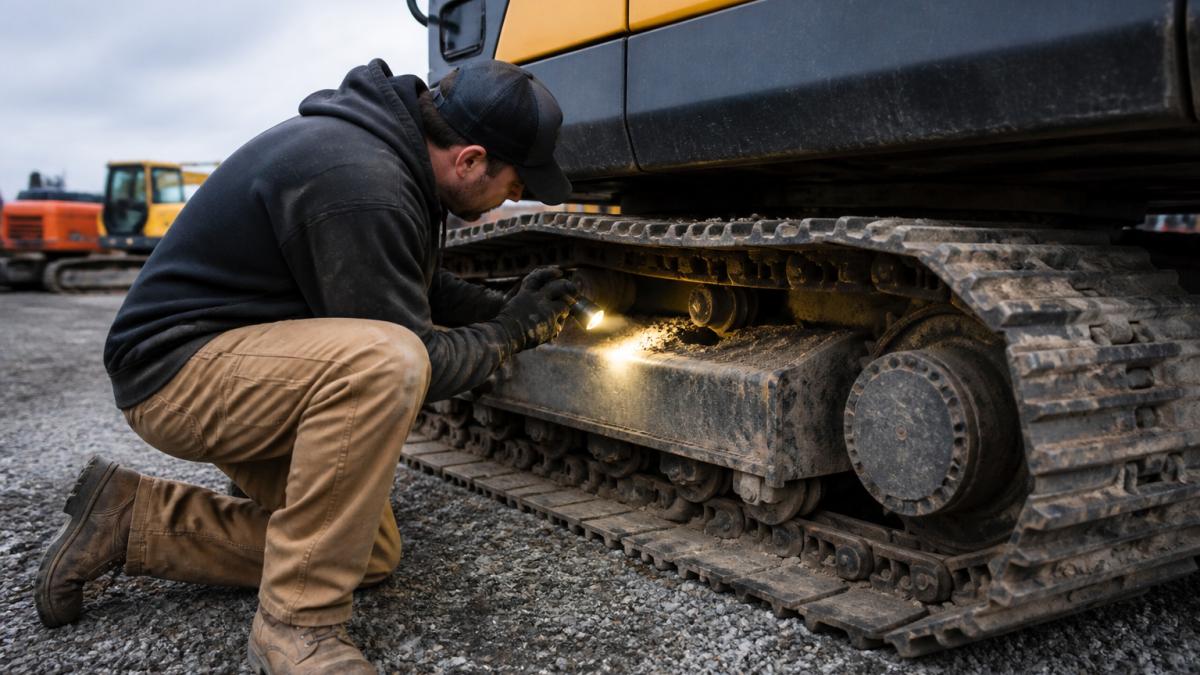
Fluids, Filters, and Grease Points
Start with the visible items:
- Hydraulic oil: color, level, and smell. Milky fluid signals water intrusion.
- Engine oil and coolant: clean oil and full coolant suggest routine care.
- Filters: dated filter markings prove recent service.
- Grease points: fresh grease at pins and bushings shows the machine is worked on, not just worked.
Undercarriage, Tracks, and Bucket Wear
Check track tension, link wear, roller condition, and bucket cutting edge.
Building an Excavator Preventive Maintenance Schedule by Operating Hours
Your operator manual sets the intervals, so use it as the source of truth and log every service against the hour meter.
Always confirm exact intervals in your specific model's operator manual.
Daily (Every Shift)
- Walk-around inspection: check for leaks, loose bolts, and damaged hoses.
- Fluid levels: engine oil, coolant, hydraulic oil, and fuel.
- Track tension: verify within spec; adjust if needed.
- Grease points: apply grease to pins and bushings per manual.
- Document: note hour meter reading and any issues in a logbook.
250-Hour Interval (Typical)
- Engine oil and filter change (often at 250 hours, but verify).
- Hydraulic oil return filter replacement.
- Inspect belts and hoses for wear.
- Check battery electrolyte and terminals.
- Grease all points thoroughly.
- Record service in logbook with date and hours.
500-Hour Interval
- Hydraulic oil change (many manufacturers recommend 500 hours, but some extend to 1000, check manual).
- Fuel filter replacement.
- Air filter cleaning or replacement depending on conditions.
- Inspect undercarriage components: track tension, roller wear, sprocket teeth.
- Oil sampling: take engine and hydraulic oil samples for analysis.
1,000-Hour Interval
- Full hydraulic system service: change hydraulic oil and filters.
- Engine valve clearance adjustment (if applicable).
- Inspect and adjust track tension; measure track wear.
- Replace coolant if due.
- Comprehensive undercarriage inspection: measure link height, bushing wear, and roller diameter.
Annual (Regardless of Hours)
- Full fluid service: engine oil, hydraulic oil, coolant, and gear oils.
- Replace all filters.
- Oil analysis for engine, hydraulic, and coolant.
- Inspect and test all safety systems.
- Professional undercarriage measurement and wear assessment.
Always defer to your operator manual and consult a dealer if unsure.
Here is how the article breaks down service intervals by operating hours.
| Interval | What to do | Note |
|---|---|---|
| Daily (every shift) | Walk-around, fluid levels, track tension, grease points | Note hour meter and issues in logbook |
| 250 hours | Engine oil and filter change, hydraulic return filter | Often at 250 hours, but verify |
| 500 hours | Hydraulic oil change, fuel filter, oil sampling | Some manufacturers extend to 1000, check manual |
| 1,000 hours | Full hydraulic service, valve clearance, track wear | Replace coolant if due |
| Annual (regardless of hours) | Full fluid service, all filters, oil analysis | Inspect and test all safety systems |
Why Excavator Service Records Do More for Price Than a Fresh Paint Job
Keep service records.
What to keep:
- Dated service invoices with hour meter readings
- Oil analysis reports
- Parts receipts for filters, hoses, and undercarriage components
- Photos of repairs in progress
The Used Excavator Inspection Checklist Sellers Should Run First
A used excavator inspection checklist can help organize a seller's inspection.
Work through it in order:
- Cold start: note smoke, noise, and hesitation
- Hydraulic function: cycle all functions, watch for drift
- Leaks: check cylinders, hoses, and the pump area
- Undercarriage: measure track and roller wear
- Bucket and attachments: check pins, bushings, and thumb operation
- Electrical: lights, gauges, and safety shutoffs
- Documents: assemble service records and hour meter history
How Maintenance Affects Appraisal, Offers, and Final Sale Price
Maintenance does not set resale price on its own. Age, hours, brand, and condition all weigh in, and the independent price effect of maintenance is not something the available data quantifies. However, maintenance influences price through several concrete mechanisms that affect buyer confidence and negotiation.
Service History and Buyer Confidence
A complete service history, dated invoices, oil analysis reports, and a logbook, signals that the machine was cared for. Buyers and appraisers treat documented maintenance as evidence of reduced risk. Without records, buyers assume the worst and discount accordingly. A machine with no paper trail gets priced as a machine with no maintenance, even if you serviced it faithfully.
Wear and Tear on Key Components
Undercarriage, hydraulic components, and engine condition are major value drivers. A machine with fresh grease, clean fluids, and documented oil changes will show less wear on these components. For example, regular hydraulic oil changes extend pump and cylinder life, which buyers can verify through oil analysis reports. Conversely, neglected leaks or deferred repairs can lead to catastrophic failures that drastically reduce value.
Appraisal and Condition Grade
Appraisers use condition grades to justify value. A machine with maintenance records and clean inspection results can achieve a higher condition grade, which supports a higher appraised value. Appraisers look for evidence of routine care: filter dates, grease residue, and fluid clarity. They also check for leaks and component wear. Documentation helps them verify that issues were addressed promptly.
Offers and Negotiation
If you want to see how maintained machines sit against the broader market, browse used heavy equipment for sale and compare condition descriptions side by side.
Maintenance Mistakes That Quietly Reduce Resale Value
- Skipping grease intervals and letting pins wear
- Ignoring small hydraulic leaks
- Running dirty fuel
- Letting the undercarriage wear
- No records at all
Pre-Sale Repairs: What to Fix and What to Leave Alone
Repair decisions also depend on the buying climate. CNH's search for a construction partner is one example of how industry shifts affect used-equipment demand and buyer caution.
Listing Your Excavator With Ironmartonline
Ironmartonline runs nine web-based selling platforms, with no contracts and no hidden fees, and global and local reach.
Browse heavy equipment listings to see how your machine would be presented, or join our email list to follow the market.
Frequently Asked Questions
Do maintenance records increase an excavator's resale value?
Keep detailed service records and follow the manufacturer's schedule.
How often should an excavator be serviced?
Follow the service intervals in your operator manual. Record service tasks with the hour meter reading.
What excavator parts should be inspected before selling?
A used excavator inspection checklist can cover undercarriage wear, track tension and condition, bucket and attachment wear, hydraulic leaks, cylinder condition, engine and coolant levels, filter dates, and fault codes. Photograph the items you inspect.
How many hours is a lot for a used excavator?
There is no universal cutoff. Compare hour meter readings with service records and the machine's condition.
The hardest part of selling a used excavator is not the machine. It is proving the machine was cared for. Ironmartonline connects your documented, well-maintained equipment to buyers who value it, using nine selling platforms, no contracts, and no hidden fees. Get started with Ironmartonline and turn your service records into a stronger offer.
