
Table of Contents
- Why Use an Equipment Broker for Your Excavator Purchase
- Financing Options for Used Excavator Buyers
- Equipment Leasing vs. Buying Pros and Cons
- Heavy Equipment Loan Requirements
- How to Get Approved for Heavy Machinery Loans
- Interest Rates and Loan Terms in 2026
- Down Payments and Funding Timelines
- Private Party vs. Dealer Purchase Financing
- Frequently Asked Questions
Last Updated: September 17, 2026
Why Use an Equipment Broker for Your Excavator Purchase
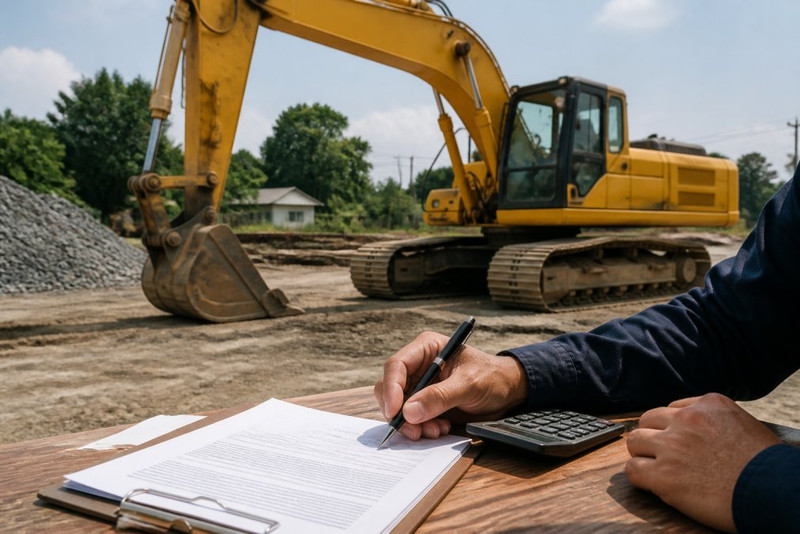
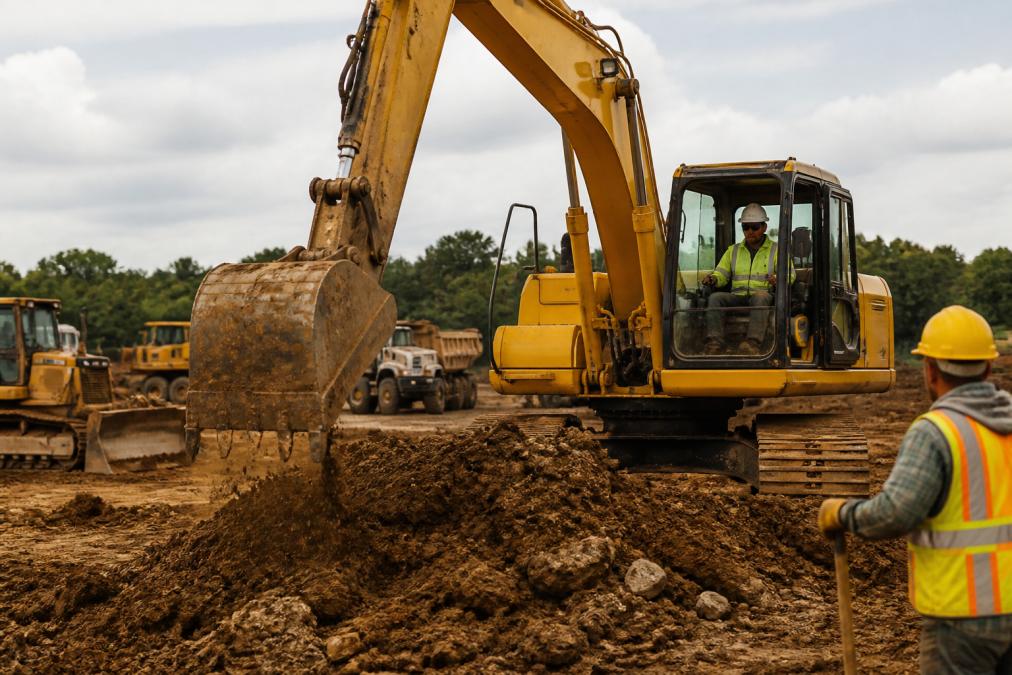
When you're ready to buy a used excavator, you face a critical question: why use a Heavy Equipment Broker for your excavator purchase instead of hunting through classified listings, auction sites, and dealer networks on your own? The answer lies in efficiency, access, and expertise. Equipment brokers connect you directly to verified sellers across multiple platforms, eliminating weeks of searching through fragmented marketplaces. A broker like Ironmartonline operates nine specialized web-based selling platforms that reach millions of potential buyers and sellers globally and locally, ensuring your equipment search reaches far beyond what you'd find independently.
The real value emerges when you understand the financing landscape. Most buyers don't realize that financing options for used excavator buyers vary dramatically depending on whether you're purchasing through a dealer, a private party, or an auction platform. A broker can simplify this complexity. Rather than juggling applications across multiple lenders, you can get guidance on which financing structure makes sense for your specific purchase scenario. Brokers often understand how lender requirements shift based on equipment age, condition, and price point, knowledge that can save you time.
Beyond matching you with equipment, brokers can assist with logistics such as title transfers, inspection coordination, and delivery logistics. They may have built relationships with lenders, inspectors, and logistics providers. You can get financing options for used excavator buyers tailored to your situation, rather than generic loan products that may not fit your timeline or budget.
Financing Options for Used Excavator Buyers
Financing options for used excavator buyers break into three primary categories: traditional bank loans, alternative lenders, and dealer financing. Each carries different interest rates, down payment requirements, and approval timelines. Understanding these distinctions directly impacts your total cost of ownership and cash flow.
Traditional Bank Loans
Traditional bank loans remain the gold standard for equipment financing when you qualify. Banks quote heavy equipment loan rates between 4% and 4.5%, significantly lower than alternative lending sources ROK Financial's heavy equipment financing analysis. These rates apply to borrowers with strong credit profiles and established business histories.
The catch: banks require substantial documentation. You'll need detailed financial statements, balance sheets, and cash flow projections. Banks treat heavy equipment as hard collateral, meaning they're lending against the excavator's resale value, not your personal creditworthiness. This approach protects them but requires you to prove your business can service the debt independently.
Approval timelines stretch longer with banks, typically 3 to 4 weeks for complete underwriting. Down payment requirements range from 20% to 30% on used equipment. According to Franklin Financing Services' construction equipment financing case studies, SBA-backed equipment financing can require as little as 10% down, whereas conventional lenders for used equipment may require 30-50% down.
Alternative Lenders
Alternative lenders fill the gap when traditional banks decline your application or when speed matters more than rate optimization. These non-bank financing sources typically charge between 9% and 10% for heavy equipment ROK Financial's comparison of bank versus alternative lender rates. Higher rates reflect faster approval and more flexible credit requirements.
Alternative lenders thrive on application-only financing for hard collateral up to $500,000 Ameris Bank Equipment Finance standards for simplified credit approval. You submit minimal documentation, often just the equipment specs and basic business info, and receive funding decisions within 1 to 2 weeks. This speed comes at a cost: interest rates run 4.5 to 5.5 percentage points higher than bank rates.
The real advantage emerges for buyers with credit challenges, recent business formation, or irregular income patterns. If traditional banks rejected you, alternative lenders may still offer options. They often understand that construction businesses have seasonal revenue swings and that a strong balance sheet can matter more than perfect credit scores.
Equipment Leasing vs. Buying Pros and Cons
The lease-versus-buy decision shapes your entire equipment strategy. Leasing transfers ownership risk to the lessor while buying builds equity in the asset. Neither choice is universally superior, context determines which makes financial sense.
| Factor | Buying | Leasing |
|---|---|---|
| Monthly Cost | Higher (principal + interest + maintenance) | Lower (fixed payment) |
| Ownership | You own the asset | Lessor retains ownership |
| Maintenance | Your responsibility | Typically included |
| Upgrade Frequency | Keep until obsolete | Upgrade every 3-5 years |
| Tax Treatment | Depreciation deductions | Operating expense deduction |
| Exit Strategy | Sell when done | Return at lease end |
Buying makes sense when you plan to operate the excavator for 5+ years and need consistent, familiar equipment. You build equity, avoid mileage restrictions, and customize the machine to your exact specifications. The downside: you absorb maintenance costs, obsolescence risk, and eventual disposal responsibility.
Leasing appeals to contractors with fluctuating project types or those who want predictable monthly expenses without capital expenditure surprises. Lease payments stay fixed while buying costs rise as equipment ages. Leasing also simplifies tax treatment, the entire payment is a deductible operating expense rather than a capitalized asset requiring depreciation calculations.
Heavy Equipment Loan Requirements
Lenders evaluate your application across multiple dimensions: business stability, equipment condition, down payment capacity, and credit history. Understanding these criteria helps you prepare a stronger application.
Documentation and Financial Statements
Lenders require a complete financial picture before committing capital. Standard documentation includes:
- 2 years of business tax returns
- Current balance sheet and profit/loss statements
- Bank statements (typically 3 months)
- Equipment appraisal or purchase agreement
- Proof of business registration and licenses
Banks scrutinize your balance sheet to assess working capital. They want to see sufficient cash reserves to cover equipment payments even during slow business periods. If your balance sheet shows thin margins or declining revenue, expect higher interest rates or down payment requirements.
Equipment appraisals matter enormously. Lenders lend against the excavator's residual value, what they could recover if they repossessed and resold it. A 2015 model in excellent condition appraises higher than a 2015 model with worn hydraulics or a cracked boom. This appraisal directly determines your loan amount and interest rate.
Credit Score and Business Credit
Your personal credit score influences loan terms, though it carries less weight for equipment financing than for personal loans. Most lenders require a minimum credit score of 650, though 700+ unlocks better rates. Business credit history matters more than personal credit for this loan type.
Lenders evaluate your business credit by reviewing payment history with previous vendors, equipment lessors, and financial institutions. Consistent, on-time payments signal reliability. Late payments or charge-offs raise red flags about your ability to service equipment debt.
How to Get Approved for Heavy Machinery Loans
Approval hinges on presenting a complete, credible financial picture. Start by gathering documentation before approaching lenders. Incomplete applications delay decisions by weeks.
First, compile your financial statements and tax returns. Ensure they're current, lenders won't accept documents older than 90 days. If your business is new (less than 2 years old), prepare a detailed business plan showing revenue projections and explain your construction experience.
Second, obtain an independent equipment appraisal. Don't rely on the seller's valuation. Third-party appraisals carry weight with lenders because they're unbiased assessments of resale value. Budget $300 to $600 for this appraisal, money well spent that often secures better loan terms.
Third, identify your down payment source. Lenders want to see that you're investing meaningful capital alongside their financing. Down payments ranging from 10% to 20% signal commitment and reduce lender risk. Funding timelines for equipment financing in the current market typically range from 1 to 4 weeks Tzortzis Capital's 2026 equipment financing timeline analysis.
Interest Rates and Loan Terms in 2026
Interest rates for equipment financing in 2026 span a wide range depending on lender type and borrower profile. Equipment financing interest rates for 2026 range from 7% to 14% for lower-middle market transactions Tzortzis Capital's 2026 equipment financing rate analysis. This range reflects the gap between prime-qualified borrowers at traditional banks and riskier borrowers at alternative lenders.
Loan terms, the repayment period, typically range from 24 to 72 months for used heavy equipment. Shorter terms (24-36 months) mean higher monthly payments but lower total interest cost. Longer terms (60-72 months) reduce monthly burden but increase total interest paid.
Total Cost of Ownership: Beyond Monthly Payments
Most buyers focus on monthly payment when comparing loans, but total cost of ownership (TCO) reveals the true financial impact. Consider this scenario: a $75,000 used excavator financed at two different structures.
Option A: 36-month loan at 5% interest
- Monthly payment: $2,187
- Total interest paid: $3,732
- Total cost: $78,732
Option B: 60-month loan at 7% interest
- Monthly payment: $1,449
- Total interest paid: $6,940
- Total cost: $81,940
Option B's lower monthly payment saves $738 per month, but costs $3,208 more over the loan life. The decision depends on your cash flow constraints versus your ability to invest that monthly savings elsewhere. If you can deploy the $738 monthly savings into higher-margin work, Option B wins. If cash flow is tight, Option A's higher payment may be unsustainable.
TCO also includes maintenance and repair costs, which vary dramatically by equipment age and condition. A 2018 excavator typically costs $150-$300 monthly in preventive maintenance. A 2012 model might run $400-$600 monthly as hydraulic seals wear and wear items require replacement. Over a 5-year ownership period, this difference compounds to $12,000-$24,000 in additional maintenance costs, often exceeding the interest savings from a lower-rate loan.
When comparing financing offers, request an amortization schedule from each lender. This document shows exactly how much principal and interest you pay each month, allowing you to calculate true total cost. Many buyers discover that a slightly higher rate with a shorter term actually costs less in total interest than a lower rate stretched across 72 months.
Rate Negotiation and Pre-Approval Strategy
The rates quoted above are starting points, not fixed prices. Your credit profile, down payment size, and equipment condition directly influence the rate you receive. Lenders often quote a range (e.g., "5% to 7%") and assign your specific rate based on underwriting. Navigating these underwriting variables becomes significantly easier when you compare the terms offered by various commercial equipment lenders to ensure your financing structure aligns with current market standards.
Pre-approval before equipment shopping gives you negotiating leverage. When you approach a seller or dealer with a pre-approval letter showing your approved rate and loan amount, you signal serious intent and eliminate financing contingency risk. Sellers and dealers are more willing to negotiate price when they know funding is already secured.
Request rate quotes from at least three lenders before committing. The difference between a 6% and 7% rate on a $75,000 loan over 60 months amounts to roughly $750 in additional interest, worth an hour of comparison shopping. Some lenders offer rate discounts for automatic payment setup (typically 0.25% to 0.5% reduction) or for existing customers, discounts worth asking about explicitly.
Down Payments and Funding Timelines
Down payment expectations vary by lender and equipment age. For used equipment, traditional banks typically require 20% to 30% down. Alternative lenders offer more flexibility: down payments ranging from 0% to 20% Tzortzis Capital's 2026 down payment and funding speed analysis. Some alternative lenders offer zero-down financing for qualified borrowers, though these loans carry higher interest rates to compensate for increased risk.
Funding timelines affect your ability to close deals quickly. If you're bidding against other buyers at an equipment auction, slow funding kills your competitive advantage. Funding timelines for equipment financing typically range from 1 to 4 weeks, depending on documentation completeness and lender type. Banks average 3-4 weeks. Alternative lenders often close in 1-2 weeks. Having pre-approval before you identify specific equipment accelerates your purchase timeline considerably.
Private Party vs. Dealer Purchase Financing
Financing a private party purchase differs substantially from dealer financing. When you buy from another construction contractor or owner-operator, you're responsible for coordinating the inspection, title transfer, and financing separately. Lenders treat private party purchases cautiously because they can't verify the seller's claims about equipment condition and maintenance history.
Dealer financing simplifies the process. Dealers often have existing relationships with lenders and simplified approval processes. The dealer handles paperwork coordination and often guarantees equipment condition through warranties. However, dealer financing typically costs 1-2 percentage points more than bank financing because dealers mark up rates.
Private party purchases offer lower prices, you eliminate dealer markup and sales commissions. But you assume inspection risk. Lenders may require a third-party equipment inspection before funding, adding $400-$800 to your costs. The tradeoff: potentially 15-25% lower purchase price versus higher transaction costs and longer timelines.
Pre-Financing Inspection Checklist for Private Party Purchases
Lenders won't fund equipment they haven't verified. Before approaching a lender with a private party purchase, conduct a pre-financing inspection that addresses lender concerns. This inspection serves two purposes: it gives you confidence in the equipment's condition, and it provides documentation lenders require before committing capital.
Structural and Frame Inspection
- Check the boom, stick, and bucket for visible cracks or bending
- Inspect welds for separation or corrosion
- Look for bent or twisted frame rails
- Verify the undercarriage (tracks or wheels) for uneven wear
- Check for rust perforation on the cab or counterweight
Hydraulic System Assessment
- Inspect all hoses for leaks, cracks, or bulging
- Check hydraulic fluid color (should be amber; dark brown indicates overheating or contamination)
- Verify hydraulic pump operation by cycling all functions smoothly
- Listen for unusual noises during operation (grinding, whining, or chattering indicates internal damage)
- Check for hydraulic fluid pooling under the machine
Engine and Drivetrain
- Start the engine and listen for rough idle, knocking, or excessive exhaust smoke
- Check coolant level and condition (should be clear, not rusty or milky)
- Verify oil level and color (dark oil suggests overdue maintenance)
- Check battery terminals for corrosion
- Inspect belts and hoses for cracks or fraying
Operational Testing
- Cycle the bucket fully open and closed multiple times (should be smooth and responsive)
- Rotate the cab 360 degrees and listen for grinding or binding
- Lower and raise the boom to full extension and retraction
- Verify all hydraulic functions respond immediately (no lag or sluggishness)
- Check for fluid leaks during operation
Documentation Review
- Request maintenance records for the past 2-3 years
- Verify service intervals were followed (oil changes, filter replacements, major repairs)
- Check for any major repairs or frame damage history
- Confirm the serial number matches the title and any lien records
Document this inspection with photos and video. Lenders want visual evidence that the equipment is in acceptable condition. A professional equipment inspector typically charges $400-$600 and provides a detailed report that carries weight with lenders.
Title Transfer and Lien Verification for Private Party Deals
Before financing, verify the seller actually owns the equipment free and clear. Many used excavators still carry liens from previous loans. If the seller owes money to a lender, that lender has a legal claim on the equipment and must be paid off at closing.
Request a lien search from the Secretary of State's office in the state where the equipment is registered. This search costs $10-$25 and reveals any outstanding loans or claims against the equipment. If a lien exists, the seller must provide a payoff letter from their lender showing the exact amount needed to clear the lien at closing.
Title transfer mechanics vary by state. Some states issue equipment titles similar to vehicle titles; others use bill-of-sale documentation. Contact your state's Department of Motor Vehicles or equivalent agency to confirm the required transfer process. In most states, you'll need:
- A signed bill of sale from the seller
- Proof of the seller's ownership (previous title or bill of sale)
- Proof that any liens have been satisfied
- Your equipment appraisal (for lender documentation)
Your lender will typically require title transfer to occur before or simultaneously with funding. Some lenders use title companies to handle the transfer and hold funds in escrow until the title is clear. This adds 3-5 business days to closing but protects both you and the lender.
Financing Coordination for Private Party Purchases
Unlike dealer financing where the dealer coordinates everything, private party purchases require you to manage the lender relationship directly. Here's the typical workflow:
Week 1: Inspection and Appraisal Identify the equipment, negotiate price, and schedule a third-party appraisal. The appraisal typically takes 2-3 business days. Simultaneously, conduct your own inspection using the checklist above.
Week 2: Lender Application Submit your financing application with the appraisal, equipment photos, and inspection documentation. Provide the seller's contact information so the lender can verify ownership and condition independently if needed.
Week 3: Underwriting and Title Verification The lender reviews your application, verifies the equipment appraisal, and confirms title status. Request a lien search yourself to avoid delays, if a lien exists, the seller must provide a payoff letter immediately.
Week 4: Closing Once approved, coordinate with the seller and lender to schedule closing. The lender funds the loan, you pay the seller (minus any liens that are paid off), and title transfers to your name.
Private party purchases typically take 3-4 weeks from inspection to funding, compared to 1-2 weeks for dealer purchases.
Frequently Asked Questions
What credit score is needed for equipment financing?
Most lenders require a credit score of 600 or higher for equipment financing, though scores above 700 qualify for better rates. Some lenders offer application-only financing up to $500,000 without requiring full financial statements, making approval faster for qualified buyers. Your business credit score and personal credit history both factor into the decision. Stronger credit typically qualifies you for rates between 4% and 4.5% with traditional banks, while lower scores may result in rates from alternative lenders closer to 9% to 10%.
What documentation is needed to apply for used equipment financing?
Most lenders require personal and business tax returns (typically 2 years), a current balance sheet, profit and loss statements, and bank statements. For application-only financing up to $500,000, you may skip full financial statements. You'll also need the equipment's details: age, condition, serial number, and appraisal value. Some lenders accept purchase agreements or auction documentation as proof of the asset. Having these documents ready speeds the approval process, which typically takes 1 to 4 weeks in 2026.
How do equipment leasing and buying compare in terms of costs and benefits?
Leasing offers lower monthly payments, built-in maintenance, and flexibility to upgrade equipment regularly. However, you build no equity and face mileage or usage restrictions. Buying requires a larger down payment (0% to 20% in 2026) but lets you build equity, claim tax deductions like Section 179, and customize the equipment. Financing terms for used equipment typically run 24 to 72 months. Total cost of ownership favors buying if you keep equipment long-term, while leasing suits businesses needing newer machinery with minimal commitment.
Can I finance a private party used excavator purchase?
Yes, many lenders finance private party purchases, though approval may be stricter than dealer financing. Lenders require a professional equipment appraisal to verify the excavator's condition and value. You'll need proof of the sale agreement and the seller's title documentation. Private party financing often carries slightly higher interest rates than dealer programs and may require a larger down payment (30% to 50% versus 0% to 20% for dealer purchases). Working with an equipment broker can help facilitate the transaction and provide documentation lenders need.