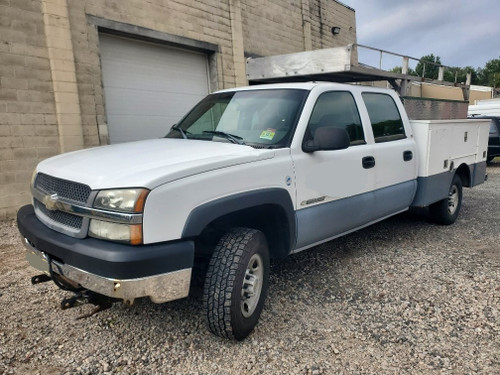
Description
2018 FORD F-550 XL Service Truck - 4x4, Super Low Miles V-10 Gas Honda, Fully Equipped, EB 10,000 Watt Generator, Acytelane Torches and Hose
Hydraulic Line Press, AC, Incredible-One Owner Maintained. Located in Ridgefield, NJ 07657.
Specs and Dims
Description Continued...
2018 Ford F-550 XL Service Truck
The 2018 Ford F-550 XL service truck pairs a Super Duty chassis with a rear service body, giving contractors and fleet buyers a heavy-duty work platform rated for serious payload. Buyers should verify engine choice (6.7L Power Stroke diesel or 6.8L Triton V10 gas), GVWR class, and service body configuration before committing, since these three factors determine what the truck can actually haul and tow on the job.
What is the 2018 Ford F-550 XL service truck built for?
The F-550 XL sits at the top of Ford's Super Duty chassis cab lineup. Ford builds the cab and chassis, then upfitters mount a service body — typically a steel or aluminum unit with lockable compartments, a crane or hoist mount, and a flatbed or dedicated work area behind the cab. This setup makes the F-550 XL a common choice for utility crews, oilfield service, HVAC contractors, and municipal fleets that need to carry tools, parts, and equipment to remote job sites.
The "XL" trim is Ford's base-level Super Duty trim. It skips the interior upgrades found on Lariat or Platinum models and focuses on durability: vinyl or cloth seating, rubber flooring, and fewer electronic frills. For a work truck, that's not a downgrade. It's fewer components to fail in the field.
What engine options came with the 2018 F-550?
Ford offered two engine choices on the 2018 F-550:
- 6.7L Power Stroke V8 Turbo Diesel — rated up to 450 horsepower and 935 lb-ft of torque, paired with a TorqShift 6-speed automatic transmission. This is the engine most service truck buyers choose, since torque output directly affects towing and PTO-driven equipment performance.
- 6.8L Triton V10 gas engine — rated at 385 horsepower and 405 lb-ft of torque. Lower upfront cost, simpler emissions system, but less low-end torque for heavy loads.
Choose the diesel if you're running a crane, welder, or compressor off the PTO regularly. Choose the gas V10 if your routes are shorter and your budget prioritizes lower purchase price and fewer diesel-specific maintenance costs (DEF, DPF service).
What's the payload and towing capacity on an F-550 XL?
The F-550 chassis is built on a Class 5 truck platform, with GVWR ratings that typically range from 17,500 to 19,500 lbs depending on axle and suspension configuration. That's meaningfully higher than the F-450 or F-350, which is the entire point of stepping up to a 550 for service body work. Actual payload capacity depends on the upfit — a steel service body with a crane cuts into payload more than a lightweight aluminum body — so buyers should always check the truck's door-jamb weight sticker against the installed body weight, not just the factory chassis rating.
Is the 2018 Ford F-550 XL a good choice for a service fleet?
Yes, if your work requires Class 5 payload capacity and PTO-driven equipment. The diesel-equipped F-550 XL remains one of the most common platforms for utility and field service work because parts availability, diesel torque output, and upfit compatibility are all well established. Confirm engine type, GVWR, and service body condition before you buy, and the platform delivers.
Frequently Asked Questions
What's the difference between the F-550 XL and higher trims like Lariat?
The XL trim is the base work-truck spec — fewer interior features, no leather or upgraded infotainment, but the same chassis, engine options, and payload ratings as higher trims.
Does the 2018 F-550 come in 4x4?
Yes. Ford offered the F-550 in both 4x2 and 4x4 configurations in 2018, which affects ground clearance and off-road service capability.
What transmission does the 2018 F-550 XL use?
Both engine options pair with Ford's TorqShift 6-speed automatic transmission.
How much does a service body add to the total weight?
It varies by material and equipment. Steel bodies with cranes can add several thousand pounds, while aluminum flatbeds add less — always check the installed weight against remaining payload capacity.