

Last Updated: October 27, 2026
Quick Summary
A heavy equipment appraisal is a written estimate of a machine's value, prepared by a qualified appraiser who reviews its make, model, age, hours, condition, and recent comparable sales. Before selling, gather your maintenance records, inspect the machine, and use the resulting valuation report to set a realistic asking price.
- Gather serial number, hour meter reading, service records, and title documents before the appraiser arrives.
- Walk the machine yourself and fix small problems, since undisclosed damage can cost you credibility.
- Ask which premise of value the report uses, because fair market and liquidation values can differ sharply.
- Check that comparable sales match your model, hours, and condition before accepting or challenging the report.
Table of Contents
- Why Use Ironmartonline Equipment Broker to Sell Your Machinery
- What a Heavy Equipment Appraisal Is and When You Need One
- Equipment Appraisal Information Needed Before the Inspection
- Heavy Equipment Inspection Checklist for Sellers
- Factors That Affect Equipment Value
- Heavy Equipment Valuation Methods and Value Types
- How Long an Appraisal Takes and What It Costs
- Reading and Challenging the Equipment Appraisal Report
- Using Your Appraisal to Set a Sale Price and Choose a Sales Route
- Frequently Asked Questions
Why would a seller hand their machine to a broker instead of listing it themselves? That is the question every seller should ask before a sale. Ironmartonline is a heavy equipment brokerage that connects buyers and sellers of used machinery. Before you can set a fair price, you need a clear idea of what your machine is worth. That starts with a proper heavy equipment appraisal before selling. This guide walks you through the appraisal process, the information you need to gather, how to inspect your machine, and how to use the results to choose your next move.
Why Use Ironmartonline Equipment Broker to Sell Your Machinery
Ironmartonline uses nine web-based selling platforms to put your machine in front of a large pool of potential buyers. You do not have to build listings on each site yourself. The service runs without contracts or hidden fees, so you know what you are dealing with from the start.
Here is what that means for a seller:
- Wide reach: Your equipment reaches potential buyers through nine platforms.
- No contracts: You are not locked into a long agreement.
- No hidden fees: The service has no hidden fees.
Knowing your appraised value first will help you judge any broker's pricing.
What a Heavy Equipment Appraisal Is and When You Need One
A heavy equipment appraisal is a written estimate of a machine's value, prepared by a qualified appraiser. The appraiser looks at the machine's make, model, age, hours, condition, and recent comparable sales. The result is a valuation report you can use to set a price.
You typically need an appraisal when you:
- Plan to sell a machine and want a realistic asking price
- Need to document value for insurance or financing
- Want to compare a broker's offer against an independent number
Appraisers often describe value in terms of intended use. Fair market value assumes a typical sale between a willing buyer and seller. Orderly liquidation value and forced liquidation value assume a faster, less favorable sale. Knowing which type of value your appraisal reports matters, because the numbers can differ sharply.
Equipment Appraisal Information Needed Before the Inspection
Gather your paperwork before the appraiser arrives. Missing records can lower the value or slow the process. Pull together the following:
- Make, model, and serial number
- Year of manufacture and total operating hours
- Maintenance and service records
- Attachment list, including buckets, blades, and forks
- Recent repair invoices and any major component replacements
- Title and ownership documents
If you cannot find some records, say so up front. A transparent seller earns more trust than one who guesses. Clear documents also support the appraiser's assumptions about the machine's history.
Heavy Equipment Inspection Checklist for Sellers
A physical inspection drives most of the valuation. Walk the machine before the appraiser does, and fix small problems that cost you money. Check these areas:
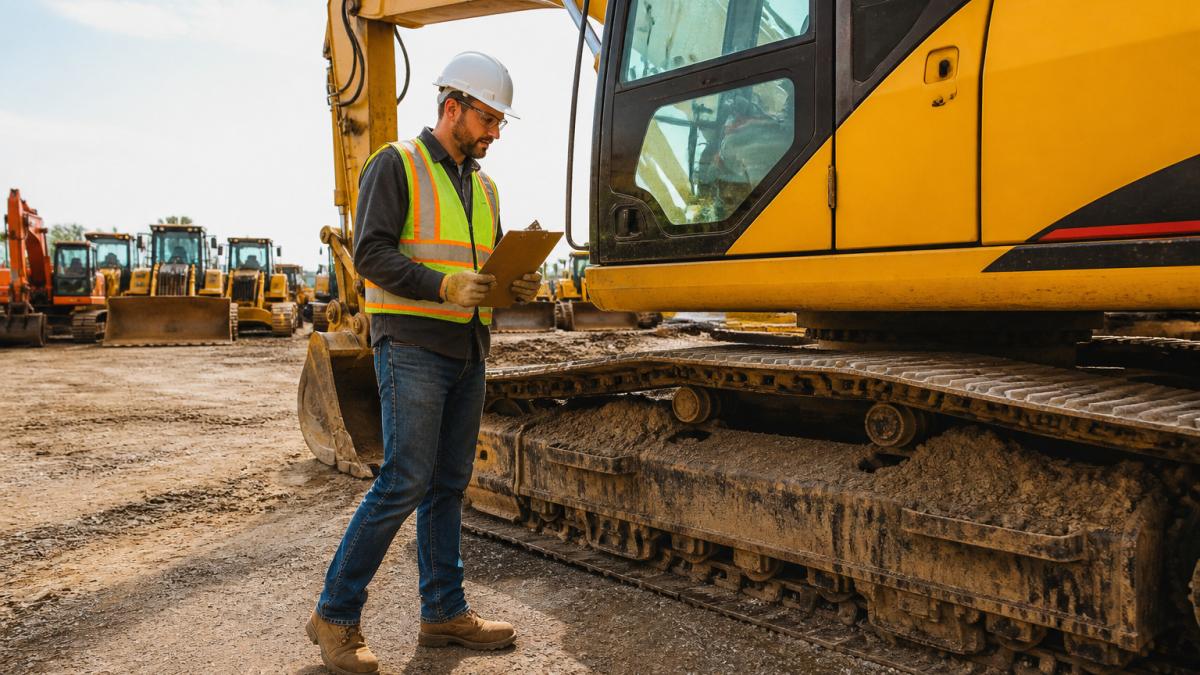
- Engine starts cleanly and runs without warning lights
- Hydraulic hoses and fittings show no leaks
- Tires or tracks show even wear
- Undercarriage and rollers are intact
- Boom, stick, and cylinders show no cracks or heavy play
- Cab glass, mirrors, and seats are in working order
- Fluid levels and filters are current
Watch out: Do not hide damage or wear. An appraiser will find it, and a discovered problem can cost you more credibility than the repair would have cost.
Clean the machine, take clear photos, and note any known defects in writing. This gives the appraiser a fair starting point.
Factors That Affect Equipment Value
Several factors drive the number on your appraisal:
- Age and hours: Newer machines with lower hours usually command higher prices.
- Condition: Structural damage, worn components, and leaks reduce value.
- Maintenance history: Complete service records support a higher valuation.
- Attachments: Useful attachments can add value.
- Market demand: Machines in high demand sell for more.
- Make and model reputation: Some brands hold their value better than others.
Each factor shifts the final figure. Ask the appraiser to explain how each one affected the valuation.
Heavy Equipment Valuation Methods and Value Types
Appraisers generally use three approaches:
- Sales comparison approach: Compares your machine to similar machines that recently sold.
- Cost approach: Estimates what it would cost to replace the machine, then subtracts depreciation.
- Income approach: Estimates value based on the income the machine can produce.
Most used heavy equipment is valued mainly with the sales comparison approach, because recent sales of similar machines are the clearest guide.
Ask which premise of value the report uses. A fair market value report and a liquidation value report can give very different numbers for the same machine.
How Long an Appraisal Takes and What It Costs
Most sellers want two answers before they book: how much will this cost, and how long until I have a number I can list against? Neither answer is fixed, but the drivers are predictable enough to plan around.
What drives the fee.
Reading and Challenging the Equipment Appraisal Report
An appraisal report is a working document, not a verdict. Read it the way a buyer will: looking for the assumptions, the evidence, and the gaps.
What a complete report should contain. Check that the report includes:
- Identification. Make, model, serial number, year, and hour meter reading, matched to your machine.
- Premise and type of value. Fair market value, orderly liquidation, or forced liquidation, stated plainly.
- Scope of work. What was inspected, what was not, and whether the appraiser relied on photos or records instead of a physical visit.
- Assumptions and limiting conditions. These are the caveats that tell you how far the number can be trusted.
- Valuation approaches used. Which of the three approaches were applied and why the others were excluded.
- Comparable sales. The transactions the appraiser relied on, with enough detail to judge similarity.
- Final value estimate and effective date. The number and the date it applies to.
How to check the comparables. This is where most disputes start. For each comparable, ask:
- Is it the same make and model family, or at least the same size class and application?
- How close is the year and hour meter reading to yours?
- Was it a retail sale, an auction sale, or a private transaction? Auction results often reflect distressed or as-is conditions and may not support a fair market value conclusion.
- Is the sale recent enough to reflect current demand?
- Were adjustments made for condition, attachments, or location, and are those adjustments explained?
If a comparable is a different model, a much higher-hour unit, or an auction result used without adjustment, ask the appraiser to walk you through the reasoning. A clear, specific question is far more effective than a general objection.
When a challenge is justified. Challenge the report when:
- The comparable machines are not truly similar in model, hours, or condition.
- The inspection notes miss items you can document as sound, such as a recent major component replacement with invoices.
- The stated premise of value does not match how you plan to sell.
- The effective date is stale relative to your sale timeline.
How to challenge it well. Put your question in writing, cite the specific page or comparable, and attach the records that support your position. Ask for a written response or a revised report.
Turning the report into an asking price.
Using Your Appraisal to Set a Sale Price and Choose a Sales Route
Your appraisal gives you a starting point, not a final answer. Compare the appraised value with current listings for similar machines. You can browse used heavy equipment for sale to see what comparable machines are asking. Then decide how you want to sell.
Your options include:
- Selling privately: You keep more of the sale price but handle all the listing and buyer contact.
- Using a dealer or auction: Faster, but often at a lower price.
- Using a broker: Ironmartonline lists your machine across nine platforms and handles much of the process without contracts or hidden fees.
If you choose a broker, compare the reach and terms against your own plan. Read trusted platforms to sell used heavy equipment online for a closer look at where your machine could be listed.
A solid appraisal, a clean inspection, and complete records give you the strongest position. Set your price from the facts, choose the route that fits your timeline, and you will sell with confidence. For a platform-by-platform comparison, see the best places to sell a used wood chipper.
Frequently Asked Questions
Should I get a heavy equipment appraisal before selling?
An appraisal is worth considering when the machine is high value, when you need a documented figure for financing, insurance, estate or partnership purposes, or when you have no reliable comparable sales to price it yourself. For lower-value machines, a dealer or auction estimate may be enough. Compare the cost of the appraisal against the price difference it might help you defend, and use the appraisal's value estimate as a reference point rather than a guaranteed sale price.
What information is needed for a heavy equipment appraisal?
Most appraisers ask for the make, model, year, and serial number, plus any attachments such as buckets or fifth wheels. Maintenance records, operating hour or usage readings, repair history, and any known defects help the appraiser assess condition. Bring the title or ownership documents and tell the appraiser about any liens. The more complete the equipment records, the fewer assumptions the appraiser has to make.
How long does a heavy equipment appraisal take?
Turnaround depends on the appraiser's workload, how quickly the documents arrive, and whether an on-site physical inspection is needed. Desktop appraisals based only on records and market data typically take less time than appraisals that include a physical inspection. Ask the appraiser for an estimated timeline before you schedule the work so you can plan your listing and sale around it.
What is the difference between fair market value and liquidation value?
Fair market value assumes a reasonable sale over a normal marketing period between a willing buyer and a willing seller. Liquidation value assumes the equipment must be sold quickly, usually under orderly or forced conditions, and typically results in a lower figure. Confirm which premise of value the appraisal uses, because the intended use of the report determines which one is appropriate for your situation.
