
Table of Contents
- Why Use an Equipment Broker When Negotiating Used Excavator Prices
- Research Market Value and Recent Comparable Sales
- Complete a Used Excavator Inspection Checklist Before Negotiating
- Calculate Total Cost of Ownership Before You Negotiate
- Develop Negotiation Scripts for Heavy Equipment Deals
- Buying Used Heavy Equipment from Brokers vs. Private Sellers
- Identify Red Flags and Mechanical Issues That Lower Value
- Set Your Walk-Away Price and Know When to Stop Negotiating
- Secure Financing and Payment Incentives
- Finalize the Deal with a Strong Purchase Agreement
- Frequently Asked Questions
Last Updated: September 23, 2026
Why Use an Equipment Broker When Negotiating Used Excavator Prices
Buying used excavators without expert guidance is risky. You might overpay by thousands. You might miss hidden damage. You might negotiate poorly and leave money on the table.
Why use a Heavy Equipment Broker when negotiating used excavator prices? Because brokers like Ironmartonline handle the heavy lifting. They research market values. They inspect equipment thoroughly. They negotiate on your behalf. They connect you to verified sellers across nine specialized platforms with millions of potential buyers.
The stakes are high. Excavator prices have dropped 19% year-over-year, representing $15,000 to $30,000 in potential savings per unit depending on machine size, according to AMOParts 2026 market analysis. But those savings only materialize if you know how to negotiate price for used excavators strategically. Most buyers leave money on the table because they skip crucial steps: market research, mechanical inspection, and structured negotiation tactics.
This guide walks you through exactly how to negotiate price for used excavators like a professional. We'll cover the inspection checklist that identifies mechanical red flags. We'll show you how to research fair market value using comparable sales data. We'll give you negotiation scripts that work. And we'll explain why working with a Heavy Equipment Broker simplifies the entire process. Mastering these specialized tactics provides a reliable foundation for buying used heavy machinery, a skill set that remains equally essential when you are navigating the acquisition of used commercial vehicles.
Whether you're a contractor, fleet manager, or owner-operator, knowing how to negotiate price for used excavators saves you thousands and protects your investment. Let's start with the foundation: understanding what the market is actually paying.
Research Market Value and Recent Comparable Sales
Your negotiating position depends entirely on data. You need to know what similar excavators sold for recently.
Start by pulling comparable sales for the exact make, model, and hour range. Ironmartonline advises that this is the primary strategy for negotiating a used heavy equipment deal: research comparable sales by pulling recent transaction prices for the exact make, model, and hour range of the excavator in question, according to Ironmartonline's 2026 Buyer's Guide.
Check these sources for transaction data:
- Equipment auction sites
- Dealer inventory listings
- Private sale records
- Regional equipment markets
Document at least 3-5 comparable sales. Note the price, hours, condition, and sale date for each. This gives you a range, not a single number.
Prices vary based on:
- Operating hours (major depreciation factor)
- Hydraulic system condition
- Undercarriage wear
- Engine performance
- Attachment compatibility
Outside of top-tier brands like Caterpillar and Komatsu, prices have eased slightly month-to-month, which provides increased flexibility when negotiating final purchase prices, according to My-Equipment September 2026 analysis. This means you have use.
Complete a Used Excavator Inspection Checklist Before Negotiating
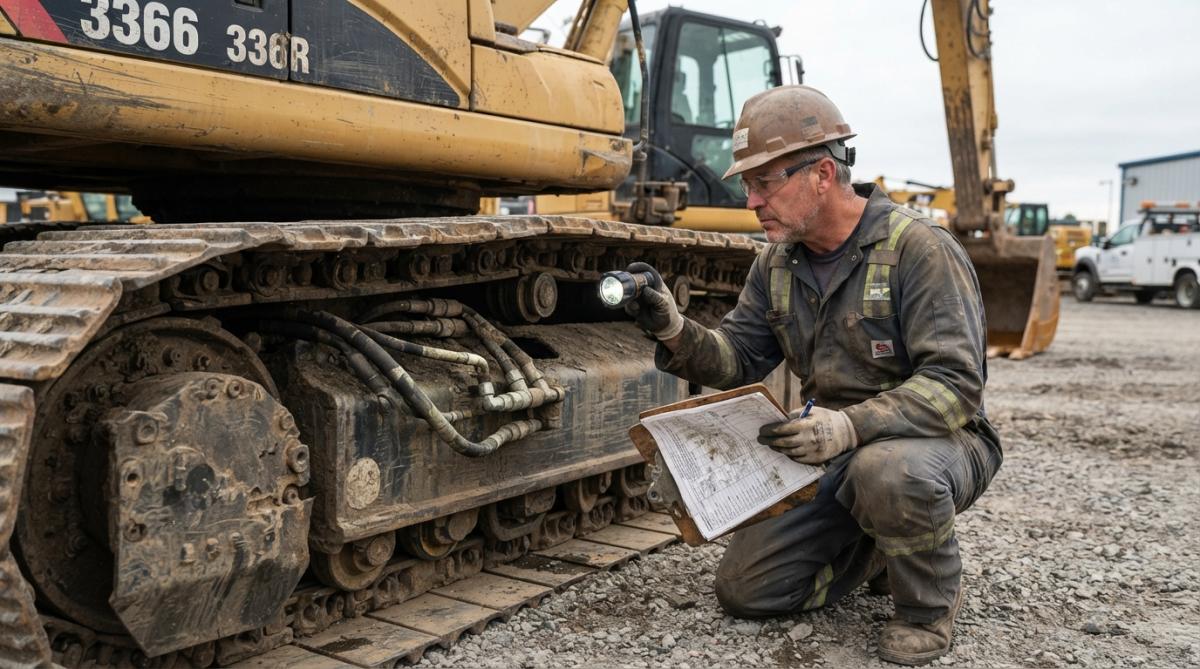
Never negotiate without inspecting. A thorough mechanical inspection identifies issues that justify lower offers. But inspection goes beyond visual checks, it includes verifying ownership, confirming machine identity, and documenting every defect with repair cost estimates.
Digital Documentation Verification (Before Physical Inspection)
Start here. Verify the machine is what the seller claims and that no liens encumber it.
-
Serial Number Cross-Check: Obtain the equipment's serial number from the seller. Verify it matches the title, registration, and any service records. Cross-reference it against the manufacturer's database (Caterpillar, Komatsu, John Deere all maintain searchable registries). Mismatched or missing serial numbers are immediate red flags, they indicate potential theft, salvage history, or title problems. Document the serial number location (typically on the frame near the engine or cab) with a photo.
-
Title and Ownership History: Request a copy of the title or bill of sale. Verify the seller's name matches the title holder. Check for liens using the Uniform Commercial Code (UCC) search through your state's Secretary of State office (most states offer online UCC search tools). A lien means the seller doesn't fully own the equipment, you could inherit the debt. This search costs $5-$25 and takes minutes online.
-
Service and Maintenance Records: Request all available service records, warranty documentation, and repair invoices. These reveal maintenance patterns. Machines with consistent, documented maintenance (oil changes every 250 hours, filter replacements, hydraulic fluid flushes) cost less to own long-term. Gaps in records suggest neglect. Missing records for a 10,000-hour machine are a negotiating advantage, you can't verify proper care.
Engine and Performance Diagnostics
-
Compression Test: A cold compression test reveals engine wear. Normal compression for most excavator engines indicates engine wear. Readings below a certain threshold indicate worn rings or valve problems. A full engine rebuild can be costly. Document the reading and use it in negotiation.
-
Hour Meter Verification: Compare the hour meter to the machine's physical condition. A 5,000-hour excavator should show minimal wear; a 12,000-hour machine should show significant undercarriage and hydraulic wear. If the meter shows 6,000 hours but the machine looks like it has 15,000 hours of use, the meter may have been rolled back or the machine was worked harder than recorded. Request service records to verify actual usage patterns.
-
Cold and Warm Start Performance: Start the engine cold. Listen for grinding, knocking, or rough idle, signs of carbon buildup, valve issues, or bearing wear. Once warm, listen again. Excessive noise when cold that disappears when warm suggests worn bearings (expensive). Check oil color and condition. Dark, thick oil indicates poor maintenance or overdue oil changes. Clean, amber oil suggests proper care.
Hydraulic System and Undercarriage Assessment
The hydraulic system is the excavator's heart. Leaks, slow response, or weak pressure indicate expensive repairs ahead.
-
Hydraulic Leak Inspection: Inspect all hoses, cylinders, and fittings for seepage or active leaks. Small weeps are normal; streams of fluid are not. Check cylinder rod seals by extending and retracting each cylinder slowly. Leaking seals require replacement. Photograph any leaks and note their location.
-
Pressure and Response Testing: Under load, test bucket curl, boom lift, swing speed, and travel. Slow movement indicates worn seals or control valve issues. Jerky, hesitant movement suggests spool valve wear or contaminated hydraulic fluid. A full hydraulic system flush and seal replacement can be costly. If response is sluggish, this is your negotiating anchor.
-
Undercarriage Wear Assessment: Examine track tension, sprockets, rollers, and idlers. Measure track sag (should be 1-2 inches; more indicates worn rollers). Look for bent or cracked components, rust, or missing bolts. Heavy undercarriage wear justifies price reductions. A full undercarriage replacement (tracks, rollers, sprockets) can be costly depending on machine size.
Structural and Attachment Integrity
-
Boom and Arm Inspection: Visually inspect the boom and arm for cracks, bends, or welding repairs. Cracks in the boom require replacement, which can be costly. Welded repairs may hold but are structural compromises. Request X-ray or ultrasonic inspection records if available. If cracks are visible, this is a deal-breaker or massive price reduction.
-
Swing Bearing and Counterweight: Check the swing bearing for play or grinding sounds during rotation. Excessive play indicates bearing wear, which can be costly to replace. Verify the counterweight is intact and properly bolted. Missing or damaged counterweights affect machine balance and stability, a safety and operational liability.
Create Your Inspection Report
Document every finding with photos, measurements, and estimated repair costs. Use this report to justify your offer, detailing specific repair needs and their estimated costs.
Sellers take detailed inspection reports seriously because they're grounded in specific repair costs, not opinion.
Calculate Total Cost of Ownership Before You Negotiate
Price is only part of the equation. Total cost of ownership includes maintenance, repairs, fuel, and depreciation.
A cheaper excavator with high hours and poor maintenance history costs more long-term than a higher-priced machine in excellent condition.
Calculate these expenses:
- Expected remaining useful life
- Annual maintenance costs
- Likely repair expenses based on condition
- Fuel consumption
- Depreciation rate
- Downtime risk during repairs
An excavator with solid service records might be priced higher than one with spotty maintenance. However, the cheaper machine could need significant repairs within two years.
Develop Negotiation Scripts for Heavy Equipment Deals
Scripts give you confidence and structure. They keep emotions out of negotiations.
Opening Your Offer and Justifying Your Number
Start with research data, not emotion. Your opening should reference comparable sales.
Script: "I've researched five comparable sales in the last 60 days. Similar machines with comparable hours sold for $38,000 to $42,000. Your asking price is $48,000. Based on the hydraulic wear I found and the undercarriage condition, I'm opening at $36,000."
This works because it:
- Cites specific data
- Acknowledges their asking price
- Explains your reasoning
- Sets a clear opening number
Don't apologize. Don't hedge. State facts.
Handling Counteroffers and Multi-Round Discussions
Negotiations for heavy equipment often require multiple rounds of discussion before a final agreement is reached, making patience and persistence essential traits for the buyer, according to Boom and Bucket negotiation guide.
Expect back-and-forth. This is normal.
When they counter, ask questions:
- "What's your reasoning for that number?"
- "Can you address the hydraulic issues we discussed?"
- "What maintenance was done in the last 500 hours?"
Their answers either justify their price or reveal weakness in their position.
Buying Used Heavy Equipment from Brokers vs. Private Sellers
Brokers and private sellers offer different advantages.
Private Sellers:
- Often motivated by quick sale
- May accept lower offers
- Less documentation
- Higher risk of undisclosed issues
- No recourse if problems emerge
Equipment Brokers:
- Verify equipment condition
- Handle paperwork and logistics
- Provide some buyer protection
- Access to wider inventory
- Professional negotiation support
A Heavy Equipment Broker like Ironmartonline connects buyers and sellers across nine specialized platforms, ensuring your equipment reaches millions of potential buyers with maximum efficiency. Working with a broker simplifies the entire process and reduces your risk.
Identify Red Flags and Mechanical Issues That Lower Value
Certain issues are deal-breakers or major price reducers.
Red flags include:
- Cracked engine block
- Bent or cracked boom
- Seized swing bearing
- Hydraulic system failure
- Missing or damaged counterweight
- Rusted or corroded undercarriage
- Mismatched serial numbers
- No service records
Each red flag justifies a price reduction. Document everything with photos and notes.
A cracked boom typically requires replacement costing $8,000+. That's your negotiating use.
Set Your Walk-Away Price and Know When to Stop Negotiating
Patience is your weapon, but know your limit.
Before negotiating, establish a walk-away price. This is the maximum you'll pay. Stick to it.
If negotiations reach your limit and the seller won't move, walk away. Another excavator will appear. Overpaying is worse than waiting.
Signs it's time to walk:
- Seller refuses to negotiate
- Hidden issues keep emerging
- Asking price exceeds your walk-away number
- Seller becomes hostile or evasive
Walking away often brings the seller back with a better offer.
Secure Financing and Payment Incentives
Financing options affect your negotiating position.
If you're paying cash, that's use. Sellers prefer immediate payment. Use it.
If you need financing, get pre-approval before negotiating. This shows you're serious and can close quickly.
Payment incentives:
- Cash discounts
- Financing through dealer networks
- Extended payment terms
- Trade-in allowances
Discuss these during negotiation, not after you've agreed on price.
Finalize the Deal with a Strong Purchase Agreement
The purchase agreement is your legal protection. It must be specific, detailed, and include contingency clauses that protect you if hidden defects emerge after inspection or delivery.
Core Agreement Elements
Every purchase agreement for used excavators must include:
-
Equipment Description with Serial Number: List the exact make, model, year, and serial number. Include operating hours at time of sale. Example: "2018 Caterpillar 320D, Serial #CAT0123456789, 8,450 operating hours as of [date]."
-
Purchase Price and Payment Terms: State the agreed price, payment method (cash, wire transfer, certified check), and payment schedule if applicable. Specify when payment is due relative to delivery and title transfer. Example: "$42,000 due upon delivery and receipt of title."
-
Title Transfer and Lien Release: The seller must provide a clear title free of liens. Include language requiring the seller to provide a UCC-3 lien release or affidavit of no liens. Specify that the buyer will not take possession until title is transferred to the buyer's name. This protects you from inheriting the seller's debt.
-
Included Attachments and Spare Parts: List every attachment (bucket, thumb, grapple) and spare parts included in the sale. Example: "Sale includes standard bucket, hydraulic thumb, and two spare track rollers."
Post-Negotiation Contingency Clauses (The Critical Difference)
This is where most agreements fail. Add these clauses to protect yourself:
-
Pre-Delivery Inspection Contingency: "Buyer has the right to conduct a final inspection of the equipment within 48 hours before delivery. If inspection reveals defects not previously disclosed or documented, buyer may (a) reject the equipment and receive a full refund, (b) request repair at seller's expense, or (c) proceed with a price reduction equal to the estimated repair cost."
Why this matters: Sellers sometimes hide or misrepresent defects. This clause gives you an exit if something critical emerges between agreement and delivery.
-
Hidden Defect Warranty Period: "Seller warrants that the equipment is in the condition described in this agreement. If defects emerge within 30 days of delivery that were not visible during pre-purchase inspection, seller agrees to either repair the defect at seller's expense or provide a refund of [X]% of the purchase price."
Why this matters: Some defects (internal hydraulic damage, electrical gremlins) only appear after operation. A 30-day window protects you.
-
As-Is Clause (If Applicable): If you're buying as-is with no warranty, state this explicitly: "Equipment is sold as-is, where-is, with all faults. Buyer accepts the equipment in its current condition and assumes all risk of defects not disclosed in writing by seller."
Why this matters: Protects the seller from future claims if you explicitly accept as-is terms. Use this only if you've done a thorough inspection and are confident in the machine's condition.
Delivery, Logistics, and Risk Transfer
-
Delivery Responsibility: Specify who arranges and pays for transportation. Example: "Seller arranges delivery to [address] at seller's expense. Risk of loss transfers to buyer upon delivery and signature of delivery receipt."
-
Delivery Timeline: Set a specific delivery date or window. Example: "Equipment shall be delivered by [date]. Failure to deliver by [date + 5 days] gives buyer the right to cancel and receive a full refund."
Title and Documentation Delivery
-
Title Transfer Timing: "Seller shall provide a clear, notarized title or bill of sale to buyer within 5 business days of payment. Seller shall provide all UCC-3 lien releases or affidavits of no liens required by [state] law."
-
Documentation Package: Specify what documents the seller must provide: original title, service records, warranty documentation, operator's manual, parts list, and any recall notices or service bulletins.
Dispute Resolution and Governing Law
-
Governing Law: "This agreement shall be governed by the laws of [your state]."
-
Dispute Resolution: Consider adding: "Any disputes arising from this agreement shall be resolved through [mediation / arbitration / court proceedings] in [your county], [your state]."
Legal Review Threshold
Have an attorney review the agreement for significant purchases. For other transactions, use a template from your state's equipment dealers association or a reputable online legal service. Never skip the agreement, verbal agreements are unenforceable for equipment sales above a certain threshold in most states.
Before You Sign
- Read every word. Don't let the seller rush you.
- Verify the serial number matches the title and your inspection documentation.
- Confirm all contingency clauses are in writing.
- Keep a copy for your records.
- Take photos of the equipment's condition before delivery.
A strong purchase agreement is the difference between a protected transaction and a costly dispute.
Frequently Asked Questions
How much room for negotiation is there on used excavators in 2026?
Significant negotiation room exists. Excavator prices have dropped, with potential reductions per unit depending on machine size. Outside top-tier brands, prices have eased month-to-month, increasing buyer flexibility. Negotiations typically span multiple rounds before final agreement, so patience and documented price research give you strong bargaining power.
What should I look for in a used excavator inspection checklist?
Prioritize hydraulic system condition, undercarriage wear (swing bearing and counterweight integrity), operating hours relative to model age, engine performance, and maintenance records. Verify the serial number and title authenticity. Check attachment compatibility with your existing fleet. Document all findings photographically to justify your offer during negotiation.
Should I buy a used excavator from a dealer or a private seller?
Dealers offer warranty protection and verified service history but typically charge higher prices. Private sellers allow more negotiation room but require thorough inspection and title verification. Equipment brokers like Ironmartonline bridge this gap, connecting you to vetted inventory across multiple platforms while handling documentation verification and providing market expertise to support your negotiation strategy.
How do I research fair market value for a specific excavator model?
Pull recent transaction prices for the exact make, model, and operating-hour range using equipment marketplaces and auction records. Document this data and bring it to negotiations as proof supporting your offer. Compare prices across private sellers, dealers, and auction houses. Regional market variance exists, so focus on comparable sales within your geographic area for the most accurate valuation.