
Table of Contents
- Why Price Used Construction Equipment Accurately
- Why Use an Equipment Broker Like Ironmartonline
- The Six Core Factors Affecting Heavy Equipment Resale Value
- Understanding Depreciation Curves
- Using a Heavy Equipment Valuation Calculator
- Cross-Referencing Market Listings and Comparable Sales
- Auction Value vs. Retail Value: Understanding the Difference
- How to Sell Heavy Equipment Online for Maximum Value
- Tax and Depreciation Implications When Selling
- Negotiation Tactics for Private Sales
- Current Market Trends Affecting Equipment Pricing
- Preparing Equipment for Sale to Maximize Value
- Conclusion: Getting Fair Market Value for Your Equipment
Last Updated: August 20, 2026
Why Price Used Construction Equipment Accurately
Pricing used construction equipment correctly isn't optional, it's the difference between recovering full value and leaving money on the table. The used construction equipment market is substantial, valued at USD 132.67 billion in 2026 and projected to reach USD 174.28 billion by 2031 at a compound annual growth rate of 5.63% (Mordor Intelligence, 2026). Yet most sellers approach valuation haphazardly, relying on gut instinct or a single online listing they found.
The stakes are real. A machine underpriced by 15% on a $150,000 excavator costs you $22,500 in lost revenue. Overprice by the same margin and your equipment sits unsold for months while carrying costs drain your cash flow. Neither outcome is acceptable when systematic pricing methods exist.
Accurate pricing serves multiple purposes. For contractors liquidating surplus equipment, it accelerates sales and maximizes proceeds. For fleet managers acquiring machines, it prevents overpayment and improves ROI on deployments. For rental companies disposing of end-of-lease inventory, it unlocks capital for reinvestment. For owner-operators managing individual machines, it determines whether a sale makes financial sense at all.
This guide walks through the exact methodology used by professional equipment brokers to establish fair market value. We'll cover the six core factors that drive resale prices, how to interpret depreciation curves, when to use online calculators versus comparable sales analysis, and the critical difference between auction value and retail value. You'll also learn how to prepare documentation, optimize listings across multiple platforms, and execute negotiation tactics that protect your bottom line.
Why Use a Heavy Equipment Broker
Before diving into the mechanics of pricing, it's worth asking: why use a Heavy Equipment Broker instead of selling independently? How do you know Ironmartonline is actually going to get your excavator in front of millions of buyers like claimed? What's the actual reach on these nine platforms mentioned? What's the fee structure actually look like? You say no hidden fees, but what percentage or flat rate is taken before listing dozers? Do you actually work with small owner-operators with just two trucks to move, or are you really only set up for big fleet managers and rental companies? If selling internationally through Ironmartonline, who handles the customs paperwork and logistics headaches? Is that on the seller or is Ironmartonline actually managing that? How long does it typically take to actually sell equipment on the platform? Is cash needed relatively quickly, not listings sitting around for months?
The answer lies in reach and efficiency. Dealer and broker networks retained 53.78% of the used construction equipment market share in 2025 (Mordor Intelligence, 2026), which tells you where buyers actually congregate. A Heavy Equipment Broker leverages specialized web-based selling platforms to connect your equipment with millions of potential buyers globally and locally. That distributed reach matters because the right buyer for your specific machine might be in another state or country entirely.
Independent sellers face a structural disadvantage: they're limited to whatever traffic they can drive to a single listing. A broker eliminates that constraint. Your excavator appears simultaneously across multiple channels where active buyers are already searching. This isn't theoretical, it's how the secondary equipment market actually functions.
There's also the matter of credibility. Buyers are naturally skeptical of private sales. A listing from an established broker carries implicit third-party validation. A reputable Heavy Equipment Broker's reputation provides that signal, which often translates to faster sales and fewer tire-kickers.
The operational burden also shifts. Handling inquiries, scheduling inspections, managing paperwork, and coordinating logistics requires time and expertise most equipment owners don't have. A broker absorbs those tasks, operating without contracts or hidden fees, meaning you're not locked into a long-term commitment or surprised by unexpected charges.
That said, understanding how equipment is actually priced remains essential whether you work with a broker or sell independently. The valuation principles don't change, they just get applied more effectively when your equipment reaches the right audience.
The Six Core Factors Affecting Heavy Equipment Resale Value
Professional appraisers evaluate used construction equipment across six dimensions. These factors interact to determine fair market value, and understanding each one prevents you from being blindsided by a lowball offer.
Supply and Demand in the Equipment Market
Market conditions set the baseline for all pricing. When demand exceeds supply, as it did during post-pandemic equipment shortages, prices spike. When supply floods the market, prices soften. This isn't opinion; it's economics.
According to recent market analysis (Sandhills Global, 2026), used heavy-duty construction equipment inventory decreased 9.21% year-over-year in July 2026, while asking values declined 3.07% annually. That trend suggests a market in transition: fewer machines available but also less aggressive pricing as buyers recognize the shift.
Geographic supply matters too. An excavator in a high-construction-activity region commands a premium over the same machine in a declining market. The Midwest and Southeast currently show stronger demand than other regions, which affects what you can realistically expect.
Tracking supply and demand requires monitoring multiple listing platforms simultaneously. A Heavy Equipment Broker's access to multiple platforms gives real-time visibility into market conditions that independent sellers often miss. This visibility informs more accurate pricing and timing decisions.
Model Year and Equipment Type
Newer machines command premium prices, but the relationship isn't linear. A 2024 excavator costs significantly more than a 2020 model, but a 2020 machine doesn't necessarily cost 50% more than a 2015 equivalent.
Equipment type creates distinct valuation curves. Excavators held 42.68% of the used construction equipment market share in 2025 (Mordor Intelligence, 2026), making them the most liquid asset class. Dozers, wheel loaders, and motor graders follow. Niche equipment, specialized attachments, vintage machines, or rare models, trades less frequently and requires more careful pricing because comparable sales data is sparse.
Model year also interacts with regulatory compliance. Electrification mandates in urban construction zones are creating a two-tier valuation structure: compliant electric units command premiums while older diesel machines retain strong demand in unrestricted territories (Mordor Intelligence, 2026). A 2018 diesel excavator in a region moving toward electric requirements faces different demand than the identical machine in a jurisdiction with no such mandates.
Geographic Location and Regional Variance
A $200,000 excavator in Texas might be worth $185,000 in Montana. That variance isn't arbitrary, it reflects regional construction activity, labor availability, regulatory requirements, and buyer concentration.
Construction and infrastructure accounted for 59.02% of the used construction equipment market share in 2025 (Mordor Intelligence, 2026), which means pricing correlates directly to regional construction spending. States with active infrastructure projects see stronger demand. Regions experiencing economic contraction see softer prices.
Regulatory geography matters too. States implementing strict emissions standards or electrification requirements affect the residual value of diesel equipment. A Tier 4 Final compliant machine trades at a premium in California but carries no premium in states with looser regulations.
Shipping costs also factor in. A machine priced competitively in your region might become uncompetitive once a buyer factors in transport costs from another state. This is why regional comparables matter more than national averages.
Usage Hours and Maintenance History
Equipment hours are the most transparent wear metric. A 2,000-hour excavator is fundamentally different from a 5,000-hour machine, even if both are the same model year.
Low-hour machines (under 2,000 hours) often sell for 80-85% of the new price (Best-Selling Construction Equipment, 2026). That premium reflects the remaining useful life and reduced risk of imminent major repairs. Beyond 2,000 hours, the depreciation curve steepens. A machine with 8,000 hours trades at 40-50% of new price; 15,000 hours might be 25-35%.
Maintenance history validates those hours. A machine with 10,000 documented hours and complete service records commands a significant premium over an identical machine with 10,000 hours and no maintenance documentation. Buyers interpret missing records as hidden problems.
Specific maintenance events matter too. A recent engine rebuild, new hydraulic system, or transmission replacement adds value because it reduces the buyer's risk of immediate major expense. Conversely, a machine approaching major service intervals (e.g., final drive replacement due at 12,000 hours) trades at a discount.
Overall Equipment Condition and Wear
Condition assessment requires systematic evaluation across multiple dimensions: undercarriage wear, hydraulic system performance, engine performance, paint and corrosion, interior cab condition, and attachment compatibility.
Undercarriage condition is often the most expensive repair. Worn track rollers, idlers, or sprockets on an excavator can run $15,000-$40,000 to replace. Buyers factor this into offers. A machine with fresh undercarriage components trades at a substantial premium.
Hydraulic system integrity affects pricing significantly. Leaks, slow response times, or pressure anomalies signal expensive repairs. A machine with tight seals and crisp hydraulic response commands a premium.
Engine performance, compression, fuel efficiency, smoke emissions, reveals wear that hours alone don't capture. A 6,000-hour machine with a tired engine might trade lower than a 9,000-hour machine with a strong, responsive powerplant.
Cosmetic factors (paint, rust, cab interior cleanliness) influence buyer perception disproportionately. A machine that looks well-maintained sells faster and at higher prices than an equivalent machine that appears neglected, even if the mechanical condition is identical.
Understanding Depreciation Curves
Most standard heavy equipment loses between 20% and 40% of its original retail price during the first year (JumboBee, 2026). After this initial drop, the depreciation rate typically settles between 10% and 15% per year, calculated on the remaining value.
This pattern matters because it explains why a five-year-old machine isn't worth half a new one. A machine that cost $300,000 new loses $90,000 in year one (30%), leaving $210,000. Year two: 10-15% of $210,000 = $21,000-$31,500 depreciation, leaving $179,000-$189,000. Year five cumulative depreciation is typically 50-60%, not 70%.
Depreciation curves vary by equipment type. Excavators and dozers (high-demand categories) hold value better than niche equipment. Machines in high-supply regions depreciate faster than machines in constrained markets. Machines with maintenance records depreciate more slowly than machines with spotty history.
Understanding your machine's position on its depreciation curve prevents overpricing. A machine five years old at 4,000 hours should trade near the midpoint of its curve, roughly 45-55% of new price. If you're asking 70%, you're fighting market reality.
Conversely, a machine with exceptional condition, low hours, and strong maintenance history can trade above its curve. A 2024 machine with 1,200 hours and complete service records might command 85-90% of new price instead of the typical 75-80%.
Using a Heavy Equipment Valuation Calculator
Online valuation calculators provide a starting point but require careful interpretation and systematic cross-checking. A machine learning model achieved 98% accuracy in forecasting equipment resale prices for loaders, excavators, and bulldozers by considering numerous influencing factors (ResearchGate, 2026), which demonstrates that systematic valuation is possible, but only when the model accounts for all relevant variables and is calibrated to actual market outcomes.
Most free online calculators oversimplify by asking only for equipment type, model year, and hours, then returning a price range. That's insufficient because it ignores the variables that actually drive secondary-market pricing. A responsible calculator should factor in:
- Specific condition assessment (undercarriage wear, hydraulic system integrity, engine performance, cosmetic condition)
- Maintenance history and documentation (service records, major repairs, component replacements)
- Regional market conditions (local construction activity, regulatory environment, buyer concentration)
- Current supply and demand for that specific make and model in your geography
- Recent comparable sales (actual hammer prices, not asking prices)
- Regulatory compliance status (emissions tier, electrification readiness, safety certifications)
- Attachment and accessory value (buckets, blades, hydraulic thumbs, GPS systems)
How to Evaluate a Calculator's Reliability
Before relying on any online tool, test it against known data. Input a machine you know sold recently, same make, model, year, hours, and condition, then compare the calculator's output to the actual selling price. If the calculator is within 5-10% of the real price, it's reasonably calibrated. If it's off by 20% or more, discard it; the model is either outdated or poorly weighted.
Check what data the calculator requires. Tools that ask only for year and hours are inherently less accurate than tools that ask about condition, maintenance, and regional factors. The more granular the input, the more reliable the output.
Look for transparency about the data source. Calculators built on recent auction data (Ritchie Bros., IronPlanet, and other major auction houses) tend to be more current than calculators built on historical averages. Market conditions shift; a calculator using 2024 data is more reliable than one using 2022 averages.
The Calculator-to-Comparable Sales Workflow
Use online calculators as a reality check, not as your primary valuation method. Here's the systematic approach:
-
Run the calculator with your machine's specs. Note the output range (e.g., $145,000-$175,000).
-
Find five to seven recent comparable sales in your region (same make/model, within 2-3 years of your machine's year, within 2,000 hours of your machine's hours, sold in the last 60-90 days).
-
Compare the calculator output to the comparable sales range. If the calculator suggests $150,000 but regional comparables show similar machines trading at $125,000-$135,000, trust the comparables. The calculator is either using outdated data or doesn't account for your region's market conditions.
-
Adjust for differences. If your machine has lower hours than the comparables, add 3-5% to the comparable average. If your machine has better maintenance documentation, add another 2-3%. If your machine is in worse condition, subtract 5-10%.
-
Document your reasoning. When you list the machine or negotiate with buyers, you'll reference this analysis: "Comparable sales in this region averaged $155,000 for similar machines. Mine has 1,500 fewer hours and complete service records, so I'm asking $165,000."
Cross-Referencing Market Listings and Comparable Sales
Comparable sales analysis remains the gold standard for equipment valuation. Find machines similar to yours (same make, model, year, hours, condition) that sold recently, then adjust for differences.
Start by surveying active listings across multiple platforms. Check asking prices for machines like yours. But remember: asking price is not selling price. A machine listed at $200,000 might sell for $175,000. Asking prices are aspirational.
Actual selling prices require detective work. Auction results are public, Ritchie Bros., IronPlanet, and other major auction houses publish hammer prices. These represent real transactions. A $150,000 hammer price for a 2018 excavator with 6,000 hours tells you what a buyer actually paid, not what a seller hoped for.
Recent comparable sales should be:
- Same or very similar make/model
- Within 2-3 years of your machine's model year
- Within 2,000 hours of your machine's hours
- In your geographic region (or adjusted for regional variance)
- Sold within the last 60-90 days (older comps become unreliable as market conditions shift)
If you find five recent sales of similar machines ranging from $140,000 to $165,000, your machine likely falls somewhere in that range. If you're asking $190,000, you're priced above market.
Document your comps. When negotiating with buyers, you'll reference them: "Three similar machines sold in this region last month at $150,000-$160,000. My machine has lower hours and better maintenance records, so I'm asking $165,000."
Auction Value vs. Retail Value: Understanding the Difference
Auction value and retail value are not the same. Auction value is what a machine sells for at a public auction. Retail value is what a dealer or broker lists it for on the open market.
Auction values typically run 10-20% below retail value. Why? Auctions move inventory quickly. Buyers know they're bidding competitively in real time. There's no negotiation, the hammer falls and you're done. This efficiency commands a discount.
Retail value assumes a longer sales window, individual buyer negotiation, and higher transaction costs. A dealer listing a machine at $160,000 retail might see it sell for $155,000 after negotiation. That same machine at auction might hammer at $135,000-$140,000.
Understanding this gap matters for your strategy. If you need cash quickly, auction might be appropriate even at a lower price. If you can wait 60-90 days and negotiate with individual buyers, retail pricing might yield more total proceeds. managing construction budgets.
A Heavy Equipment Broker's access to multiple platforms serves both auction and retail functions, giving you flexibility to choose the sales channel that matches your timeline and objectives.
How to Sell Heavy Equipment Online for Maximum Value
Online sales have democratized equipment marketing. You're no longer limited to local buyers or a single platform. Strategic listing across multiple channels reaches buyers nationwide and internationally.
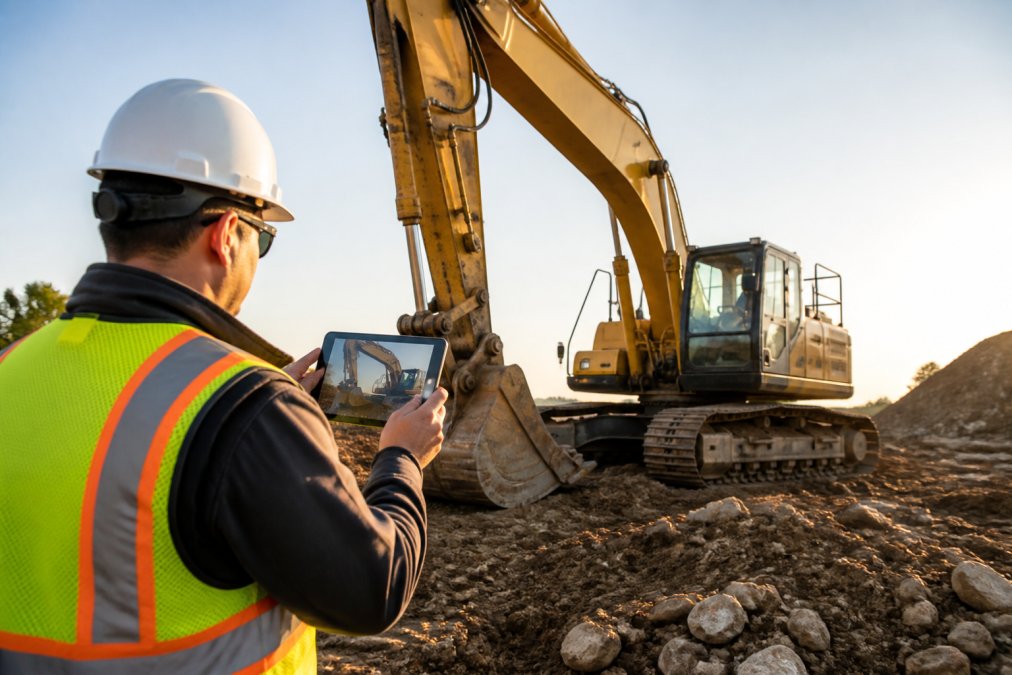
The first step is professional presentation. Equipment photos should show the machine from multiple angles, full side profile, undercarriage, cab interior, hydraulic connections, engine compartment. Poor photos tank inquiries. Buyers assume hidden problems if you don't show the machine clearly.
Write detailed descriptions. Don't just list specs; explain condition. "Excellent undercarriage, recent hydraulic service, full maintenance records, original paint" tells a story. "Well-maintained machine" tells nothing.
Pricing strategy matters. If you list across multiple platforms, price consistently. Buyers compare. A $160,000 listing on one site and $180,000 on another creates confusion and erodes trust.
Preparing Equipment Documentation and Paperwork
Documentation is your most valuable asset when selling. Buyers trust machines with complete records. Missing paperwork raises red flags and suppresses offers.
Essential documentation includes:
- Title and registration (clear ownership)
- Service records (oil changes, major repairs, part replacements)
- Inspection reports (third-party condition assessments)
- Warranty information (if transferable)
- Attachments documentation (ownership proof for buckets, blades, etc.)
- Compliance certifications (emissions, safety standards)
Organize records chronologically in a single file. Digital copies are preferable, they're easy to share with interested buyers.
For machines with spotty records, obtain a professional inspection report. A third-party inspector can validate condition and reduce buyer risk.
A Heavy Equipment Broker helps coordinate documentation. Professional brokers understand what documentation buyers require and can flag missing items before listing, preventing delays during the sales process.
Optimizing Your Listing for Multiple Platforms
Different platforms serve different buyer segments. A machine listed only on one site misses buyers on others.
Machinery Trader reaches traditional equipment buyers. IronPlanet attracts international buyers and rental companies. Auction sites like Ritchie Bros. reach dealer networks. Regional sites reach local contractors. Listing across multiple channels increases visibility exponentially.
Optimize titles for search. Don't just say "Excavator." Say "2018 CAT 336 Excavator, 6,200 Hours, Excellent Condition." Include year, make, model, and hours in the title, these are the terms buyers search.
Write descriptions for both human readers and search algorithms. Use the semantic terms buyers search: "fair market value," "resale price," "heavy equipment valuation," "equipment condition," "maintenance history," "operating hours." These terms improve search visibility.
Price consistently across platforms. Buyers monitor multiple sites. Inconsistent pricing creates confusion and suggests you're unsure of value.
Update listings regularly. Stale listings get less visibility. Refresh photos and descriptions monthly. If a machine hasn't sold in 60 days, reconsider your price, the market is telling you something.
Tax and Depreciation Implications When Selling
Selling equipment triggers tax considerations. Understand them before listing.
If you've been depreciating the machine on your business tax return, the sale creates a taxable gain or loss. A machine purchased for $300,000 and depreciated to a $120,000 book value that sells for $180,000 creates a $60,000 gain. That gain is taxable.
The nature of that gain matters for tax purposes. Section 1231 property (equipment held for business use) receives preferential treatment in some cases. Consult your accountant before finalizing a sale to understand your specific tax position.
Depreciation recapture also applies. Depreciation deductions you claimed reduce your cost basis. When you sell, the IRS recaptures that benefit through depreciation recapture tax, typically at 25% federal rate (plus state taxes if applicable).
For example: A $300,000 excavator depreciated $180,000 over six years has a cost basis of $120,000. If it sells for $180,000, the $60,000 gain includes $60,000 of depreciation recapture, taxed at 25% = $15,000 federal tax (before state taxes).
These calculations are complex. Many sellers underestimate their tax liability and are surprised at tax time. Budget conservatively for taxes before committing to a sale price.
Negotiation Tactics for Private Sales
Negotiating directly with buyers gives you control but requires skill and preparation. Most equipment owners are better at operating machines than negotiating sales. The difference between a skilled negotiator and an unprepared seller often amounts to $10,000-$30,000 in lost proceeds.
Preparation: The Foundation of Negotiation
Before the first buyer inquiry, establish your negotiation parameters:
- Walk-away price: The absolute minimum you'll accept. Decide this in advance, in writing, before emotion enters the conversation. If you'll accept $160,000 minimum, commit to that number now.
- Target price: The price you'd be satisfied with. If your walk-away is $160,000, your target might be $175,000.
- Anchor price: Your opening ask, 10-15% above target. If target is $175,000, anchor at $195,000-$200,000. This gives negotiation room while staying credible.
- Comparable sales documentation: Gather five to seven recent sales of similar machines with prices, dates, hours, and condition notes. Print or screenshot these. You'll reference them during negotiations.
- Condition documentation: Photos of the machine from multiple angles, maintenance records organized chronologically, any inspection reports, warranty documentation, attachment ownership proof. Organize these in a single digital folder you can share instantly.
Anchoring: The Opening Move
Your initial asking price anchors the entire negotiation. If you ask $195,000, a buyer's opening offer will be lower, perhaps $160,000. If you ask $165,000, their opening offer might be $135,000. The anchor matters because negotiations typically settle somewhere between the two opening positions.
But anchor within reason. An absurdly high price ($250,000 for a machine worth $175,000) signals you're unrealistic and kills negotiations immediately. Buyers will walk away rather than negotiate with someone who's delusional about value.
Anchor 10-15% above your target price. This is aggressive but defensible. When a buyer challenges your price, you have room to move while still hitting your target.
Handling the Lowball Offer
Most buyers open with a lowball, an offer 15-25% below asking. This is standard negotiation practice, not a personal insult. Respond with data, not emotion.
Example lowball scenario:
- You ask $195,000
- Buyer offers $155,000
- You respond: "I appreciate the offer. Three similar machines, 2019 CAT 336 with 5,800 hours, 2020 CAT 336 with 6,100 hours, and 2018 CAT 336 with 5,200 hours, sold in this region in the last 60 days at $175,000, $178,000, and $172,000 respectively. My machine has 5,400 hours and better maintenance records than all three. I'm asking $185,000."
Notice what you did: You didn't just say "that's too low." You provided specific comparable sales with dates and details. You explained why your machine justifies a premium (lower hours, better maintenance). You moved your ask down from $195,000 to $185,000, showing flexibility, but you stayed well above their $155,000 opening.
This response accomplishes three things:
- It educates the buyer on actual market value
- It demonstrates you've done your homework
- It shows you're willing to negotiate but not desperate
The Documentation Advantage
Buyers who see comprehensive documentation are more likely to accept higher prices. Documentation reduces their perceived risk. A machine with complete service records, maintenance photos, and a third-party inspection report feels safer than an identical machine with spotty history.
During negotiations, use documentation strategically:
- When a buyer questions hours: "Here's the telematics printout from the last service showing 5,412 hours. Here's the service invoice dated three weeks ago confirming those hours."
- When a buyer questions condition: "Here's the inspection report from [Third-Party Inspector], dated [Date]. The inspector found no major issues. Here are before-and-after photos from the cleaning and prep work."
- When a buyer questions price: "Here are the comparable sales I mentioned, with links to the original listings and auction results. Here's my machine's maintenance history showing regular service every 250 hours."
Documentation transforms "I think my machine is worth $180,000" into "The market data and inspection reports support $180,000." The second statement is much harder to dismiss.
Handling Specific Buyer Objections
Buyers raise predictable objections. Prepare responses in advance:
**Objection: "The hours seem high." **Response: "The machine is [X years old]. At [Y hours per year], that's normal operating intensity for [type of work]. The maintenance records show we've stayed on top of service intervals. Compare that to similar machines with [higher hours and worse maintenance], those are trading at lower prices."
**Objection: "I can get a newer model for that price." **Response: "New equipment has 8-12 week lead times right now. This machine is deployable immediately. If you need to put it to work next week, a new machine doesn't help you. Plus, you're comparing apples to oranges, new equipment depreciates 20-30% in year one. This machine has already taken that hit."
**Objection: "There's rust on the undercarriage." **Response: "That's surface rust, not structural. The inspection report confirms the undercarriage components are sound. We can address cosmetic rust for $[X] if that's a concern, but it doesn't affect function or longevity."
**Objection: "I found a similar machine for $20,000 less." **Response: "I'd like to see that listing. Can you share it? [Wait for response.] That machine has [higher hours / worse condition / no maintenance records / different attachments]. Here's why mine justifies the premium: [specific reasons]. If you'd rather buy that machine, I understand. But if you want the better machine, this is fair market value."
Notice the pattern: You don't dismiss their objection. You acknowledge it, provide context, and redirect to value. You're not defensive; you're educational.
Using Silence Strategically
After you make a counteroffer, stay quiet. Don't fill the silence by justifying your price further or lowering it. Silence creates discomfort, and buyers often fill that discomfort by raising their offer.
Example:
- You: "Based on comparable sales, I'm asking $175,000."
- Buyer: [Silence]
- You: [Stay silent. Don't talk.]
- Buyer: "Would you take $170,000?"
That buyer just raised their own offer because you didn't fill the silence. If you'd immediately said, "Well, I could go to $172,000," you'd have anchored lower and lost $3,000.
Silence is uncomfortable. Use it anyway. It works.
Separating Person from Position
The buyer isn't your enemy. They're trying to buy at the lowest price you'll accept. You're trying to sell at the highest price they'll pay. That's normal negotiation. Don't take lowball offers personally or let frustration enter your voice.
If a buyer is rude or dismissive, you can end the conversation: "I appreciate your interest, but I'm looking for a buyer who respects the value here. If you change your mind, let me know." Then move on to the next buyer. You don't need to sell to someone who disrespects you.
Documenting the Agreement
Once you've agreed on price and terms, document everything in writing via email:
"Per our conversation today, we've agreed on the following:
- Equipment: [Make, Model, Year, Hours, Serial Number]
- Sale Price: $[Amount]
- Payment Terms: [Cash / Financing / Installment schedule]
- Delivery: [Buyer pickup / Seller delivery / Third-party transport]
- Warranty: [As-is / Limited warranty / Specific components covered]
- Timeline: [Inspection date / Payment date / Delivery date]
- Contingencies: [Financing approval / Inspection results / Title transfer]
Please confirm you agree with these terms. Once confirmed, we'll proceed to [next step]."
This email creates a paper trail. If disputes arise later, you have written confirmation of what was agreed. Verbal agreements create disputes. Written confirmations prevent them.
When to Walk Away
If a buyer won't move above your walk-away price after multiple rounds of negotiation, walk away. There will be other buyers. Selling below your minimum just to close a deal is a loss, not a win.
If a buyer demands unreasonable terms (30-day payment delay, full warranty on a used machine, delivery to a remote location at your cost), walk away. Some deals aren't worth doing.
If a buyer is evasive about financing or legitimacy, walk away. You don't want to sell to someone who can't pay or who might be using the equipment for illegal purposes.
The Broker Alternative
If negotiation feels overwhelming, that's exactly why equipment brokers exist. A broker handles all buyer interactions, negotiation, documentation, and logistics. You set your minimum acceptable price, the broker finds buyers, negotiates on your behalf, and handles the paperwork. You lose some upside (the broker takes a commission), but you gain certainty, speed, and freedom from the negotiation burden. For many sellers, that trade-off is worth it.
Current Market Trends Affecting Equipment Pricing
The used construction equipment market in 2026 shows distinct trends that affect pricing strategy.
According to Sandhills Global's July 2026 market report, used heavy-duty equipment inventory decreased 9.21% year-over-year while asking values declined 3.07% annually. This suggests a market tightening, fewer machines available, but also less aggressive pricing as buyers recognize supply constraints.
Used medium-duty equipment showed different dynamics. Inventory decreased 13.04% year-over-year while asking values increased 0.08% year-over-year, trending upward. This indicates strong demand for mid-range equipment relative to supply.
Telematics and electrification are reshaping valuation. Telematics retrofitting allows buyers to verify engine hours, hydraulic pressure logs, and geofenced usage history, reducing information asymmetry that historically dampened secondary-market pricing (Market Research Future, 2026). Machines with telematics data command premiums because they eliminate uncertainty.
Electrification mandates in urban construction zones are creating a two-tier valuation structure. Compliant electric units command premiums while older diesel machines retain strong demand in unrestricted territories. A 2015 diesel excavator in California faces different demand than the identical machine in Texas.
North American operators account for approximately 45% of global secondary equipment transactions, with rental fleets and redeployment strategies enabling high fleet use (68-72%) without new capital expenditure (Strategic Market Research, 2026). This means rental companies are major buyers in the secondary market, and understanding their procurement cycles improves pricing strategy.
Strong infrastructure pipelines, acceleration of residual values, and supply-chain disruptions that extend original-equipment lead times are recalibrating purchase decisions toward immediately deployable assets (Mordor Intelligence, 2026). In practical terms: buyers prefer used equipment they can deploy immediately over new equipment with long lead times. This supports pricing discipline for machines in good condition.
Preparing Equipment for Sale to Maximize Value
Presentation affects price. A machine that looks well-maintained sells faster and at higher prices than an equivalent machine that appears neglected.
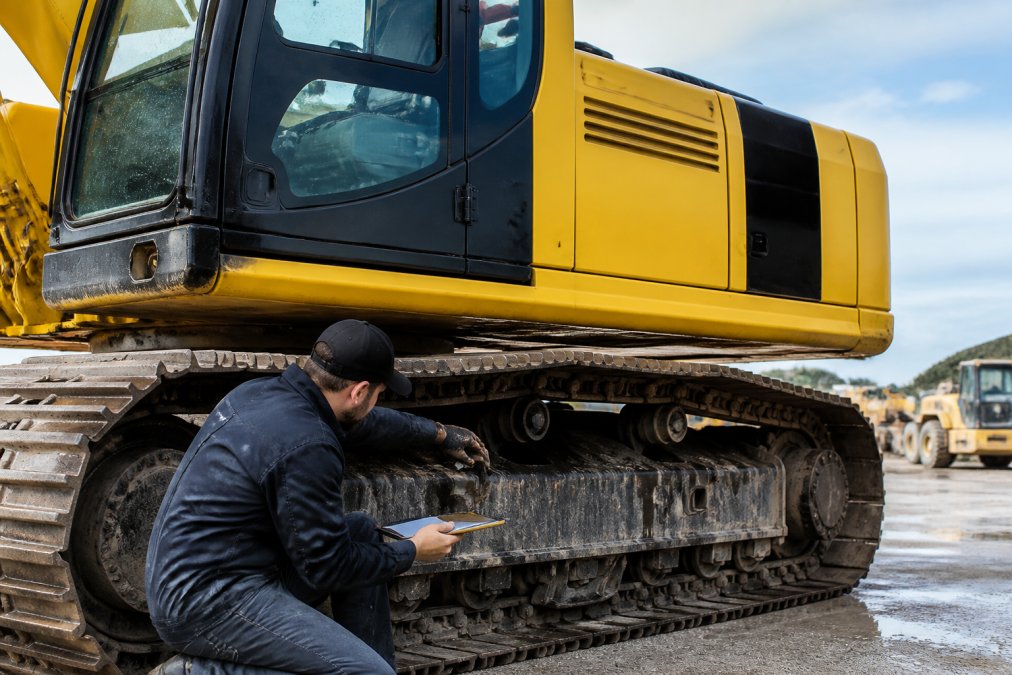
Start with cosmetic work. Pressure wash the exterior to remove dirt and debris. Paint over rust spots. Clean the cab interior. These steps cost minimal amounts but often add significant value to selling price by improving buyer perception.
Address obvious mechanical issues. A loose hydraulic hose, leaking seal, or missing bolt signals poor maintenance. Fix these items before listing. A small seal replacement prevents a buyer from deducting a large amount from their offer due to perceived neglect.
Replace consumables. New air filters, fuel filters, and hydraulic fluid signal that the machine has been maintained. Buyers notice these details.
Organize and clean the engine compartment. Remove grease buildup. Replace cracked hoses. Tighten loose connections. An engine compartment that looks clean and organized suggests the machine has been cared for.
Test all systems before listing. Hydraulics should respond crisply. Engine should start reliably. Attachments should function smoothly. Any sluggish response or unusual noise raises buyer concerns.
Document the preparation work. Take photos of before-and-after cleaning. Keep receipts for any parts replaced. This documentation supports your asking price.
Consider a professional inspection. A third-party inspector validates condition and reduces buyer skepticism. Machines with inspection reports sell faster and at higher prices than machines without them.
Conclusion: Getting Fair Market Value for Your Equipment
Pricing used construction equipment accurately requires understanding six core factors, supply and demand, model year, geographic location, usage hours, condition, and market trends, then validating your assessment through depreciation curves, online calculators, and comparable sales analysis. The difference between an informed price and a guess is often significant in lost proceeds.
Working with a Heavy Equipment Broker accelerates the process. Brokers have real-time access to market data, comparable sales, and buyer networks that individual sellers lack. They understand how to position your machine across multiple specialized selling platforms to reach millions of potential buyers, something a single independent listing cannot achieve.
Getting fair market value for your equipment means more than posting a listing and hoping. It means understanding your market, preparing your machine professionally, and connecting with qualified buyers efficiently. A Heavy Equipment Broker's network of specialized selling platforms, combined with transparent operations and no hidden fees, positions your equipment where active buyers are already searching. Whether you're a contractor liquidating surplus excavators, a fleet manager acquiring heavy-duty trucks, or an owner-operator moving individual machines, professional brokerage support ensures you recover maximum value.
Frequently Asked Questions
How do I calculate the fair market value of used construction equipment?
Fair market value combines multiple data points: comparable listings from recent sales, auction results for similar machines, operating hours, condition, and geographic location. Start by gathering 5-10 comparable sales from the past 90 days, note the model year and hours for each, then average the results. A heavy equipment valuation calculator accelerates this process by weighing factors automatically. According to Ritchie Bros., six key factors consistently influence price: supply and demand, model year, equipment type, location, usage hours, and overall condition. Cross-reference your findings against both retail and wholesale values to establish a realistic range.
What factors affect the resale value of heavy equipment most significantly?
Operating hours and maintenance history are the strongest predictors. Low-hour machines (under 2,000 hours) often sell for 80-85% of the new price, while high-hour units depreciate faster. Condition of the undercarriage, hydraulic system, and engine performance directly impact value. Market trends matter too: in 2026, asking values decreased 0.3% month-over-month and 3.07% year-over-year for heavy-duty equipment, while medium-duty asking values increased slightly. Geographic location affects resale value because regional regulations (especially electrification mandates in urban zones) create price premiums for compliant equipment. Service records and attachment compatibility also strengthen value.
Should I use a professional appraisal or online valuation tools?
Use both. Online valuation tools give you a fast, data-driven baseline by comparing your equipment to recent market sales. They're free and account for multiple variables at once. Professional appraisals add credibility for buyers and protect your bottom line by connecting your asset to reality rather than wishful thinking. For high-value equipment or disputed valuations, a professional appraisal from a certified equipment appraiser is worth the investment. Machine learning models now achieve 98% accuracy in forecasting resale prices by considering numerous influencing factors, so modern online tools are increasingly reliable.
How does equipment age and hour usage affect pricing?
Most heavy equipment loses 20-40% of its original retail price in the first year. After that, depreciation typically settles at 10-15% annually on the remaining value. Operating hours amplify this decline: every 1,000 additional hours reduces value further depending on equipment type. A dozer with 5,000 hours is worth substantially less than one with 2,000 hours, even if both are the same model year. Telematics now allow buyers to verify actual engine hours, hydraulic pressure logs, and geofenced usage history before purchase, reducing the information gap that once dampened secondary-market pricing. Machines with documented, consistent maintenance schedules command premiums.
What's the difference between auction value and retail value for used equipment?
Auction value is typically 15-30% lower than retail value because buyers accept speed over price, auctions close in days, not weeks. Retail value assumes a longer sales window where you can find the right buyer willing to pay full market price. In July 2026, used crawler dozers saw auction values decline 1.35% month-over-month, while asking prices (retail) declined only 0.3%, showing the gap. Private party sales usually fall between these two, depending on your negotiating position and how quickly you need to sell. Dealer networks retain 53.78% of the used construction equipment market share, bridging these pricing tiers.
How do I know if my equipment is priced competitively?
Pull 8-10 comparable listings from the past 60-90 days for your exact model, year, and hour range. Note the asking prices and, if available, the actual selling prices (these are often lower). Calculate the median. If your asking price is within 5% of that median, you're competitive. Check both retail marketplaces and recent auction results to see where your equipment actually sold. Regional variance matters: electrification mandates and infrastructure investment levels shift values by region. If your equipment sits unsold for 30+ days, it's likely overpriced, adjust downward by 5-10% and monitor response.
What documentation do I need to maximize the resale value of heavy equipment?
Gather the original purchase receipt, complete maintenance records (oil changes, major repairs, component replacements), service invoices showing hours and dates, any warranty documentation, and the equipment's serial number and model specifications. Digital telematics records showing geofenced usage history and engine performance logs significantly strengthen buyer confidence and justify higher prices. Title or bill of sale, proof of ownership, and any compliance certifications (especially for electrified or regulated equipment) are essential. Missing paperwork reduces value by 10-20% because buyers face uncertainty. Professional appraisals often require this documentation, so having it organized before listing accelerates the sales process.
How do market trends in 2026 affect equipment pricing right now?
Used equipment pricing stabilized in 2026 after post-pandemic spikes, but values remain strong, approximately 25% above pre-pandemic levels according to Rouse retail data. Inventory levels decreased 9.21% year-over-year in July 2026, signaling steady demand. Electrification mandates are creating a two-tier market: compliant electric units command premiums while older diesel machines retain strong demand in unrestricted territories. Telematics retrofitting is reducing information asymmetry, allowing buyers to verify actual condition and hours, which supports fairer pricing. The used construction equipment market is projected to grow to USD 174.28 billion by 2031 at a 5.63% CAGR, indicating sustained buyer interest and stable valuations.
This article was written using GrandRanker