
Table of Contents
- Why Use an Equipment Broker for Heavy Machinery Transport
- Pre-Loading Inspection and Safety Checks
- Selecting the Right Trailer and Tow Vehicle for Transport
- Understanding Weight Capacity and Load Limits
- Heavy Equipment Transport Regulations and Permits
- Securing Equipment with Chains, Straps, and Rigging Materials
- Heavy Equipment Transport Insurance Requirements
- What Happens If You Buy Stolen Heavy Equipment
- Post-Transport Inspection and Documentation
- Frequently Asked Questions
Last Updated: September 4, 2026
Moving a machine from a seller's yard to your job site is where many equipment purchases go sideways. The heavy construction equipment market is valued at USD 80.92 billion in 2026, and with that much machinery changing hands, the logistics behind each transaction carry real risk Market Data Forecast 2026 North America Heavy Construction Equipment Report. Transporting heavy machinery safely requires more than just driving a truck under a loader and chaining it down. This guide from Ironmartonline covers the full process, from pre-loading inspections to post-transport documentation, so your investment arrives intact.
But first, a question that most buyers skip: why use a Heavy Equipment Broker when arranging transport? Because a broker who understands machinery movement can connect you with vetted carriers, flag regulatory requirements, and keep your transaction secure from pickup to delivery. At Ironmartonline, we provide the expertise to get the job done successfully. Below, we'll show you exactly how to transport heavy machinery without the headaches.
Why Use an Equipment Broker for Heavy Machinery Transport
The single biggest mistake buyers make is treating transport as an afterthought. A broker does more than find a truck; they verify the carrier, confirm insurance, and ensure compliance documents are in order before your machine leaves the lot.
A broker who moves equipment daily knows realistic rates and can negotiate on your behalf. They also coordinate the specialized trailers, permits, and escorts that standard freight brokers don't handle.
The market is recovering in 2026, with sustained growth expected in the off-highway equipment sector Power & Motion recovery forecast. More transactions mean more demand for qualified transport. Working with a broker who specializes in heavy equipment protects you from carriers who lack the right trailers or the knowledge to secure oversized loads properly.
Pre-Loading Inspection and Safety Checks
Inspect the machine thoroughly before a single chain touches it. Walk around the equipment and document existing damage with photos and notes. This protects you if the carrier files a claim or if the machine arrives with new dents.
Check fluid levels and look for leaks. A hydraulic leak during transit can create a safety hazard and an environmental mess. Secure or remove loose components like buckets, counterweights, and attachments. Items that aren't bolted down become projectiles during sudden stops.
Verify that the machine's pivot points and moving parts are immobilized. Bucket linkages, booms, and blades should be pinned or blocked so they can't swing during transport. According to 2026 industry data, 34% of heavy equipment transport incidents are attributed to securement accidents Why Loyalty securement statistics. Most of these are preventable with a proper pre-loading inspection.
Selecting the Right Trailer and Tow Vehicle for Transport
The trailer must match the machine's weight, width, and configuration. A lowboy trailer is the standard choice for excavators and dozers because its deck sits closer to the ground, lowering the center of gravity. A step-deck or flatbed may work for lighter equipment, but you need to confirm the deck height and ramp angle can handle your machine's clearance.
The tow vehicle's hauling capacity must exceed the combined weight of the trailer and the equipment. Check the gross vehicle weight rating of the truck and compare it against the total load. Exceeding this rating compromises braking and steering and puts you in violation of transportation standards.
Industry best practices now emphasize assessing size, weight, and configuration before selecting a trailer type Morning Ag Clips transport best practices. A common mistake is choosing a trailer based on what's available rather than what's correct. If the machine is too wide or heavy for the trailer, you need a different trailer, not a riskier load.
Understanding Weight Capacity and Load Limits
Every trailer has a rated load capacity, and every axle has a legal weight limit. Know both before you load. The machine's operating weight, not its shipping weight, determines what the trailer must carry. Add the weight of attachments, fuel, and any rigging materials to get the true load.
Load distribution matters as much as total weight. Position the machine so its weight is balanced over the trailer's axles. Too much weight on the rear axle causes fishtailing. Too much on the tongue makes steering difficult. The center of gravity of the equipment should sit low and centered.
For loads exceeding 10,000 lbs, industry safety standards mandate at least four tie-down points SimplyFleet heavy equipment transport tips. The combined working load limit of all chains and binders must meet or exceed the machine's weight. Axle weight limits vary by state, so verify the route you plan to take complies with local regulations before departure.
Heavy Equipment Transport Regulations and Permits
Oversized loads require permits. If your machine exceeds legal width, height, or weight limits, you need an oversized load permit for each state you cross. These permits specify the route, travel times, and whether escort vehicles are required.
Carriers are increasingly integrating FMCSA and DOT standard adherence into their logistics planning to avoid transit delays Empire Cat compliance guidance. That means hours-of-service rules, weight documentation, and permit paperwork must all be current. A missing permit can stop your load at a weigh station and result in fines that exceed the cost of the permit itself.
The buyer is ultimately responsible for ensuring the transport complies with regulations, even when a broker or carrier handles the move. Confirm that the carrier holds the necessary authority and that the permits match your machine's actual dimensions. Don't rely on verbal assurances; request copies of the permits and the carrier's insurance certificate before the truck arrives.
Securing Equipment with Chains, Straps, and Rigging Materials
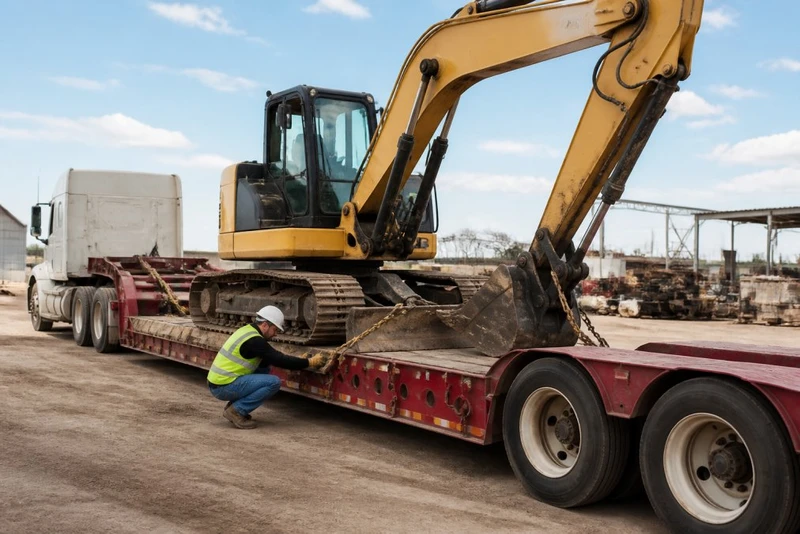
Securement is where most transport failures happen. Heavy-duty chains with binders are the primary method for securing tracked equipment. Ratchet straps work for lighter machinery but lack the working load limit needed for excavators and dozers.
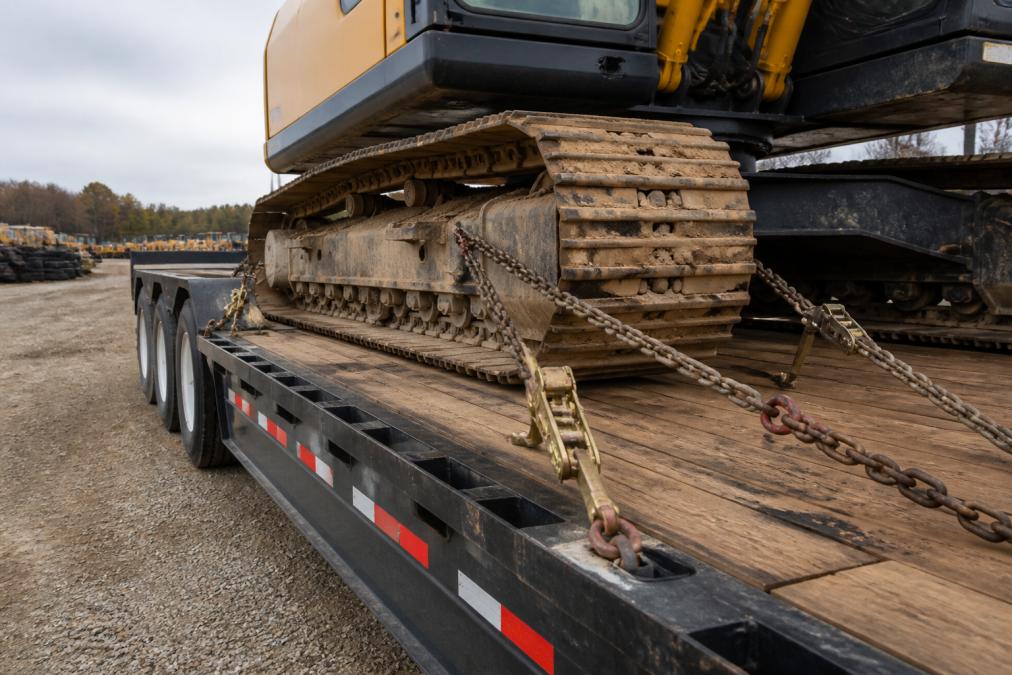
Use at least four tie-down points for any machine over 10,000 lbs, and distribute them so the load is held in all directions. Chains should cross over the equipment's structure, not just loop around axles. Chain binders must be rated for the load and tightened until the chain has no slack.
Effective transport requires more than basic straps; it requires specialized rigging to prevent damage Craters and Freighters rigging guidance. Wood blocks or cribbing protect hydraulic lines and painted surfaces where chains contact the machine. After driving a few miles, stop and re-tighten the binders. Chains stretch and settle during the first part of the trip.
Heavy Equipment Transport Insurance Requirements
Your insurance coverage during transport is separate from your general liability policy. Most standard policies exclude damage that occurs while equipment is being towed or hauled. You need either inland marine coverage or a transit policy that specifically covers machinery in motion.
Understanding Coverage Gaps
Carrier liability insurance is mandatory, but it is often insufficient. A typical carrier policy covers $100,000 to $500,000 in liability, which falls far short of the replacement value of most heavy machinery. An excavator worth $250,000 or a dozer worth $400,000 leaves you exposed if the carrier's policy is the only backstop. You must verify the carrier's actual coverage limit before the load moves, not after an incident occurs.
Inland Marine vs. Transit Insurance
Inland marine coverage is a property insurance rider that protects equipment while it is in transit. It typically covers damage from collision, overturning, fire, and weather. Transit insurance is similar but often includes coverage for theft and mysterious disappearance, important if your load will be parked overnight or staged at a transfer point. The cost difference for a single-trip policy depends on various factors. For a machine, expect to pay for comprehensive transit coverage.
Certificate of Insurance and Additional Insured Status
Before the load moves, request a certificate of insurance from the carrier. The certificate must name you as an additional insured, which means you are protected under their policy if a third party sues. Verify that the certificate lists the specific equipment being transported, the route, and the dates of transport. A generic certificate that does not reference your machine is not sufficient.
Deductibles and Claims Process
Ask about the deductible on the carrier's policy. A deductible means you absorb that cost if damage occurs. Some carriers offer zero-deductible options for an additional premium. Understand the claims process before transport begins: how long does the carrier have to inspect damage, what documentation do you need to provide, and what is the timeline for payment. A carrier that drags out claims or disputes liability can leave you waiting months for reimbursement.
Self-Insurance and Bonding
If you transport machinery frequently, self-insuring through a dedicated reserve fund or bonding may be more cost-effective than buying a transit policy for each move. However, this requires careful accounting and is only viable if you have the capital to cover a total loss. Most buyers benefit from a transit policy for each transport event.
What Happens If You Buy Stolen Heavy Equipment
Buying stolen equipment is a risk that transport planning won't solve, but it can expose. If a machine is stolen, the original owner retains title regardless of what you paid. Law enforcement can seize the equipment from your job site, and you lose both the machine and your money.
Verify the machine's title and serial number before you arrange transport. Check the serial number against the National Crime Information Center database and request a title search. A seller who hesitates to provide documentation is a red flag. Legitimate sellers, including equipment brokers, verify ownership before listing equipment.
Transport companies can also be part of the problem. A fraudulent carrier may pick up a machine and never deliver it, selling it to an unsuspecting buyer. Using a vetted broker who verifies carriers reduces this risk. Never hand over a machine to a carrier you haven't confirmed through a documented process.
Post-Transport Inspection and Documentation
The transport process ends with a thorough inspection at delivery. Walk around the machine and compare its condition to the photos you took before loading. Note any new damage, leaks, or loose components on the bill of lading before you sign it. However, a cursory visual check is not enough; you need a systematic process to verify that the machine arrived in the condition promised and is ready for operation.
Immediate Arrival Inspection (First 2 Hours)
Before you sign the bill of lading, perform a walk-around inspection with the carrier present. Check for:
- Visible structural damage: Dents, cracks, bent frames, or broken welds on the equipment or trailer.
- Fluid leaks: Look under the machine and around hydraulic lines, engine oil, coolant, and fuel tanks. A leak discovered during transport is the carrier's liability; a leak discovered after you sign is yours.
- Loose or missing components: Verify that all pins, bolts, and attachments are in place. Check that bucket teeth, cutting edges, or blade edges have not been damaged or lost.
- Tire and wheel condition: Inspect the tires on both the equipment and the trailer for cuts, bulges, or pressure loss.
- Rigging damage: Look for marks, gouges, or bent areas where chains or straps contacted the machine. Document these with photos.
Take timestamped photos from multiple angles, front, rear, both sides, and close-ups of any visible damage. Include the odometer or hour meter in at least one photo to establish the machine's operating condition at arrival.
Functional Verification (First 24 Hours)
After the initial inspection, perform a functional test if the machine is operational:
- Engine start and idle: Start the engine and listen for unusual noises. Check that the alternator, water pump, and other belt-driven components are functioning.
- Hydraulic system pressure: If the machine has hydraulic controls, activate each function (bucket, boom, blade, etc.) and verify smooth operation. Jerky or slow response may indicate air in the lines or internal damage.
- Steering and brake response: For wheeled equipment, test steering input and brake feel. Delayed response or excessive play may indicate damage to control linkages.
- Fluid levels and condition: Check engine oil, coolant, hydraulic fluid, and fuel. Discolored or foamy hydraulic fluid may indicate water contamination from a leak during transport.
- Attachment operation: If the machine has removable attachments (buckets, forks, grapples), test their operation independently.
Document the results of each test. If any function is abnormal, photograph or video-record the malfunction and note it in writing with the date and time.
Bill of Lading and Damage Notation
The bill of lading is a legal document that transfers liability from the carrier to you. Do not sign a clean bill of lading if you have identified damage. Instead, mark the bill as "Received in damaged condition" and list each defect. Examples:
- "Hydraulic line leaking at left track area, documented with photos."
- "Dent on right side of boom, approximately 4 inches wide."
- "Engine oil level low; fluid appears diluted."
Both you and the carrier representative must sign and date the notation. Keep a copy for your records. A clean bill of lading signed after damage is discovered makes it nearly impossible to file a claim against the carrier.
Post-Delivery Documentation Package
Organize and retain the following documents:
- Bill of lading (signed copy with any damage notations).
- Carrier's insurance certificate and your transit insurance policy.
- Permits and compliance documentation (oversized load permits, escort logs, weight tickets).
- Pre-transport inspection photos and post-delivery inspection photos.
- Functional test notes and any video recordings of abnormal operation.
- Serial number and title documentation confirming ownership.
- Delivery receipt signed by both parties, including date and time of arrival.
Store digital copies in a cloud-based folder (Google Drive, Dropbox, or OneDrive) that you can access from any device. If you need to file an insurance claim, dispute a carrier's liability, or prove ownership to a lender or buyer, this documentation is your evidence.
Timeline for Claims
Most carriers require that damage claims be filed within 30 days of delivery. Some policies allow up to 90 days if latent damage (internal damage not visible at delivery) is discovered later. Do not wait. If you identify damage during the first 24 hours, notify the carrier and your insurance company in writing immediately, even if you have not yet filed a formal claim. This creates a dated record of the damage and prevents the carrier from arguing that the damage occurred after delivery.
Frequently Asked Questions
What are the DOT regulations for transporting heavy equipment?
The Federal Motor Carrier Safety Administration (FMCSA) and Department of Transportation (DOT) regulate oversized loads through the Commercial Vehicle Safety Alliance (CVSA). Loads exceeding 10,000 lbs require a minimum of four tie-down points using heavy-duty chains or ratchet straps rated to the load's weight. Equipment must be immobilized using wedges, chocks, or cradles. Oversized load permits are mandatory for machinery exceeding standard highway dimensions. Compliance with these standards reduces securement accidents, which account for 34% of heavy equipment transport incidents.
How much does it cost to transport heavy equipment?
Heavy machinery shipping costs typically range depending on distance, equipment weight, trailer type, and route complexity. Final costs depend on your specific equipment specifications, destination, and whether permits or specialized rigging are required. Contact an equipment broker or logistics provider for a detailed quote based on your machinery's dimensions and weight.
What insurance coverage is required when moving heavy equipment?
Transport insurance must cover the equipment's full replacement value and include liability coverage for third-party damage. Most carriers carry cargo liability insurance, but as the buyer, verify coverage limits exceed your equipment's value. Inland marine insurance or equipment floater policies provide additional protection during transit. Insurance requirements vary by state and equipment type. Consult your insurance provider to confirm adequate coverage before transport begins.
How do I verify the legal ownership of heavy equipment before transport?
Request the original title, bill of sale, and registration documents from the seller. Verify the VIN or serial number matches all paperwork. Conduct a title search through your state's motor vehicle department or equipment registry. For heavy machinery, check for liens through the Uniform Commercial Code (UCC) database. Working with a reputable equipment broker ensures proper documentation and reduces the risk of purchasing equipment with unclear ownership or legal disputes.
This article was written using GrandRanker