
Table of Contents
- Why Sell Surplus Dozers Now: Market Conditions in 2026
- Why Use an Equipment Broker to Sell Your Dozers
- Auction vs. Broker vs. Private Sale: Which Method Moves Dozers Fastest
- Understanding Used Dozer Pricing Guide and Resale Value
- How to Prepare Dozers for Sale: Condition, Inspection, and Documentation
- Marketing Your Surplus Dozers: Reach and Listing Strategies
- Determining Fair Market Value and Pricing Strategy
- Commission Structures and Hidden Fees: What to Expect
- Closing the Sale: Title Transfer, Payment, and Logistics
- Conclusion
Last Updated: August 19, 2026
Why Sell Surplus Dozers Now: Market Conditions in 2026
The heavy equipment market is in the middle of a significant expansion. According to Global Market Insights' Heavy Equipment Market Report, the global market reached $251.1 billion in 2026 and is projected to grow to $379.3 billion by 2034, expanding at a 5.29% compound annual growth rate. Within that landscape, the used construction equipment market is accelerating even faster, projected to grow from $142.6 billion in 2026 to $243 billion by 2035 at a 6.1% CAGR.
For sellers, this creates a window of opportunity. Federal and state infrastructure funding continues flowing through 2026-2027, driving fleet modernization cycles. Contractors and rental companies are actively acquiring equipment to meet demand. That means your surplus dozers have genuine buyers waiting.
But timing matters. The market isn't uniformly strong. In April 2026, auction values for used heavy equipment fell 1.09% month-over-month, with crawler dozers seeing the largest monthly decline at 2.12%. Late-model assets are depreciating faster than mid-range equipment. This tells you something critical: condition, hours, and marketing strategy now determine whether you capture top dollar or settle for below-market pricing.
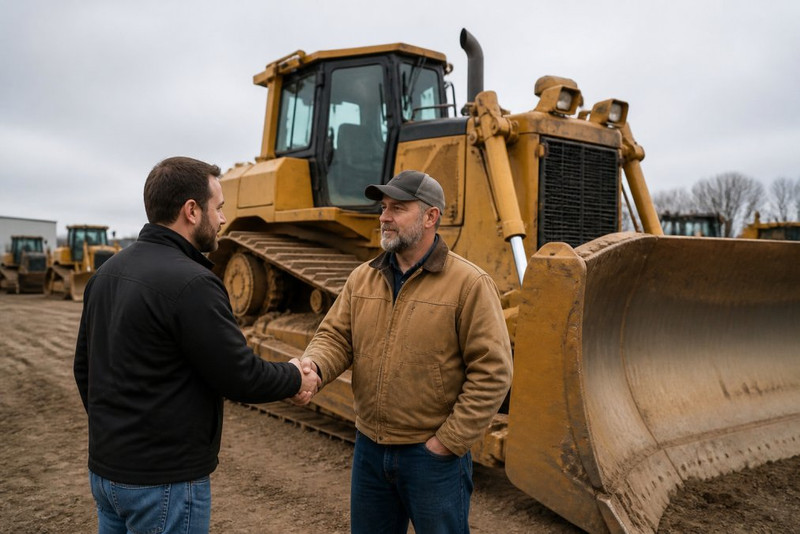
Why use a Heavy Equipment Broker like Ironmartonline to sell your surplus dozers? This is the question every fleet manager and owner-operator should ask before listing. The answer isn't obvious until you understand what brokers actually do differently.
Most sellers assume they have three options: auction houses, private sales, or online marketplaces. But that framework misses a critical fourth path, one that combines the speed of auctions, the pricing potential of private sales, and the reach of digital platforms. A Heavy Equipment Broker positioned correctly doesn't just list your dozers; it actively markets them across multiple channels simultaneously, reaching millions of qualified buyers without the overhead of managing the sale yourself.
Why Use an Equipment Broker to Sell Your Dozers
An equipment broker serves as your intermediary in the heavy equipment marketplace. Unlike auction houses that take a commission on final sale price, or online platforms that simply host listings, a broker actively works to move your equipment. They handle marketing, buyer vetting, negotiations, and logistics, the operational burden that most private sellers underestimate.
Ironmartonline operates nine specialized web-based selling platforms, giving your dozers exposure across multiple buyer communities simultaneously. That network approach matters because dozer buyers aren't concentrated in one place. A contractor in the Midwest, a rental company in the South, and an international buyer all use different platforms. A broker with access to multiple channels reaches all three without requiring you to list separately on each.
The speed advantage is measurable. Auction sales compress the selling timeline to 7-14 days, while private party sales typically take 60-120 days. A broker's model falls between these extremes, faster than private sales because they're actively marketing, but more selective about buyers than open auctions.
Ironmartonline operates with no hidden fees and no long-term contracts. That transparency matters because you're already managing equipment disposal; you don't need surprises in the fee structure. You know exactly what you're paying for the service before listing.
The real value emerges when your dozer needs to move quickly. If you have surplus inventory sitting idle, every month it sits costs you storage, insurance, and opportunity cost. A broker's multi-platform network and active marketing approach reduces that carrying cost by compressing the sales cycle.
Auction vs. Broker vs. Private Sale: Which Method Moves Dozers Fastest
Understanding the three primary selling methods requires looking beyond speed to total return, the combination of sale price, timeline, and effort required.
Auction Model: Unreserved auctions (no minimum bid) generate the highest sell-through rates. Top auction firms achieve 90%+ sell-through rates using unreserved formats. The trade-off is predictable: your dozer sells fast, but to the highest bidder at that moment, not necessarily at market value. Auctions compress the timeline to 7-14 days, but you surrender pricing control. Digital platforms have accelerated auction adoption; online bidding now drives 40-50% of sales at major auction firms.
Private Sale: Selling directly to a buyer gives you maximum control over pricing and negotiations. You keep all proceeds minus transportation costs. The catch: you handle marketing, buyer vetting, payment security, inspections, and fraud prevention. Timeline stretches to 60-120 days because you're relying on organic interest rather than active buyer networks. For owner-operators with one or two units and flexible timelines, this works. For fleet managers with surplus inventory, the operational burden becomes prohibitive.
Broker Model: A broker occupies the middle ground. Ironmartonline's approach uses multiple platforms to aggregate buyer interest, compress timelines closer to auctions (typically 14-30 days), and maintain pricing closer to private sales. You're not managing the sale yourself, but you're also not surrendering to the highest bid in an open auction. The fee structure replaces the operational burden you'd carry in a private sale.
The choice depends on three variables: how many units you're moving, how quickly you need capital, and how much operational overhead you can absorb.
| Selling Method | Timeline | Pricing Control | Sell-Through Rate | Best For |
|---|---|---|---|---|
| Unreserved Auction | 7-14 days | Minimal | 90%+ | High-volume, urgent liquidation |
| Broker (Multi-Platform) | 14-30 days | Moderate | 75-85% | Fleet managers, multiple units |
| Private Sale | 60-120 days | Maximum | 60-70% | Single units, flexible timeline |
Understanding Used Dozer Pricing Guide and Resale Value
Dozer pricing in 2026 follows a clear depreciation curve based on operational hours. This is the foundation of every selling decision you'll make.
Equipment with fewer than 5,000 operational hours typically sells at 65-75% of original manufacturer pricing. A dozer that cost $180,000 new and has 3,000 hours on it will fetch roughly $117,000-$135,000 in the current market. These are considered "low-hour" machines and command premium pricing because they have substantial useful life remaining.
Mid-hour machines (5,000-15,000 hours) settle in the 45-60% range. The same $180,000 dozer with 10,000 hours brings $81,000-$108,000. The jump in depreciation reflects increased maintenance risk and reduced remaining service life, but these machines still represent solid value for contractors managing fleet costs.
High-hour equipment (15,000+ hours) drops to 25-40% of original pricing. At 20,000 hours, you're looking at $45,000-$72,000. These machines are workable for specific use cases, small contractors, rental companies buying for short-term projects, or international buyers where capital is constrained, but the market for them is narrower.
Your dozer's actual resale value depends on three additional factors beyond hours: maintenance records, undercarriage condition, and engine performance. A low-hour machine with spotty maintenance records will sell below the 65-75% range. A high-hour machine with documented service history and a strong engine might exceed the 25-40% range.
This is where preparation and documentation become financial levers. A dozer you can prove was serviced regularly and has no hydraulic issues commands a premium within its hour category. One with deferred maintenance sells at a discount.
How to Prepare Dozers for Sale: Condition, Inspection, and Documentation
Preparation determines whether your dozer sells at the top or bottom of its price range. This is where most sellers leave money on the table.
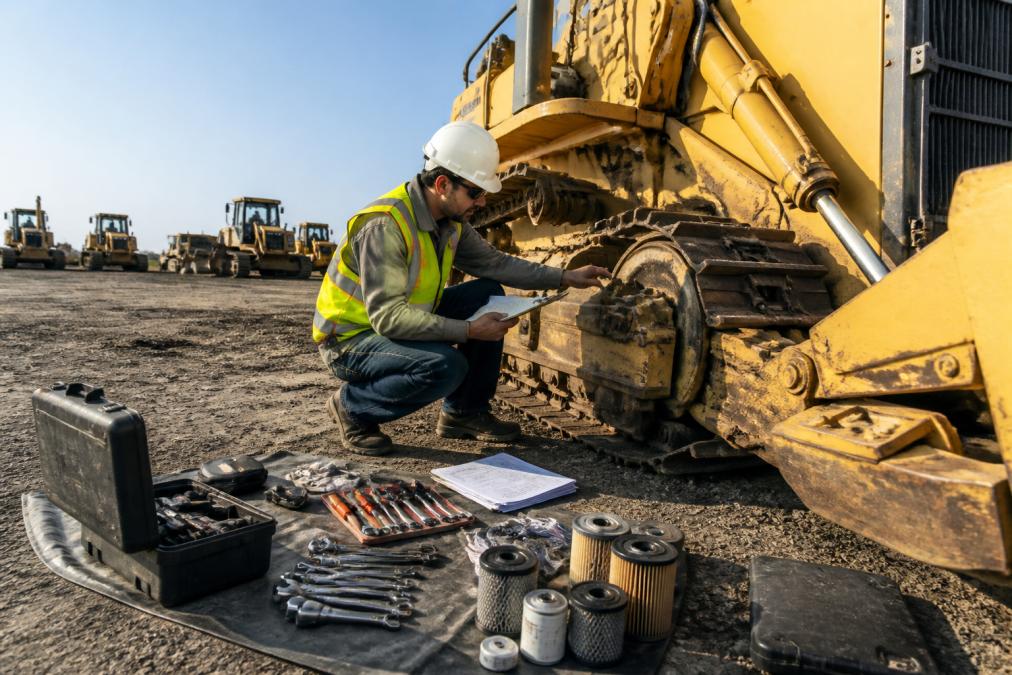
Start with a professional inspection. Document everything: engine hours, maintenance records, recent repairs, undercarriage wear, hydraulic system health, and any operational issues. This documentation becomes your competitive advantage because it allows buyers to bid with confidence. Equipment with verified maintenance history sells faster and at higher prices than unmarked machines.
Cleaning and Maintenance for Higher Resale Value
A clean dozer presents better than a dirty one, this is obvious but often skipped. Pressure wash the exterior, remove accumulated mud and debris, and detail the cabin. Buyers form impressions quickly, and a well-maintained appearance signals that the machine was maintained mechanically as well.
Go deeper than cosmetics. If the dozer has minor maintenance items pending, worn belts, low fluid levels, or minor leaks, address them before listing. These small fixes cost $500-$2,000 but can add $5,000-$15,000 to final sale price because they remove buyer uncertainty. A dozer that needs "some work" sells at a steep discount; a dozer that's been serviced and ready to operate sells at market rate.
Check the undercarriage carefully. Worn tracks, bent idlers, or damaged sprockets are expensive to replace and create immediate price reductions. If undercarriage work is needed, get a quote. If it's under $3,000, do it. If it's over $5,000, disclose it and price accordingly, trying to hide undercarriage issues will be discovered during inspection and will tank your credibility. maintaining heavy machinery.
Fluid levels matter more than most sellers realize. Top off engine oil, hydraulic fluid, coolant, and fuel. A dozer that arrives at inspection with low fluids signals neglect, even if the machine is mechanically sound.
Equipment Condition Reports and Inspection Records
Create a formal equipment condition report before listing. This document should include:
- Total operational hours (verified if possible)
- Date of last major service
- List of recent repairs or replacements
- Known wear items (tracks, belts, seals)
- Engine compression test results (if available)
- Hydraulic system pressure readings
- Fuel system condition
- Electrical system functionality
- Any outstanding maintenance or repairs needed
This report becomes your primary marketing tool. Buyers will request it, and having it prepared before listing accelerates the sales process. A Heavy Equipment Broker often requires this documentation to list equipment on their platforms, so prepare it early.
Photograph the equipment from multiple angles, including close-ups of the engine, hydraulic systems, cabin condition, and any areas of wear. Include photos of maintenance records and service receipts if available. Digital documentation removes friction from the buying process, buyers can evaluate condition without requiring an in-person inspection, which speeds up serious inquiries.
Marketing Your Surplus Dozers: Reach and Listing Strategies
Where your dozer gets listed determines who sees it and how quickly it sells.
Single-platform listings (one marketplace or auction house) limit your buyer pool. You're relying on traffic to that specific platform and hoping qualified buyers happen to be browsing when your listing is active. Multi-platform marketing solves this by distributing your dozer across several channels simultaneously.
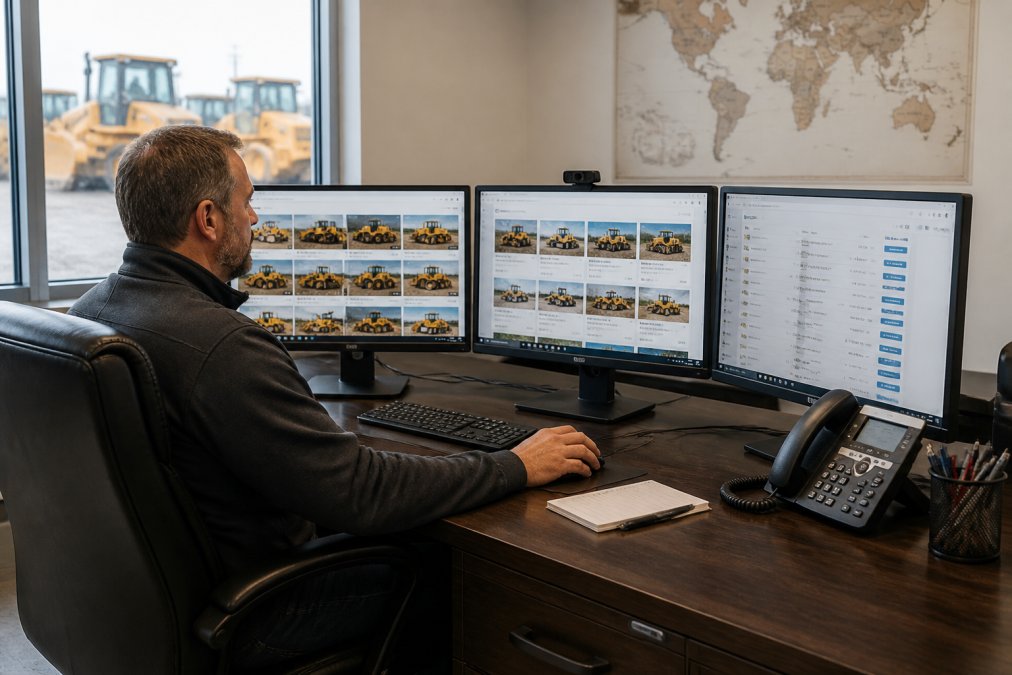
Ironmartonline's nine specialized web-based selling platforms reach millions of potential buyers, contractors, rental companies, fleet managers, and international buyers. This distributed approach captures interest from multiple buyer segments without requiring you to manage separate listings.
Listing strategy should emphasize specificity. Include the exact model, year, operational hours, recent maintenance, and known condition issues. Vague listings ("well-maintained dozer, priced to sell") generate low-quality inquiries. Detailed listings attract serious buyers who understand exactly what they're getting.
Pricing strategy requires transparency. List at or slightly above your target price, not dramatically higher with the expectation of negotiating down. Overpriced listings languish; fairly priced ones generate competing bids that drive final price up. A dozer listed at $85,000 when market value is $80,000 might sit for weeks. The same dozer listed at $80,000 might generate three competing bids and sell for $82,000 within days.
Timing matters. List when buyer demand is strongest, typically mid-week and mid-month when contractors and rental companies are actively shopping. Avoid listing on Fridays or during holiday periods when buyer attention is lowest.
Determining Fair Market Value and Pricing Strategy
Fair market value isn't a single number; it's a range determined by condition, hours, market demand, and comparable sales.
Start with baseline pricing using the depreciation framework: your dozer's original cost, current operational hours, and condition category (low-hour, mid-hour, or high-hour) establish a starting range. Then adjust for specifics: recent maintenance adds 5-10% premium, deferred maintenance reduces price 10-15%, and strong market demand (high buyer interest) supports pricing at the top of the range.
Research comparable sales. What have similar dozers sold for in the past 30 days? A Heavy Equipment Broker and other platforms can provide this data, recent comparable sales are the most reliable pricing reference. Auction results are public, so you can track what similar machines actually sold for, not asking prices.
Avoid anchoring to asking prices from listings that haven't sold. If a competitor's dozer has been listed for 60 days without selling, that's a signal that the asking price is too high, not that it's a fair reference point.
Price for your timeline. If you need to sell within 30 days, price at the lower end of the fair-market range to attract multiple bids. If you have 90 days, you can price at the midpoint and wait for the right buyer. Urgency should drive pricing strategy, not market sentiment.
Commission Structures and Hidden Fees: What to Expect
Commission structures vary significantly across auction houses, brokers, and online platforms.
Auction houses typically charge 8-15% of final sale price, plus buyer's premiums (additional fees charged to the winning bidder). These fees compound, a $50,000 sale might net you $40,000-$42,000 after commissions and premiums. The advantage is speed and certainty; the disadvantage is transparent but substantial cost.
Online marketplaces charge listing fees plus a final sale commission. These are lower percentage-wise than auctions but still meaningful on high-value equipment.
Ironmartonline operates with no contracts and no hidden fees. Pricing is transparent upfront, which removes the surprise factor that plagues many selling experiences. You know exactly what you'll pay before listing, which allows you to calculate net proceeds accurately.
Ask brokers and platforms directly: What is the total cost to sell my dozer? Include listing fees, commission percentages, buyer's premiums, and any administrative charges. Don't accept vague answers. Get a written quote that spells out every fee.
The lowest commission isn't always the best deal. A competitive commission on a platform that reaches 100,000 buyers might net you more than a lower commission on a platform that reaches 10,000 buyers. Evaluate based on total proceeds, not commission rate alone.
Closing the Sale: Title Transfer, Payment, and Logistics
The final phase of selling your dozer involves three critical elements: legal title transfer, secure payment, and equipment delivery.
Title Transfer: Heavy equipment requires a clear title, typically documented through a bill of sale and equipment registration. Requirements vary by state, but generally you'll need:
- Original title or proof of ownership
- Bill of sale (signed by both parties)
- Odometer/hour-meter reading certification
- Lien release (if the equipment is financed)
Work with your broker or the buyer's representative to ensure all paperwork is completed correctly. Incomplete title transfer can delay payment or create legal issues later. A Heavy Equipment Broker handles much of this documentation coordination, which reduces your administrative burden.
Payment: Establish payment terms before the sale closes. Wire transfer is standard for high-value equipment because it's faster and more secure than checks. Require payment before releasing the equipment to the buyer. Don't release equipment on a promise of payment, that's how you end up with unpaid sales.
For international sales, establish payment through an escrow service or verified banking institution. The added cost is worth the security.
Logistics: Arrange transportation only after payment clears. Most buyers arrange their own hauling, but confirm this before closing. If you're responsible for delivery, get quotes from heavy equipment transporters and factor that cost into your net proceeds. Transportation costs vary depending on distance.
Document the equipment's condition at handoff with photos. If the buyer disputes condition after delivery, having photographic evidence protects you.
Selling surplus dozers quickly requires strategy, not just listing and hoping. The 2026 market rewards sellers who prepare equipment thoroughly, price fairly, and use multi-platform marketing to reach qualified buyers. Ironmartonline's Heavy Equipment Broker model, with access to nine specialized selling platforms, transparent fee structure, and no long-term contracts, gives you the operational edge to move inventory fast while maintaining pricing power. The equipment market is growing, but depreciation is accelerating for late-model assets. If you have surplus dozers, the advantage goes to sellers who act decisively and market strategically.
Frequently Asked Questions
How do I determine the fair market value of a used dozer before selling?
Used dozer pricing depends on operational hours, condition, and market demand. Equipment with fewer than 5,000 hours typically sells at 65-75% of original manufacturer pricing, mid-hour machines (5,000-15,000 hours) settle at 45-60%, while high-hour equipment (15,000+ hours) drops to 25-40%. An equipment broker can provide a market appraisal based on your dozer's specific condition, serial number verification, and recent comparable sales. Check maintenance records and operational hour logs to establish accurate baseline value.
Should I sell my surplus dozer through an auction, broker, or private sale?
Auction sales are fastest, compressing timelines to 7-14 days, making them ideal if you need cash quickly. No reserve auctions achieve 90%+ sell-through rates. Broker sales typically take 30-45 days but often yield higher net returns because brokers access multiple platforms and buyer networks. Private sales offer maximum control over pricing but require 60-120 days and place marketing, negotiation, and fraud prevention on you. For speed, auctions win. For value and convenience, a broker is most efficient.
What preparation steps actually increase a dozer's resale value before listing?
Professional cleaning of the exterior, undercarriage inspection, and hydraulic system evaluation directly impact buyer confidence and final price. Document all maintenance records, engine performance metrics, and attachment compatibility. Provide a detailed equipment condition report showing operational hours, wear patterns, and any repairs completed. Buyers trust machines with transparent maintenance histories. Step-by-step cleaning and maintenance, including greasing, fluid top-offs, and minor repairs, can improve resale value by 5-15% compared to listing as-is. High-quality photos showing condition from multiple angles also accelerate sales cycles.
How long does it typically take to sell a surplus dozer using an equipment broker?
Broker sales typically close within 30-45 days from listing to payment, depending on market demand and equipment condition. Auction sales are faster at 7-14 days, while private sales take 60-120 days. Online bidding now drives 40-50% of sales at top firms, significantly reducing sales cycles compared to traditional regional methods. Brokers with access to multiple platforms and millions of potential buyers worldwide compress timelines by reaching qualified buyers faster. Expect faster payouts from digital platforms: 12 days versus 21 days with traditional methods.
This article was written using GrandRanker