
Table of Contents
- Why Value Used Industrial Machinery Accurately
- The Cost Approach to Valuation
- The Market Comparison Method
- The Income Capitalization Approach
- Understanding Machinery Depreciation Schedule
- Industrial Equipment Appraisal Methods in Practice
- Equipment Liquidation Value vs Fair Market Value
- Verification of Serial Numbers and OEM Specifications
- Tax and Accounting Implications of Equipment Valuation
- Conclusion
Last Updated: August 16, 2026
Why Value Used Industrial Machinery Accurately
Accurate valuation of used industrial machinery is critical when buying or selling equipment. Whether you're a construction contractor liquidating surplus excavators, a fleet manager acquiring trucks, or an agricultural business owner sourcing cost-effective used tractors, proper valuation determines profitability.
Why use a Heavy Equipment Broker like Ironmartonline when valuing your machinery? Professional brokers connect your assets to millions of potential buyers across nine specialized web-based platforms, ensuring maximum market exposure. Brokers access current market data, understand depreciation patterns, and position machinery competitively without contracts or hidden fees. A single percentage-point error in depreciation or missed condition factors can cost thousands on mid-sized sales. Yet many sellers rely on outdated price guides or intuition rather than systematic methodology.
Professional valuation requires understanding three primary approaches: the cost approach, market comparison method, and income capitalization approach. Most accurate appraisals blend elements of all three. This guide covers these methodologies, practical assessment techniques, and critical distinctions between fair market value and liquidation value that separate informed sellers from those leaving profit behind.
The Cost Approach to Valuation
The cost approach calculates equipment value by starting with original purchase price and adjusting downward for depreciation, obsolescence, and wear. This method works best for relatively new or specialized machinery where comparable sales data is limited.
The formula is: Depreciation = Original Cost × (Age / Useful Life). For example, an excavator costing $85,000 new with a 10-year useful life that's now 4 years old depreciates $34,000, leaving $51,000 residual value before condition adjustments.
This approach has limitations. It assumes original purchase price was fair market value and doesn't account for technological obsolescence. A 10-year-old excavator may be mechanically sound but technologically outdated compared to newer models offering efficiency gains. The cost approach shines for custom or specialized equipment with few comparable sales, providing a logical starting point appraisers can adjust based on condition and market demand.
The Market Comparison Method
The market comparison method determines equipment value by analyzing recent sales of similar machinery. This approach most directly reflects what buyers actually pay, making it preferred when sufficient comparable sales data exists.
Identify at least three to five recent sales of equipment matching yours in age, condition, hours, and features. A 2022 excavator with 3,500 hours in excellent condition provides better comparison data than a 2018 model with 8,000 hours in fair condition.
Adjust for differences between your equipment and each comparable. If your excavator has a newer attachment package worth $5,000 that the comparable lacked, add $5,000 to that comparable's price. If your equipment has higher hours, subtract value proportionally. Average adjusted comparable prices to arrive at fair market value.
The challenge is data availability. Industrial machinery sales often happen privately without public listing. Equipment traders and brokers access comprehensive sales data individual sellers miss. Platforms like Ironmartonline track thousands of sales across equipment categories, providing market intelligence unavailable through individual research. Market comparison works exceptionally well for common equipment: excavators, wheel loaders, dump trucks, and tractors all have sufficient secondary market activity to generate reliable comparables.
The Income Capitalization Approach
The income capitalization approach values equipment based on income it generates. This method applies when equipment is used for rental, leasing, or revenue-generating operations.
The formula is: Equipment Value = Net Annual Income / Capitalization Rate. If equipment generates $20,000 in annual net income and the capitalization rate is 15%, equipment value is approximately $133,000.
The capitalization rate reflects expected investor returns, accounting for risk, maintenance costs, obsolescence, and market demand. This approach requires reliable historical income data. Agricultural equipment, rental fleet items, and commercial vehicles are commonly valued this way because income-generating capacity is quantifiable. It's less useful for equipment held as backup assets generating minimal income.
Understanding Machinery Depreciation Schedule
A machinery depreciation schedule shows how equipment loses value over its useful life. Depreciation is the largest factor affecting resale value for most industrial equipment.
Depreciation Rates by Equipment Category
Different equipment categories depreciate at markedly different rates:
- Heavy construction equipment (excavators, wheel loaders, dozers): 15-20% year one, then 10-12% annually for years 2-5, then 5-8% thereafter. A $100,000 excavator typically reaches 50% of original value by year 5.
- Agricultural equipment (tractors, combines, balers): 20-25% year one due to seasonal use and rapid model turnover.
- Trucks and trailers (dump trucks, flatbeds, tankers): 15-18% year one, 10-15% years 2-3, then 8-12% annually.
- Material handling (forklifts, telehandlers, skid steers): 12-15% year one, then 8-10% annually.
- Specialized equipment (drilling rigs, pile drivers, concrete pumps): 10-15% year one, then 5-8% annually.
Adjusting Depreciation for Condition and Hours
Hours of operation are the primary adjustment factor. Most equipment has a rated useful life in operating hours. Equipment at 30% of rated hours depreciates slower than the schedule suggests; equipment at 80% of rated hours depreciates faster. Calculate: (Actual Hours / Rated Hours) × Depreciation Rate.
Maintenance condition can shift depreciation by 10-20 percentage points. Equipment with documented full-service maintenance may depreciate 5-10% slower; equipment with deferred maintenance depreciates 10-15% faster.
Cosmetic condition affects buyer perception. Fresh paint, clean hydraulics, and intact decals may hold 5-10% more value than mechanically identical equipment in poor condition.
Technological Obsolescence and Economic Life
Depreciation accelerates when equipment reaches technological obsolescence. A 15-year-old excavator might depreciate 5-8% annually through normal wear, but if new models offer 20% fuel efficiency improvements, older equipment can lose 15-20% of value in a single year as buyers shift preferences.
Economic life is the period equipment remains economically viable. A 2015 wheel loader may have 15 years of mechanical life but only 5-7 years of economic life if 2024 models offer 25% better fuel economy and integrated telematics.
Building Your Depreciation Worksheet
- Start with baseline depreciation for your equipment category and age.
- Adjust for hours: Reduce depreciation by 20-30% if at 40% of rated hours; increase by 15-25% if at 90%.
- Adjust for condition: Add 5-10% for excellent maintenance records; subtract 10-15% for deferred maintenance.
- Assess technological obsolescence: Increase depreciation by 10-20% if major model refreshes occurred in past 2-3 years.
- Cross-check against market comparables: Your adjusted depreciation should align with recent sales. If your calculation yields 60% residual value but comparables sell at 45%, market conditions are driving faster depreciation.
Industrial Equipment Appraisal Methods in Practice
When a professional appraiser evaluates used industrial machinery, they combine all three valuation approaches and apply systematic assessment protocols.
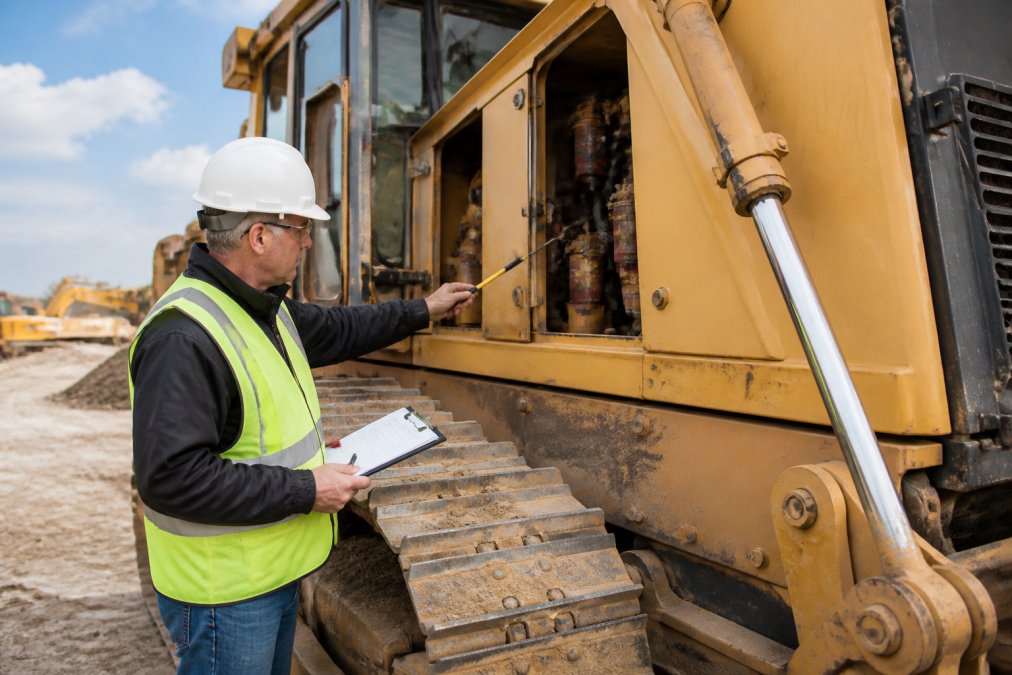
The Physical Inspection Protocol
Documentation and Verification
- Locate and photograph the serial number on frame or engine block
- Verify serial number against seller documentation and OEM records
- Document OEM specifications: engine displacement, hydraulic capacity, bucket size, lift capacity
- Photograph equipment from multiple angles, including damage or modifications
Mechanical and Hydraulic Assessment
- Start engine and listen for abnormal sounds, smoke, or vibration
- Check fluid levels and condition: oil, hydraulic fluid, coolant, transmission fluid
- Operate all hydraulic functions through full range; note sluggish response, leaks, or pressure loss
- Inspect hoses and fittings for cracks, leaks, or corrosion
- Test brakes, steering, and transmission engagement
Structural and Wear Assessment
- Inspect frame for cracks, bends, or welding repairs
- Check bucket teeth, cutting edges, or blade wear
- Inspect tires or tracks for remaining tread depth
- Look for rust, corrosion, or paint damage
- Check for signs of major repairs: mismatched paint, welded seams, replacement panels
Hours of Operation Verification
- Record hour meter reading
- Cross-reference reported hours against visible wear patterns
- Look for signs of odometer fraud
- For equipment without hour meters, estimate hours based on wear and service records
Comparable Sales Research
The appraiser researches recent comparable sales using:
- Public auction results
- Dealer inventory and asking prices
- Private sale data through broker networks
- Rental company fleet pricing
Identify at least three to five recent sales matching the subject equipment in model, age (within 2-3 years), hours (within 20%), condition, and geographic market. Adjust each comparable for hours, condition, features, and regional variations. Average adjusted prices to arrive at fair market value.
Depreciation Calculation and Synthesis
The appraiser calculates depreciation using the baseline schedule adjusted for condition, hours, and obsolescence. This cross-checks against the market comparison method. If cost approach yields $45,000 and market comparison yields $48,000, synthesize into approximately $46,500. If methods diverge significantly, investigate: Has the market softened? Is equipment technologically obsolete? Are comparables truly comparable?
Documentation and Appraisal Report
The appraisal report documents equipment identification, condition assessment, comparable sales with adjustments, depreciation calculation, and final valuation. This documentation is essential when financing purchases, negotiating sales, or resolving disputes about fair market value.
Self-Assessment Checklist for Sellers
- Serial number verified against OEM records
- Hour meter reading recorded and cross-checked against wear
- All fluids checked and topped off
- All hydraulic functions tested and working smoothly
- No active leaks observed
- Frame and structure inspected for cracks or damage
- Wear items assessed for remaining life
- At least three comparable sales identified from past 90 days
- Comparables adjusted for hours, condition, and features
- Depreciation schedule applied with adjustments
- Cost approach, market comparison, and income approach calculated
- Final valuation cross-checked across all three methods
Equipment Liquidation Value vs Fair Market Value
Fair market value is the price at which equipment sells under normal market conditions between willing buyer and seller, neither under pressure. This valuation applies for insurance, financing, and accounting purposes.
Liquidation value is what equipment brings when sold quickly, typically at auction or distressed sales. Liquidation value is generally 40-70% of fair market value, depending on market conditions and equipment category. When rental companies clear aging fleet equipment or contractors face cash flow pressure, they accept liquidation pricing.
During strong economic periods when equipment demand is high, liquidation value approaches fair market value. During recessions, the gap widens. Specialized equipment with limited buyer pools shows wider gaps than common equipment with many potential buyers.
Strategic sellers use this distinction to advantage. With time to market equipment properly through multiple channels, as with a broker accessing nine specialized platforms, you approach fair market value. If you need quick conversion, plan for liquidation pricing. Professional brokers help navigate this decision by showing what equipment actually sells for across different sales channels and timeframes.
Verification of Serial Numbers and OEM Specifications
Verifying that equipment matches its documentation is non-negotiable in valuation and sale. Serial number fraud and specification misrepresentation are real problems in used equipment markets.
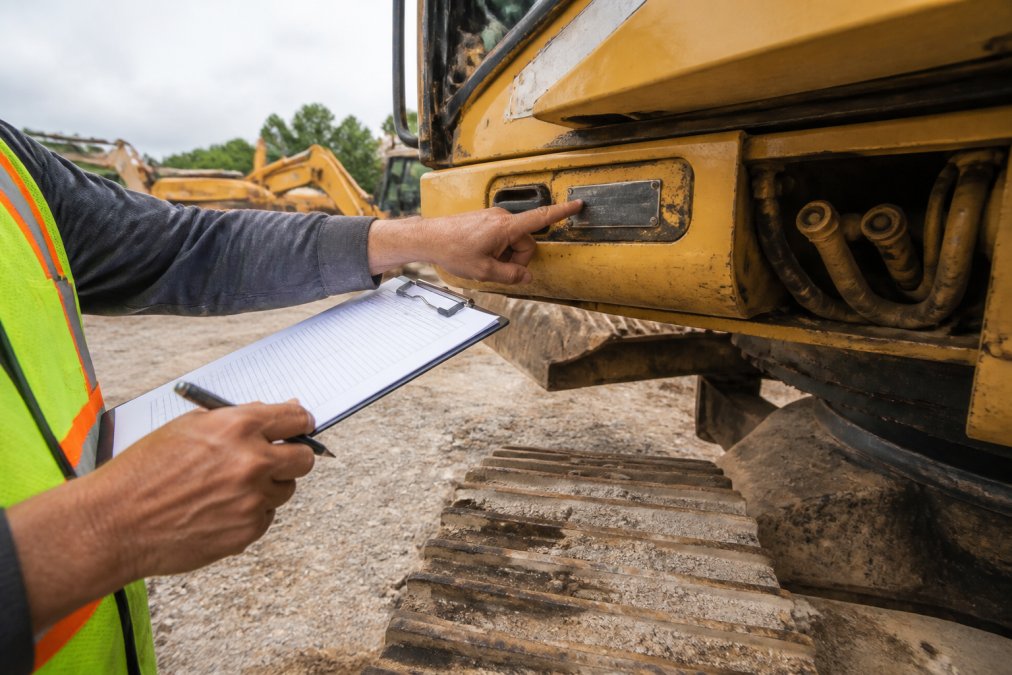
Every piece of industrial equipment has a unique serial number stamped on the frame or engine block. This links to manufacturer records documenting original specifications, production date, and sometimes service history. Before accepting valuation, verify the serial number matches seller documentation.
The verification process involves:
- Locating the serial number on physical equipment
- Comparing the stamped number to seller documentation
- Contacting the original equipment manufacturer to confirm legitimacy and match stated model and specifications
- Checking for signs of tampering, filing, or re-stamping
Original equipment manufacturer specifications include engine displacement, hydraulic capacity, bucket size, and lift capacity, details affecting equipment value. A loader listed as having a 3-cubic-yard bucket but equipped with 2.5 cubic yards is worth less than advertised. Many equipment databases allow serial number entry to retrieve original specifications and production history. This verification takes minutes and prevents costly mistakes. Professional brokers verify serial numbers and OEM specifications as standard practice before listing equipment.
Tax and Accounting Implications of Equipment Valuation
Equipment valuation affects tax liability and financial reporting. When you sell equipment at a gain, you may owe capital gains tax. When claiming depreciation deductions, depreciable basis affects tax deductions over time.
For tax purposes, the IRS recognizes "basis" in equipment, what you paid for it. As you use equipment in business, depreciation deductions reduce taxable income. When you sell, the difference between sale price and adjusted basis determines taxable gain or loss.
Accurate valuation at sale is essential for calculating gain or loss correctly. Overstating sale price inflates taxable gain; understating it leaves deductions on the table and triggers potential IRS scrutiny if reported price doesn't match market value.
For businesses maintaining equipment inventories, financial accounting standards require equipment be valued at the lower of cost or fair market value. Significant fair market value drops may require balance sheet write-downs, affecting financial statements and financing ability.
When valuing equipment for these purposes, documentation matters. Keep records of original purchase price, acquisition dates, maintenance expenses, and improvements. When selling, obtain professional appraisal or document comparable sales used to determine fair market value. This documentation supports tax filing and protects you if the IRS questions valuation.
Conclusion
Valuing used industrial machinery accurately requires understanding three core methodologies, cost approach, market comparison method, and income capitalization approach, and knowing when to apply each. The most reliable valuations synthesize all three, adjusted for condition, depreciation, market demand, and equipment-specific characteristics.
The distinction between fair market value and liquidation value, importance of verifying serial numbers and OEM specifications, and tax implications of equipment sales all shape your selling strategy. When ready to sell surplus equipment or acquire machinery, working with a professional Heavy Equipment Broker gives you access to market data, verified buyer networks, and expertise to position equipment competitively.
Accurate equipment valuation requires market expertise and access to current sales data that individual sellers rarely possess. Ironmartonline connects buyers and sellers of used machinery across nine specialized web-based selling platforms, giving your equipment maximum exposure without contracts or hidden fees. Whether you're a contractor liquidating surplus excavators, a fleet manager acquiring trucks, or an agricultural business owner sourcing equipment, our platform reaches millions of potential buyers globally and locally. Get started with Ironmartonline and access the market intelligence and buyer network that ensures your equipment sells at fair market value, not liquidation pricing.
Frequently Asked Questions
How do I calculate the fair market value of equipment?
Fair market value is determined by comparing your equipment against recent sales of similar machinery in the secondary market, adjusted for condition, age, and operational status. The market comparison method works best: find three to five comparable machines sold within the last 90 days, note their selling prices, then apply adjustments for differences in hours, maintenance history, and features. This reflects what a willing buyer would pay a willing seller in normal market conditions, not a fire sale.
What's the difference between liquidation value and fair market value?
Liquidation value is what you'd receive if you needed to sell quickly, typically 40-60% of fair market value. Fair market value assumes adequate time to find the right buyer and proper marketing. Liquidation value applies when you're forced to sell due to cash flow pressure or lease-end deadlines. Fair market value reflects strategic sales where you control the timeline and can reach millions of potential buyers through professional channels like a heavy equipment broker.
How does depreciation affect the value of industrial assets?
Depreciation reduces equipment value through age, usage hours, and technological obsolescence. Most industrial machinery depreciates 15-20% annually in the first three years, then stabilizes. A machinery depreciation schedule helps predict residual value based on economic life and useful life expectations. Original equipment manufacturer (OEM) specifications, maintenance records, and operational status significantly influence actual depreciation rates. Equipment with documented maintenance history depreciates slower than neglected machines.
Why use an equipment broker to value and sell industrial machinery?
A professional equipment broker provides access to millions of potential buyers across multiple platforms, ensuring competitive fair market pricing. Brokers handle appraisal verification, serial number confirmation, and OEM specification documentation, reducing your liability and speeding sales. They understand market volatility, seasonal demand, and regional pricing differences that individual sellers miss. Brokers also manage the logistics of reaching global and local markets without requiring you to maintain multiple listings or handle inquiries yourself.
This article was written using GrandRanker