
Table of Contents
- Why Verify Heavy Equipment Buyers, And Why Use Ironmartonline Equipment Broker
- Step 1: Conduct a Background Check on the Buyer
- Step 2: Identify and Prevent Heavy Equipment Buyer Scams
- Step 3: Verify Buyer Financial Capacity and Intent
- Step 4: Use Secure Payment Methods and Heavy Equipment Escrow Services
- Step 5: Document Everything and Verify Buyer Identity
- Common Mistakes to Avoid When Vetting Buyers
- Conclusion
How to Verify Heavy Equipment Buyers: A 2026 Guide
Last Updated: July 28, 2026
Learning how to verify heavy equipment buyers protects you from fraud, payment failures, and equipment disappearance. A buyer who looks legitimate on the surface might be running a scam operation or lack the financial capacity to close the deal. According to industry practitioners, the verification process requires checking background information, financial proof, equipment application intent, and legal documentation, not just a handshake and a promise.
At Ironmartonline, we've tracked hundreds of equipment transactions and identified the critical verification steps that separate safe sales from risky ones. Our experience shows that sellers who skip verification steps lose an average of 30-40% of deals to payment disputes, equipment recovery issues, or outright fraud. Below, we'll show you exactly how to verify heavy equipment buyers before transferring title, accepting payment, or handing over keys.
But first, here's the question many equipment sellers ask: Why use a Heavy Equipment Broker instead of managing buyer verification on your own? The answer lies in scale and expertise. A heavy equipment broker connects your equipment to millions of potential buyers across specialized web-based selling platforms, which means you reach qualified buyers faster. More importantly, the brokerage model includes built-in buyer vetting protocols that filter out high-risk transactions before they waste your time. You avoid the overhead of conducting background checks, lien searches, and financial verification yourself, the broker's team handles the preliminary screening. For sellers moving multiple pieces of heavy equipment or construction machinery, this approach cuts deal-closing time significantly while reducing your exposure to fraud.
The five strategies we cover below have helped equipment owners avoid scams, secure faster payments, and complete transactions with confidence. Let's start with the foundation: understanding who you're actually selling to.
Step 1: Conduct a Background Check on the Buyer
Verifying heavy equipment buyers begins with basic background research. You need to know whether the buyer is a legitimate business entity, an individual with a track record, or a shell company designed to disappear after the sale. A thorough background check answers three core questions: Is this buyer registered as a legal business? Do they have a history of successful equipment transactions? Are there any liens, lawsuits, or red flags in their financial history?
Verify Business Registration and Legal Status
Request the buyer's business license, EIN (Employer Identification Number), and proof of business registration with their state's Secretary of State office. For corporate buyers, verify their formation documents and confirm the business is in good standing. You can check this through your state's business database or use the Secretary of State business lookup database. Individual buyers should provide a driver's license and Social Security number for a basic background check.
Ask for the buyer's full legal business name and cross-reference it against the National Association of Secretaries of State. Scammers often use slightly altered business names or operate under shell corporations with no real operational history. If the buyer hesitates to provide basic registration documents, that's a significant red flag. Legitimate buyers expect this request and provide documentation without delay.
For commercial equipment sales, request Articles of Incorporation or an LLC Operating Agreement. These documents prove the business exists and show who has signing authority. A buyer claiming to represent a company but unable to produce these documents is likely fraudulent.
Check References and Transaction History
Ask the buyer for three references from previous equipment purchases. Contact these references directly, do not rely on contact information the buyer provides. Call their main business line and ask to speak with someone who can verify the equipment transaction. Legitimate buyers will have satisfied references willing to discuss their experience.
During reference calls, ask specific questions: How long did the transaction take? Did payment clear without issues? Was the equipment condition as described? Did the buyer follow through on the purchase? References who hesitate or provide vague answers suggest the buyer may have had problems in past deals.
Request documentation of previous equipment purchases. Buyers with a solid track record will have invoices, bills of sale, or photos of equipment they've acquired. New buyers with no history pose higher risk, not because they're necessarily fraudulent, but because you have no data to assess their reliability.
Step 2: Identify and Prevent Heavy Equipment Buyer Scams
Heavy equipment buyer scams fall into predictable patterns. Knowing these patterns helps you spot fraudulent buyers before they damage your business. The most common scams involve payment fraud, equipment theft after delivery, or buyers who disappear mid-transaction.
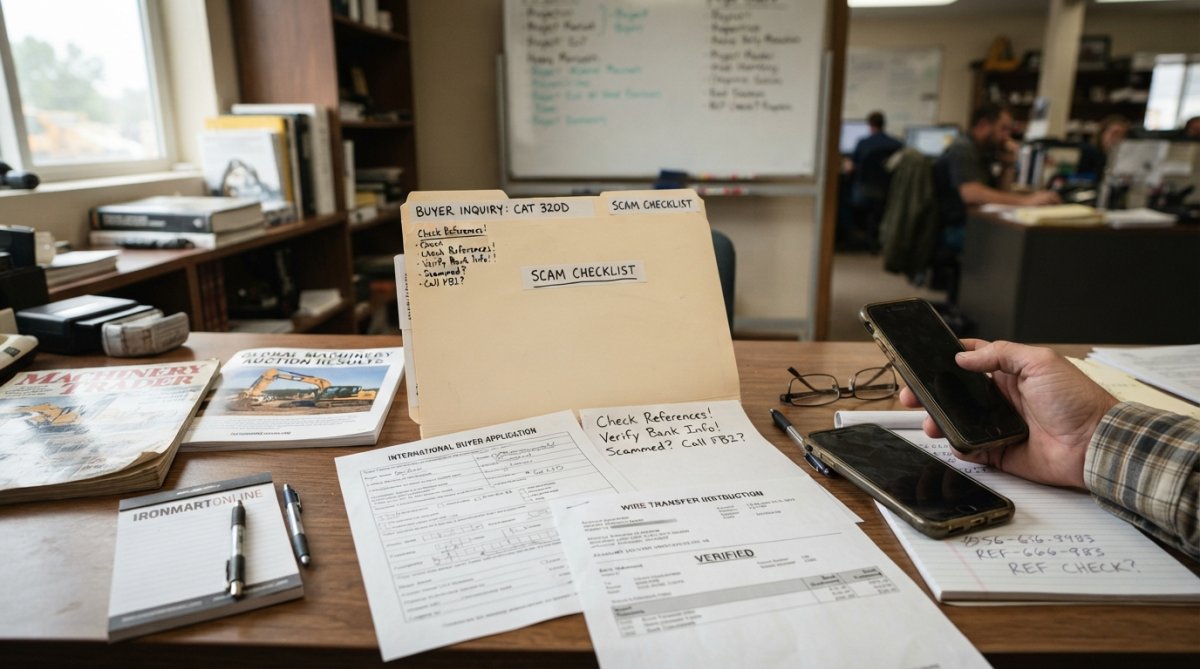
Red Flags That Signal Fraudulent Buyers
Watch for these warning signs during buyer interactions:
- Pressure to move quickly. Legitimate buyers want time to inspect equipment and arrange financing. Buyers pushing for same-day payment or immediate delivery are often running a scam.
- Unwillingness to visit the site. A buyer who refuses an in-person inspection or remote video walkthrough may be planning to claim the equipment doesn't match the listing.
- Requests to wire payment before delivery. Legitimate buyers arrange escrow or payment-upon-delivery. Wire transfers that happen before the buyer takes possession leave you vulnerable.
- Vague answers about equipment use. Ask how they plan to use the equipment. Fraudulent buyers often give generic responses or contradict themselves about the intended application.
- No verifiable business address. Scammers use PO boxes, temporary addresses, or operate entirely online. Request a physical business location and verify it exists.
- Inconsistent communication. If the buyer switches contact methods, changes their story, or becomes evasive when asked clarifying questions, reconsider the transaction.
- Payment from third parties. Legitimate buyers pay from their own accounts. If payment comes from an unrelated company or individual, the transaction carries higher risk.
Verification Tools and Digital Resources
Use digital verification tools to cross-check buyer information. The FTC's business lookup tool helps identify fraudulent business claims. Run the buyer's business name and phone number through a reverse phone lookup service to confirm they match legitimate business records.
Check the buyer's business credit report through Dun & Bradstreet or similar services. A business with no credit history, recent bankruptcies, or multiple liens is riskier than one with established credit. Many equipment brokers use these services as part of standard due diligence.
Google the buyer's business name along with keywords like "complaint," "fraud," or "lawsuit." If multiple negative results appear, investigate further before proceeding. Check the Better Business Bureau for complaints or disputes.
For larger transactions, consider hiring a background check service that specializes in commercial due diligence. These services cost money but provide comprehensive reports that include UCC lien searches, judgment records, and bankruptcy filings.
Step 3: Verify Buyer Financial Capacity and Intent
Knowing a buyer exists doesn't mean they can actually pay for your equipment. Financial verification confirms the buyer has the funds to close the deal and the legitimate intent to use the equipment for the stated purpose. This step separates serious buyers from time-wasters and protects you from non-payment disputes.
Request Proof of Funds
Ask the buyer to provide bank statements, proof of credit approval, or a letter from their lender confirming financing is available. For cash purchases, request a bank statement showing the required funds. Legitimate buyers will provide this documentation without hesitation, it's standard practice in heavy equipment sales.
Review the bank statements carefully. Look for account age (accounts opened days before the purchase are suspicious), account balance relative to the purchase price, and transaction history that suggests legitimate business operations. A buyer with a six-month-old account and minimal transaction history is riskier than one with years of documented activity.
If the buyer is financing the purchase, request a pre-approval letter from their lender. This letter should specify the equipment type, purchase price, and approval conditions. Verify the lender's legitimacy by calling the phone number listed on the letter (not a number the buyer provides).
For international buyers or large transactions, consider requiring proof of funds held in escrow or a deposit into an escrow account before you arrange delivery. Escrow services hold payment until both parties confirm the transaction is complete.
Assess Equipment Application and Use Case
Ask detailed questions about how the buyer plans to use the equipment. Their answers should be specific and consistent with the equipment's capabilities. A buyer claiming to use a wheel loader for small landscaping work when they're purchasing a 20-ton machine raises questions about their actual intent.
Request documentation of their work contracts or job sites where the equipment will operate. Legitimate commercial buyers can show you active projects requiring the equipment. If they can't describe specific job applications, they may be purchasing equipment for resale or with intent to strip it for parts.
Discuss maintenance and operating requirements. Buyers unfamiliar with the equipment's specifications or maintenance intervals may not be experienced operators. This doesn't necessarily disqualify them, but it suggests they're less experienced and may face issues during operation.
Step 4: Use Secure Payment Methods and Heavy Equipment Escrow Services
Payment method determines your financial security in the transaction. Wire transfers, personal checks, and cash payments carry different risk profiles. Escrow services add a layer of protection by holding payment until both parties confirm the equipment condition and delivery.
Escrow Services for Risk Mitigation
Heavy equipment escrow services act as neutral third parties holding payment until you and the buyer confirm transaction completion. The buyer deposits funds into an escrow account, you deliver the equipment, the buyer inspects it, and the escrow company releases payment to you only after both parties confirm satisfaction.
Escrow services provide significant protection against payment fraud and equipment disputes. For transactions over $50,000, escrow protection is justified by the risk reduction.
Select an escrow company with specific experience in heavy equipment transactions. Equipment-focused escrow providers understand the inspection timeline, title transfer requirements, and logistics involved in moving machinery. General escrow services may not be familiar with heavy equipment-specific issues.
Require the buyer to fund the escrow account before you arrange equipment delivery. Do not move equipment until escrow funding is confirmed and documented. Once the buyer takes possession and confirms the equipment condition, the escrow company releases payment to you.
Payment Verification Before Transfer
Never transfer title until payment has cleared. For wire transfers, confirm the funds have arrived in your bank account and are no longer subject to reversal. Bank staff can tell you the clearing timeline for wire transfers from the buyer's bank.
For checks, wait for the check to clear through your bank, typically 5-7 business days, before releasing equipment. Personal checks from buyers you don't know carry significant risk of fraud.
For credit card or ACH payments, confirm the transaction has posted and is not pending reversal. Some payment methods allow chargebacks weeks after the initial transaction, so document the payment method and confirmation details for your records.
Require the buyer to sign a bill of sale acknowledging receipt and condition of the equipment. This document protects you if the buyer later claims the equipment was damaged or not as described.
Step 5: Document Everything and Verify Buyer Identity
Documentation creates a legal record of the transaction and protects you if disputes arise. Every communication, agreement, and verification step should be documented in writing. Digital records are admissible in court and provide evidence of your due diligence.
Legal and Title Documentation
Prepare a comprehensive bill of sale that includes:
- Full legal names and addresses of both parties
- Detailed equipment description (make, model, year, VIN/PIN, serial number)
- Equipment condition at time of sale
- Purchase price and payment terms
- Date of sale and delivery
- Signatures from authorized representatives of both parties
Have the buyer sign the bill of sale before equipment delivery. This document proves the buyer accepted the equipment in its current condition and prevents later claims of damage or misrepresentation.
Verify the buyer's authority to sign legal documents. For corporate buyers, confirm the signatory has power of attorney or is listed as an authorized officer in the business registration documents. For LLC purchases, confirm the signer is listed as a member or manager with signing authority.
Transfer the title and registration in your state's system. Document the buyer's information exactly as it appears on their legal identification. Errors in title transfer can delay the buyer's ability to operate the equipment legally and create liability issues for you.
Remote Inspection and Digital Verification Protocols
For buyers unable to visit in person, conduct a video inspection using a video call platform. Have the buyer watch you perform a walk-around inspection of the equipment, demonstrating operation of key systems, checking hour meters, and showing the equipment's overall condition.
During the video call, ask the buyer to confirm they can see the equipment clearly and understand its current condition. Have them acknowledge any visible wear, damage, or mechanical issues. This video call creates a record that the buyer viewed the equipment and accepted its condition.
Request the buyer provide photo identification during the video call. Compare the ID photo to the person on the video to confirm you're speaking with the authorized buyer representative. Document the call by recording it (with the buyer's consent) or by taking screenshots of the video with timestamps.
For international transactions, use video conferencing with recorded sessions to document buyer identity verification. This creates a clear audit trail if disputes arise later.
Common Mistakes to Avoid When Vetting Buyers
Sellers often skip verification steps to close deals faster, creating unnecessary risk. Here are the most costly mistakes:
Skipping the background check. Many sellers accept a buyer's word about their business legitimacy without verifying registration or references. This leaves you vulnerable to fraud and payment disputes.
Accepting wire transfer payment before delivery. Wire transfers cannot be reversed once sent. If the buyer disappears or claims the equipment was damaged, you have no recourse and no way to recover payment.
Failing to document communications. Verbal agreements create disputes. Email every agreement, verification step, and inspection confirmation so you have written proof of what was discussed and agreed.
Releasing equipment before payment clears. Allowing the buyer to take possession before payment has fully cleared gives them use to negotiate down the price or claim equipment damage.
Ignoring inconsistencies in buyer information. If the buyer's story changes or their explanations don't add up, pause the transaction and investigate further. Scammers often contradict themselves under questioning.
Accepting payment from third parties. If payment comes from someone other than the listed buyer, verify the relationship and confirm the third party is authorized to pay on behalf of the buyer.
Skipping the video inspection for remote buyers. Buyers who refuse to participate in a video walkthrough may be planning to claim the equipment doesn't match the listing. Document their refusal in writing.
Verifying heavy equipment buyers requires time and attention to detail, but it prevents costly fraud, payment disputes, and equipment recovery issues. The five-step process, background checks, scam prevention, financial verification, secure payment, and documentation, creates a complete due diligence framework that protects your interests.
Ironmartonline specializes in connecting equipment sellers with verified buyers across multiple platforms, which means you reach qualified purchasers without managing the verification burden alone. Our brokerage model includes buyer screening protocols that filter transactions before they reach you, reducing your exposure to fraud and non-payment. By listing with Ironmartonline, you access a marketplace of serious equipment buyers while our team handles preliminary verification steps. Get started with Ironmartonline and simplify your equipment sales process with built-in buyer protection.
Frequently Asked Questions
What are the most common red flags when dealing with a heavy equipment buyer?
Watch for buyers who pressure you to move quickly without proper verification, request unusual payment methods like wire transfers to offshore accounts, refuse to provide proof of funds or business credentials, or seem vague about their intended use for the equipment. Legitimate buyers expect and respect thorough verification processes. Scammers typically avoid documentation and transparency. Trust your instincts, if something feels rushed or unclear, slow down and dig deeper before proceeding.
How do I perform a heavy equipment buyer background check?
Start by verifying the buyer's business registration through your state's Secretary of State office. Check their company name, legal structure, and standing. Request references from previous equipment purchases and contact those references directly. Search for the buyer's name and business online to review reputation and any complaints. Ask for proof of funds and banking information. Verify their physical business address and phone number independently. Cross-reference information across multiple sources to confirm legitimacy and assess their transaction history with similar equipment.
Are heavy equipment escrow services safe, and should I use them?
Yes, reputable escrow services provide significant protection by holding funds in a neutral third-party account until both parties fulfill their obligations. The escrow agent verifies payment before releasing funds and confirms equipment delivery before releasing payment to the seller. This reduces fraud risk substantially. Choose escrow providers with established track records in heavy equipment transactions. Verify their credentials and licensing. While escrow services may involve additional costs, they're worth the investment for high-value equipment sales, especially when dealing with unfamiliar buyers or international transactions.
What documentation should I request from a heavy equipment buyer before finalizing a sale?
Request a copy of the buyer's government-issued ID, business license or articles of incorporation, proof of funds from a bank statement, proof of insurance if applicable, and references from previous equipment purchases. For significant sales, require a signed purchase agreement outlining terms, payment method, delivery date, and equipment condition. Conduct a title search to ensure no liens exist. Document all communications in writing. Verify the buyer's identity independently using the documentation provided. Keep detailed records of all transactions for your protection and to establish a clear audit trail.
This article was written using GrandRanker