
Table of Contents
- Why Your Heavy Equipment Listing Description Decides the Sale
- What You'll Need Before Writing Your Listing
- Step 1: Write a Headline That Gets Clicks
- Step 2: Lead With Essential Specifications
- Step 3: Describe Mechanical Condition Honestly
- Step 4: List Attachments and Accessories That Add Value
- Heavy Equipment Sales Description Template You Can Copy
- Tips for Selling Construction Machinery Online: SEO and Mobile Optimization
- How to List Used Excavators for Sale: A Worked Example
- Legal Disclaimers and Liability in Equipment Listings
- Frequently Asked Questions
Last Updated: September 14, 2026
Why Your Heavy Equipment Listing Description Decides the Sale
The heavy equipment market in North America was valued at USD 77.04 billion in 2025, according to Market Data Forecast's heavy construction equipment report, and 2026 is shaping up as a peak selling year. That means more machines competing for the same buyers. Your heavy equipment listing is the only salesperson most buyers will ever meet.
Why use Ironmartonline as your equipment broker? Because a brokerage that places your machine across nine specialized selling platforms puts it in front of millions of buyers instead of the handful who happen to browse one site. But reach alone doesn't close a deal. The description does.
Below, we break down exactly how to write a heavy equipment listing description that moves a machine: the specs buyers search for, the maintenance history that builds trust, the attachments that add dollars, and a copy-and-paste template you can use today.
Here's what most sellers get wrong: they write for themselves, listing every feature they're proud of, instead of writing for a buyer who is scanning for risk.
What You'll Need Before Writing Your Listing
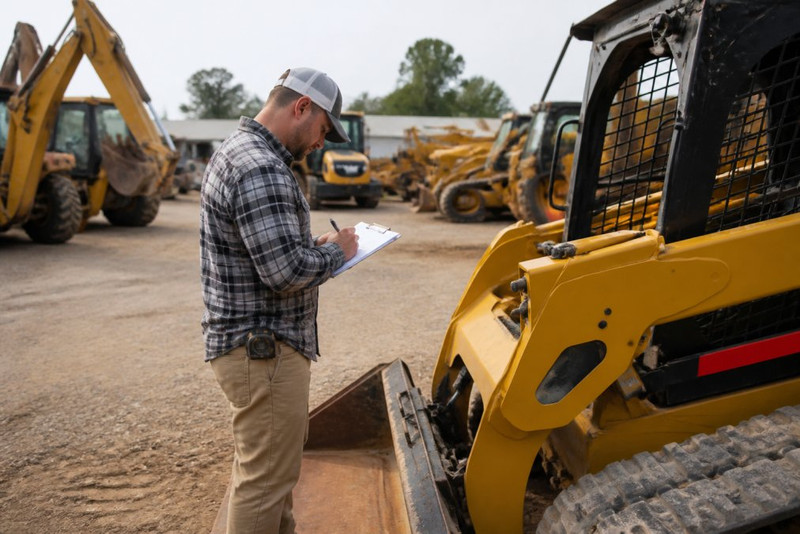
Preparation is where good listings are won. Gather three things before you type a single word: documentation, photographs, and a realistic valuation.
Gather Your Machine Documentation
Pull the title, service records, and any technical documentation you have. Industry best practice for 2026 listings requires the make, model, year, serial number, and operating hours to match the title exactly, per Ironmartonline's 2026 selling guide. Buyers cross-check these against spec databases, and mismatches kill trust instantly.
Photograph the Equipment Properly
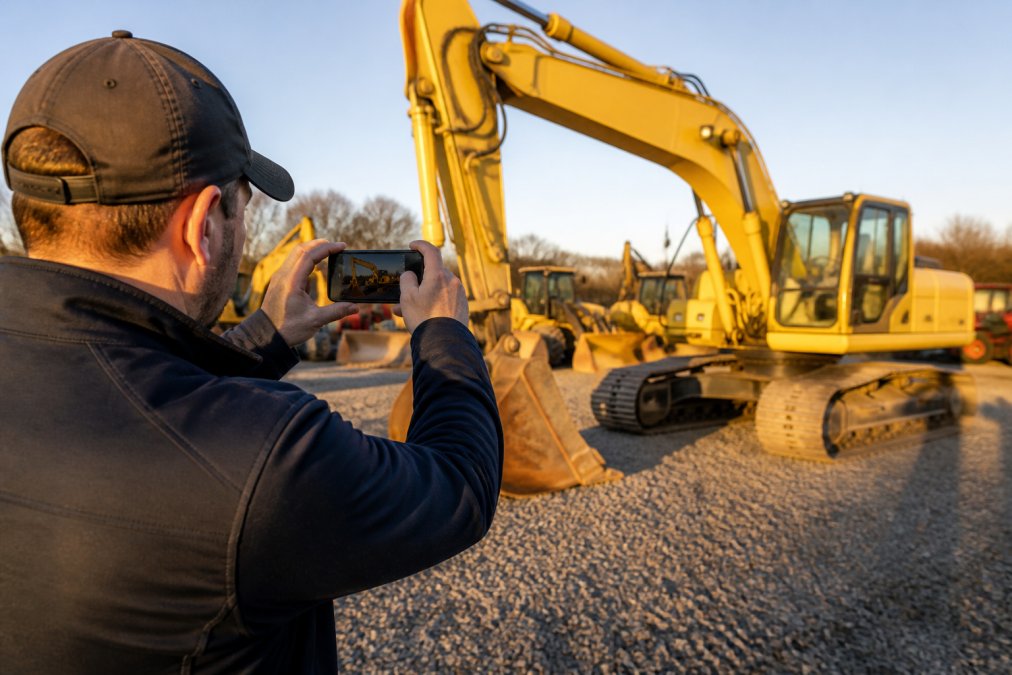
Shoot in daylight, clean the machine first, and capture at least 20 images: four corners, the cab interior, the engine bay, the undercarriage, and any wear. High-quality photography is the single biggest trust signal in a used equipment listing, and it does more work than any adjective you can write.
Step 1: Write a Headline That Gets Clicks
Your headline is a search result, not a slogan. The best-performing format is: [Year] [Make] [Model] [Machine Type] - [Key Spec] - [Location]. For example: "2019 Caterpillar 320 Excavator - 4,200 Hours - Well Maintained."
Include the year of manufacture, make and model, and one standout spec. Skip "Must Sell!" and "Great Deal!", those read as desperation, not value. A headline with the exact make and model gets found by buyers searching that model; a clever headline gets found by nobody.
Step 2: Lead With Essential Specifications
Specifications are the first thing serious buyers scan, so put them above the prose. A buyer searching for a specific machine wants to confirm fit before reading your story.
Specs Buyers Search For First
- Year of manufacture and make/model
- Serial number and operating hours
- Engine performance and horsepower
- Hydraulic system details and flow rate
- Undercarriage condition (for tracked machines)
- Attachments included
- Mileage (for trucks and trailers)
With over 470,000 equipment specifications available for more than 20,000 models, according to Construction Equipment Guide's spec database, buyers can verify your numbers in seconds. Accuracy is not optional.
Step 3: Describe Mechanical Condition Honestly
Honesty sells faster than hype, but vague honesty doesn't sell at all. Top-performing listings translate condition into a format buyers can verify: component-by-component status, hour-meter-anchored service history, and a clear statement of what has not been inspected. That structure is what separates a listing that gets a phone call from one that gets scrolled past.
Document Condition by Component, Not by Adjective
"Runs great" tells a buyer nothing. Instead, break the machine into its major systems and give each one a status line:
- Engine: Hours since last overhaul, oil consumption noted, any blow-by or smoke observations
- Hydraulics: Pump hours, cylinder condition, hose replacement dates, any weeping fittings
- Undercarriage (tracked machines): Percentage remaining on rails, sprockets, idlers, and rollers; date of last undercarriage work
- Transmission/Final drives: Service interval, any rebuild history, fluid condition
- Cab and electronics: A/C status, monitor function, any fault codes
- Tires (wheeled machines): Tread depth, brand, date codes, number of recaps
A buyer comparing three excavators can rank them on this structure in under a minute. A buyer reading three paragraphs of adjectives cannot.
How to Present Service Records and Maintenance History
List preventative maintenance by date and hour meter reading, not by vague interval. "Serviced regularly" is worthless; "Oil and filter at 4,500, 5,000, and 5,500 hours; hydraulic filter at 5,200 hours" is a document a buyer can audit.
A common pattern among sellers who get top dollar: they photograph the actual service log pages and reference them in the listing ("see photo 14 for the full service log"). That single move converts a claim into evidence.
Note the original owner if you are not it, and say so if records are partial. "Full service records since new" is worth more than any single feature, and buyers pay for it. If records are partial, state which periods are missing, a buyer who discovers a gap you didn't mention will assume the worst.
Disclose Known Issues Before the Buyer Finds Them
Every used machine has something. List known issues explicitly: a slow hydraulic leak, a cracked mirror, a non-functioning work light, a seat that needs replacing. Buyers respect disclosed defects far more than they distrust undisclosed ones. A disclosed $200 repair reads as an honest seller; the same repair discovered at inspection reads as a hidden problem.
Step 4: List Attachments and Accessories That Add Value
Attachments are line items, not afterthoughts, and most sellers leave money on the table by treating them as a footnote. A bucket, thumb, breaker, or quick coupler can shift a machine's resale value by thousands, and the way you describe them determines whether a buyer searching for that specific attachment ever finds your listing.
Price Attachments Into the Description, Not the Fine Print
Break them out as a structured list with condition and compatibility noted for each:
- Buckets: Size (e.g., 24-inch, 36-inch), tooth condition, any custom fabrication
- Hydraulic attachments: Breakers, thumbs, grapples, shears, note brand, model, and hours of use
- Quick coupler: Type (mechanical or hydraulic), brand, and which attachments it fits
- Trailer or transport equipment: Included or available separately
- Spare parts, filters, or manuals: What's on hand and whether it transfers with the sale
For each attachment, state whether it is included in the asking price or available as a separate purchase. Ambiguity here is one of the most common sources of post-sale disputes.
Name the Attachment the Way Buyers Search For It
Buyers searching for a machine with a specific attachment will find your listing only if you name that attachment using the terms they type. "Comes with extras" gets skipped. "Hydraulic thumb, 36-inch digging bucket, and mechanical quick coupler included" gets found.
This is where attachment listing overlaps with SEO: the attachment names are long-tail keywords. A buyer searching "excavator with hydraulic thumb for sale" will never surface a listing that says "comes with attachments." Name each item specifically, and include the brand where it matters (e.g., "Caterpillar quick coupler" rather than "quick coupler").
Compatibility and Fitment Details Buyers Ask About
For each attachment, note the machine models it fits and whether any adapters are required. A buyer with a second machine in the fleet wants to know if the bucket or thumb will transfer. Stating compatibility up front eliminates a round of questions and signals that you know your equipment.
If an attachment is aftermarket rather than OEM, say so. Buyers value OEM attachments differently than aftermarket ones, and hiding the distinction erodes trust when they discover it.
Heavy Equipment Sales Description Template You Can Copy
Use this heavy equipment sales description template and fill in the blanks:
[Year] [Make] [Model] [Machine Type] - [Hours] Hours - [Location]
Specifications: Serial number [XXX], [XXX] operating hours, [XXX] horsepower [XXX] engine, [XXX] hydraulic system. Original owner: [Yes/No].
Condition: [Describe mechanical condition, recent repairs, and wear]. Service records: [Full/Partial/None]. Last service at [XXX] hours.
Attachments: [List each attachment and its condition].
Notes: [Any known issues, prior use, or inspection reports available].
Call to action: [Contact method] to schedule a visual inspection or request additional photos and technical documentation.
A template keeps you from forgetting the details buyers ask about, and it standardizes your listings if you sell multiple machines.
Tips for Selling Construction Machinery Online: SEO and Mobile Optimization
Most guides ignore this, and it costs sellers real money. Write your listing so search engines and buyers on phones can find it.
Front-load buyer intent keywords: "used excavator for sale," "Caterpillar 320 for sale," "low-hour dozer." Repeat the make, model, and machine type naturally two or three times in the body. Add a location reference so local buyers find you.
For mobile-first optimization, keep paragraphs to two or three lines, use bullet lists for specs, and put your call to action near the top. More than half of equipment buyers browse on a phone before they ever call.
How to List Used Excavators for Sale: A Worked Example
Here is how to list used excavators for sale using the template above, filled in:
2018 John Deere 210G LC Excavator - 5,600 Hours - Ohio
Specifications: Serial number 1FF210GX_ _ _, 5,600 operating hours, 159 hp diesel engine, hydraulic thumb. Original owner: Yes.
Condition: Undercarriage at 70%, new tracks installed at 4,900 hours. Engine performance strong, no leaks. Full service records since new.
Attachments: 36-inch digging bucket, hydraulic thumb, quick coupler.
Notes: Fresh hydraulic oil change, inspection report available on request.
Call to action: Contact us to schedule a visual inspection or request the service file.
Notice what is missing: no hype, no vague claims, no "runs great." Every line answers a buyer question before it is asked.
Legal Disclaimers and Liability in Equipment Listings
A listing description is a sales document, and what you write can create legal obligations. State condition as fact, not opinion, and avoid guarantees you cannot back up.
Include a short disclaimer: "Sold as-is, where-is, with no warranty expressed or implied. Buyer is responsible for inspection prior to purchase." This language is standard in equipment sales and protects you if a buyer later disputes the condition. Never claim a machine is "like new" or "fully rebuilt" unless you have documentation proving it.
Frequently Asked Questions
What details must be included in a heavy equipment listing description?
Every heavy equipment listing needs the make, model, year of manufacture, serial number, and operating hours exactly as they appear on the title. Add engine performance details, hydraulic system condition, undercarriage wear, attachments included, and service records. This standardization builds buyer trust and ensures your listing appears in filtered searches. Over 470,000 equipment specifications exist for more than 20,000 models, so verify your technical data against a reliable spec database before publishing.
How can I highlight the maintenance history in an equipment listing?
List service records chronologically with dates, machine hours at service, and what was performed. Note preventative maintenance intervals you followed. If the machine had an original owner who kept detailed logs, say so. Transparency about maintenance history directly reduces perceived risk. Include recent inspections, oil analysis results, and any undercarriage or hydraulic system work. Specific records outperform vague claims like 'well maintained' every time.
What are the best practices for photographing heavy equipment for sale?
Photograph the machine from all four corners, plus close-ups of the undercarriage, hydraulic system, engine compartment, cab interior, and any wear points. Clean the equipment first. Shoot in natural daylight against a neutral background. Include photos of the serial number plate, hour meter, and any attachments. High-quality photography is one of the strongest trust signals in heavy equipment sales. Listings with 15-20 clear photos consistently generate more serious buyer inquiries than listings with three or four.
How do I optimize my equipment listing for mobile buyers?
Most buyers now browse listings on phones, so keep paragraphs short (two to three sentences), use bullet points for specifications, and place the most important details in the first 100 words. Avoid large blocks of text. Use descriptive subheadings so mobile users can scan quickly. Ensure your photos load fast and your call to action is visible without scrolling. A mobile-first format with clear specs and a strong headline captures buyer intent before they move to the next listing.
Selling surplus equipment is a documentation problem as much as a marketing one, and most sellers lose money on the details they leave out. Ironmartonline connects your machine to millions of buyers across nine specialized web-based selling platforms, with no contracts and no hidden fees, so your listing reaches the people already searching for it. Get started with Ironmartonline and turn a well-written listing into a faster, higher-value sale.