
Table of Contents
- What Selling Heavy Duty Trucks Online Actually Earns in 2026
- The Real Costs of Selling Heavy Duty Trucks Online
- Best Platforms to Sell Commercial Trucks
- Preparing Heavy Trucks for Online Sale
- How to Sell Used Heavy Duty Trucks: Step by Step
- Consignment vs. Direct Sale: Which Keeps More Profit
- Tax and Depreciation Implications Most Sellers Miss
- Online vs. Offline Sales: A Cost-Benefit Breakdown
- Frequently Asked Questions
Last Updated: September 10, 2026
What Selling Heavy Duty Trucks Online Actually Earns in 2026
Selling heavy duty trucks online is profitable when the spread between your acquisition cost and the final sale price clears your transaction costs, and in 2026 that spread is real: the used semi-truck market is projected to grow at a 6.4% CAGR toward $27.1 billion by 2035, up from a $14.6 billion base in 2025, according to Market.us used semi-truck market analysis.
Why use Ironmartonline equipment broker? Because a broker puts your truck in front of millions of buyers across nine specialized web-based selling platforms at once, without contracts or hidden fees, and that reach is what turns a listed asset into a sold asset. Most individual sellers list on one site, wait, and accept the first offer.
The math gets harder before it gets easier. New commercial-truck sales totaled 193,692 units through June 2026, an 11.1% decline year over year, per NADA's ATD Truck Beat report. Fewer new trucks moving means more buyers shopping used, which is good news for sellers who show up prepared.
Below, we break down where the profit actually comes from, what it costs to get there, and how to structure a sale so you keep more of the spread.
The Real Costs of Selling Heavy Duty Trucks Online
The biggest mistake sellers make is counting gross sale price as profit. It isn't. Your net comes after listing costs, reconditioning, transportation, and the time your capital sat tied up in a depreciating asset.
Start with depreciation, because it never stops. Used truck market indicators from July 2026 showed selling prices and volumes mostly down, though depreciation rates stayed minimal, according to J.D. Power used truck data via Truck Parts and Service. Minimal depreciation is not zero depreciation. Every month a truck sits unsold, it bleeds value.
Then add the line items most sellers forget:
- Reconditioning: tires, brakes, DOT-required repairs, detailing
- Listing fees: marketplace subscriptions or per-listing charges
- Photography and inspection: a documented condition report
- Transport: moving the unit to a buyer or a holding lot
- Capital cost: the interest or opportunity cost on money locked in inventory
A common mistake is skipping reconditioning to save cash. In practice, a truck with worn tires and a cracked windshield sits for months while a comparable clean unit sells in weeks, and the price gap usually exceeds what the repairs would have cost.
Best Platforms to Sell Commercial Trucks
The best platforms to sell commercial trucks fall into three groups: dedicated commercial marketplaces, general buy-and-sell sites, and full-service brokerages that syndicate your listing across many channels at once. Each has a different tradeoff between reach, cost, and the amount of work you do yourself.
Marketplace Strengths and Weaknesses
| Platform Type | Reach | Effort Required | Best For |
|---|---|---|---|
| Commercial truck marketplaces | National, dealer-heavy | Moderate | Dealerships with inventory systems |
| General buy-and-sell sites | Local and regional | High | Owner-operators moving one unit |
| Full-service brokerages | Global and local | Low | Sellers wanting maximum exposure |
Dedicated commercial marketplaces carry strong brand recognition and analytics, but they can be expensive for individuals. General sites like Facebook Marketplace cost nothing to list, which is exactly why they attract scams and non-serious inquiries. What most guides miss is that a free listing is only cheap if your time is worthless.
Auction platforms have shifted the market toward online price discovery, and auction results often show buyers paying premiums for specific models, according to Charter Trucks auction market analysis. That premium only materializes when enough qualified buyers see the listing.
The Hidden Costs of Online Marketplaces
Beyond listing fees, online marketplaces impose costs that erode profit. Commercial truck marketplaces often charge subscription fees, plus transaction fees that can take a percentage of the final sale price. General sites are free to list but may charge a final value fee on completed sales. These fees add up quickly.
Time is another cost. A truck listed on a single general site might take longer to sell, while a brokerage syndicating across multiple platforms can cut that time. The faster sale reduces depreciation loss, which often exceeds the commission difference.
Why a Brokerage Often Wins
Full-service brokerages like Ironmartonline eliminate the guesswork. They handle listing creation, buyer vetting, and negotiation across nine specialized platforms, reaching millions of buyers. Sellers pay no upfront fees and no hidden charges, just a commission upon successful sale. This model aligns incentives: the broker only gets paid when the truck sells.
For sellers who lack the time or expertise to manage multiple listings, a brokerage provides the reach of a national network without the administrative burden. The result is a faster sale at a competitive price, often netting more than a solo sale after accounting for time and depreciation.
Preparing Heavy Trucks for Online Sale
Preparing heavy trucks for online sale means documenting condition, service history, and title status before the first photo goes up. Buyers scroll past listings that look improvised.
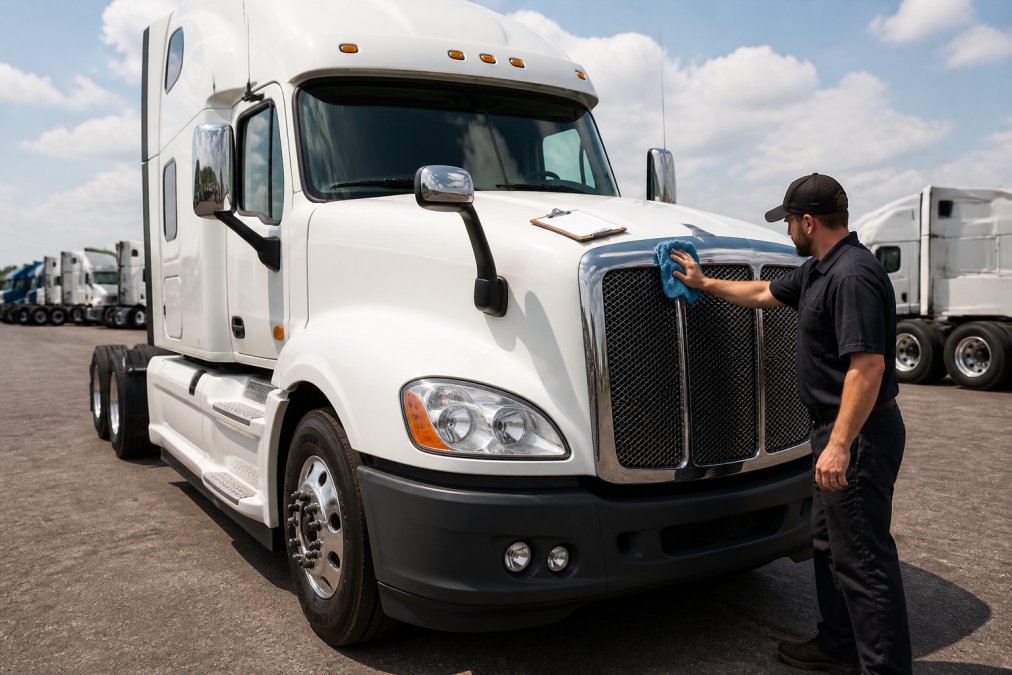
Start with the presentation basics. Wash the unit, clear the cab, and shoot in daylight from multiple angles, including the engine bay, tires, and any damage. Buyers who find surprises after the sale file disputes, and disputes cost more than honesty. maximize trucking revenue.
The Documentation Buyers Expect
Have these ready before you list:
- Clean title in hand, no liens
- Service and maintenance records
- Engine hours and odometer reading
- DOT inspection status
- VIN and spec sheet
- Disclosure of known defects
A truck with a complete paperwork packet commands a higher price because the buyer's risk drops. That is a real premium, not a courtesy.
How to Sell Used Heavy Duty Trucks: Step by Step
The process for how to sell used heavy duty trucks runs from valuation to funds cleared.
Step 1: Value the truck against live data. Use valuation tools and benchmark against recent regional sales of similar units rather than guessing. Current guidance emphasizes online valuation tools and regional benchmarking to set realistic baselines, per Pickup Truck Talk valuation guidance.
Step 2: Set a price with room to negotiate. Price at market, not at your emotional attachment to the unit.
Step 3: Prepare the unit and the paperwork. Recondition, photograph, and assemble the documents listed above.
Step 4: List across multiple channels. One platform means one pool of buyers. Syndication creates competition.
Step 5: Qualify buyers before you talk price. Ask about financing, timeline, and whether they have inspected a similar unit.
Step 6: Close and confirm funds. Do not release the title until payment clears.
Step 7: Handle transfer and logistics. Coordinate transport and title transfer in writing.
Expected Result: A documented, competitively priced unit typically attracts serious inquiries faster than a bare listing, because buyers can evaluate risk without a site visit.
Consignment vs. Direct Sale: Which Keeps More Profit
A direct sale keeps the full sale price minus your own costs, while consignment trades a commission for reach, expertise, and a faster, hands-off process. Which wins depends on how much time you have and how many buyers you can reach alone.
Direct sales suit sellers with a strong local network and the time to field inquiries. The catch is that your buyer pool is limited to who you can personally reach, and your capital stays locked until the right buyer appears.
Consignment and brokerage suit sellers who want exposure without managing logistics. You give up a slice of the sale price, but the unit reaches a far larger buyer pool and the administrative burden shifts off your desk.
The real difference comes down to this: a direct sale maximizes margin per unit, while a brokered sale maximizes the probability of selling at all. If your truck has been listed for months with no serious offers, the commission you avoided is costing you more in depreciation than it would have cost in fees.
Tax and Depreciation Implications Most Sellers Miss
Tax treatment and depreciation schedules change your real net far more than most sellers realize, and they are the angle competitors ignore entirely.
Business vehicles are generally depreciated over a set schedule rather than expensed in one year, and the tax basis of a truck you sell depends on how much depreciation you have already claimed. If you claimed depreciation deductions, part of your sale proceeds may be treated as ordinary recaptured income rather than a capital gain, which is taxed differently. Section 179 and bonus depreciation rules have shifted repeatedly in recent years, so the deduction you took when you bought the truck affects what you owe when you sell it.
I am not your accountant, and this is not tax advice. What matters is the practical move: before you price a unit, ask your tax professional what your after-tax proceeds will look like. A sale that looks profitable on the invoice can shrink once recapture is applied.
Online vs. Offline Sales: A Cost-Benefit Breakdown
Online selling wins on reach and price discovery, while offline selling wins on speed and certainty for sellers who already have a buyer in hand. The cost-benefit calculation hinges on how many qualified buyers each channel puts in front of your truck.
Offline channels, including local dealers and word of mouth, move fast when demand is local, but they cap your buyer pool at your region. Online channels expose the unit to national and international buyers, which is where competitive bidding happens.
The market context favors online. Freight capacity remains tight and carrier profitability is improving, which ACT Research describes as a constructive outlook for 2026 truck sales, per ACT Research market outlook. Carriers replacing or expanding fleets shop online because that is where inventory is visible.
A Side-by-Side Cost Comparison
To make a smart decision, compare the true costs of each channel. Here is a breakdown for a typical $50,000 used semi-truck:
| Cost Factor | Online Marketplace | Local Dealer/Offline |
|---|---|---|
| Listing/Commission Fees | 2%-5% of sale price ($1,000-$2,500) | 10%-20% of sale price ($5,000-$10,000) |
| Reconditioning | $1,000-$3,000 | $1,000-$3,000 |
| Transportation | $500-$2,000 (if buyer is distant) | $0-$500 (local pickup) |
| Time to Sale | 30-60 days | 15-30 days |
| Depreciation Loss (per month) | ~1% of value ($500) | ~1% of value ($500) |
| Net Proceeds (approx.) | $43,000-$47,000 | $38,000-$43,000 |
This table shows that while offline sales may close faster, the higher commission and lower price due to limited buyer pool often result in lower net proceeds. Online sales, despite slightly longer time to sale, attract more buyers and competitive bids, driving up the final price.
The Time-Value Tradeoff
A common mistake is to prioritize speed over net profit. If a local dealer offers a certain amount today, but an online listing could fetch more in a longer timeframe, the difference may outweigh the depreciation and any carrying costs. For most sellers, the online route can yield a better financial outcome.
However, online sales require effort: photographing, responding to inquiries, and managing logistics. A brokerage like Ironmartonline handles these tasks, effectively giving you the reach of online with the convenience of a hands-off sale.
Frequently Asked Questions
What are the primary costs associated with selling heavy duty trucks online?
Listing fees, photography, inspection and reconditioning, and any marketplace commission all come out of your proceeds. Brokerage models usually work on commission, and Ironmartonline states it charges no hidden fees. The biggest hidden cost is time: trucks that sit unsold keep depreciating. Benchmark your asking price against recent regional sales of similar units so you do not absorb months of depreciation while waiting for a buyer.
How does selling through a broker compare to private sales for heavy trucks?
Private sales keep the full sale price but put listing, photography, buyer vetting, and paperwork on you. A broker handles exposure and negotiation across multiple channels for a commission. The trade-off is reach versus control. Exposure matters more in a soft market. Sellers with one or two units often find the net difference smaller than expected once their own time is counted.
Does the condition of a heavy duty truck significantly impact online sale speed?
Yes. Buyers shopping online cannot inspect in person, so service records, tire condition, and a clean interior do the persuading. Trucks with complete maintenance histories and recent DOT inspections sell faster because they reduce buyer risk. Reconditioning before listing usually pays for itself: a washed, detailed truck with clear photos and documented service attracts serious inquiries instead of lowball offers. Condition also affects financing, since lenders price risk based on age, mileage, and documented upkeep.
What documentation is required to sell a commercial truck online?
You need a clear title, current registration, and a bill of sale. If a lien exists, get a lien release before listing. For heavy-duty units, buyers also expect service records, DOT inspection reports, and an accurate odometer statement. If you finance through a lender, confirm payoff instructions in writing. Interstate sales may require an IRP account or trip permits for delivery, and the buyer typically handles their own registration. Preparing these documents before listing prevents deals from stalling at closing.
What are the current market trends for heavy duty truck resale values?
The used semi-truck market is projected to grow at a 6.4% CAGR, reaching $27.1 billion by 2035 from $14.6 billion in 2025, according to Market.us. ACT Research calls 2026 constructive for Class 8 because freight capacity is tight and truckload rates are strengthening. Strong rates support resale values.