
Table of Contents
- Why Use an Equipment Broker When Selling Your Excavator
- Assess Your Excavator's Current Condition and Market Value
- Used Excavator Inspection Checklist: What Buyers Look For
- Cost of Excavator Maintenance vs Resale Value: ROI Analysis
- Critical Wear Parts That Impact Resale Price
- Repairs Worth Making Before Sale
- Repairs Not Worth the Investment
- Document Everything: Service Records and Maintenance History
- Cosmetic Restoration and Cleaning for Maximum Appeal
- Frequently Asked Questions
Last Updated: October 2, 2026
Why Use an Equipment Broker When Selling Your Excavator
Selling a used excavator on your own takes time, effort, and expertise you may not have, which is why many sellers choose to handle parts and repairs before selling through a Heavy Equipment Broker. You'll need to handle marketing, fielding calls from tire-kickers, managing paperwork, and negotiating prices.
This is where a Heavy Equipment Broker makes a real difference. Why use a Heavy Equipment Broker when selling your excavator? Because brokers connect your machine to millions of potential buyers across nine specialized web-based selling platforms. They handle the logistics and reach buyers you'd never find on your own.
The reality is simple: new financed mini excavator sales fell 7.7% year-over-year between June 2025 and May 2026, according to Equipment World market data. A broker helps you present your machine in the best possible light, and reaches the right buyers willing to pay for quality.
Before you list anything, you need a clear strategy for parts and repairs before selling: which repairs are worth making, which ones cost more than they return, and how to document everything so buyers trust what they're buying.
Assess Your Excavator's Current Condition and Market Value
Start by knowing what your excavator is actually worth right now, in its current condition. Don't guess. Heavy equipment typically loses 20-30% of value in the first year, according to HVI App depreciation analysis. But some brands hold value much better. Kubota mini excavators, for example, retain 60% to 70% of original value, according to Rubbl brand residual value analysis.
Get a realistic market appraisal before deciding what repairs to make.
Pull together:
- Purchase price and original invoice
- Current market comps (what similar machines sold for recently)
- Your machine's hours and condition
- Major repairs or rebuilds already done
- Service records (if you have them)
A Heavy Equipment Broker can help you understand current market value based on real sales data across multiple platforms. Knowing this number before you start repairs keeps you from over-investing.
Used Excavator Inspection Checklist: What Buyers Look For
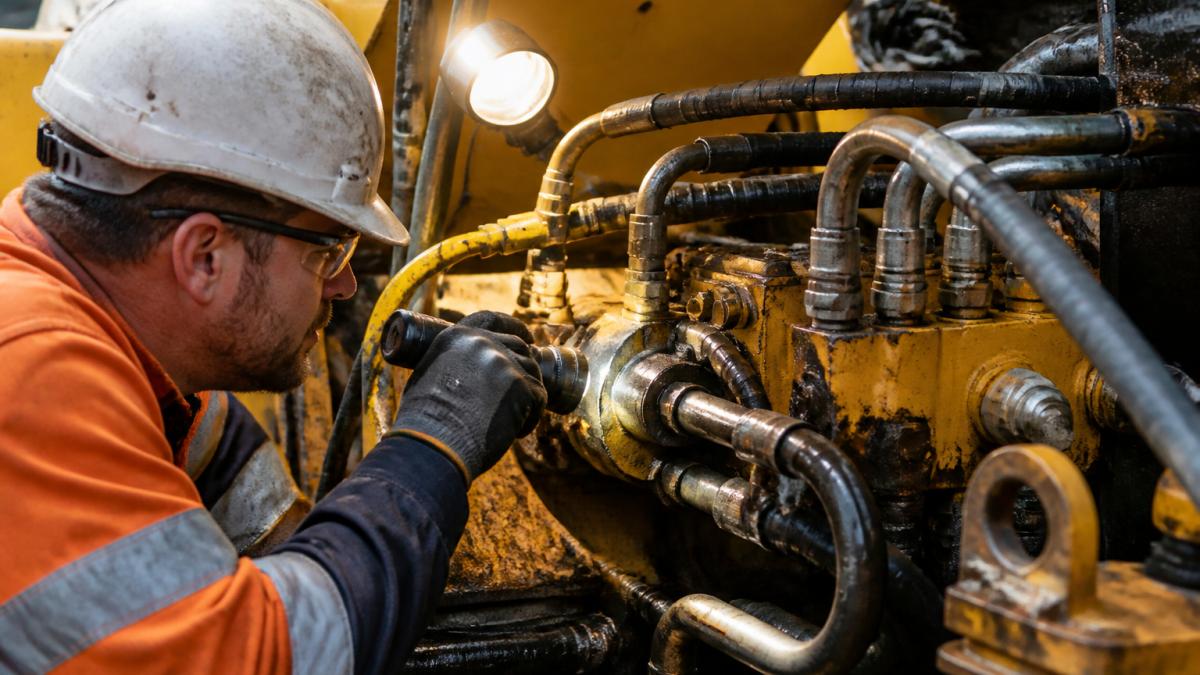
Buyers inspect three critical areas: the engine, the hydraulic system, and the undercarriage. Each one tells a story about how the machine was maintained. The key is not just identifying problems, it's understanding which problems are deal-killers, which are negotiable, and which are cosmetic.
Engine Performance and Cold Start Diagnostics
A cold start tells you everything. Turn the key. Does the engine fire up immediately, or does it crank for 10+ seconds? Blue smoke on startup signals worn piston rings, a serious internal wear issue. Black smoke means fuel-injector problems. White smoke suggests coolant in the cylinders, a critical failure that requires immediate attention and often makes the machine unsellable without major work.
Run the engine and listen for these specific failure modes:
- Knock or ping under load: Bearing wear. The engine may run but is nearing end-of-life. Buyers will demand a significant discount.
- Rough idle: Fuel or ignition issue. Usually fixable for $300-$600 and worth addressing before sale.
- Excessive valve noise (ticking or clacking): Worn lifters or valve clearance problems. Cost to repair: $600-$1,200. This is a moderate repair that shows attention to detail if fixed.
- Grinding or metal-on-metal sound: Catastrophic internal damage. Do not attempt to sell without full disclosure.
Let the engine warm up for 5 minutes and check exhaust color. Clear exhaust is good. Light gray is acceptable. Dark smoke or blue smoke indicates the machine needs work before sale. Record what you observe in writing with timestamps, buyers want proof the engine runs clean and has been tested, not just claimed to run.
Hydraulic System Inspection and Leak Repair
Hydraulic leaks are the single most common reason buyers walk away from a deal. Crawl under the machine with a flashlight and white paper towel. Look for wet spots on cylinders, hoses, and pump connections. Even small seeps matter because they signal neglect and predict future failure.
Check hydraulic fluid condition, this is critical:
- Clear amber or light brown: Fluid is in good condition. No action needed.
- Dark brown or black: Fluid is degraded from heat and oxidation. Requires a full fluid change ($200-$400) before sale. Buyers see this as a red flag for hard use.
- Milky or cloudy appearance: Water contamination, usually from condensation or a cracked seal. Requires fluid change and investigation of the contamination source. Cost: $300-$600.
- Burnt smell (like charred oil): Fluid has overheated, indicating the system ran too hard or cooling was inadequate. Change the fluid and inspect the cooler for blockages.
Test all hydraulic functions under load:
- Boom extends and retracts smoothly: Should move at consistent speed without jerking, stalling, or losing pressure. Jerking indicates a failing seal or pump cavitation.
- Bucket curls without hesitation: Slow or weak bucket curl signals a failing cylinder or pump wear.
- Swing operates without grinding or binding: Smooth 360-degree rotation is essential. Grinding indicates bearing wear in the swing motor.
- Tracks move evenly: Both tracks should move at the same speed. Uneven movement indicates a failing travel motor or internal leakage.
Pressure-test the main hydraulic pump if you have access to a gauge. Normal operating pressure for most excavators is 2,500-3,500 PSI. Pressure below 2,000 PSI under load signals pump wear. Document all test results in writing, serious buyers will ask for this data.
Undercarriage Wear and Track Condition
Undercarriage condition is the single biggest value driver for excavators under 10,000 hours. Flip the machine up on its side (or use a pit if available). Inspect the tracks, rollers, and sprockets systematically.
Look for these specific wear indicators:
- Track tension: Should be snug but not overly tight. Loose tracks slip and wear faster. Tight tracks strain the rollers and idlers. Proper tension allows one finger to lift the track slightly at the midpoint. Adjust if needed ($100-$200 in labor).
- Bent or missing track links: Each missing or bent link reduces track life and signals abuse. Replacement cost: $150-$300 per link. If more than two links are damaged, budget for full track replacement ($3,000-$5,000).
- Worn roller bearings: Spin each roller by hand. They should turn freely for 5-10 seconds. If they stop immediately or don't spin at all, the bearing is seized. Replacement: $400-$800 per roller. This is worth fixing if only one or two rollers are bad.
- Sprocket teeth: Inspect the drive sprocket teeth closely. Sharp, defined teeth indicate normal wear. Rounded or hooked teeth signal heavy use and imminent replacement need. Cost: $800-$1,200 per sprocket. If teeth are severely worn, disclose this to buyers, they'll negotiate.
- Pins and bushings: The foundation of track integrity. Grab the track at multiple points and try to move it side-to-side. Excessive play (more than 1/4 inch) indicates worn pins or bushings. Replacement of a complete pin-and-bushing kit: $800-$1,500. This repair almost always pays for itself in resale value.
Document undercarriage findings with photos and measurements. Buyers will inspect this area closely, and detailed documentation builds confidence in your asking price.
Cost of Excavator Maintenance vs Resale Value: ROI Analysis
Here's the hard truth: not every repair makes financial sense. When annual repair costs trend toward 50% or more of the machine's current market value, you should seriously consider selling rather than fixing, according to ML Heavy Construction Equipment upgrade guidance.
Run the math before you commit to work:
| Repair Type | Typical Cost | Resale Value Increase | ROI |
|---|---|---|---|
| Hydraulic seal replacement | $400-$800 | +$1,200-$2,000 | Strong |
| Engine oil and filter change | $150-$300 | +$500-$800 | Strong |
| Track replacement | $3,000-$5,000 | +$2,000-$3,000 | Weak |
| Full engine rebuild | $4,000-$8,000 | +$2,000-$4,000 | Weak |
| Bucket teeth replacement | $200-$400 | +$600-$1,000 | Strong |
| Cosmetic cleaning | $300-$800 | +$2,000-$4,000 | Strong |
Small, high-ROI repairs (seals, fluids, teeth) pay for themselves. Major overhauls (engine, transmission) often don't. The optimal replacement cycle for heavy equipment occurs between 10,000-15,000 hours, according to FieldFix replacement cycle study. If your excavator is approaching that window, selling as-is might beat pouring money into repairs.
Critical Wear Parts That Impact Resale Price
Buyers obsess over wear parts because they signal how hard the machine worked. A set of fresh pins and bushings is worth thousands to a buyer.
Pins, Bushings, and Undercarriage Components
The track system relies on pins and bushings to articulate smoothly. Worn pins create play, the track shifts side-to-side instead of tracking straight. Bushings deteriorate from dirt and moisture.
Replace these if they're visibly loose or worn:
- Track pins (both sides)
- Bushing sets (complete kit)
- Idler wheel bushings
- Roller frame pins
This repair almost always pays off.
Hydraulic Cylinders and Pump Performance
Hydraulic cylinders wear from repetitive use. Seals degrade. Internal rod scoring develops. A leaking cylinder signals age and hard use.
Before selling, pressure-test all cylinders:
- Boom cylinder
- Bucket cylinder
- Swing motor
If pressure drops under load, the seal is shot. But buyers see a fresh cylinder as proof of investment in the machine.
The hydraulic pump is the heart of the system. If it whines, knocks, or loses pressure, this is rarely worth doing before sale unless the machine is otherwise in excellent condition.
Repairs Worth Making Before Sale
Focus your money strategically. Not all repairs are equal. The key is to prioritize repairs that solve buyer objections, signal good maintenance, and deliver measurable ROI. Use this decision framework: Does this repair eliminate a deal-killer objection, or does it signal pride of ownership? If yes, do it. If no, skip it.
Tier 1: Deal-Killer Repairs (Do These First)
These repairs prevent buyers from walking away. Without them, you'll struggle to sell at any price.
Hydraulic leaks and seal replacement. A leaking cylinder or pump is a red flag that stops negotiations immediately. Buyers assume the worst and demand steep discounts. Replacing seals eliminates this objection entirely. Priority: Critical. Do this first if any leaks are visible.
Engine cold-start and smoke diagnostics. If the engine produces blue or white smoke on startup, buyers will demand a discount or walk away. A fuel-injector cleaning or ignition tune-up often clears the problem. Priority: Critical. Test the engine before listing.
Track and undercarriage safety. If the track is so loose it slips, or if rollers are seized, the machine is unsafe to operate. Buyers will refuse to take it for a test drive. Tighten the track or replace seized rollers. Priority: Critical. A machine that can't be safely tested won't sell.
Tier 2: Confidence Builders (Do These Second)
These repairs signal that you maintained the machine and cared for it. They don't fix broken things, they prove the machine was well-kept.
Fluid and filter changes. Fresh oil, hydraulic fluid, and coolant. Buyers see clean fluid as proof of maintenance and attention to detail. This repair always pays for itself because it costs so little and signals so much. Priority: High. Do this for every machine.
Bucket teeth and cutting edges. Dull or broken teeth signal abuse and hard use. Fresh teeth make the machine look well-maintained and ready to work. Buyers notice this immediately. Priority: High. If teeth are visibly worn, replace them.
Hose replacement. Cracked, leaking, or brittle hoses are cheap to replace and show buyers you sweated the details. A machine with fresh hoses looks like it was cared for. Priority: Medium. Replace any hose that shows cracks or weeping.
Pins and bushings (track system). A complete pin-and-bushing kit adds in resale value. This is one of the highest-ROI repairs you can make because buyers obsess over undercarriage condition. Priority: High if budget allows. This repair pays for itself and then some.
Tier 3: Nice-to-Have Repairs (Do These Last, If Budget Remains)
These repairs improve appearance and buyer perception but don't fix mechanical problems.
Cleaning and cosmetic restoration. A clean machine sells faster and for more money. Pressure wash the entire machine, remove mud and grease, polish the cab windows, touch up paint where rust is starting. This is one of the best ROI repairs you can make because it's cheap and has huge visual impact. Priority: High. Do this for every machine, it costs little and looks professional.
Cab interior touch-ups. Vacuum the cab, wipe down the dash, clean windows, replace missing decals. Priority: Medium. This is quick and improves buyer perception.
Tier 4: Repairs to Skip (Don't Do These)
These repairs cost more than they return. The math doesn't work.
Full engine rebuild. Unless the engine is completely seized, buyers will accept a machine with engine wear. You lose money. Skip this. Disclose engine wear and let the buyer decide.
Complete track replacement. Tracks wear. Buyers expect this. You lose money. Skip this. Negotiate with the buyer instead or lower your asking price.
Transmission or final drive repair. Major drivetrain work is expensive and risky. If the transmission is slipping, disclose it and let the buyer decide whether to fix it after purchase. Skip this. The risk and cost outweigh the benefit.
Complete machine repaint. A fresh coat of paint looks great. Skip this. Clean the machine instead, pressure washing delivers 80% of the visual improvement.
Decision Framework: When Budget Is Limited
If you have a limited budget for repairs, prioritize in this order:
- Fix any hydraulic leaks (deal-killer).
- Change all fluids (confidence builder, cheap).
- Replace bucket teeth if worn (confidence builder).
- Pressure wash and clean (highest ROI per dollar).
If you have a moderate budget:
- Fix hydraulic leaks.
- Change all fluids.
- Replace bucket teeth.
- Replace pins and bushings if undercarriage is worn.
- Pressure wash and detail.
If you have a larger budget:
- Fix all hydraulic leaks and replace seals.
- Change all fluids.
- Replace bucket teeth.
- Replace pins and bushings.
- Pressure wash and detail.
- Replace one or two seized rollers if needed.
The goal is to eliminate deal-killer objections first, then signal good maintenance, then improve appearance. Don't spend money on repairs that don't move the needle on buyer confidence or resale price.
Repairs Not Worth the Investment
Skip these. The cost outweighs the resale benefit.
Full engine rebuild. Unless the engine is completely shot, buyers will accept a machine with engine wear. The math doesn't work.
Complete track replacement. Tracks wear. Buyers expect this. Negotiate with the buyer instead.
Transmission or final drive repair. Major drivetrain work is expensive and risky. If the transmission is slipping, disclose it and let the buyer decide whether to fix it after purchase.
Cab interior restoration. Torn seats, cracked dash, missing gauges don't kill sales. A cleaning beats an interior rebuild.
Repainting the entire machine. A fresh coat of paint looks great but costs $1,500-$3,000 and adds only $1,000-$2,000 in value. Clean it instead.
Document Everything: Service Records and Maintenance History
This is where you win or lose money at sale time. Buyers trust machines with documented service history. They'll pay more and negotiate less.
Compile a service file with:
- Original purchase invoice and warranty paperwork
- All maintenance receipts (oil changes, filter replacements, fluid top-ups)
- Repair invoices (who did the work, when, what was fixed)
- Inspection reports (hydraulic tests, engine diagnostics)
- Fluid analysis reports (oil samples showing wear metals)
- Attachment maintenance records (bucket teeth, pins, seals)
To effectively appraise and sell a used mini excavator in 2026, sellers should compile comprehensive documentation, including service logs, repair receipts, hydraulic fluid analysis reports, and records of attachment maintenance. When you list with a Heavy Equipment Broker, provide all documentation upfront. Serious buyers will ask for it. Having it ready closes deals faster.
Cosmetic Restoration and Cleaning for Maximum Appeal
A clean excavator sells for more money. Period.
Pressure wash the entire machine. Remove mud, grease, and rust stains. Pay special attention to:
- Engine compartment (shows you maintained the cooling system)
- Hydraulic lines (reveals leaks immediately)
- Track system (buyers inspect this closely)
- Cab interior (vacuum, wipe down, clean windows)
Touch up paint where rust is starting. Rust-preventive paint on a frame rail looks professional. Buyers notice.
Polish the cab windows and mirrors. Replace cracked or missing decals. These small touches signal pride in ownership.
This is the highest-ROI work you can do.
Frequently Asked Questions
Is it worth repairing an excavator before selling it?
Yes, but only strategically. Focus on repairs that address major red flags: excessive engine smoke, persistent hydraulic overheating, and undercarriage failures. These directly influence buyer interest and resale price. Document all repairs with receipts to justify the investment.
What documentation should I provide when selling a used excavator?
Compile comprehensive service logs, repair receipts, hydraulic fluid analysis reports, and attachment maintenance records. This documentation is critical for effective appraisal and sale. In-house maintenance records prove the machine received proper care. Service history directly influences whether buyers view your machine as a sound investment or a risk.
How do worn undercarriage parts affect excavator trade-in value?
Worn undercarriage components significantly reduce resale value. Track tension, pins, and bushings are inspection priorities. Excessive wear signals higher maintenance costs ahead for the buyer, making them hesitant to bid competitively. Addressing undercarriage wear before listing improves your negotiating position.
What are the most common excavator repairs that increase resale value?
Repairs addressing hydraulic leaks, track tension adjustment, and engine performance diagnostics deliver measurable ROI. Cold start testing and fluid contamination checks prove mechanical integrity to buyers. The key is targeting repairs that prevent major failures, not cosmetic upgrades. Focus on parts and repairs that signal the machine will run reliably for the next owner.
Preparing an excavator for sale requires strategy, not just hope. Focus on repairs that buyers actually value, small maintenance items, fluid changes, and cosmetic work. Skip the expensive overhauls that don't return their cost. Document every service. Clean the machine thoroughly. Then list it with Ironmartonline, where your excavator reaches millions of qualified buyers across our nine specialized platforms. We handle the marketing and logistics so you get top dollar without the headache.