

Table of Contents
- Diesel Tractor Engines: The Trade-Offs That Decide the Purchase
- Diesel vs Gasoline Tractor: Power Delivery, Fuel Economy, and Cost
- The Case for Diesel Tractor Engines: Efficiency, Torque, and Durability
- The Case Against: Wet Stacking, Cold Starts, and Repair Costs
- Diesel Tractor Engine Lifespan: What Hours and Duty Cycles Tell You
- Diesel Tractor Maintenance: Service Intervals and Seasonal Care
- Used Diesel Tractor Buying Checklist: What to Inspect Before You Pay
- Matching Engine Size to Implements and Fieldwork
- Conclusion
- Frequently Asked Questions
Last Updated: October 19, 2026
Diesel Tractor Engines: The Trade-Offs That Decide the Purchase
Diesel tractor engines are compression-ignition powerplants that ignite fuel through heat and pressure rather than a spark plug, and they dominate heavy fieldwork for one reason: they deliver high torque at low engine speed. That single trait shapes nearly every advantage and drawback a buyer will live with. This guide from Ironmartonline breaks down the pros and cons of diesel tractor engines so you can size the decision correctly before you commit capital.
Here is the part most buyers get wrong: they compare diesel and gasoline on sticker price alone. The real answer lives in duty cycle, hours per year, and how the machine will be loaded.
Why use Ironmartonline as your equipment broker? Because the engine you choose determines resale value, and resale value determines what your machine is worth when you sell. Our brokerage runs nine web-based selling platforms that put used machinery in front of millions of potential buyers, with no contracts and no hidden fees. A well-specified diesel tractor moves faster and at a stronger number than one that was mismatched to its workload from day one.
A review of diesel single- and dual-fuel engines notes that diesel engines hold fuel-conversion efficiencies above those of stoichiometric spark-ignition engines at both full and part load. That efficiency gap is the foundation of every argument below.
Diesel vs Gasoline Tractor: Power Delivery, Fuel Economy, and Cost
Diesel wins on torque and fuel efficiency under load; gasoline wins on upfront cost, cold starting, and quiet simplicity. Which matters more depends entirely on what the tractor does all day, and on how many hours per year it actually runs.
Torque and Low-RPM Operation Under Load
Torque is rotational force, and diesel engines produce it low in the rev range. That means a diesel tractor pulls a loaded implement at modest engine speed without screaming or downshifting constantly. For towing, heavy loads, and PTO-driven fieldwork, this is the defining advantage. A gasoline engine makes its power higher up, so it works harder to do the same job. In practice, a diesel tractor lugging a disk harrow at 1,800 RPM is doing the same work a gasoline engine would only manage near its power peak, which means less wear, less noise, and less fuel burned per acre.
Fuel Economy and the Break-Even Point
Diesel fuel carries more energy per unit than gasoline, and diesel engines convert that energy more completely under load. The catch is purchase price. Diesel equipment typically costs more upfront, so the fuel savings have to repay that premium over the hours you actually run.
Rather than treating each cost in isolation, compare total ownership over a defined period. A common pattern among buyers who run 400-600 hours per year is that the diesel premium repays itself within the first several years through lower fuel consumption per hour and stronger resale. Low-hour hobby operations, say, under 100 hours per year, rarely reach that break-even point before resale, because the fuel savings never accumulate enough to offset the higher purchase price and the higher cost of diesel-specific service parts.
| Factor | Diesel Tractor | Gasoline Tractor |
|---|---|---|
| Low-RPM torque | Strong | Moderate |
| Fuel efficiency under load | Higher | Lower |
| Upfront purchase price | Higher | Lower |
| Cold-weather starting | Harder | Easier |
| Engine lifespan | Longer | Shorter |
| Resale value | Stronger | Weaker |
| Best for | Fieldwork, heavy loads | Light duty, occasional use |
The Case for Diesel Tractor Engines: Efficiency, Torque, and Durability
The strongest argument for diesel tractor engines is that they are built for sustained load, and that is exactly what farm and construction work demands. Three advantages carry most of the weight.
- Fuel efficiency: Diesel squeezes more work from each gallon, especially at part and full load.
- Torque: Low-end pulling power handles implements and towing without strain.
- Durability: Diesel engines are built heavier and generally run longer before major service.
- Resale value: Used diesel tractors hold value well because buyers trust the powertrain.
Energy Innovation's case studies on advanced diesel engines describe development work aimed at making diesel internal-combustion engines more efficient and lower-polluting, with a focus on engines commonly used in trucks. The same engineering priorities carry into tractor powertrains.
The Case Against: Wet Stacking, Cold Starts, and Repair Costs
Diesel's weaknesses show up in specific operating patterns, and ignoring them is expensive. The three that bite hardest are wet stacking, cold starting, and repair cost.
Wet stacking happens when a diesel engine runs for long periods at low load. Unburned fuel and soot accumulate in the exhaust instead of burning off. WPower Products' overview of diesel engine pros and cons lists wet stacking as a genuine drawback, and it is the one most often overlooked by buyers who plan to idle their machine or run light implements all day.
Cold starting is the second issue. Diesel fuel resists ignition, which is why diesel engines rely on glow plugs and high compression. In cold weather, gasoline tractors start more easily, while diesel tractors need more deliberate warm-up routines.
Repair costs form the third. Diesel fuel systems and emissions components are more complex and more expensive to service than a gasoline equivalent. Budget for it.
Diesel Tractor Engine Lifespan: What Hours and Duty Cycles Tell You
Diesel tractor engine lifespan is best measured in hours and duty cycles, not years. A well-maintained diesel tractor run under steady load commonly reaches very high hour counts before major overhaul, while a lightly loaded or poorly serviced one can fail far earlier.
Duty cycle is the key variable. A tractor that pulls ground-engaging implements at consistent load treats its engine well. A tractor that idles between short light tasks does not. When you evaluate a used machine, ask how it was used, not just how many hours show on the meter. Hours under load tell a very different story than hours at idle.
Diesel Tractor Maintenance: Service Intervals and Seasonal Care
Diesel tractor maintenance follows a predictable rhythm: fluid and filter checks, fuel system care, cooling system attention, emissions system management, and seasonal prep. Staying ahead of that schedule is what separates a long-lived engine from an expensive repair bill, and modern emissions hardware makes the schedule more important than it was on older mechanical diesels.
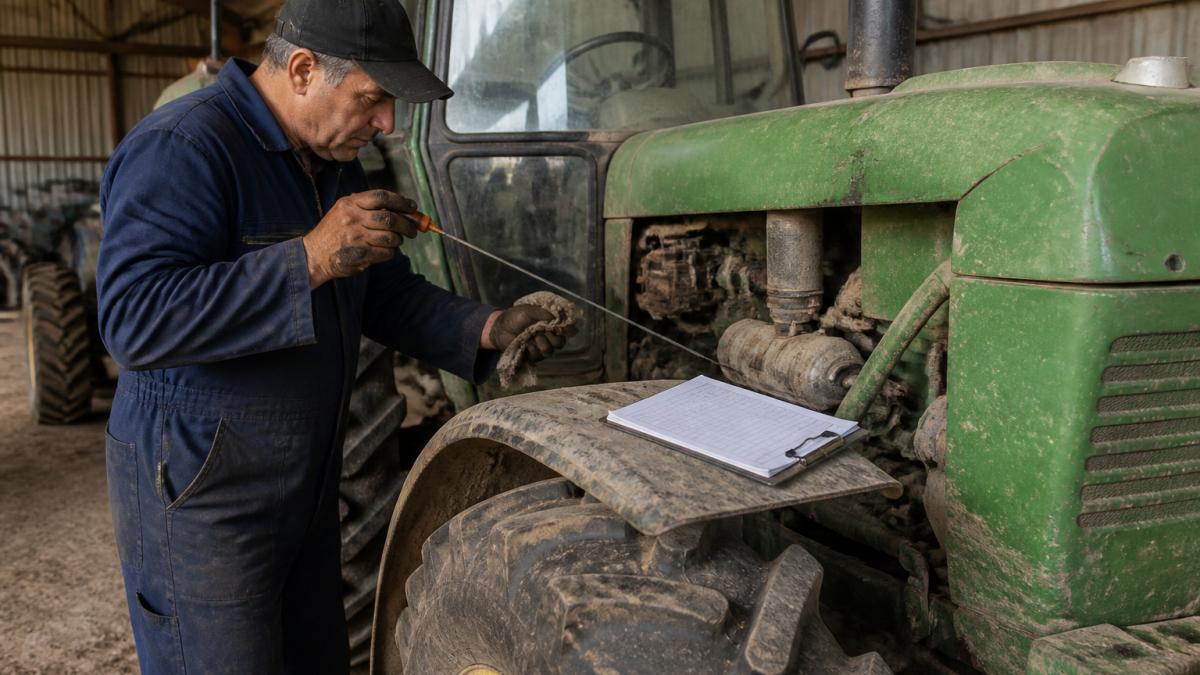
Core maintenance tasks include:
- Change engine oil and filters on the manufacturer's interval.
- Service the fuel filter and drain water from the separator regularly.
- Keep the air filter clean; dust destroys diesel engines quickly.
- Check coolant and inspect hoses before heavy work seasons.
- Exercise the machine periodically during off-season storage.
Emissions Systems on Modern Tractors
Tractors built to current emissions standards carry a diesel particulate filter (DPF) and, on many models, selective catalytic reduction (SCR) that uses diesel exhaust fluid (DEF). These systems work best when the engine reaches operating temperature under load. Short, light-duty operation, the kind common on hobby farms and loader work, can prevent the DPF from reaching the heat needed to burn off accumulated soot, triggering frequent regeneration cycles or, worse, a derate that limits power until service is performed. If your workload is mostly light and intermittent, factor regeneration behavior into your buying decision, and follow the manufacturer's guidance on passive versus active regeneration.
Cold-Weather Starting Practices
Diesel fuel resists ignition, which is why diesel engines rely on glow plugs and high compression. In cold weather, gasoline tractors start more easily, while diesel tractors need more deliberate warm-up routines. Practical steps include keeping the battery healthy and fully charged, using the glow plugs as the manual directs, installing a block heater for consistent cold starts, and switching to winter-blend fuel before temperatures drop. Cranking a cold diesel without these preparations stresses the starter and battery and can dilute the oil with unburned fuel.
Fuel Storage and Seasonal Use
Fuel storage deserves attention too. Stored diesel ages, absorbs water, and can support microbial growth that fouls filters and injectors. Keep stored fuel clean and free of water, rotate it rather than letting it sit for seasons, and treat it according to the supplier's recommendations. For tractors used intermittently, this is often the difference between a machine that starts cleanly after months of storage and one that needs a fuel system service before the season begins.
Used Diesel Tractor Buying Checklist: What to Inspect Before You Pay
A used diesel tractor buying checklist protects your capital, because the engine is the most expensive component to replace. Inspect in this order.
- Check cold-start behavior: does it start cleanly without excessive cranking?
- Watch the exhaust under load: blue, black, or white smoke signals trouble.
- Verify hour meter and cross-check against wear on pedals, seat, and tires.
- Inspect for wet stacking signs: sooty, oily residue at the exhaust outlet.
- Check for fuel, oil, and coolant leaks around the block and lines.
- Test the PTO and hydraulics under load, not just at idle.
- Review service records; a documented history is worth more than a clean hood.
- Confirm emissions components are intact and functioning.
When you are ready to sell or trade, Ironmartonline connects sellers to buyers across global and local markets, so a well-inspected machine reaches the audience that values it. Our nine selling platforms and no-contract model make the process straightforward.
Matching Engine Size to Implements and Fieldwork
Engine size should follow the implement, not the other way around. A tractor sized too small for its implements labors constantly; one sized too large runs light and risks wet stacking. Match horsepower and PTO output to the heaviest implement you plan to run, then add a sensible margin.
Consider these rules of thumb:
- Size to the largest implement you will pull regularly, not the occasional one.
- Confirm PTO horsepower meets the implement's requirement, not just engine horsepower.
- Account for terrain and soil type; heavier ground demands more power.
- Leave headroom for future implements, but do not oversize into permanent light-load operation.
For buyers and sellers alike, Ironmartonline's heavy equipment brokerage helps place machines with the operators whose workloads fit them, which protects value on both sides.
Conclusion
Choosing between diesel and gasoline comes down to honest math about hours, load, and how long you plan to keep the machine. Diesel tractor engines reward serious workloads with efficiency, torque, and durability, while gasoline suits lighter, occasional use. Get the duty cycle right and the rest follows.
Frequently Asked Questions
What are the advantages of a diesel tractor engine?
Diesel tractor engines deliver high torque at low engine speed, which suits heavy loads, towing, and PTO-driven implements. A 2019 review in Frontiers in Mechanical Engineering notes diesel engines exceed stoichiometric spark-ignition engines in fuel-conversion efficiency at both full and part load. They also last longer between overhauls when maintained, and they hold resale value well. For fieldwork that runs at steady load, those traits translate into lower fuel consumption per acre and fewer engine service interruptions.
Is a diesel or gasoline engine better for a tractor?
It depends on duty cycle. Diesel wins for heavy loads, long fieldwork days, and high-hour use because of torque and fuel efficiency. Gasoline can suit light, intermittent tasks and is easier to start in cold weather. If your tractor runs a loader, pulls a plow, or powers a PTO for hours, diesel is the better fit. For occasional yard work, a gasoline tractor may cost less upfront.
How long do diesel tractor engines typically last?
Lifespan depends on hours, load, and maintenance rather than a single number. Diesel engines are known for durability, and many tractor engines run thousands of hours before a major overhaul when serviced on schedule. Low-load operation, dirty fuel, and missed oil changes shorten that life. When buying used, treat engine hours as one signal among several: check service records, blow-by, and cold-start behavior before you judge remaining life.
What should I check when buying a used diesel tractor?
Start the engine cold and watch for smoke, then check for blow-by at the breather. Inspect the cooling system, fuel lines, and injection pump for leaks. Review service records for oil and filter intervals. Test the PTO and hydraulics under load. Look for wet stacking signs if the tractor ran light duty. Confirm the emissions equipment is intact and matches the model year. A compression test and oil analysis add confidence before you commit.
Are diesel tractors harder to maintain?
Diesel tractors need more disciplined maintenance than gasoline models, not necessarily more frequent repairs. Fuel filters, water separators, and oil changes matter more because diesel injection systems are sensitive to contamination. Cold-weather starting requires attention to glow plugs, block heaters, and battery condition. WPower Products lists fuel expense and wet stacking as drawbacks, both of which maintenance habits can manage. Keep records, use clean fuel, and service on schedule to avoid costly injection repairs.
If you are weighing a purchase or ready to move a machine, Ironmartonline can help. Our heavy equipment brokerage puts your equipment in front of millions of buyers through nine web-based selling platforms, with no contracts and no hidden fees. Get started with Ironmartonline and turn your surplus machinery into a completed sale. Join our email list for market updates and new listings.