

Table of Contents
- Selling Dozers Privately vs Auction: Which Nets More?
- Private Sale vs Auction: How Each Method Works
- Net Proceeds: Where Private Sales and Auctions Diverge
- How to Price a Used Dozer for a Private Sale
- Prepare a Dozer for Sale: Condition, Records, and Photos
- Your Used Dozer Listing Checklist
- Dozer Auction Reserve: Setting a Floor Without Killing Bids
- Fraud, Payment, and Liability Risks in Each Sale Method
- Which Sale Method Fits Your Dozer and Timeline?
- Frequently Asked Questions
Last Updated: October 8, 2026
Selling Dozers Privately vs Auction: Which Nets More?
Selling dozers privately usually nets more money, while auction selling typically closes faster. That trade-off sits at the center of nearly every decision an owner faces when moving a surplus machine. This comparison from Ironmartonline breaks down both paths, from listing to cash in hand.
Why use Ironmartonline as an equipment broker? Because the two traditional paths each carry a cost: a private sale demands weeks of your time, and an auction hands pricing control to a room full of strangers. A broker sits between the two, putting your machine in front of a large buyer audience while you keep a say in the final number.
The stakes are real. A dozer is a high-value, low-volume asset. It might sit for months on a private listing, or sell in minutes under the gavel for less than you hoped. Auction houses often market speed and broad buyer exposure as their core advantages, while private sales appeal to sellers who want patience and control (Westbrook Auctions on machinery exit strategies). Below, we'll show you exactly how each method works, where the net proceeds diverge, and how to decide which fits your machine and timeline.
Private Sale vs Auction: How Each Method Works
A private sale is a direct transaction between you and a buyer, negotiated outside a bidding floor. An auction is a timed, public event where buyers compete and the highest bid wins. The mechanics of each shape everything that follows.
The Private Sale Process
You set the asking price, field inquiries, schedule inspections, and negotiate one-on-one. The machine stays in your yard until it sells. You decide which offers to entertain and which to reject. That control is the whole point, but it comes with the work of marketing the machine yourself or hiring someone to do it.
The Auction Process
You consign the machine to an auctioneer, who evaluates it, markets it to a registered bidder base, and runs the sale on a set date. Consignment typically involves an agreement, an evaluation, and a marketing push before the gavel falls (Mid East Equipment on consignment auctions). Once bidding opens, the market decides the price. You either accept the result or protect yourself with a reserve.
| Factor | Private Sale | Auction |
|---|---|---|
| Price control | Seller sets asking price | Market sets final bid |
| Time to sell | Weeks to months | Fixed sale date |
| Buyer pool | Whoever responds to your listing | Registered bidder base |
| Seller workload | High, unless brokered | Low after consignment |
| Sale certainty | No guaranteed buyer | Sale on auction day |
Net Proceeds: Where Private Sales and Auctions Diverge
Net proceeds, not sale price, decide which method pays better. A high auction bid means little if commissions and fees eat the margin. This is the section most sellers skim, and it is the one that determines whether you actually made money.
Auction sellers pay a commission, often a percentage of the hammer price, plus possible listing and preparation fees. That cut comes straight off the top. A private sale avoids commission, but you absorb marketing costs and the value of your own time. The honest comparison is final cash in hand after every cost.
Here is the part most sellers miss: a private sale can command a higher price because you can wait for the right buyer, while an auction price reflects whoever showed up that day. In a hot market, competitive bidding can push a dozer past its expected value. In a sluggish market, an auction can undersell a machine that a patient private seller would have moved at a fair number.
To compare net proceeds properly, list every cost that applies to your situation. Auction costs typically include seller commission, listing fee, preparation or wash fee, transport to the auction yard, and sometimes a no-sale fee if the reserve is not met. Private sale costs typically include advertising, photography, inspection time, negotiation time, and transport arranged by the buyer or split. A brokered listing may involve a flat fee or commission, but it can reduce your workload and broaden reach.
The table below shows the cost categories to compare side by side. Fill in your own numbers because rates vary by region, auction house, and machine value.
| Cost category | Private sale | Auction |
|---|---|---|
| Seller commission | None | Percentage of hammer price |
| Listing or entry fee | Advertising cost | Auction listing fee |
| Preparation | Your labor or paid wash/repair | Auction wash/prep fee |
| Transport to sale site | Buyer usually arranges | You pay to deliver to auction yard |
| No-sale fee | None | Possible if reserve not met |
| Your time | High | Low after consignment |
Run your own numbers before you decide.
One more dozer-specific cost: undercarriage condition affects both the sale price and the buyer's willingness to pay for transport. A machine with worn undercarriage may sell for less and cost more to move, which widens the net-proceeds gap between methods. Factor that into your comparison.
How to Price a Used Dozer for a Private Sale
Pricing a used dozer starts with condition, hours, and comparable sales, not with what you paid for it. Overprice it and it sits; underprice it and you leave money on the table. Dozer-specific factors carry more weight than most owners expect.
Start with the machine itself. Track hours, undercarriage wear, engine and hydraulic health, and service history all move the number. A dozer with fresh undercarriage and documented maintenance supports a stronger ask than one with unknown hours. Then look at what comparable machines are actually selling for, not what sellers are asking. Asking prices are wishes; sold prices are facts.
Undercarriage condition alone can swing value significantly, because replacement is a major expense for the next owner. Measure wear on the rails, sprockets, idlers, and rollers. A common rule of thumb is that undercarriage life is measured in percentage remaining; below 50% remaining, buyers discount heavily. Document the measurements with photos.
Make and model demand matters. Certain models from Caterpillar, Komatsu, Deere, and Case hold value better in the used market because parts and service are widely available. A less common model may take longer to sell and command a lower price. Year and emissions tier also affect value, especially if the machine will be used in regions with strict emissions rules.
Attachments and blade type change the buyer pool. A machine with a ripper, winch, or specialized blade may appeal to a narrower set of buyers but can command a premium from the right one. A standard straight blade or angle blade has broader appeal.
Service history is proof, not a claim. Maintenance logs, repair invoices, and hour-meter records support your price and speed up the sale. Without them, buyers assume the worst and negotiate down.
To set your price, gather at least three to five recent sold listings for comparable machines. Adjust for hours, undercarriage condition, attachments, and location. Set your asking price at the top of the realistic range, leave a little negotiating room, and be ready to justify every dollar with records.
The cost to transport a dozer is high, so buyers factor distance into their offer. If you are far from major construction markets, your realistic price may be lower than a comparable machine near a city. Price with logistics in mind.
Prepare a Dozer for Sale: Condition, Records, and Photos
Preparation is where private sellers win or lose the deal. A clean, documented, well-photographed machine sells faster and for more.
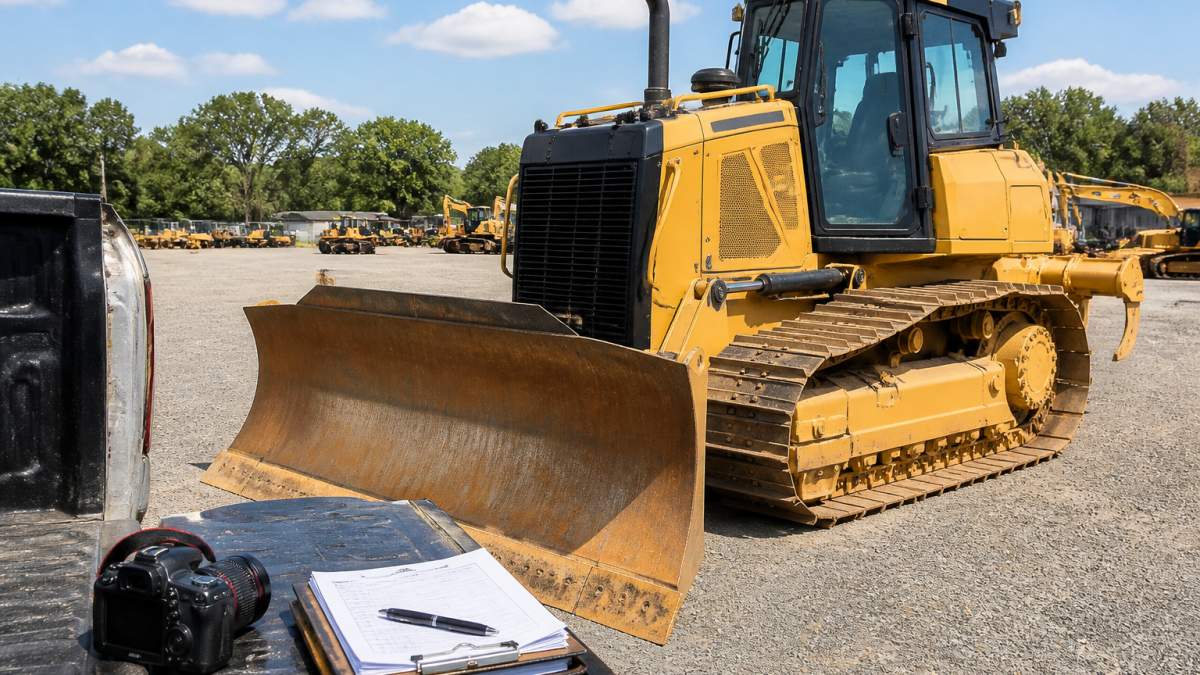
Wash the machine and clear the cab. Steam off years of grease so a buyer can see leaks, welds, and wear instead of dirt. Fix small problems before listing, because a buyer who spots a cheap defect wonders what else you hid.
Gather your paperwork: service records, hour-meter history, maintenance logs, and any repair invoices. Records turn a claim into proof, and proof supports your price. Then shoot photos in good light from every angle, including the undercarriage, engine bay, and any flaws. Buyers trust sellers who show the bad with the good. A listing that hides defects wastes everyone's time and invites lowball offers.
Your Used Dozer Listing Checklist
A used dozer listing checklist keeps you from forgetting the details that close a sale. Work through it before you publish anything.
- Machine cleaned, cab cleared, and fluids topped off
- Hour meter reading verified and photographed
- Undercarriage condition documented with close-up photos
- Service records and maintenance logs scanned and ready
- All defects disclosed in writing, with photos
- Asking price set from comparable sold machines
- Contact method and inspection terms stated clearly
- Payment terms and title transfer process defined up front
The last two items matter more than most sellers realize. State how you'll accept payment and how the title transfers before a buyer asks. Ambiguity here kills deals and, worse, opens the door to fraud.
Dozer Auction Reserve: Setting a Floor Without Killing Bids
A dozer auction reserve is the minimum price you'll accept, and setting it too high can scare off bidders entirely. Set it too low and you risk selling below value.
A reserve protects you from a bad day at the auction. It tells the auctioneer not to sell unless bidding reaches your floor. The catch is that a reserve above what buyers consider fair value can suppress bidding, because serious bidders dislike wasting effort on a machine that won't sell. Some auctions also charge a fee if the reserve isn't met, so an unsold machine can still cost you.
Set the reserve at the lowest number you'd genuinely accept, informed by comparable sales and your net-proceeds math. Communicate it clearly to the auctioneer and understand the terms before you consign. If you can't stomach the reserve risk, a private sale or a brokered listing gives you more control over the final number.
Fraud, Payment, and Liability Risks in Each Sale Method
Fraud and payment risk exist in both methods, but they show up differently. Private sales expose you to fake buyers and payment scams; auctions shift some risk to the auction house but not all of it.
In a private sale, watch for overpayment scams, counterfeit cashier's checks, and buyers who want you to ship the machine before funds clear. Verify funds with your bank before releasing anything. Confirm the buyer's identity, and never hand over a title until payment is final. Liability also matters: once the machine leaves your yard, document the transfer so you're not tied to what the next owner does with it.
Auctions handle bidder registration and often manage payment, which reduces your exposure to individual scams. But read the consignment terms. Some agreements limit the auction house's liability, and an as-is sale still leaves you responsible for accurate disclosure. In both paths, honest condition reporting and clean paperwork are your best protection.
Which Sale Method Fits Your Dozer and Timeline?
Match the method to your machine and your cash needs, not to habit. There's no universal winner, only the right fit for your situation.
Choose a private sale when you have time, a desirable machine, and the patience to market it. You keep more of the proceeds and control the price. Choose an auction when you need the machine gone on a schedule, when it's older or surplus, or when you want a large buyer pool without doing the legwork. Auction selling can move older or surplus construction equipment quickly and reach a broad audience, including international buyers (JumboBee on auction selling for construction equipment).
For many owners, a brokered listing splits the difference. Ironmartonline connects sellers to buyers through nine specialized web-based selling platforms, with no contracts and no hidden fees, so your dozer reaches a wide audience without the auction floor's pricing gamble. We handle the exposure; you keep a say in the deal.
Frequently Asked Questions
Is it better to sell a dozer privately or at auction?
It depends on your timeline and the machine. A private sale gives you control over price and lets you negotiate directly with a buyer, which often nets more on late-model, low-hour dozers. An auction moves older or surplus equipment faster and exposes it to a larger buyer pool, including international buyers. Weigh net proceeds after fees, how quickly you need cash, and whether your dozer is common or a unique asset.
How long does it take to sell a used dozer privately?
A private sale typically takes longer than an auction because you are marketing to individual buyers and negotiating one at a time. Well-priced, clean machines with good records can move in weeks, while niche or high-hour dozers may sit for months. An auction compresses the process into a single event, which matters if you need cash quickly or are clearing surplus equipment.
How do I price a used dozer for a private sale?
Start with recent sale prices for the same model, year, and hours, then adjust for undercarriage wear, service history, and attachments. Undercarriage condition alone can swing value significantly. Compare asking prices on dealer listings, but remember those include dealer markup. Price slightly above your walk-away number to leave room for negotiation, and be ready to justify your figure with records and inspection results.
How do auction reserves work for heavy equipment?
A reserve is the minimum price you will accept. If bidding does not reach it, the dozer does not sell. Reserves protect you from a weak market, but set too high they discourage bidders and produce a no-sale. Some auctions charge fees even on no-sales, so confirm terms first. A realistic reserve based on recent comparable sales usually produces better results than an aspirational one.
What should I include in a dozer listing?
Include the make, model, year, hours, serial number, undercarriage condition, service records, attachments, and any known issues. Add clear photos of all four sides, the undercarriage, the cab, and the engine. Note whether the machine has been used in a specific application and whether it is emissions-compliant for your market. Complete listings attract serious buyers and reduce back-and-forth.
The hard part isn't choosing a method on paper. It's getting your machine in front of enough serious buyers to command a fair price without waiting months or surrendering control. Ironmartonline solves that by putting your dozer on nine specialized web-based selling platforms, reaching buyers locally and globally with no contracts and no hidden fees. If you're ready to sell, join our email list and see how a brokered listing can move your equipment without the auction gamble.