
Table of Contents
- Why Use an Equipment Broker for International Heavy Truck Sales
- Understand Equipment Valuation Before You Sell
- Master Heavy Equipment Export Documentation
- Identify and Target International Buyers
- Prepare Your Trucks for International Transit
- Navigate Legal and Regulatory Requirements
- What Happens If You Buy Stolen Heavy Equipment
- Secure Payment Methods for International Machinery Sales
- Handle Logistics and Shipping Methods
- Common Mistakes to Avoid When Selling Internationally
Last Updated: August 25, 2026
Why should you consider using an equipment broker when selling heavy trucks internationally? The answer lies in complexity. International heavy truck sales involve customs documentation, regulatory compliance, currency conversion, and logistics coordination that most owner-operators and small fleet managers aren't equipped to handle alone. A Heavy Equipment Broker like Ironmartonline simplifies this process by connecting you with qualified international buyers across nine specialized web-based selling platforms, reaching millions of potential purchasers without the typical hassle of contracts or hidden fees.
The global heavy-duty trucks market was valued at $308.3 billion in 2025 and is projected to reach $475.5 billion by 2035, growing at a compound annual growth rate of 4.8%. The global used truck market was valued at $58.16 billion in 2025 and is expected to grow to $92.52 billion by 2034, with North America accounting for 36.81% of global used truck sales in 2025.
That growth creates opportunity, but it also creates risk. According to McKinsey & Co., "2025 was extremely challenging, and 2026 is projected to at least start equally challenging." Fleet purchases are being deferred, tariffs are reshaping buyer behavior, and nearly half of heavy truck dealers report that tariffs have already reduced demand. In this environment, knowing how to reach international buyers and navigate the selling heavy trucks internationally process becomes critical to moving inventory quickly and securing fair prices.
Why use an Ironmartonline Heavy Equipment Broker? Because independent sellers struggle with the regulatory landscape, buyer verification, and cross-border documentation that brokers handle routinely. An Ironmartonline Heavy Equipment Broker connects you to vetted international buyers across multiple platforms simultaneously, multiplying your exposure without requiring you to manage each listing individually. Rather than posting on a single site and hoping the right buyer finds you, a broker ensures your trucks reach the markets where demand actually exists.
Below, we'll walk you through 10 essential tips for selling heavy trucks internationally, covering everything from equipment valuation and export documentation to payment security and logistics.
Why Use an Equipment Broker for International Heavy Truck Sales
Selling heavy trucks internationally without professional support is like navigating customs without a map. The regulatory landscape shifts by country, buyers expect documentation you may not have prepared, and miscommunication across borders can kill deals that were otherwise solid.
An equipment broker acts as your intermediary, handling the details that derail most independent sellers. A Heavy Equipment Broker connects you to a network of vetted international buyers across multiple platforms simultaneously, multiplying your exposure without requiring you to manage each listing individually. Rather than posting on a single site and hoping the right buyer finds you, a broker ensures your trucks reach the markets where demand actually exists.
Instead of fielding questions about export requirements or struggling to explain your truck's compliance status to a buyer in another country, the broker manages those conversations. They understand which documentation matters to buyers in specific regions, what certifications are required, and how to structure deals that work across borders. For owner-operators with just two or three trucks to move, this professional coordination is often the difference between a quick sale and inventory sitting idle for months.
Brokers also protect you from underpricing. When you sell independently, you're negotiating against experienced international buyers who know exactly what your equipment is worth in their market. A broker has handled many similar transactions and can provide insights into the market price for your specific truck model, condition, and configuration. That knowledge alone can often help recover a broker's fee within a single transaction.
Understand Equipment Valuation Before You Sell
Before you list a single truck, you need an honest appraisal of what it's actually worth in the international market. Equipment valuation for heavy trucks is not straightforward. The same truck that might fetch domestically could be worth significantly more or less depending on its destination market, local demand, fuel costs in that region, and regulatory requirements.
Start with a detailed condition assessment. Document the engine hours, service history, any major repairs, tire condition, and structural integrity. International buyers are far more scrutinous than domestic purchasers because they're importing an asset that will operate in unfamiliar conditions.
Research comparable sales in your target markets. The used truck market shows significant regional variation. A Class 8 tractor that's reaching the end of its useful life in the United States may have strong demand in Latin America or Africa, where trucking fleets operate longer and maintenance infrastructure is different. Check recent sales data from equipment marketplaces and broker reports to understand what similar trucks have sold for in those regions.
Consider also the truck's configuration. A long-haul tractor configured for highways may be worth less in a market where regional hauling dominates. A truck with emissions systems that exceed local requirements may actually be worth less to a buyer who will immediately have to modify it for compliance.
The most reliable approach is to work with a broker or appraiser who specializes in the specific markets you're targeting. They'll factor in local demand, import duties, compliance costs, and currency fluctuations to give you a realistic range.
| Valuation Factor | Impact on Price | How to Assess |
|---|---|---|
| Engine hours and maintenance history | High | Service records, mechanic inspection |
| Truck configuration and specialization | High | Compare to similar models in target market |
| Emissions and regulatory compliance | Medium-High | Check target country's standards |
| Structural condition and accident history | High | Physical inspection, CarFax/history report |
| Market demand in target region | High | Broker research, comparable sales data |
| Currency and import duty costs | Medium | Consult customs broker or trade data |
Master Heavy Equipment Export Documentation
Export documentation is where most independent sellers stumble. The paperwork required to legally export a heavy truck crosses multiple jurisdictions and regulatory bodies, and a single missing form or incorrect certification can halt a sale entirely.
The foundation is the commercial invoice. This document describes the truck in detail, states the sale price, and serves as proof of the transaction. It needs to be accurate down to the VIN, engine number, and specific equipment attached.
Next comes the bill of lading, which documents the physical shipment. It serves as a receipt for the goods, a contract for transportation, and proof of ownership transfer. The bill of lading must match the commercial invoice in every material detail.
Export licenses are required for certain destinations. The U.S. Department of Commerce regulates exports through the Bureau of Industry and Security. Most heavy trucks don't require a specific export license unless they're being shipped to embargoed countries, but you need to verify this before proceeding.
The title transfer documentation varies by state but is essential. You'll need a clean title showing you as the legal owner with no liens.
Emissions documentation has become increasingly critical. The California Air Resources Board (CARB) adopted the Advanced Clean Trucks (ACT) regulation in 2020, which requires manufacturers to sell increasing percentages of zero-emission heavy-duty trucks starting in 2024 (arb.ca.gov). If your truck doesn't meet these standards, you need documentation showing its actual emissions profile so buyers can make informed decisions about compliance costs in their market.
Finally, prepare a detailed equipment specification sheet. This includes engine type and horsepower, transmission details, axle configuration, tire specifications, and any aftermarket equipment. International buyers often operate in markets where parts availability differs dramatically from the U.S., so they need to understand exactly what they're getting.
Identify and Target International Buyers
Finding the right international buyer is half the battle in selling heavy trucks internationally. The wrong buyer is one who underestimates the costs of importing your truck, discovers compliance issues too late, or lacks the capital to complete the transaction.
Start by understanding which markets have actual demand for your specific truck type. Latin America and sub-Saharan Africa have strong demand for used Class 8 tractors, but the specifications that matter differ. A buyer in Mexico prioritizes fuel efficiency and compatibility with Mexican fuel standards. A buyer in Nigeria may prioritize durability and parts availability in West African supply chains.
The American Trucking Associations reports that trucks transported 67% of the value of surface trade between the U.S. and Canada and 85% of surface trade between the U.S. and Mexico in 2024 (trucking.org). This volume indicates active buyer networks in those countries.
Brokers maintain relationships with established importers and fleet operators in key markets. Rather than trying to identify and vet individual buyers yourself, a Heavy Equipment Broker connects you with pre-qualified purchasers who have already demonstrated the financial capacity and regulatory knowledge to complete international transactions.
When evaluating potential buyers, verify their legitimacy. Ask for references from previous transactions, confirm their business registration in their home country, and request proof of financial capacity. International scams targeting equipment sellers are common, and a buyer who won't provide basic verification is a buyer to avoid.
Prepare Your Trucks for International Transit
A truck that looks acceptable for domestic resale may not survive international shipping in acceptable condition. The preparation phase is where you protect your asset and maximize its value.
Start with a comprehensive mechanical inspection. Document everything: engine compression, transmission function, brake system integrity, and electrical systems. International buyers expect trucks to be mechanically sound because they won't have easy access to specialized service centers once the truck arrives.
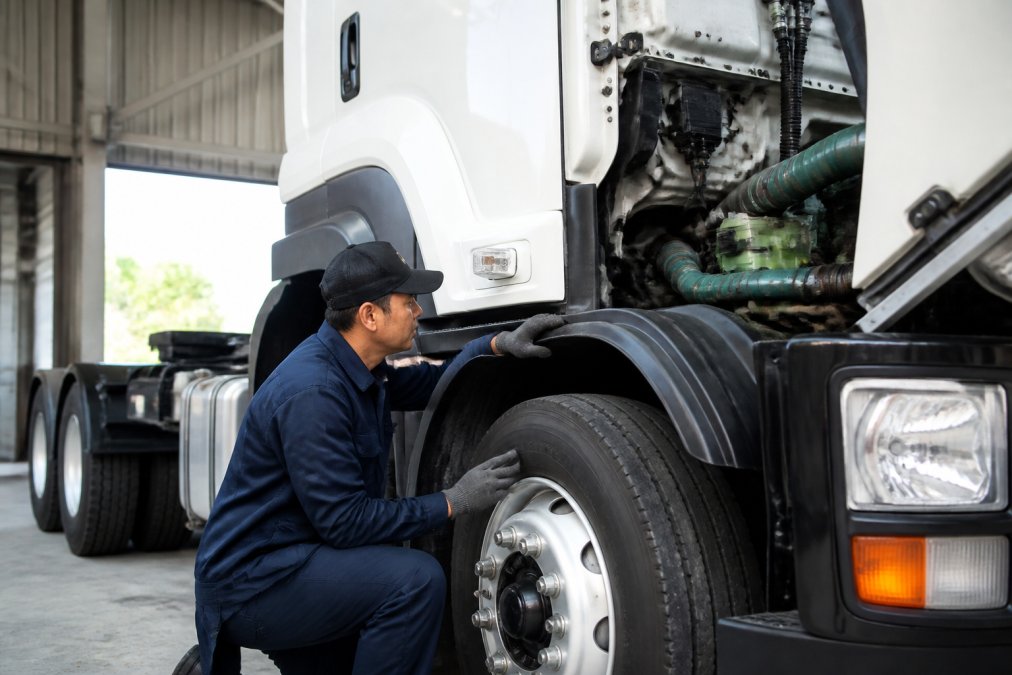
Next, address cosmetic and structural issues. Rust, dents, and cracked windows matter more for export than domestic sales. Pressure-wash the entire exterior, address any rust spots with rust treatment and paint, and repair or replace damaged windows and mirrors.
Prepare the truck for the specific shipping method you'll use. If the truck will be shipped via roll-on roll-off (RoRo), ensure all loose items are removed, the fuel tank is at the correct level, and the battery is disconnected to prevent drain during transit.
Document the truck's condition thoroughly with photographs and video. Capture the exterior from multiple angles, the interior condition, the odometer reading, and any existing damage. This documentation protects you if the buyer claims the truck arrived in worse condition than agreed.
Finally, ensure all keys, manuals, and documentation are included and organized. International buyers appreciate receiving everything promised, and missing items create friction that can delay payment or trigger disputes.
Navigate Legal and Regulatory Requirements
Selling heavy trucks internationally means complying with both U.S. export regulations and the import regulations of the destination country. Each jurisdiction has different requirements, and non-compliance can result in the truck being held at port, returned to the U.S., or seized.
The foundation is understanding your obligations as the exporter. The U.S. Department of Transportation and the Commerce Department regulate what can be exported and to where. Most heavy trucks can be exported freely, but certain destinations and certain configurations may have restrictions.
Title and ownership documentation must be clear. The truck cannot have any liens, and you must be able to prove legal ownership. If the truck is financed, you'll need the lender's permission and cooperation to transfer title. international shipping strategies.
Import regulations in the destination country vary widely. Some countries require that imported trucks meet specific emissions standards. Others require vehicles to pass inspection by a local authority before they can be registered. Some countries impose tariffs or import duties that can be substantial.
Currency and payment regulations also matter. Some countries restrict how much currency can be transferred across borders, which affects how the buyer can pay you. Understanding these requirements prevents payment delays or complications.
What Happens If You Buy Stolen Heavy Equipment
If you inadvertently sell stolen equipment, the consequences for both parties are severe, and the legal liability falls primarily on the seller. Stolen equipment can be seized by law enforcement at any point after the sale, and your buyer will have no recourse against you unless you explicitly warranted the truck's legal ownership.
For sellers, the protection is straightforward: verify ownership before selling. Obtain a clear title report showing no liens or claims. Run the VIN through the National Insurance Crime Bureau (NICB) database to confirm the truck hasn't been reported stolen.
For international sales, this verification becomes even more critical. A truck that's stolen domestically might be difficult to trace once it crosses a border, but international law enforcement agencies increasingly cooperate on equipment theft.
The practical approach is to work with a broker or title company that specializes in equipment verification. They have access to databases and documentation systems that confirm clean title and legal ownership. This verification protects both you and the buyer and is a standard part of professional equipment sales.
Secure Payment Methods for International Machinery Sales
Payment is where most international equipment sales go wrong. A buyer in another country may face pressure to send payment before receiving the truck, or you may be pressured to release the truck before payment clears. One party inevitably takes on unacceptable risk.
The industry standard for protecting both parties is escrow services. An escrow company holds the buyer's payment in a secure account until the truck is delivered and the buyer confirms receipt in acceptable condition. Only then does the escrow company release payment to you.
For international transactions, use an escrow service experienced in cross-border equipment sales. They understand currency conversion, international wire transfer requirements, and the documentation needed to comply with regulations in both countries.
Wire transfers are common for large equipment sales, but they're irreversible once sent. Always require that payment be received and confirmed before releasing the truck.
Letters of credit are another option, particularly for larger transactions. The buyer's bank issues a letter of credit guaranteeing payment upon presentation of specific documentation (typically the bill of lading and commercial invoice). This protects both parties because the bank is vouching for the buyer's ability to pay.
Cryptocurrency and informal payment methods should be avoided entirely for international equipment sales. They offer no buyer protection, no fraud recourse, and significant regulatory complexity. Legitimate international buyers expect traditional payment methods, and any buyer pushing for unconventional payment is a red flag.
Handle Logistics and Shipping Methods
Getting a heavy truck from your location to an international buyer involves multiple options, each with different costs, timelines, and risks. Understanding these methods helps you quote accurately and manage buyer expectations.
Roll-on roll-off (RoRo) shipping is the most common method for heavy trucks. The truck is driven onto a specialized vessel, secured in place, and transported to the destination port where it's driven off. RoRo is cost-effective and relatively fast, typically taking 2-4 weeks for transatlantic shipments.
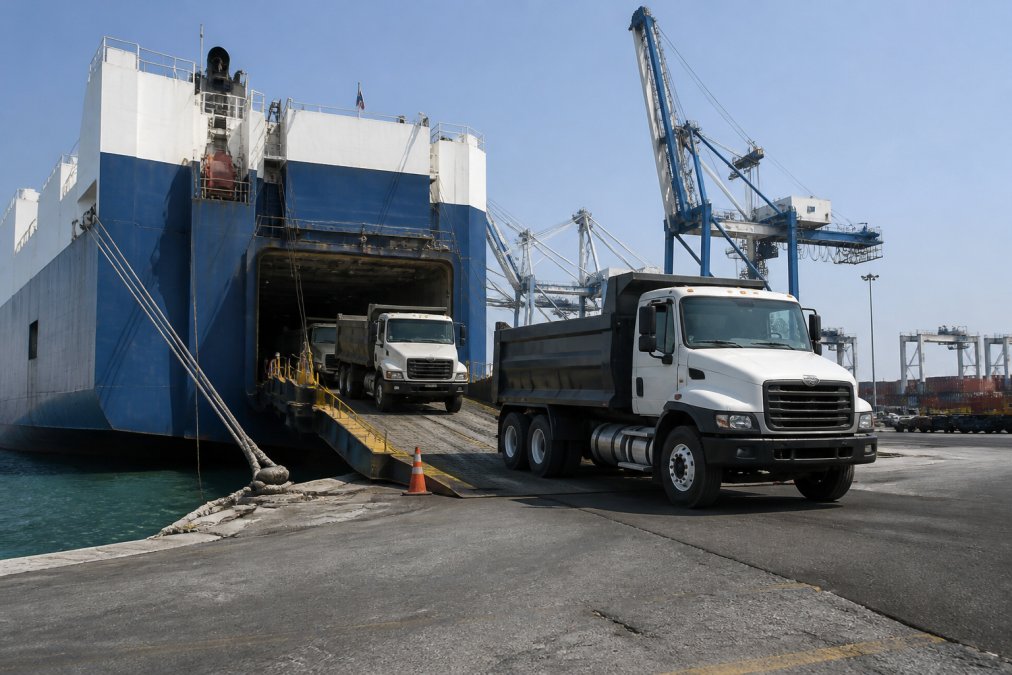
Container shipping involves placing the truck in a sealed shipping container, which provides better protection but is more expensive. Containerization is necessary if the truck will be shipped to regions where RoRo service isn't available, or if the buyer specifically requests it.
Breakbulk shipping is an option for trucks that don't fit standard containers or RoRo specifications. This is the most expensive option and typically takes longer, but it's sometimes necessary for oversized or heavily modified equipment.
Inland freight to the port is your responsibility unless you negotiate otherwise. Port fees, customs clearance, and import taxes are the buyer's responsibility in most transactions, but you should understand these costs so you can represent them accurately.
Insurance during transit is critical. Your truck should be covered from the moment it leaves your facility until it arrives at the buyer's location. Confirm with your freight forwarder or broker exactly what's covered and what isn't.
Common Mistakes to Avoid When Selling Internationally
The difference between a smooth international sale and a problematic one often comes down to avoiding predictable errors. Most of these mistakes are preventable with proper planning.
The first major mistake is underestimating the cost and timeline of export. Sellers frequently quote delivery dates without accounting for documentation delays, port congestion, or customs hold-ups. A realistic timeline for an international sale is 6-12 weeks from contract to delivery, not 3-4 weeks.
The second mistake is failing to disclose known issues with the truck. A truck with a transmission that's starting to slip, a radiator that leaks slightly, or electrical gremlins that appear intermittently might seem like minor issues domestically. Internationally, these issues become major problems because the buyer can't easily return the truck or demand warranty work. Disclose everything in writing and let the buyer make an informed decision.
The third mistake is not verifying the buyer's legitimacy before committing to a sale. Scams targeting equipment sellers are sophisticated. A buyer who won't provide verifiable business registration, references, or proof of financial capacity is a significant risk.
The fourth mistake is using informal payment methods or releasing the truck before payment is confirmed. Wire transfers that haven't cleared, checks from foreign banks, or promises of payment "once the truck arrives" are all high-risk scenarios. Insist on payment methods that provide protection, such as escrow or letters of credit.
The fifth mistake is inadequate documentation. Every conversation with the buyer, every agreement about truck condition, every specification should be documented in writing. International disputes are difficult to resolve, and written documentation is your only protection if disagreements arise.
The sixth mistake is not preparing the truck adequately for transit. A truck that looks acceptable for domestic resale may arrive at the destination with additional damage from shipping, rust from salt water exposure, or mechanical issues that developed during transit. Proper preparation and insurance prevent these problems.
The seventh mistake is not understanding the buyer's local regulations and requirements. A truck that's perfectly legal to operate in the U.S. might not meet the emissions standards, safety requirements, or configuration rules of the destination country. Understanding these requirements before you sell prevents the buyer from discovering after import that the truck requires expensive modifications to be legal.
Selling heavy trucks internationally is complex, but it's manageable when you approach it systematically. The process demands attention to documentation, regulatory compliance, and payment security. A Heavy Equipment Broker like Ironmartonline handles these details across nine specialized platforms, connecting your trucks with qualified international buyers without contracts or hidden fees. By following these 10 strategies, you'll move inventory faster, secure fair pricing, and avoid the costly mistakes that derail most independent sellers.
=== FAQ ANSWERS (audit these too, same rules) ===
Frequently Asked Questions
Q: What documentation is required to export a heavy truck internationally?
A: Heavy equipment export documentation includes a bill of lading, commercial invoice, packing list, certificate of origin, title transfer documents, and customs declaration forms. Depending on destination country, you may need emissions compliance certificates and vehicle inspection reports. Work with a freight forwarder or customs broker to ensure all paperwork meets both origin and destination regulations. Missing or incorrect documentation delays shipment and increases costs.
Q: How do I ensure payment security when selling heavy equipment internationally?
A: Use secure payment methods for international machinery sales such as escrow services, letters of credit, or wire transfers through established banks. Never accept payment before the buyer completes due diligence and inspections. Escrow holds funds until both parties fulfill obligations, protecting you from fraud. For high-value transactions, consider requiring a deposit upfront and verifying buyer credentials through industry references and credit checks.
Q: What happens if you buy stolen heavy equipment?
A: Purchasing stolen heavy equipment exposes you to legal liability, equipment seizure by law enforcement, and financial loss. The original owner can reclaim the machinery, and you may face criminal charges depending on jurisdiction and knowledge of theft. Title transfer issues prevent registration and resale. Always verify clean title, conduct VIN checks, request proof of ownership, and work with reputable brokers who vet sellers. Due diligence protects your investment and legal standing.
Q: How long does it typically take to sell heavy trucks internationally?
A: The timeline varies depending on truck condition, market demand, pricing, and buyer location. Properly documented trucks with competitive pricing may sell faster. International sales often take longer due to customs clearance, inspections, and shipping logistics. Using multiple selling platforms can increase visibility and potentially speed up the process. Working with experienced brokers can also lead to faster transactions than independent sellers managing all logistics alone.
This article was written using GrandRanker