

Table of Contents
- Why Sell Your Used Trailers to International Buyers?
- Step 1: Prepare Your Trailer for International Sale
- Step 2: Understand Exporting Used Trailers from US Regulations
- Step 3: Determine Pricing and Market Value
- Step 4: Choose Your Selling Platform for Global Reach
- Step 5: Create a Compelling International Listing
- Step 6: Navigate International Payment Methods for Vehicle Sales
- Step 7: Manage International Trailer Shipping Costs and Logistics
- Step 8: Negotiate and Close the International Deal
- Common Mistakes to Avoid When Selling Trailers Internationally
Selling Used Trailers to International Buyers: A 2026 Guide
Last Updated: July 25, 2026
Why Sell Your Used Trailers to International Buyers?
Selling used trailers to international buyers opens access to markets far beyond domestic demand. The global equipment marketplace has expanded dramatically, with buyers from Europe, Asia, Latin America, and the Middle East actively seeking quality used American trailers. International sales now account for a significant portion of used equipment transactions, with utility trailers, heavy-duty trailers, and specialized commercial trailers commanding strong prices in overseas markets.
Here's the core question: Why use a Heavy Equipment Broker when selling internationally? Most sellers attempting to reach international buyers face three immediate obstacles: documentation complexity, payment security concerns, and logistics uncertainty. A heavy equipment broker addresses these friction points directly. By connecting your used trailers to millions of potential buyers across multiple continents, brokers eliminate the need to manage separate listings on dozens of platforms, provide built-in buyer vetting that reduces fraud risk, and offer access to freight forwarders and customs specialists who understand cross-border trailer sales.
Unlike generic marketplaces, equipment-focused brokers mean your trailer reaches qualified international buyers actively searching for used American equipment. The difference in transaction quality and sale speed is substantial.
International demand for quality used trailers remains strong, and sellers who understand the process can capture significantly higher values than domestic-only sales.
Step 1: Prepare Your Trailer for International Sale
Preparing your trailer for international sale requires more rigor than domestic transactions. International buyers cannot inspect equipment in person, so documentation, condition assessment, and transparency become your strongest selling tools.
Conducting a Pre-Export Inspection
Start with a complete physical inspection of the trailer's structural integrity, mechanical systems, and overall condition. Check the frame for rust, cracks, or previous repairs. Examine the axles, suspension components, and brake systems. Test all lights, electrical connections, and safety equipment.
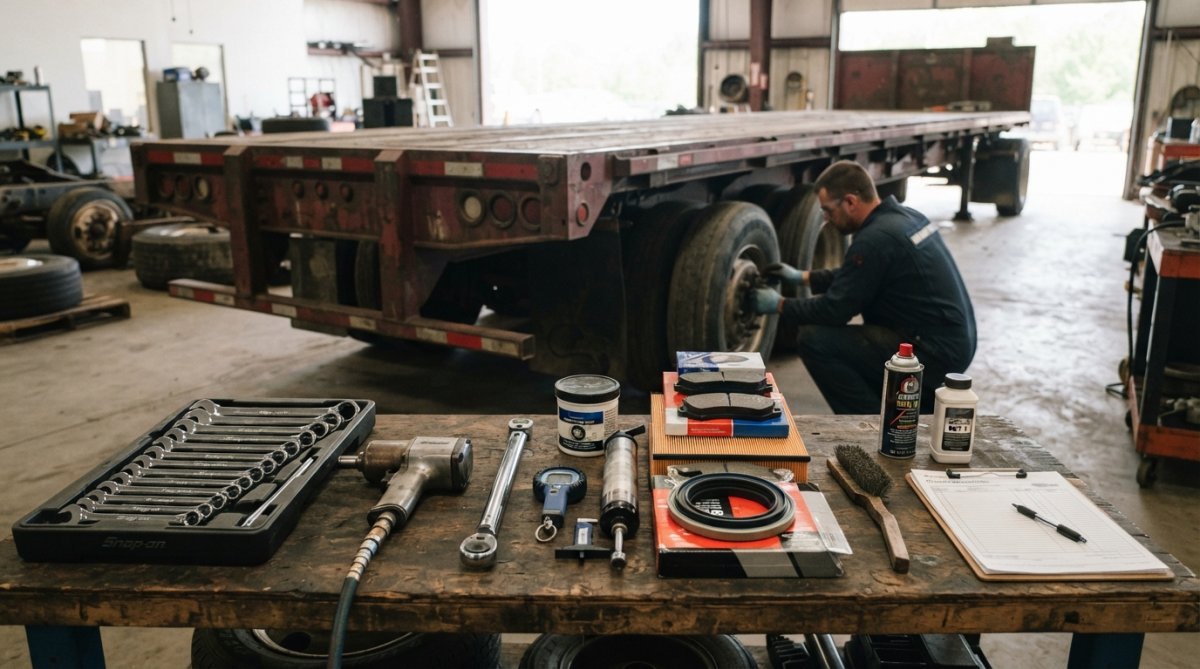
Document every finding with high-resolution photographs from multiple angles, including full-side views, close-ups of damage or wear, interior shots, and detail photos of the VIN plate. International buyers rely entirely on these images to assess condition. Poor lighting or blurry photos signal careless maintenance and reduce buyer interest immediately.
Acknowledge any repairs or significant wear directly in your listing. Honesty builds credibility; hiding problems destroys it the moment the buyer receives the pre-shipment inspection report.
Gathering Maintenance and Service Records
Compile all maintenance and service records you possess, including oil changes, brake service, suspension work, and major component replacements. Create a written maintenance summary listing the trailer's age, purchase date, and a chronological overview of major service events. This document becomes part of your export package and significantly increases buyer confidence.
Step 2: Understand Exporting Used Trailers from US Regulations
Exporting used trailers from the United States involves specific regulatory requirements that vary based on destination country, trailer type, and buyer classification.
Title and Deregistration Requirements
Verify clear title ownership and understand your state's deregistration process. Contact your state's Department of Motor Vehicles to confirm title transfer procedures for international sales. Obtain a clean, original title document, international buyers require physical documentation that cannot be transferred electronically.
Ensure the title shows no liens or outstanding claims. Prepare a bill of sale document that clearly states the trailer's VIN, condition, sale price, buyer name, and date of sale. Have this document notarized if your state requires it.
Proof of Export Documentation
When a trailer leaves the United States, you must obtain proof of export documentation from U.S. Customs and Border Protection (CBP). The freight forwarder handling your shipment typically manages this filing, but you should understand the process. The CBP requires an export declaration that includes the trailer's description, VIN, value, and destination country.
Keep copies of all export documentation for your records. International buyers often request proof that equipment was legally exported from the United States.
Step 3: Determine Pricing and Market Value
Pricing used trailers for international sale requires research into both domestic and international market conditions. Start by researching comparable trailers on major U.S. equipment marketplaces. International trailers typically command a 10-20% premium over domestic prices due to export, shipping, and customs clearance costs.
Consider the trailer's specific features when pricing. Heavy-duty trailers with advanced braking systems, specialty commercial trailers, and newer utility trailers with modern safety equipment command higher prices. Trailers with extensive maintenance records and documented recent repairs sell faster and at higher prices.
Factor in export and shipping costs when setting your price. Research typical shipping costs to your target markets. Build reasonable negotiating room into your initial listing price, typically 5-10% above your minimum acceptable price.
Step 4: Choose Your Selling Platform for Global Reach
Selecting the right selling platform dramatically affects your ability to reach international buyers.
Online Marketplaces vs. Equipment Brokers
Online marketplaces like Machinio and Machinery Trader offer broad reach and relatively low listing costs. These sites attract both domestic and international buyers. Listing on multiple marketplaces increases visibility but requires managing multiple listings and coordinating with buyers across different platforms.
Equipment brokers offer targeted exposure to qualified buyers in specific geographic markets and equipment categories. Rather than simply listing equipment, brokers actively market your trailer across their network. The trade-off is straightforward: marketplaces require more seller effort but offer lower upfront costs. Brokers require less seller effort but take a commission on successful sales.
For international sales specifically, brokers provide significant advantages. They understand export regulations, have relationships with freight forwarders and customs specialists, and guide you through cross-border transaction complexities.
Step 5: Create a Compelling International Listing
Your listing is the primary marketing tool for attracting international buyers. Since these buyers cannot inspect the trailer in person, your listing must convey condition, specifications, and value with absolute clarity.
Photography and Detailed Descriptions
Invest in high-quality photography using natural daylight from multiple angles. Include close-up details of condition, damage, wear, previous repairs, the VIN plate, interior shots, and undercarriage views if possible.
Write detailed, honest descriptions of the trailer's condition. Rather than simply stating "good condition," describe specifically: "Frame shows light surface rust on bottom edges, typical for 8-year-old equipment. No structural damage. Bed surface has minor dents from normal use. Tires have approximately 60% tread remaining. All lights functional. Brake system serviced in March 2026."
This level of detail builds buyer trust and preempts common questions.
Highlighting VIN and Specifications
Prominently display the trailer's VIN in your listing. Include all key specifications: trailer type, dimensions, weight capacity, axle configuration, brake type, hitch type, and any special features. List the manufacturer, model, and year clearly. If the trailer has been recently serviced or repaired, highlight this prominently.
Step 6: Navigate International Payment Methods for Vehicle Sales
Secure payment is critical in international trailer sales. You want assurance that payment will clear before releasing the trailer, and the buyer wants assurance that equipment matches the listing before paying.
Secure Payment Options and Fraud Prevention
Wire transfers are the most common payment method for international equipment sales. However, wire fraud is a significant risk. Never release the trailer before the wire transfer has fully cleared in your bank account. Clearing typically takes 3-5 business days for international wires.
Require a substantial deposit before arranging any export documentation or pre-shipment inspections. This demonstrates buyer commitment and gives you recourse if the buyer cancels after you've incurred costs. Use a secure payment method for the deposit that cannot be reversed.
Some international buyers prefer letters of credit, which are bank guarantees that payment will be made upon presentation of required documents. This protects both buyer and seller but involves bank fees and administrative work.
Avoid payment methods that can be reversed after the fact, such as credit cards or PayPal. These expose you to chargeback fraud.
Step 7: Manage International Trailer Shipping Costs and Logistics
Shipping a trailer internationally involves coordinating with freight forwarders, understanding Incoterms, managing customs clearance, and ensuring proper documentation.
Working with Freight Forwarders and Incoterms
A freight forwarder is a logistics company that arranges transportation of goods from your location to the buyer's destination. They handle cross-border shipping logistics, coordinate with customs brokers, arrange insurance, and ensure all required documentation is filed correctly.
When selecting a freight forwarder, verify that they have experience shipping equipment to your target country. Get quotes from multiple forwarders. Pricing varies significantly based on destination, trailer size, shipping method, and current market conditions.
Understand Incoterms, standardized international trade terms that define which party is responsible for shipping costs, insurance, and risk of loss during transit. Common Incoterms for equipment sales include:
- FOB (Free on Board): You pay for shipping to the port. Buyer pays for ocean freight and insurance.
- CIF (Cost, Insurance, and Freight): You pay for shipping, insurance, and ocean freight. Buyer pays for customs clearance and inland transport.
- DDP (Delivered Duty Paid): You pay for everything including customs duties and final delivery.
Most equipment sellers use FOB or CIF terms. FOB is simpler and reduces your liability once the trailer reaches the port.
Understanding Customs Clearance
The buyer's country will require customs clearance before the trailer can be imported and registered. Most countries require original bill of sale, commercial invoice, proof of export from the United States, equipment specifications, and customs declaration forms.
Delays in customs clearance are common, particularly if documentation is incomplete. Some countries restrict imports of equipment over a certain age, require specific safety certifications, or impose high import duties. Research your buyer's country's import regulations before finalizing the sale.
Many freight forwarders include customs brokerage services, preparing and filing customs documentation on behalf of the buyer. This service adds cost but significantly reduces delays.
Step 8: Negotiate and Close the International Deal
Negotiation in international sales follows similar principles to domestic sales but with additional complexity due to distance, communication delays, and currency considerations.
Expect international buyers to make opening offers below your asking price. This is standard practice in equipment sales globally. Respond professionally to all offers and move toward a realistic middle ground.
Communicate clearly about what's included in the sale. Are you selling the trailer only, or are you including attachments, spare parts, or documentation? Specify exactly what the buyer is purchasing.
Once you've agreed on price and terms, prepare a formal sales contract that includes trailer description and VIN, purchase price and payment terms, condition of the trailer, delivery terms, buyer's responsibility for customs clearance, and dispute resolution process. Have the contract reviewed by an attorney familiar with international equipment sales if the transaction is large or complex.
Once the contract is signed and the deposit is received, begin arranging export documentation and scheduling pickup with the freight forwarder. Provide the buyer with regular updates on export progress, shipping timeline, and estimated delivery date.
Common Mistakes to Avoid When Selling Trailers Internationally
Understanding common pitfalls helps you navigate the process more smoothly.
Incomplete or inaccurate documentation is the most frequent mistake. Missing export forms, incorrect VIN documentation, or incomplete maintenance records delay customs clearance. Invest time upfront to gather and organize all required documentation before listing.
Overpricing for international markets prevents sales. Price competitively for the total landed cost the buyer will face, accounting for export costs, shipping, and customs duties.
Inadequate photography and description results in low-quality inquiries. Poor photos signal careless maintenance and attract only scammers.
Failing to verify buyer legitimacy exposes you to fraud. Request documentation of buyer identity, business registration, and references. Verify independently before releasing equipment.
Underestimating shipping complexity leads to delays and miscommunication. Partner with experienced freight forwarders and allow adequate time for shipping and customs clearance.
Not understanding destination country regulations creates problems at customs. Research your buyer's country before finalizing the sale.
Releasing equipment before payment clears is the costliest mistake. Never allow the buyer to take possession before wire transfer payment has fully cleared in your bank account.
Selling used trailers to international buyers requires more preparation and coordination than domestic sales, but the opportunity for higher prices and access to a larger buyer pool justifies the effort. By understanding export regulations, preparing thorough documentation, pricing competitively, and managing logistics carefully, you can successfully reach international buyers and maximize your sale value.
The complexity of international equipment sales is exactly why heavy equipment brokers exist. Rather than managing export documentation, freight logistics, and international buyer communications yourself, a broker's network connects your trailer to qualified international buyers while their team guides you through export requirements, customs documentation, and cross-border payment security. For sellers new to international sales, this expertise typically accelerates sales timelines and increases final prices significantly.
U.S. Customs and Border Protection export regulations
International Chamber of Commerce Incoterms guide
Equipment shipping and logistics best practices from freight industry standards
Frequently Asked Questions
What documents do I need to sell a used trailer to international buyers?
You'll need the original title, bill of sale, registration documents, and maintenance records. For export, you may need proof of export documentation and deregistration paperwork depending on the destination country. Some international buyers also request the Vehicle Identification Number (VIN) and detailed inspection reports to verify the trailer's condition and history.
What are typical international trailer shipping costs?
International trailer shipping costs vary significantly based on destination, trailer size, and shipping method. Ocean freight is generally more economical for long-distance exports, while air freight costs substantially more. Working with a freight forwarder can help you understand Incoterms and negotiate rates. Request quotes from multiple logistics providers to compare pricing for your specific route and trailer specifications.
How do international payment methods work when selling used trailers?
Common secure payment methods include wire transfers, letters of credit, and escrow services. Wire transfers are fast but require trust; letters of credit provide buyer and seller protection; escrow holds funds until both parties confirm the transaction. Avoid cash or personal checks for international sales. Always verify buyer credentials and use reputable payment platforms to prevent fraud.
Do I need to handle customs and export regulations myself?
Many sellers work with freight forwarders or equipment brokers who manage customs paperwork and export compliance. However, you remain responsible for providing accurate documentation, title, bill of sale, and proof of export. Understanding exporting used trailers from US regulations helps you avoid delays. Consider using a broker if international logistics feels overwhelming.
This article was written using GrandRanker