

Table of Contents
- Why Use Ironmartonline Equipment Broker to Sell and Move Your Truck
- Gather the Paperwork Before You Schedule Transport
- Prepare the Used Truck for Transport
- Shipping a Non-Running Truck: What Changes
- Choosing Open or Enclosed Transport for Your Truck
- How to Vet a Carrier and Get a Shipping Quote
- Coordinating Truck Pickup and Delivery With the Buyer
- Insurance, Liability, and What to Do If Something Goes Wrong
- Your Next Step: Book Transport for Your Sold Truck
- Frequently Asked Questions
Last Updated: October 29, 2026
Why use Ironmartonline equipment broker when you sell a truck? That question matters more than most sellers expect. Once the sale closes, the hard part begins: getting a used truck from your yard to the buyer's yard without damage, delays, or paperwork headaches. Ironmartonline is a heavy equipment brokerage that connects buyers and sellers of used machinery. Keep reading and you will see what you need to do before, during, and after the sale.
Why Use Ironmartonline Equipment Broker to Sell and Move Your Truck
Selling a truck is only half the job. Ironmartonline can help you reach buyers for your truck. Ironmartonline lists equipment across nine web-based selling platforms. There are no contracts and no hidden fees.
Here is what the broker side covers:
- Listing your truck on Ironmartonline's web-based selling platforms
- Connecting you with buyers who need to ship the truck out of state
Gather the Paperwork Before You Schedule Transport
Paperwork is the fastest way to delay a truck shipment. Carriers and buyers both need proof that the sale is legitimate and that the truck is yours to move. Before you book anything, collect these documents in one folder so every ship used truck request starts on solid ground.
- Title: The original certificate of title, signed over to the buyer
- Bill of sale: A written record with the sale price, date, truck details, and both signatures
- Registration: Current registration, or the paperwork needed to cancel it
- Lien release: If a bank or lender held a lien, get a written release
Watch out: A title that lists a lien you never paid off can stop the transfer. Check for liens before you sign.
Ask the buyer what their state requires for the title transfer, and confirm the details with your state motor vehicle agency.
Prepare the Used Truck for Transport
Preparation protects the truck and reduces disputes at pickup. Walk the truck with a clear checklist and take photos of every side.
- Wash the exterior so damage is easy to see
- Photograph all four sides, the bed, the cab interior, and the odometer
- Note existing dents, scratches, and cracked glass in writing
- Remove personal items and loose parts from the cab and bed
- Check tire pressure and confirm the tires hold air
- Top off fluids as needed and confirm there are no active leaks
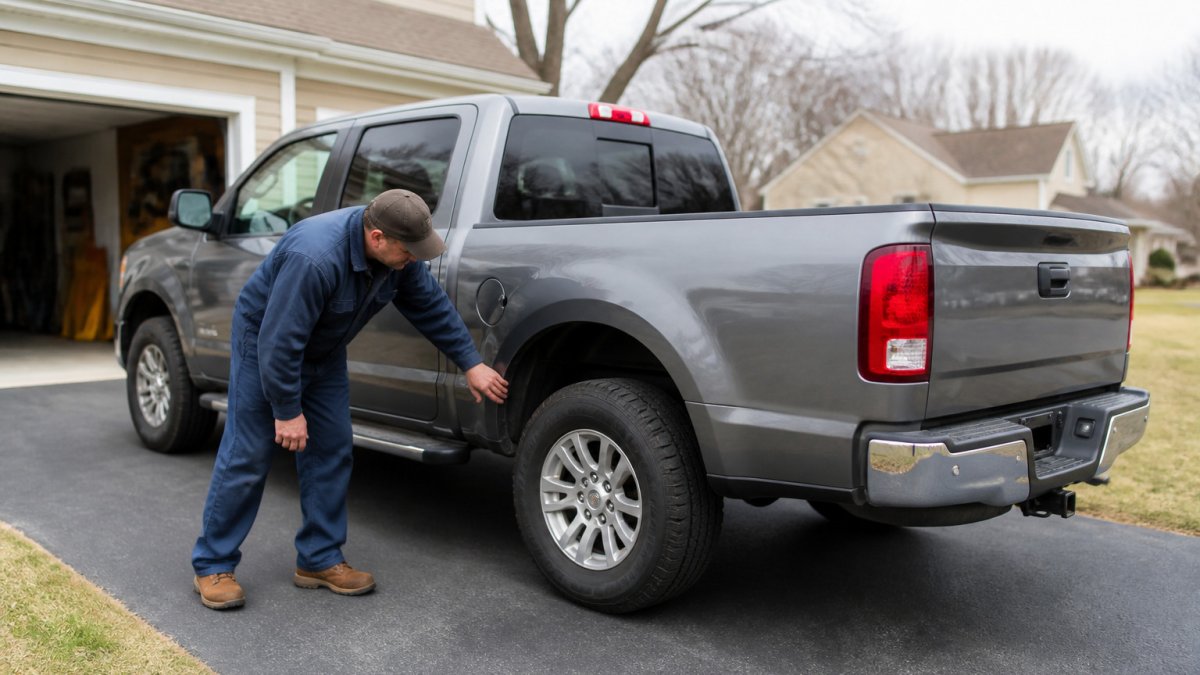
A seller in work clothes walking around a used pickup in a driveway, checking the tires and bed before shipping, is the kind of routine that prevents arguments later. Date-stamped photos are your best evidence if damage shows up.
Shipping a Non-Running Truck: What Changes
A truck that will not start needs a different plan. Tell the carrier that the truck is inoperable before you request a quote.
Expect these changes:
- Winch loading and other inoperable-truck needs can affect the quote.
Watch out: Failing to disclose that a truck does not run can lead to a rejected pickup on the day of transport.
Choosing Open or Enclosed Transport for Your Truck
Open and enclosed transport are not just a price choice, for a used truck, they are a fit choice. The right option depends on the truck's dimensions, condition, value, and how the buyer plans to use it. Most published guides compare cars; this section compares trucks.
Open transport: the default for work trucks
Open transport uses a multi-level car hauler or a flatbed trailer with the truck exposed to weather and road debris. It is the most widely available option, the easiest to book on short notice, and the usual choice for a used work truck that already has cosmetic wear. The trade-offs:
- Road grime, tar, and stone chips are possible, especially on long routes
- The truck shares a load, so pickup and delivery windows depend on the other vehicles on the trailer
- Very tall, very long, or very heavy trucks may not fit a standard open car hauler at all
Enclosed transport: protection at a premium
Enclosed transport loads the truck inside a trailer, protecting it from weather, debris, and road exposure. It is the better fit for a low-mileage, restored, specialty, or high-value truck, or one the buyer plans to show or keep long-term. The trade-offs:
- Fewer carriers offer enclosed trailers, so availability and scheduling are tighter
- Height and width limits are stricter, a lifted truck or one with a tall rack may not clear an enclosed trailer's door
- Loading and unloading may require ramps or a liftgate, and the carrier may charge for either
A truck-specific decision checklist
Ask these questions before you choose:
- Does the truck fit? Measure height to the top of the cab or rack, overall length, and width including mirrors. Compare those numbers to the carrier's stated trailer limits before you book.
- Does the truck run? A non-running truck needs winch loading on either trailer type; confirm the carrier has a winch and the equipment to load it.
- How far and how soon? Enclosed capacity is thinner on some routes, so a tight delivery deadline may push you toward open transport even for a nicer truck.
- Who pays, and for what? Put the transport choice and who pays for it in the sale agreement so the buyer is not surprised by the option you booked.
- What does the buyer expect? A buyer who plans to repaint or wrap the truck may not care about open transport; a buyer who plans to preserve original paint may insist on enclosed.
The seller-to-buyer handoff sequence
Most guides stop at "coordinate pickup." A clear sequence prevents the most common disputes. Agree on this order with the buyer before the carrier is dispatched:
- Confirm the truck is ready. The seller confirms the truck matches the listing, is clean enough for photos, and has no loose parts or personal items inside.
- Share documents. The seller sends the buyer copies of the title, bill of sale, and any lien release, and confirms which originals travel with the truck versus which are mailed separately.
- Arrange access. The seller confirms the pickup address, gate codes, hours, and who will be present, and tells the buyer and carrier the same details.
- Exchange carrier details. The seller gives the buyer the carrier's name, USDOT number, driver name, and cell number, and gives the carrier the buyer's delivery contact.
- Inspect at pickup. The seller and driver walk the truck together, note existing damage on the bill of lading, and photograph all four sides with a date stamp.
- Inspect at delivery. The buyer compares the truck to the pickup photos, notes any new damage on the delivery receipt before signing, and keeps a copy.
- Close the paperwork. The seller confirms the title and bill of sale are on their way to the buyer, and both parties keep copies of the signed bill of lading.
How to Vet a Carrier and Get a Shipping Quote
Scams target people who ship vehicles, and a used truck sale is especially exposed because the seller and buyer may never meet in person. Vet the carrier before you pay anything, and treat the quote as a document to compare line by line, not a single number.
Verify the carrier's authority and insurance
- Look up the carrier's USDOT number and MC number in the FMCSA's public SAFER system and confirm the operating authority is active and authorized for property (not just household goods).
- Ask for a certificate of insurance naming the carrier and showing cargo coverage, then call the insurer's agent to confirm the policy is current, a PDF can be altered.
- Confirm the carrier's legal name, phone, and physical address match the FMCSA record and the insurance certificate.
- Ask whether the carrier is a broker or a motor carrier. A broker arranges transport and must hold separate broker authority; a carrier actually moves the truck. Know which one you are paying.
- Ask whether the driver is an employee or an owner-operator under the carrier's authority, and get the driver's name and cell number before pickup.
What a truck shipping quote should include
Ask each carrier to put the following in writing so you can compare quotes on equal terms:
- Pickup and delivery ZIP codes and whether the quote is door-to-door or terminal-to-terminal
- The truck's year, make, model, and whether it runs
- Whether the quote assumes open or enclosed transport
- The carrier's cargo liability limit and deductible
- Whether winch loading, liftgate, or a forklift is included or extra
- Deposit amount, payment method, and when the balance is due
- Cancellation and rescheduling terms
Truck-specific factors that move the quote
Most published guides quote car shipping prices and stop there. A used truck is not a sedan, and these variables change both the carrier fit and the price:
- Weight and class. A half-ton pickup fits a standard open car hauler; a medium-duty or heavy-duty truck may exceed the trailer's deck rating and require a heavier trailer or a different carrier class.
- Height and clearance. Lift kits, oversized tires, headache racks, and tall exhaust stacks can push a truck over the height limit for enclosed trailers or low-clearance loading ramps.
- Length and wheelbase. A crew-cab long-bed truck may not fit two-to-a-load on a standard hauler, which can push the quote toward a single-vehicle or partial-load rate.
- Ground clearance and approach angle. Lowered trucks and trucks with air dams can need ramps or blocks to load without scraping.
- Operability. A non-running truck needs winch loading and may require the carrier to send a truck with a winch, which is a different dispatch.
- Modifications. Plows, cranes, utility beds, and fifth-wheel hitches change the truck's dimensions and may require the buyer to remove them before pickup or the carrier to charge for the extra footprint.
Get at least three quotes and compare the terms
Request quotes from at least three carriers or brokers, and give every one the same information: the truck's year, make, model, weight, dimensions, operability, and the exact pickup and delivery locations. A quote built on incomplete information is the most common reason a price changes on pickup day. Ask each provider to confirm in writing that the quoted price is the price you will pay if the truck matches the description.
Coordinating Truck Pickup and Delivery With the Buyer
Clear communication prevents the most common delivery problems. Set up the handoff plan with the buyer before the carrier arrives.
- Agree on the pickup location, date, and time window
- Confirm who will be present at pickup and delivery
- Share the carrier's name and driver contact details with the buyer
- Plan for a mid-route delay and agree on how you will update each other
Watch out: If pickup is delayed, notify the buyer and the carrier right away. Silence often leads to disputes over fees.
At delivery, the buyer should inspect the truck against your photos before signing the delivery receipt. Note any new damage on the paperwork before the driver leaves.
Insurance, Liability, and What to Do If Something Goes Wrong
Check your coverage before the truck moves. Ask the carrier for a copy of its cargo insurance certificate and confirm the coverage amount and deductible. Ask your own insurer whether your policy covers the truck while it is in transit.
If damage happens, act quickly:
- Document the damage with photos at delivery
- Write the damage on the bill of lading before signing
- File a claim with the carrier's insurer right away
- Keep copies of every document, including the signed bill of lading
Claims often depend on timing. The sooner you report damage, the easier it is to prove what happened.
Your Next Step: Book Transport for Your Sold Truck
Shipping a used truck after the sale takes careful planning, but it does not have to be stressful. Gather the paperwork, prepare the truck, vet the carrier, and agree on the handoff plan with the buyer. If you want help selling or moving your truck, Ironmartonline can connect you with active buyers and keep the deal organized.
Frequently Asked Questions
Do I need the title to ship a used truck? Yes. Most carriers and buyers need the signed original title to complete the transfer. Confirm the exact requirements with your state motor vehicle agency.
Can I ship a truck that does not run? Yes, but it usually requires winch loading. Tell the carrier the truck is inoperable before you request a quote.
Who pays for shipping a sold truck? This depends on your sale agreement. Many sellers and buyers split the cost or agree that the buyer pays. Put the arrangement in writing.
What if the truck arrives damaged? Note the damage on the delivery paperwork before signing, then file a claim with the carrier's insurer promptly.
Frequently Asked Questions
How do you ship a used truck after selling it?
Once the sale is agreed, confirm the buyer's delivery address, get the title and bill of sale ready, and request quotes from licensed carriers with the truck's year, make, model, and running condition. Book a carrier, agree on a pickup window with the buyer, and prepare the truck by removing personal items, documenting its condition with photos, and leaving the tank with about a quarter of fuel.
Who arranges shipping when a truck is sold privately?
In most private sales, the buyer arranges and pays for transport, but the arrangement is negotiable and should be settled in writing before the sale closes. Some sellers agree to book the carrier and split or add the cost to the price. Whoever books the carrier, confirm who pays, who is the contact for pickup, and who signs the bill of lading so no one is left waiting on the truck.
Can a truck be shipped if it is not running?
Yes, a non-running truck can usually be shipped, but the carrier needs to know before booking. Inoperable trucks typically require a winch or lift gate at pickup, which can change the quote and the carrier type. Tell the carrier exactly what does not work, such as brakes, steering, or the engine, and note any damage or missing parts on the bill of lading so the condition is documented at handoff.
What should the seller document before the truck is picked up?
Before pickup, photograph the truck from all sides, the odometer reading, and any existing damage, then keep copies of the title, registration, and bill of sale. Confirm that any lien has been released so the title can transfer cleanly. Give the carrier a complete set of keys and any remotes, and make sure the buyer and the carrier agree on the condition recorded at pickup.
