
Table of Contents
- Why Use Ironmartonline as Your Equipment Broker?
- Shipping Used Dozers Internationally: An Overview
- Used Bulldozer Export Requirements You Must Meet
- Heavy Equipment Export Documents: The Complete Checklist
- Dozer Shipping Methods: Which One Fits Your Machine?
- How to Get an International Freight Quote for Heavy Equipment
- Preparing Your Dozer for Overseas Shipping
- Customs Clearance and Import Regulations
- Common Mistakes When Shipping Used Dozers
- How Ironmartonline Simplifies International Dozer Sales
- Conclusion: Your Next Steps for Shipping Used Dozers
- Frequently Asked Questions
Last Updated: October 4, 2026
Why Use Ironmartonline as Your Equipment Broker?
Shipping used dozers internationally is the process of moving a bulldozer from a seller in one country to a buyer in another, including the export paperwork, freight booking, and customs clearance that legally transfer the machine across a border. It is a paperwork-heavy, deadline-driven job where a single missing document can leave a six-figure machine sitting on a dock for weeks. That is why so many sellers ask us a simple question first: why use Ironmartonline as your equipment broker?
The honest answer is that a broker handles the parts of an international sale that most owners never deal with until something goes wrong. At Ironmartonline, we connect buyers and sellers of used machinery on a global and local scale through nine specialized web-based selling platforms, which puts your dozer in front of millions of potential buyers instead of the handful who happen to drive past your yard. We work without contracts and without hidden fees, so you are not locked into a listing agreement while you wait for the right offer.
Below, we break down the full sequence: the requirements a used bulldozer export has to meet, the heavy equipment export documents that travel with the machine, the dozer shipping methods available, and how to get an international freight quote for heavy equipment without overpaying. If you are selling a surplus machine and want the export handled correctly the first time, this is the guide we wish every seller read before they listed.
Shipping Used Dozers Internationally: An Overview
The core of shipping used dozers internationally is a chain of four handoffs: title and export eligibility, documentation, freight booking, and customs clearance at both ends. Break any link and the machine stops moving. Securing accurate cost projections early in the process requires obtaining instant international shipping quotes to ensure that the logistical budget remains aligned with the complexities of these multi-stage handoffs.
A typical export runs in this order:
- Confirm the machine is legally exportable and the title is clean.
- Assemble the export documents, including the bill of lading, commercial invoice, and certificate of origin.
- Choose a shipping method based on the dozer's size and the destination port.
- Book freight and get a written quote that lists every accessorial charge.
- Clear export customs at origin and import customs at destination.
What most guides miss is that steps two and five are where deals die. The freight itself is rarely the problem. The paperwork is.
Used Bulldozer Export Requirements You Must Meet
Used bulldozer export requirements center on three things: proof of ownership, an accurate description of the machine, and compliance with the destination country's import rules. The destination rules are the ones sellers underestimate.
Before you list a dozer for export, confirm:
- Clean title and lien release. If a lender holds a lien, the export cannot clear until it is released in writing.
- Accurate machine identification. Serial number, make, model, year, and operating hours must match across every document.
- Destination eligibility. Some countries restrict older machines or require emissions documentation. Confirm this before you promise a delivery date.
- Export control screening. Certain destinations and certain buyers require additional screening before shipment.
For the rules that govern the U.S. side of an export, the U.S. Bureau of Industry and Security export guidance is the authoritative starting point for licensing and screening questions, and the U.S. Customs and Border Protection trade resources covers the filing and clearance side. We always tell sellers to check both before quoting a delivery window, because a requirement that surfaces after booking is far more expensive than one caught before.
Heavy Equipment Export Documents: The Complete Checklist
Heavy equipment export documents are the paper trail that proves what the machine is, who owns it, and where it is going. Missing one document is the single most common reason a dozer shipment gets delayed at the port.
Bill of Lading and Commercial Invoice
The bill of lading is the contract between the shipper and the carrier, and it doubles as the document of title. Whoever holds the original can claim the goods. The commercial invoice states the sale value and the terms of sale, and customs uses it to calculate duties.
These two documents must agree. If the invoice says one value and the bill of lading implies another, expect a hold.
Certificate of Origin and Export License
The certificate of origin states where the machine was manufactured, which determines the tariff rate the buyer pays. An export license is required only for certain destinations and certain goods, but when it is required, shipping without one is not an option. Confirm licensing requirements before you book freight, not after.
Dozer Shipping Methods: Which One Fits Your Machine?
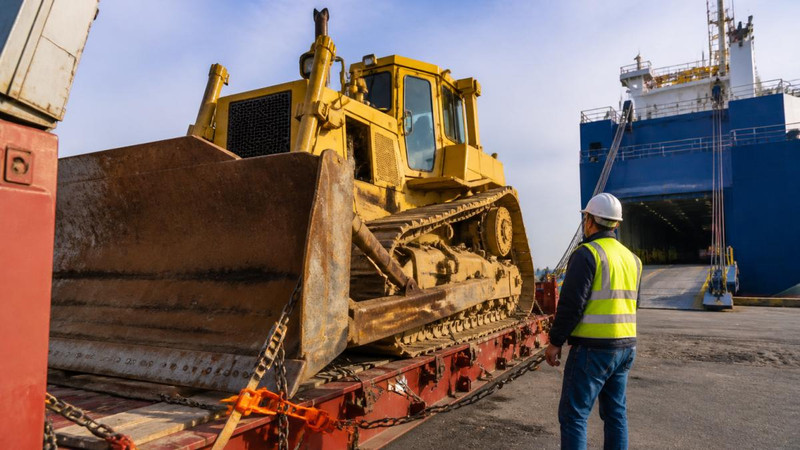
Dozer shipping methods come down to how the machine is loaded, and the right choice depends on the dozer's dimensions, weight, and whether it can be driven onto a vessel. Three options cover almost every export.
| Method | How It Loads | Best For | Watch Out For |
|---|---|---|---|
| Roll-on/Roll-off (RoRo) | Machine drives or is towed onto the vessel | Running dozers that roll under their own power | Damage risk from handling; limited sailing schedules |
| Flat rack | Machine is lifted onto an open platform | Oversized dozers that exceed container limits | Requires crane capacity at both ports |
| Break bulk | Machine is loaded individually as cargo | Very large or very heavy machines | Highest cost; fewest available vessels |
Roll-on/Roll-off (RoRo) Shipping
RoRo is the simplest method when the dozer runs. The machine is driven or towed onto the ship, secured, and driven off at the destination. It is usually the most cost-effective option for a standard-size dozer that starts and moves under its own power.
The trade-off is handling exposure. The machine passes through several sets of hands, and cosmetic or hydraulic damage during loading is a real risk.
Flat Rack and Break Bulk Shipping
Flat rack shipping places the dozer on an open platform that is lifted onto the vessel. It suits machines that are too wide or too tall for a standard container but still fit within platform limits. Break bulk is the fallback for the largest machines, where the dozer is loaded as individual cargo rather than in a container or on a rack.
Both require crane capacity at the origin and destination ports. Confirm that before you commit to either method.
How to Get an International Freight Quote for Heavy Equipment
An international freight quote for heavy equipment should itemize every charge, not hand you a single lump sum. A lump-sum quote is where surprise fees hide.
When you request a quote, give the freight forwarder:
- Exact dimensions and weight of the dozer
- Whether it runs and can be driven
- Origin yard address and destination port
- Preferred shipping method
- Required delivery window
Then insist the quote break out the ocean freight, terminal handling, documentation fees, and any accessorial charges separately. Ask what triggers additional charges, such as demurrage if the container sits at port, or detention if equipment is held past a free day.
Preparing Your Dozer for Overseas Shipping
Preparing a dozer for overseas shipping means cleaning it, documenting its condition, and draining or securing anything that could leak or shift during transit. This step protects both the machine and the sale.
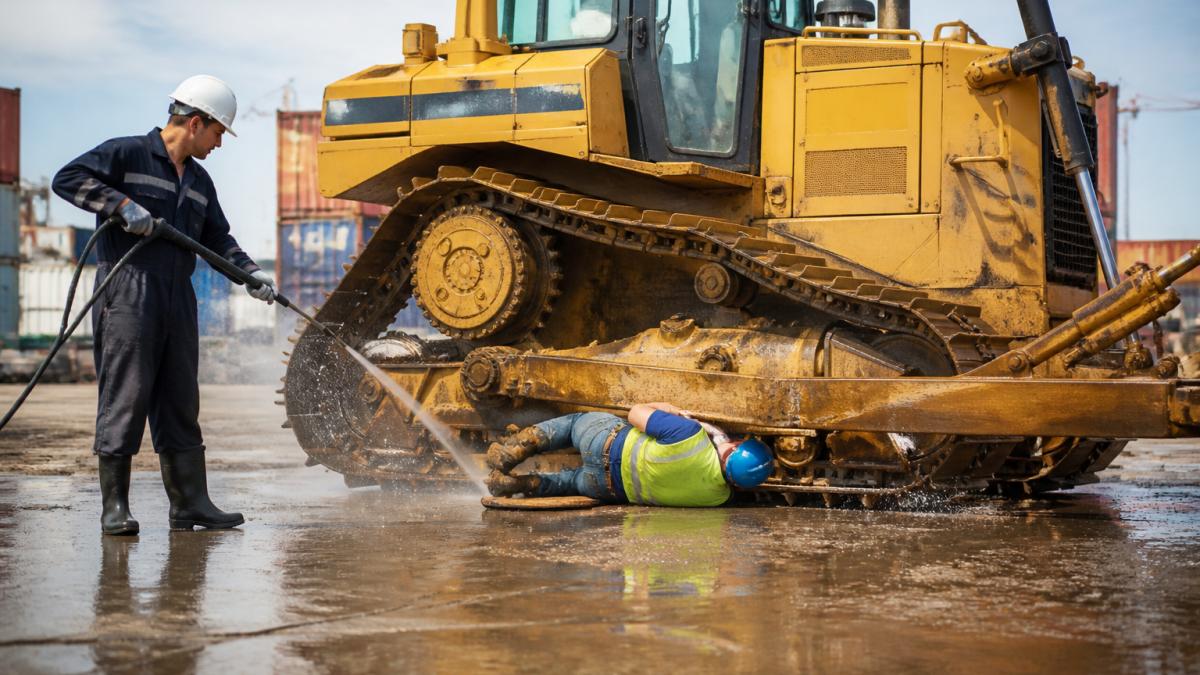
Start with a full wash. Agricultural and construction equipment often carries soil, and many destination countries require machines to arrive free of dirt and plant matter to prevent introducing pests. Clean the undercarriage, tracks, and any recessed areas where soil collects.
Then document everything. Photograph the machine from every angle, note existing wear, and record the hour meter reading. This protects you if the buyer disputes condition on arrival.
Finally, secure the machine for transit:
- Drain or top off fluids according to the carrier's instructions.
- Remove or secure any loose attachments.
- Disconnect the battery if the carrier requires it.
- Confirm tie-down points match what the carrier expects.
Customs Clearance and Import Regulations
Customs clearance is where the destination country decides whether your dozer enters and what the buyer pays to receive it. The buyer usually handles import clearance, but the seller's documents determine whether it goes smoothly.
The destination country sets its own import regulations, tariff rates, and inspection requirements. Some countries require an import license, some restrict machines above a certain age, and some require an inspection on arrival. The buyer's customs broker manages the entry, but they depend entirely on the documents you provide.
This is the part of the process where a broker earns their keep. If the paperwork you send is complete and consistent, clearance is routine. If it is not, the machine sits.
Common Mistakes When Shipping Used Dozers
The mistakes that sink dozer exports are predictable, and every one of them is avoidable. Here are the ones we see most often.
Undervaluing or misstating the machine on the invoice. Customs compares declared value against market data. A value that looks artificially low invites scrutiny and delays.
Booking freight before confirming export eligibility. If the destination restricts the machine, you have already paid for ocean freight you cannot use.
Skipping the condition report. Without dated photos and an hour-meter record, a condition dispute becomes your word against the buyer's.
Assuming the buyer handles everything. The buyer handles import clearance. You still own the export documents and the accuracy of what they say.
Choosing freight on headline rate alone. The lowest ocean rate often carries the highest accessorial charges.
How Ironmartonline Simplifies International Dozer Sales
Selling a dozer internationally is a marketing problem and a logistics problem at the same time. Ironmartonline addresses the marketing side so you can focus on the machine.
Our nine specialized web-based selling platforms put your dozer in front of millions of potential buyers across global and local markets. That reach matters because an export buyer is rarely the person down the road; it is a contractor, fleet manager, or rental house in another country who is actively searching for your exact machine.
We work without contracts and without hidden fees. You are not signing a long-term listing agreement, and you are not discovering a fee after the sale closes. The process is built to be straightforward: list the machine, reach the buyers, and move it.
For sellers who have been burned by listing sites full of fake inquiries and stale listings, the difference is the audience. A brokerage that markets to a global buyer pool generates real offers from real buyers, not tire-kickers.
Conclusion: Your Next Steps for Shipping Used Dozers
The gap between a dozer that sells internationally and one that sits in the yard is almost always documentation and reach. Get the export paperwork consistent, choose the right shipping method for the machine's size, and put it in front of buyers who are actually in the market for it.
That is the work Ironmartonline does. Our nine web-based selling platforms give your machine global and local exposure, our no-contract, no-hidden-fee model keeps the process clean, and our brokerage experience means the sale does not stall on paperwork. Join our email list to see how we connect sellers with buyers and get your dozer moving.
Frequently Asked Questions
How do you ship a used dozer internationally?
Shipping a used dozer internationally involves choosing a method like RoRo, flat rack, or break bulk, preparing the machine by cleaning and draining fluids, and handling export documents such as a bill of lading and certificate of origin. You'll also need to arrange customs clearance in both countries. Working with a broker like Ironmartonline can simplify the process by connecting you with vetted carriers and handling logistics.
What documents are needed to export a used bulldozer?
Key documents include a commercial invoice, packing list, bill of lading, certificate of origin, and an export license if required. Check with U.S. Customs and Border Protection for the latest requirements. Ironmartonline can guide you through the paperwork to avoid delays.
Can a bulldozer be shipped in a standard container?
Most bulldozers are too large for standard containers. They are typically shipped via Roll-on/Roll-off (RoRo) vessels, flat rack containers, or break bulk. Smaller dozers may fit in a flat rack, but you'll need to verify dimensions and weight limits. Your freight forwarder can recommend the best method based on your machine's size.
How long does international heavy equipment shipping take?
Transit times vary by destination and method. For example, shipping from the U.S. to Europe can take 2-4 weeks, while to Asia or Australia it may take 4-6 weeks. Add time for customs clearance and inland transport. Ironmartonline can provide estimated timelines based on your specific route and carrier availability.
What information should I provide to get an international freight quote?
To get an accurate quote, provide the dozer's make, model, year, dimensions, weight, and any special handling needs. Also include the origin and destination ports, preferred shipping method, and desired timeline. Photos and a condition report help. Ironmartonline can gather quotes from multiple carriers to find the best rate for your shipment.