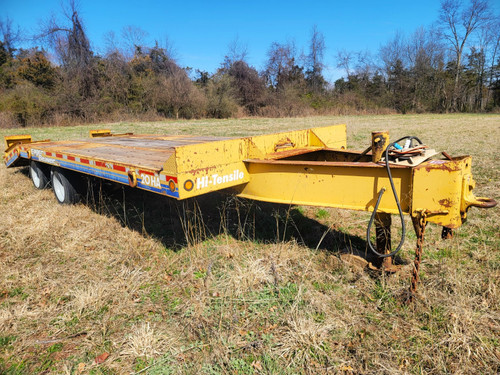
Description
1999 TALBERT RGN 50 Ton Lowboy Trailer - Heavy-Duty, Removable Gooseneck Commercial Trailer, Equipped w/50-Ton Capacity, iIntegrated Outriggers-Never Side Loaded, Very Good. Solid Frame, Brakes and Tires in Very Good Working Order. Hook up and Go to Work! Located in Scotch Plains, NJ 07076
Specs and Dims
Description Continued...
1999 Talbert RGN 50 Ton Lowboy: What Buyers Need to Know
Quick answer: The 1999 Talbert RGN 50 Ton Lowboy is a heavy-haul trailer built around a removable gooseneck design, 50-ton load capacity, and Talbert's reputation for structural durability. Buyers evaluating this trailer should verify deck condition, neck pin wear, and axle configuration before committing.
The 1999 Talbert RGN 50 Ton Lowboy has stayed in circulation for a reason. Talbert Manufacturing built this trailer to outlast the job — and a well-maintained unit from this era can still handle Class 8 freight, construction equipment, and oversized industrial loads without issue. But "well-maintained" is doing a lot of work in that sentence. Knowing what to look for separates a solid buy from an expensive mistake.
What Makes the Talbert RGN 50 Ton a Serious Work Trailer?
Talbert Manufacturing, based in Rensselaer, Indiana, has produced heavy-haul trailers since 1946. The RGN — Removable Gooseneck — design is the standard choice for hauling tall or heavy equipment that can't roll up a fixed ramp. The gooseneck detaches, the front of the trailer drops to ground level, and equipment drives on directly.
The 50-ton rating puts this trailer in the sweet spot for most heavy construction and industrial hauls — excavators, bulldozers, compactors, transformers, and similar oversized freight. Key specs on a 1999 unit typically include:
- Capacity: 50 tons (100,000 lbs.)
- Configuration: Removable gooseneck, 3-axle or 4-axle rear
- Deck length: 24–29 ft. (varies by configuration)
- Deck height: 18–20 in. loaded
- Construction: High-tensile steel main beams
Talbert's 1999-era build quality is well-regarded in the used market. The structural integrity of these trailers holds up when they've been maintained correctly — but at 25+ years old, deferred maintenance compounds fast.
What Should You Inspect on a 1999 Talbert RGN Before Buying?
Don't buy on spec sheets alone. A 1999 trailer with clean paperwork and obvious deck wear tells you more than a unit with zero documentation and a fresh coat of paint.
Gooseneck and neck pin: This is the highest-wear component on any RGN. Inspect the neck pin, locking mechanism, and mating surfaces for slop, cracking, or weld repairs. A worn or repaired neck pin is a safety issue, not a negotiating chip.
Main beams: Look for cracks at stress concentration points — especially near the rear axle suspension mounts and the gooseneck attachment zone. Hairline cracks in high-tensile steel don't always show without cleaning the surface first.
Deck condition: Check for rot, delamination (on wood decks), or warping. A deteriorated deck isn't cosmetic — it affects load distribution and legal compliance.
Axles and suspension: Air-ride vs. mechanical suspension matters for your haul type. Confirm axle spacing against your state's bridge law requirements before you buy.
Tires and brakes: Budget for replacements if the tires are original or unbranded. Brake chambers, slack adjusters, and ABS function (if equipped) should all be verified.
A pre-purchase inspection by an independent heavy trailer technician costs $300–$600. That inspection can surface $10,000–$30,000 worth of issues before the deal closes.
Is a 1999 Talbert RGN 50 Ton the Right Trailer for Your Operation?
The 1999 Talbert RGN makes sense in specific situations. It doesn't make sense in all of them.
Buy it if: You need a proven 50-ton hauler, your haul routes are well-established, and you have a maintenance program in place. A clean unit with documented service history is a legitimate workhorse at a fraction of new trailer cost.
Look elsewhere if: You're operating in states with strict annual inspection requirements and the trailer hasn't been inspected recently. Bringing a 25-year-old trailer into compliance costs money and time — factor both into your offer price.
Pricing context: Clean, documented 1999 Talbert RGN units in working condition typically trade in the $25,000–$55,000 range depending on axle count, deck condition, and regional market. A unit priced below $20,000 warrants hard scrutiny.
Make Your Decision with the Right Information
The 1999 Talbert RGN 50 Ton Lowboy rewards buyers who do the work upfront. Confirm the neck pin condition, verify axle compliance, and get an independent inspection before any money moves. A clean unit at fair market value is a strong asset. A discounted unit with hidden structural damage is a liability.
Get the inspection done first.
Frequently Asked Questions
What is a Talbert RGN trailer?
A Talbert RGN (Removable Gooseneck) trailer is a heavy-haul trailer with a detachable front section that allows the deck to lower to ground level. This lets heavy equipment drive directly onto the trailer without a fixed ramp, making it the standard configuration for hauling excavators, bulldozers, and similar machinery.
How much weight can a 1999 Talbert RGN 50 Ton carry?
The 1999 Talbert RGN 50 Ton is rated for 50 tons, or 100,000 lbs. Actual legal payload depends on your axle configuration, state bridge laws, and permit requirements — verify these before loading.
What is the typical lifespan of a Talbert lowboy trailer?
A well-maintained Talbert lowboy can remain in active service for 30–40 years. The limiting factors are typically deck integrity, gooseneck wear, and axle condition — not the main beam structure, which Talbert builds to outlast most other components.
What should a 1999 Talbert RGN 50 Ton cost on the used market?
Expect $25,000–$55,000 for a clean, operational unit with documented service history. Units priced below $20,000 typically reflect deferred maintenance, structural issues, or missing compliance documentation.
Is the 1999 Talbert RGN still a viable trailer for commercial hauling?
Yes — with current inspections, maintained brakes and axles, and a sound deck. The structural quality of Talbert's late-1990s production holds up. The key variable is maintenance history, not model year.