
Table of Contents
- Why the Time to Sell a Used Tractor Matters
- Best Time of Year to Sell a Tractor
- Engine Hours and Market Liquidity
- How to Price Used Construction Equipment for Faster Sales
- Selling Used Tractor: Private Party vs. Dealer
- Preparing Your Tractor for Sale
- Digital Marketing Checklist for Private Sellers
- Market Conditions and Inventory Trends in 2026
- Conclusion
Last Updated: August 18, 2026
Why the Time to Sell a Used Tractor Matters
The average time to sell a used tractor is a critical metric for equipment owners planning cash flow and capital allocation. In 2026, timelines vary dramatically based on machine condition, market positioning, and sales channel.
According to recent market data, low-hour, late-model tractors take approximately 300 days to sell as of March 2026, a significant shift from two years ago. Meanwhile, higher-hour tractors in the 3,000-4,500 hour range move faster, with over half selling within 60 days. This reflects how buyers actually value equipment in a stabilizing market.
The time to sell directly impacts your working capital, your ability to reinvest in newer equipment, and your overall business flexibility. A machine sitting for nine months costs money in storage, insurance, and lost opportunity. Understanding what drives faster sales is the difference between liquidating equipment strategically and watching it depreciate while languishing on the market.
This raises an important question: why use a Heavy Equipment Broker? The answer lies in how the brokerage landscape has evolved. A premier heavy equipment broker like Ironmartonline connects your machinery to millions of potential buyers across nine specialized web-based selling platforms, dramatically compressing the time-to-sale window compared to private listings or single-platform approaches. Rather than hoping a local buyer finds your tractor on a classified site, you're positioned where serious buyers actively shop.
Below, we'll break down the exact factors that determine how long your tractor will take to sell, the best timing strategies, and the specific steps that accelerate the process.
Best Time of Year to Sell a Tractor
Seasonal demand is one of the most underestimated factors in tractor sales velocity. Fall and winter (November through February) represent the strongest window for selling used farm equipment. Farmers are planning for the next growing season and have made capital allocation decisions. Late fall and winter pricing tends to hold steady, whereas spring buying sees prices spike 15-30% above winter levels for the same models.
For the average equipment owner, winter selling offers better negotiating position without the seasonal price premium. You're selling into genuine demand rather than panic buying. However, if your tractor is in exceptional condition with low hours, spring selling may justify waiting for the premium, provided you can absorb carrying costs.
Summer is favorable for compact and utility tractors in the 25-75 horsepower range when smaller operations and hobby farmers need immediate equipment. Larger row-crop tractors move slower in summer when farmers are focused on current operations.
The key insight: match your machine's category to seasonal demand. A 75-horse utility tractor sells faster in June. A 300-horse row-crop tractor sells faster in November.
Engine Hours and Market Liquidity
Engine hours are the single most predictive factor in how quickly a used tractor moves, but the relationship is not linear, it varies by horsepower class, production year, and maintenance documentation.
Low-hour machines (fewer than 5,000 operational hours) typically command 65-75% of original manufacturer pricing but face the longest sales cycles. As of March 2026, only about 14% of low-hour, late-model tractors sold within 60 days. Buyers perceive these machines as premium inventory and expect perfect condition and complete documentation. A low-hour machine with documented full service history can sell within 90-120 days.
Mid-hour equipment (5,000-15,000 hours) represents the fastest-moving segment across all horsepower classes. Over half of mid-hour tractors in the 300-424 horsepower row-crop category sold within 60 days as of March 2026. These machines hit the sweet spot: affordable enough for price-sensitive buyers but modern enough to feel reliable. The typical days-on-market for this segment is 35-75 days depending on horsepower and condition.
High-hour machinery (15,000+ hours) typically sells at 25-40% of original pricing and moves steadily if priced correctly. High-hour tractors with documented maintenance history sell within 45-90 days; those without records may take 120+ days.
The critical insight most sellers miss: maintenance documentation compresses time-to-sale by 30-50% regardless of hour range. A tractor with 8,000 hours and a complete service record sells 25-40% faster than an identical machine with spotty records.
Horsepower also influences liquidity. Compact tractors under 50 horsepower have the broadest buyer base and typically sell within 30-60 days. Row-crop tractors in the 200-400 horsepower range take 60-120 days on average. Specialty tractors can take 150+ days even at fair prices.
If your tractor has fewer than 5,000 hours, expect a 120-180 day sales cycle unless you have complete service records, in which case 90-120 days is realistic. If it's in the 5,000-15,000 hour sweet spot with documented maintenance, days-on-market typically ranges from 35-75 days. If your tractor has 15,000+ hours, price it 15-25% below comparable low-hour machines; realistic timeline is 60-100 days. Document every service, it's worth 20-30% in sales velocity.
How to Price Used Construction Equipment for Faster Sales
Pricing strategy is where most private sellers make costly mistakes. They anchor to what they paid, not what the market will bear. In 2026, asking prices for used tractors trended downward for 11 consecutive months, posting a year-over-year decline of 5.85% in December.
Fair market value is determined by three variables: production year, engine hours, and service history. A 2022 tractor with 3,000 hours and complete maintenance records commands a premium. The same model year with 8,000 hours and spotty records sells at a 20-30% discount.
Successful sellers price aggressively at listing, 5-10% below comparable recent sales, and move inventory within 45 days rather than holding out for higher prices that never materialize. A heavy equipment broker helps by providing transparent market data and appraisals tied to actual recent sales, not wishful thinking.
| Hour Range | Typical Price as % of Original | Average Days to Sell | Best For |
|---|---|---|---|
| Under 5,000 hours | 65-75% | 180-300 days | Premium buyers, patient sellers |
| 5,000-15,000 hours | 45-60% | 30-90 days | Most private sellers |
| 15,000+ hours | 25-40% | 45-120 days | Value-conscious buyers |
Selling Used Tractor: Private Party vs. Dealer
The channel you choose fundamentally changes your time-to-sale and net proceeds.
Private party sales give you the highest gross price but require the most effort and carry the longest timeline. The average private seller waits 120-180 days to close. You capture the full retail markup but carry storage, insurance, and carrying costs.
Dealer trade-ins are fast and friction-free but come at a steep discount. Dealers typically offer 15-25% below fair market value. You walk away with a check in 24 hours. This makes sense if you need immediate liquidity or if your tractor requires significant work.
Broker-assisted sales split the difference. A heavy equipment broker positions your equipment across multiple platforms simultaneously, widening buyer exposure without the friction of private selling. Brokers handle photography, listing optimization, and buyer qualification. Broker-assisted inventory often moves faster because it reaches qualified buyers actively shopping.
The decision hinges on your timeline and condition. If you have three months and your tractor is in good shape, a broker network makes sense. If you need cash in 30 days, a dealer trade-in is your answer.
Preparing Your Tractor for Sale
Equipment condition is the single biggest determinant of selling speed and final price. A tractor that's been maintained meticulously and is visually clean sells 40-60% faster than one with deferred maintenance and cosmetic wear.
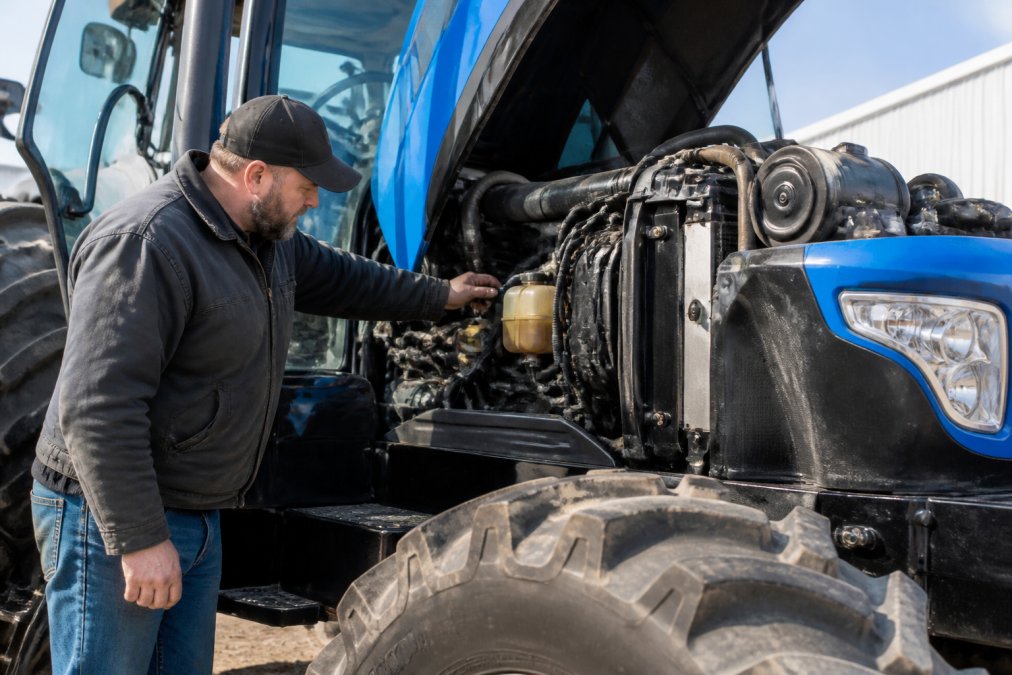
Start with mechanical readiness. Have the engine serviced, fluids topped off, and any obvious leaks addressed. Replace worn belts and hoses. A well-running engine is worth 10% of the sale price in buyer confidence. If major work is needed, disclose it upfront and price accordingly.
Cosmetic preparation matters more than most sellers realize. Pressure wash the exterior, clean the cab interior thoroughly, and touch up obvious rust spots. These details cost $200-500 but signal that the machine was cared for.
Documentation is non-negotiable. Compile service records, maintenance logs, and repair receipts. A tractor with 8,000 hours and a complete service history outsells an identical machine with spotty records by 20-30%.
Finally, be honest about condition. Note cosmetic wear, operational quirks, and deferred maintenance in your listing. Transparency compresses the sales cycle by filtering out buyers who can't accept the actual condition.
Digital Marketing Checklist for Private Sellers
If you're selling privately, your digital presentation determines whether qualified buyers call you. Listings with complete maintenance documentation receive 40-50% more qualified inquiries than listings without it. Before you write a single word or take a photo, compile your service records and organize them chronologically.
Photography and visual presentation is your second-highest-impact lever. Take at least 20-25 photos covering:
- Engine compartment (clean, well-lit, showing fluid levels and condition)
- Hydraulic systems and hoses (close-ups of any wear or leaks)
- Tires (tread depth, sidewall condition, any cracking)
- Cab interior (steering wheel, seat condition, controls, hour meter clearly visible)
- Overall exterior from at least four angles
- Any attachments or implements included in the sale
- Close-ups of any cosmetic wear, rust, or damage
Shoot in natural daylight. Listings with 20+ photos receive 35-45% more inquiries than listings with 5-10 photos.
Listing description structure matters more than word count. Lead with specifications in a scannable format:
- Model year, make, model
- Horsepower and engine type
- Total operating hours (be precise)
- Transmission type
- Tire condition and size
- Hydraulic system condition
- Any attachments or implements included
- Service history status
- Known issues or deferred maintenance
Then describe condition in plain language. Use phrases like "well-maintained," "original paint," "recent service," or "ready to work" if they're true. A listing that says "Engine runs strong, minor rust on fenders, new tires, complete service records" receives more qualified inquiries than hype language.
Pricing and positioning directly impact inquiry volume. Price your listing 5-10% below comparable recent sales to trigger immediate inquiries. Underpriced inventory moves within 30-60 days; fairly priced inventory sells within 60-90 days; overpriced inventory sits for 150+ days. Include your asking price prominently.
Platform selection and reach determines your buyer pool. Post on multiple platforms simultaneously:
- Facebook Marketplace (broadest audience, fastest response time)
- Craigslist (attracts local, price-sensitive buyers)
- TractorHouse.com (attracts serious equipment buyers)
- Specialized agricultural classified sites (regional reach, farmer-focused)
- Heavy equipment broker networks (reaches buyers actively shopping across multiple verticals)
Listings posted on three or more platforms sell 40-60% faster than single-platform listings.
Response time and inquiry management is your final lever. Respond to inquiries within 24 hours. Answer questions directly and completely. Offer a video call or in-person inspection within 48 hours of serious inquiry. Track all inquiries in a spreadsheet so you don't lose momentum on hot leads.
Transparency on condition and history accelerates the entire process. A listing that discloses cosmetic wear, deferred maintenance, or mechanical quirks upfront filters out buyers who can't accept the actual condition and leaves you with a smaller pool of genuinely interested buyers who close faster.
Listings with complete service records, 20+ photos, transparent condition disclosure, competitive pricing, and multi-platform reach sell 35-50% faster than listings that lack these elements.
Market Conditions and Inventory Trends in 2026
The used tractor market is consolidating, not collapsing. The global used tractors market was valued at $35.4 billion in 2025 and is expected to grow to $37.3 billion in 2026, with a projected CAGR of 5.1% through 2035.
Used tractor inventories fell for the eighth consecutive month in December 2025, declining by 1.9% month-over-month and by 15.5% year-over-year. This tightening inventory is good news for sellers; reduced supply means less competition. However, it also reflects that farmers and equipment rental companies are holding equipment longer, suggesting cautious spending sentiment.
Tractor auction values increased by 2.39% month-over-month but declined 2.54% year-over-year in December 2025. This mixed signal reveals a market in transition. Recent sales are holding value, but year-over-year comparisons show price softening. For sellers, pricing discipline matters more than ever.
According to Sandhills Global's December 2025 Agriculture Equipment report, asking prices for used tractors trended downward for 11 consecutive months in 2025, posting a year-over-year decline of 5.85% in December. This reflects broader economic uncertainty in agriculture.
Global Market Insights Inc.'s analysis indicates that manufacturers may be able to fulfill 2026 orders for 2027 delivery, meaning used equipment, particularly late-model, low-hour machines, will remain in demand for at least 18-24 months. As new equipment delivery delays persist, used inventory becomes the only available option for farmers who need to upgrade.
In 2026, sellers with mid-hour equipment in good condition have a significant advantage. Buyers are shopping for value and reliability, not prestige. A 2020 tractor with 6,000 hours and complete service history is worth more to a working farmer than a 2024 model with spotty maintenance.
According to Ag Equipment Intelligence's 2026 dealer survey, 67.5% of surveyed dealers reported declines of 2% or more in new equipment sales in 2025 compared to the previous year, while 46.3% reported similar declines in used equipment sales.
The time to sell a used tractor depends on preparation, pricing, and positioning. Equipment in the 5,000-15,000 hour range with complete service records and honest condition disclosure moves within 60-90 days when priced competitively.
Getting your tractor in front of qualified buyers accelerates the entire process. A heavy equipment broker connects your equipment to millions of potential buyers across multiple specialized platforms, compressing sales timelines and removing the friction of private selling. Whether you're a small owner-operator or managing fleet liquidation, the right broker turns inventory into cash efficiently.
Frequently Asked Questions
What is the average time to sell a used tractor in 2026?
The time to sell a used tractor varies significantly based on condition and market segment. Low-hour, late-model tractors are taking approximately 300 days to sell on average, with only 14% selling within 60 days. Higher-hour tractors (3,000-4,500 hours) move faster, with over half selling within 60 days. Overall market liquidity depends on engine hours, maintenance records, production year, and current seasonal demand. Pricing strategy and listing optimization also play critical roles in reducing time-to-sale.
Does selling through a broker speed up the sale of heavy equipment?
Yes. A heavy equipment broker connects your tractor to millions of potential buyers across multiple platforms simultaneously, dramatically increasing visibility compared to private classified ads. Brokers handle marketing, buyer qualification, and negotiation, which typically accelerates the sales process. The average industrial equipment sales cycle is 130 days from first contact to close, but brokers with access to specialized networks and pre-qualified buyers can reduce this timeline. Using multiple web-based selling platforms ensures your equipment reaches the right audience faster.
What documents do I need to sell a used tractor?
Essential documents include the original title, maintenance records, service history, equipment appraisal or valuation documentation, and any warranty or guarantee information still in effect. Maintenance records significantly impact market liquidity and buyer confidence, tractors with complete service histories sell faster and at better prices. Include documentation of any recent repairs, parts replacements, or upgrades. For financed equipment, obtain a lien release from your lender before listing. Clear documentation of the tractor's condition, operating hours, and production year strengthens your listing and justifies your asking price.
Will tractor prices go down in 2026?
Tractor prices are stabilizing in 2026 rather than declining sharply. Asking prices for used tractors declined 5.85% year-over-year in December 2025, but auction values increased 2.39% month-over-month, indicating market stabilization. Late-model, low-hour machines are expected to maintain strong resale value due to high demand for the next 18-24 months, as manufacturers fulfill 2026 orders for 2027 delivery. Depreciation depends heavily on horsepower rating, model year, and condition. Fair market value for low-hour machines (under 5,000 hours) typically holds at 65-75% of original manufacturer pricing.
This article was written using GrandRanker