

Table of Contents
- Why Use an Equipment Broker When Selling Heavy Duty Trailers
- Preparing a Trailer for Sale: Essential Steps
- Gathering Critical Documentation for Heavy Duty Trailer Sales
- Heavy Equipment Appraisal: Determining Your Asking Price
- Online Marketplaces for Trailers: Where to List
- Creating a Compelling Listing That Attracts Serious Buyers
- Tips for Selling Heavy Duty Trailers: Negotiation and Closing
- Avoiding Scams and Security Measures When Selling Online
- Common Mistakes to Avoid When Selling Heavy Duty Trailers
- Conclusion
Tips for Selling Heavy Duty Trailers: A 2026 Guide
Last Updated: July 26, 2026
Selling a heavy-duty trailer demands strategy, not just a listing and hope. The market for used trailers, flatbeds, lowboys, dumps, and specialized carriers requires understanding what buyers want and avoiding costly mistakes. This guide covers actionable steps from preparation through closing.
At Ironmartonline, we've helped thousands of equipment owners navigate this process. Our nine specialized web-based selling platforms connect sellers with millions of qualified buyers globally and locally. But before choosing a sales channel, you need to understand what buyers actually want to see.
Why Use an Equipment Broker When Selling Heavy Duty Trailers
Many sellers assume they can handle the sale alone. They post photos, write a description, and hope the right buyer finds them. But selling heavy-duty equipment isn't like selling a used car. Buyers evaluate load capacity, GVWR (Gross Vehicle Weight Rating), axle configuration, and regulatory compliance. A single missing specification or poor presentation can disqualify you from serious buyers.
A Heavy Equipment Broker solves this by positioning your trailer in front of millions of potential buyers instead of hoping local interest finds you. It handles the complexity of specifications and documentation that private buyers struggle with, and provides credibility that reduces buyer hesitation.
Why use Ironmartonline specifically? The platform's nine dedicated selling channels ensure your equipment reaches the right audience, fleet operators, rental companies, contractors, or international buyers. You avoid the dead-end of a single marketplace where your listing gets buried. Instead, your trailer appears across multiple high-traffic platforms with no contracts, no hidden fees, and no exclusivity clauses.
Preparing a Trailer for Sale: Essential Steps
Your trailer's condition signals its actual value. A well-maintained unit sells faster and commands higher prices. A neglected one triggers buyer skepticism and opens the door to aggressive negotiations.
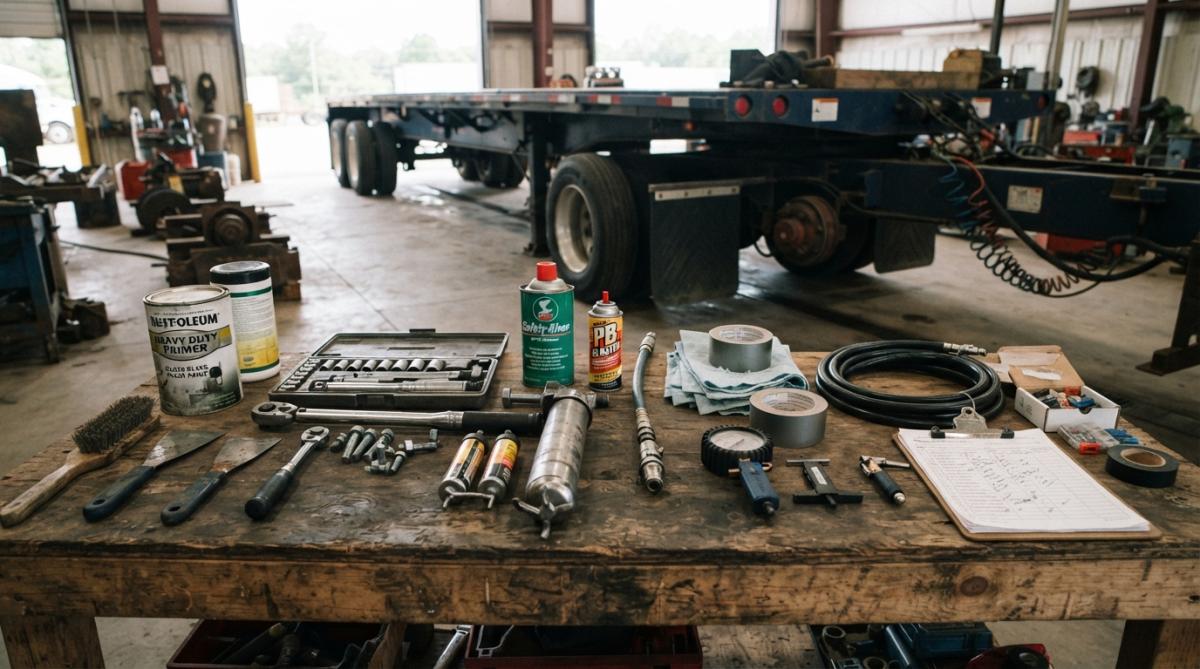
Start with a complete visual inspection in daylight. Look for rust on the frame, deck, and undercarriage. Check the hitch connection, safety chains, and electrical connectors. Examine tires for tread depth, cracks, and wear. Document everything, both strengths and weaknesses.
Cleaning and Inspection
A thorough cleaning is a trust signal. Buyers interpret a dirty trailer as poorly maintained. Pressure wash the exterior, paying special attention to the undercarriage. Clean the deck and wipe down the hitch assembly.
Inspect tires, brakes, lights, and coupling mechanism. Test all electrical connections, brake lights, turn signals, and reflectors. Check brake fluid level and condition. Verify safety chains are intact and properly attached. Document the VIN and any manufacturer plates. Take clear photos of all critical safety items.
(/cushman-haulster-3-wheel-utility-vehicle-used-for-sale/): Essential Steps]Making Repairs and Addressing Rust or Damage
Minor repairs pay for themselves in sale price and speed. Replace burned-out lights, bald tires, and worn brake pads. These signal responsible maintenance.
Rust is the enemy. Surface rust can be cleaned and treated; structural rust is a deal-breaker. Wire brush affected areas, treat with rust converter, and apply protective coating. For dents or deck damage, assess whether repair is cost-effective. Don't attempt professional welding yourself.
Gathering Critical Documentation for Heavy Duty Trailer Sales
Documentation separates legitimate sales from questionable transactions. Commercial operators and fleet managers won't proceed without it. Missing paperwork creates doubt and gives buyers leverage to demand price reductions.
Essential Ownership and Service Records
Collect the title or certificate of ownership. Verify your name is listed as the registered owner with no liens. Obtain current registration documents.
Gather all maintenance records, service logs, repair receipts, and inspection reports. These prove the equipment has been maintained. If detailed records are lacking, document what you know: "Last brake service: 2024," "Tires replaced: 2023."
Create a bill of sale template that includes the trailer's full description, VIN, purchase price, date of sale, and signatures from both parties.
Understanding Federal Excise Tax (FET) and State-Specific Obligations
Heavy-duty trailers are subject to Federal Excise Tax (FET) under Internal Revenue Code Section 4051. The FET applies to trailers with a gross vehicle weight rating (GVWR) exceeding 55,000 pounds. As of 2026, the FET rate is 12% of the sale price for trailers meeting this threshold.
If your trailer's GVWR exceeds 55,000 pounds, understand who bears the FET liability. Generally, the manufacturer or importer pays FET on the initial sale. For used heavy-duty trailers, FET has already been paid and should not be charged again. If your trailer's GVWR is below 55,000 pounds, FET does not apply.
State regulations vary significantly. Some require notarized bills of sale; others don't. Some impose sales tax on equipment; others exempt commercial equipment. A few require a lien release before transferring title. Research your state's specific requirements through your Department of Motor Vehicles.
Liability Protection and Disclosure Obligations
Document the trailer's condition honestly. Note rust, worn components, and repairs with receipts. If you're aware of recurring issues, disclose them. This documentation becomes part of your bill of sale and protects you from future claims of concealed defects.
Understand whether your state recognizes "as-is" sales for commercial equipment. Some allow "as-is" sales with minimal seller liability if the buyer had inspection opportunity. Others impose implied warranties regardless of "as-is" language.
Organizing Documentation for Buyer Confidence
Compile all documents into a single organized package: title and registration, maintenance records, repair receipts, inspection reports, bill of sale, and a one-page specification and condition summary. This signals professionalism and reduces buyer hesitation.
If selling through an equipment broker, provide all documentation to them. They verify completeness and flag missing items before listing, preventing delays at closing.
Heavy Equipment Appraisal: Determining Your Asking Price
Pricing determines whether you leave money on the table. Underpricing moves the trailer quickly but sacrifices thousands in profit. Overpricing prices you out of the market.
Researching Market Value and Comparable Sales
Research comparable trailers on online marketplaces, equipment trading platforms, and auction sites. Filter by trailer type, age, and condition. Note asking prices, but recognize that asking price isn't selling price.
Check recent sales data and auction results for actual selling prices. Trade publications sometimes include pricing benchmarks, though often as ranges rather than specific prices.
Consider the trailer's specifications. Load capacity, axles, deck length, and special features all affect value. A 40-foot flatbed with air brakes and LED lights commands a premium over a basic 28-foot trailer.
Factoring in Condition, Specifications, and Load Capacity
Condition is the primary variable. A 10-year-old trailer in excellent condition typically sells for more than a 5-year-old trailer in poor condition. Be honest about condition: excellent, good, fair, or poor.
Load capacity and GVWR matter enormously. Commercial buyers need specific weight ratings. Clearly state these specifications in your listing.
Specialized features, air suspension, hydraulic landing gear, LED lighting, or recent component replacements, justify premium pricing. Document these upgrades and their condition.
Online Marketplaces for Trailers: Where to List
The marketplace you choose determines who sees your trailer and how quickly it sells. Different platforms attract different buyer types, and a single listing limits exposure significantly.
Understanding Buyer Types and Platform Alignment
Before selecting platforms, identify your primary buyer. Are you targeting fleet operators managing 50+ trailers? Independent owner-operators? Rental companies? Construction contractors? Salvage buyers? Each searches on different platforms.
Fleet operators and rental companies search on dedicated equipment trading platforms and industry-specific marketplaces. They value robust filtering and prefer sites where they can post wanted ads.
Owner-operators and small contractors search on general classified sites, equipment marketplaces, and Facebook Marketplace. They're price-sensitive and prefer local or regional listings.
Salvage and scrap buyers search on auction sites and specialized salvage platforms. These typically yield lower prices.
International buyers search on global equipment trading platforms and often have specific regulatory requirements.
Platform Categories and Strategic Use
Dedicated equipment trading platforms focus exclusively on commercial equipment. These charge listing fees but deliver highly qualified traffic. Buyers are serious and ready to move quickly. These platforms offer advanced filtering and buyer-vetting tools. If you're selling a well-maintained, mid-to-premium trailer, these justify the listing fee through faster sales and higher prices.
Equipment auction sites offer online bidding and in-person events. Auctions create price discovery through competitive bidding, which can drive prices higher. However, they charge seller fees and require accepting the highest bid. Auctions work well if you want to move equipment quickly.
General classified sites (Craigslist, Facebook Marketplace) attract local buyers and private purchasers. These are free or low-cost but offer minimal buyer vetting. You'll field more inquiries but spend more time screening serious offers. Scam risk is higher. Use them as a secondary channel.
Manufacturer and dealer networks sometimes allow private sellers to list on their used-equipment pages. These attract buyers specifically interested in that brand with lower competition.
Multi-Platform Strategy: The Advantage of Simultaneous Distribution
The most effective approach is simultaneous listing across multiple platforms. Instead of managing five separate listings, you post once and the broker distributes it. This reaches more buyers, reduces your workload, and typically generates faster sales.
When you list simultaneously, you create the appearance of active market interest. Buyers see your trailer on multiple sites and perceive it as legitimate and well-marketed. This increases buyer confidence and reduces negotiation friction.
Multi-platform distribution also protects you from platform-specific downtime. If one platform's traffic drops, your trailer remains visible on others. This redundancy is especially valuable for high-value assets.
Evaluating Platform Fit for Your Specific Trailer
Research where similar trailers are selling. Search for trailers matching your type, age, and condition on each platform. Count active listings. If a platform has 500 similar trailers, yours will face heavy competition. If it has 50, your listing will have more visibility.
Check average time-on-market for similar trailers. If most are listed 60+ days, that platform may not reach your buyer. If most are listed 5-10 days, it's moving inventory quickly.
Read buyer reviews of the platform. Look for seller feedback on responsiveness and fraud prevention. Platforms with strong seller ratings are worth the listing fee.
Creating a Compelling Listing That Attracts Serious Buyers
Your listing is the first impression. It determines whether a buyer clicks through or scrolls past.
High-Quality Photos and Detailed Specifications
Invest in clear, well-lit photos using daylight or professional lighting. Photograph the trailer from multiple angles: full side view, front, rear, and close-ups of key components. Show deck condition, hitch assembly, tires, brakes, and any damage. Include interior shots if applicable. A trailer with 15-20 clear photos generates significantly more inquiries than one with three blurry pictures.
In your description, lead with specifications. State the trailer type, year, manufacturer, deck dimensions, load capacity, GVWR, number of axles, and brake type. Include the VIN. List all recent repairs or component replacements. Mention special features and air suspension, power landing gear, or LED lighting.
Be transparent about condition. If there's rust, note it. If a component is worn but functional, say so. Buyers appreciate honesty; they'll discover issues during inspection anyway.
Writing Transparent Descriptions and Highlighting Key Features
Write in clear, straightforward language. Avoid marketing jargon. "Well-maintained" means nothing; "Last service: June 2026, new brake pads, tires at 75% tread" means everything.
Highlight what makes your trailer valuable. If it's newer, emphasize the year. If it's specialized, lead with that. If it has recent upgrades, list them prominently.
Include your contact information and availability. Specify whether you're willing to ship or if the buyer must arrange pickup. State your preferred payment method.
Tips for Selling Heavy Duty Trailers: Negotiation and Closing
Once a serious buyer emerges, your job shifts from marketing to closing. Most buyers expect to negotiate; prepare for it.
Establish your walk-away price before negotiations begin. This is the lowest price you'll accept. Stick to it. When a buyer makes an offer below this threshold, you can counter or decline.
Expect buyers to request an inspection. Allow it. A professional inspection builds confidence and often uncovers minor issues you can address or price into the negotiation. If inspection reveals major problems, be prepared to reduce your price or walk away.
When you reach agreement on price, put it in writing. Use a bill of sale that includes the trailer's description, VIN, agreed price, payment terms, and delivery arrangements. Both parties should sign and retain copies.
Payment method matters. Cash or certified check is safest. Wire transfers carry fraud risk. Personal checks require time to clear. If the buyer is financing, verify that the lender has approved the purchase and funds will be available on the agreed closing date.
Avoiding Scams and Security Measures When Selling Online
Selling equipment online introduces risk. Scammers target high-value assets. Protect yourself with these measures.
Never accept payment before the buyer takes possession. This is the golden rule. If someone offers to wire payment upfront and arrange shipping, it's a scam. Legitimate buyers want to inspect the equipment and take possession before paying.
Verify the buyer's identity and legitimacy. Ask for business registration if they claim to be a company. Request contact information and check references if possible. Be wary of buyers who insist on immediate payment or avoid phone conversations.
Meet in person for the inspection and closing. Never hand over the title or keys without receiving verified payment. If the buyer arranges a third party to pick up the trailer, verify that arrangement directly with your buyer.
Use secure communication. Avoid sharing your personal address, phone number, or financial information via email or messaging apps until you've verified the buyer's legitimacy.
Common Mistakes to Avoid When Selling Heavy Duty Trailers
Sellers often sabotage their own sales through preventable errors.
Underestimating preparation time. Many sellers list immediately without cleaning, inspecting, or gathering documentation. This rush results in lower offers and longer timelines. Plan for 2-4 weeks of preparation before listing.
Neglecting documentation. A missing title, outdated registration, or absent maintenance records creates red flags. Buyers assume the worst and demand price reductions. Gather all documents before listing.
Overpricing based on emotional attachment. If comparable units are selling for $22,000, that's the market price. Emotion-driven pricing prices you out of the market. Research comparable sales and price competitively.
Providing insufficient photos or vague descriptions. Buyers can't make decisions without clear information. Invest in good photos and detailed specs.
Ignoring buyer questions or communication delays. Serious buyers have options. If you're slow to respond, they'll move to the next listing. Respond promptly and thoroughly.
Failing to disclose known issues. This creates legal liability and destroys trust. Transparency about condition accelerates negotiations and protects you from future disputes.
Accepting the first offer without market testing. Your first offer may be significantly below market value. List the trailer, collect multiple offers, and use competitive interest to drive price up.
Selling heavy-duty trailers profitably requires strategy, preparation, and the right platform. The difference between a seller who nets $28,000 and one who nets $22,000 on the same trailer often comes down to how thoroughly they prepared and where they listed. Ironmartonline's nine specialized selling platforms eliminate the guesswork by distributing your equipment to millions of qualified buyers simultaneously, with no contracts, no hidden fees, just maximum exposure and faster sales. Ready to maximize your equipment's value? Join our email list and get immediate access to our complete seller's checklist and pricing guide.
Frequently Asked Questions
What is the best way to determine the market value when selling heavy duty trailers?
Research comparable sales of similar trailers in your region using online marketplaces and industry databases. Consider GVWR, axle configuration, load capacity, age, maintenance history, and current condition. Check recent listings for flatbed, lowboy, dump, and specialized trailers matching your type. Factor in demand seasonality and regional variations. A heavy equipment appraisal from a professional broker can provide objective valuation and competitive pricing insights.
What documentation do I need to sell a heavy duty trailer?
You'll need the original title or certificate of ownership, current vehicle registration, complete maintenance records, service history, and the Vehicle Identification Number (VIN). Prepare a bill of sale template for the buyer. Include documentation of any major repairs, refurbishing work, or recent upgrades. If the trailer has been financed, ensure the lien is cleared before sale. Having organized, transparent documentation builds buyer confidence and accelerates closing.
Should I sell my heavy duty trailer privately or through an equipment broker?
Private sales offer more control and potentially higher margins, but require significant marketing effort and time. Equipment brokers provide access to millions of potential buyers across multiple online marketplaces, handle marketing complexity, and manage negotiations professionally. Brokers are ideal if you lack time or marketing expertise. Private sales work better if you have an existing buyer network or prefer direct control. Consider your timeline, resources, and comfort with sales negotiations when deciding.
What are the most common mistakes to avoid when selling heavy duty trailers?
Avoid overpricing without market research, neglecting repairs or cleaning before listing, providing vague or incomplete descriptions, and using poor-quality photos. Don't ignore documentation requirements or underestimate buyer financing needs. Beware of scammers requesting unusual payment methods or deposits. Avoid being evasive about condition issues, transparency builds trust. Don't rush negotiations or skip verification of serious buyers. Finally, don't list on just one platform; maximize exposure across multiple online marketplaces to reach more qualified buyers.
This article was written using GrandRanker