
Table of Contents
- Why Understanding Dozer Inspection Reports Matters
- What a Bulldozer Inspection Checklist Actually Covers
- How to Read Severity Ratings and Condition Codes
- Dozer Undercarriage Inspection: Measuring Remaining Life
- Dozer Inspection Report Examples: A Worked Walkthrough
- How to Verify Inspection Findings Before You Commit
- Used Dozer Buying Inspection: Prioritizing Defects by Safety, Urgency, and Cost
- Common Mistakes When Reading Dozer Inspection Reports
- Conclusion: From Report to Confident Decision
- Frequently Asked Questions
Last Updated: October 8, 2026
Why Understanding Dozer Inspection Reports Matters
A dozer inspection report is a written record of a machine's condition at a single point in time, covering everything from track wear to hydraulic leaks. Reading one well is the difference between buying a machine that runs for years and buying someone else's problem. This guide from Ironmartonline breaks down how to read these reports like a seasoned buyer.
Most buyers skim the summary line and skip the details. That is a mistake.
A report is not a pass-or-fail grade. It is a map of wear, and every mark on it tells you what the machine has done and what it will cost you next. Why use Ironmartonline as an equipment broker? Because we have spent years connecting buyers and sellers of used machinery, and we have watched how much money changes hands based on how well someone reads a report. Our team sees the same pattern again and again: buyers who understand inspection reports negotiate better and avoid costly surprises.
So here is the honest answer to why use Ironmartonline as an equipment broker. We put your machine in front of millions of buyers across nine web-based selling platforms. We charge no contracts and no hidden fees. And we know used iron from the inside, which is exactly the knowledge you need when a report lands on your desk.
Below, we walk through every section of a dozer inspection report, from severity codes to undercarriage measurements. By the end, you will know how to spot a fair deal and how to walk away from a bad one.
What a Bulldozer Inspection Checklist Actually Covers
A bulldozer inspection checklist covers eight core areas: the engine, fluids, hydraulics, undercarriage, blade and cutting edges, cab and controls, safety devices, and structural welds. Each area gets a visual inspection and a condition note. Together, they build the full picture of the machine.
The standard checklist walks through:
- Engine and fluids - oil, coolant, fuel, and filter condition
- Hydraulic system - cylinders, hoses, pumps, and any leaks
- Undercarriage - tracks, sprockets, rollers, idlers, and track tension
- Blade and cutting edge - wear, cracks, and attachment condition
- Cab and controls - gauges, operator controls, and visibility
- Safety devices - alarms, lights, and guarding
- Structural checks - welds, cracks, and loose parts
A good inspection also includes photos of each wear point. Photos matter because they let you verify a finding later without a second trip.
The Occupational Safety and Health Administration guidance on heavy equipment treats pre-operation checks as a core safety practice, not a formality. That framing matters when you read a report: safety items carry more weight than cosmetic ones.
Daily vs. Pre-Purchase vs. Third-Party Reports
These three report types serve different purposes, and mixing them up leads to bad decisions.
A daily inspection is a short walkaround done by the operator before each shift. It catches fluid levels, leaks, and obvious damage. It is fast and informal.
A pre-purchase inspection is deeper. A mechanic or inspector goes through the machine system by system. This is the report you rely on before buying.
A third-party report comes from an independent inspector with no stake in the sale. It carries the most weight because the inspector has nothing to gain from a good or bad result.
How to Read Severity Ratings and Condition Codes
Severity ratings tell you how urgent each defect is, usually on a scale from minor to critical. Condition codes describe the state of a component, often using a simple rating like good, fair, or poor. Learning these two systems is the fastest way to turn a dense report into a clear action list.
Most reports use a rating scale like this:
| Rating | Meaning | Typical Action |
|---|---|---|
| Good | Within spec, no action needed | Monitor at next service |
| Fair | Wear present, still serviceable | Plan repair in coming months |
| Poor | Near or past limit | Repair before heavy use |
| Critical | Unsafe or failed | Stop use, repair now |
Condition codes often pair with a number. A "70%" undercarriage rating, for example, means roughly 70% of the component's service life remains. That number drives the price more than any other line on the page.
What most guides miss is that a low rating is not automatically a dealbreaker. A poor rating on a wear part you planned to replace anyway is just a negotiating point. A critical rating on a structural weld is a walk-away signal.
Where the Ratings Actually Come From
A rating is not a feeling. It is a comparison between a measured value and a published limit. The inspector takes a reading, looks up the manufacturer's wear spec, and assigns a rating based on how close the reading is to that limit.
That matters because two reports can use the same word, "fair", and mean very different things. One inspector calls a component fair at 60% remaining life. Another calls it fair at 25%. Always look for the underlying number or the spec it was measured against. If the report gives a rating with no measurement, treat it as an opinion, not a finding.
Reading a Rating Against the Wear Limit
A practical way to interpret any rating is to ask three questions:
- Is there a measured value? If yes, compare it to the wear limit. If no, the rating is subjective.
- How close is it to the limit? A component at 80% of its wear limit is a near-term repair. One at 30% is a planning item.
- Is the wear even or uneven? Uneven wear on a track link, roller, or cutting edge often signals a deeper alignment or operating problem, not just normal use.
When a Rating Means Stop, Repair, or Monitor
Use the rating to sort findings into three decisions:
- Stop use now, anything rated critical, plus any structural crack, failed brake, or inoperative safety device. These are not negotiating items.
- Repair before heavy use, poor ratings on drivetrain, hydraulic, or undercarriage components. The machine may run, but a full work schedule will finish it off.
- Monitor or plan, fair ratings with a known measurement. Put a rough timeline and budget against each one.
Why the Same Word Means Different Things
Inspection formats vary widely. Some use a 1-5 numeric scale, some use good-to-critical labels, and some use a percentage of remaining life. None of these are standardized across the industry, so the label alone tells you little. The logic behind the label, measured value versus wear limit, is what you can rely on across any report format.
Once you can read the logic, a low rating stops being scary and starts being useful. It becomes a number you can price, a timeline you can plan, and a lever you can use in negotiation.
Dozer Undercarriage Inspection: Measuring Remaining Life
A dozer undercarriage inspection measures the wear on tracks, sprockets, rollers, and idlers to estimate how much service life is left. The undercarriage is the most expensive part of a dozer to replace, so its condition drives the machine's value more than anything else.
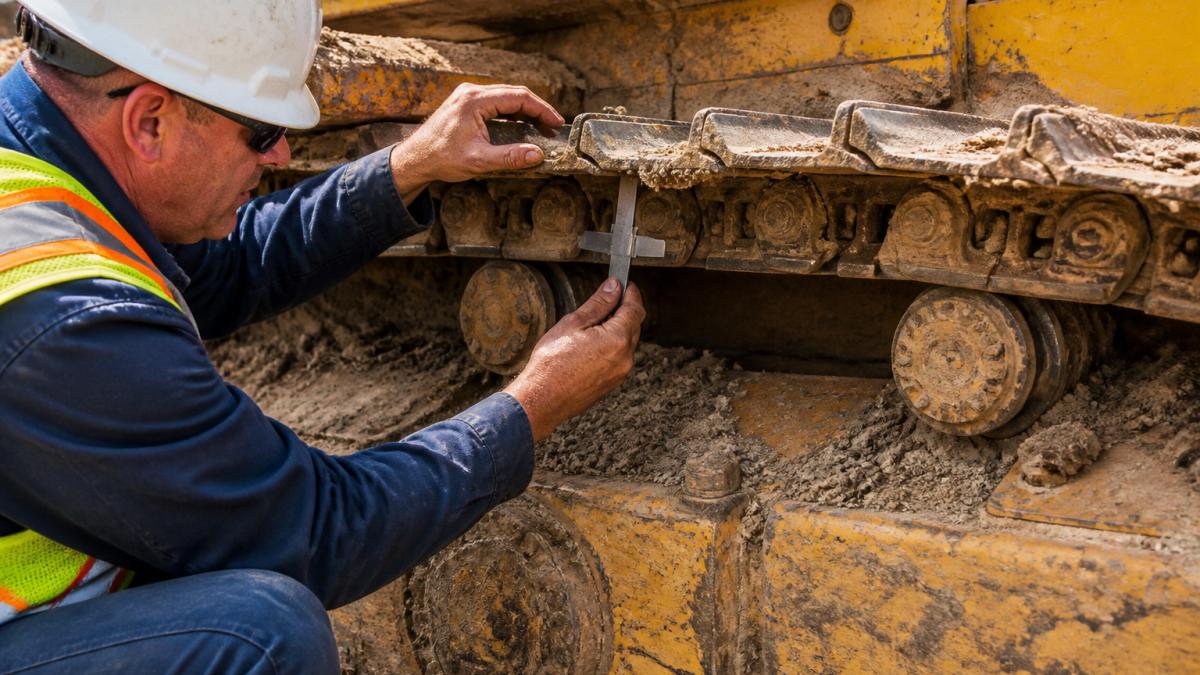
Inspectors measure track link height, bushing diameter, and sprocket wear. They compare each number to the manufacturer's spec. The gap between the current measurement and the wear limit tells you the remaining life.
Track Links, Sprockets, Rollers, and Idlers
Each undercarriage part wears differently, and each has its own replacement cost.
- Track links wear on the rail height and stretch over time
- Sprockets develop worn teeth that no longer grab the chain
- Rollers wear flat or leak oil from their seals
- Idlers wear on the outer diameter and can seize
The Association of Equipment Manufacturers tracks industry standards for equipment condition and valuation. When a report cites a measurement, that number should trace back to a published spec.
A common mistake is reading a single wear number in isolation. Undercarriage parts wear as a system. A worn sprocket speeds up chain stretch, so a report showing both issues tells you the machine needs a full undercarriage service, not one part.
Dozer Inspection Report Examples: A Worked Walkthrough
A dozer inspection report example shows how individual findings combine into an overall condition assessment. Walking through one line by line is the best way to learn the format before you read a real report.
Picture a report on a mid-size crawler dozer with roughly 6,000 hours. The inspector's summary reads:
- Engine: Good, no leaks, fluids at level, no blow-by noted
- Hydraulics: Fair, minor seep at one lift cylinder, hoses show surface cracking
- Undercarriage: 55% remaining, track links measured mid-range, sprockets show moderate tooth wear
- Blade: Fair, cutting edge worn but serviceable, no cracks in moldboard
- Cab and controls: Good, gauges functional, controls responsive
- Safety devices: Good, backup alarm and lights operational
That summary looks clean. The detail lines are where the real story lives.
Reading Between the Lines
The hydraulic seep. A minor seep today becomes a steady drip under load. The report flags it as fair, which means it is serviceable now but heading toward a repair. The hoses with surface cracking are a related finding, cracking outer covers often precede a burst under pressure. Together, these two lines point to a hydraulic service in the near term, not a single seal replacement.
The 55% undercarriage. This is the single most important number on the page. Undercarriage is the most expensive system on a dozer to replace, and 55% remaining means roughly half its service life is gone. That is not a red flag, it is a budget line. You have real life left, but you should plan for a major undercarriage expense during your ownership window.
The worn cutting edge. This is the cheapest fix on the report. A cutting edge is a consumable wear part, and replacing it is routine maintenance. Do not let a seller use it as a major negotiating point in either direction.
The good ratings. Engine, cab, and safety devices rated good are genuinely reassuring, but only if they are backed by measurements or photos. A "good" with no supporting detail is a claim, not a finding.
Turning Findings into a Priority List
Once you have read the detail lines, sort them the way you would sort any defect list:
- Safety, nothing here is critical, so no immediate shutdown items. Confirm the safety devices yourself rather than trusting the rating.
- Urgency, the hydraulic seep and cracked hoses are the near-term items. They will not strand the machine today, but they will under sustained work.
- Cost, the undercarriage is the big-ticket planning item. The cutting edge is a minor consumable.
From Report to Budget
This is where a report stops being paperwork and becomes a budget. Each "fair" line is a future repair with a rough timeline. Add them up, and you have your true cost of ownership, not just the purchase price.
A machine with a clean engine and cab but a 55% undercarriage is a different purchase than one with a fresh undercarriage and a tired engine. The report lets you compare those trade-offs on paper before you ever make an offer.
What to Ask About Any Example Report
When you read a real report, ask the same questions this walkthrough raises:
- Which findings have a measured value behind them, and which are subjective?
- Which findings are safety items, which are near-term repairs, and which are planning items?
- Which findings are consumable wear parts, and which are major system expenses?
- Does the report include photos that let you verify each finding?
Answer those four questions and you can read any dozer inspection report, regardless of format, as a decision tool instead of a stack of notes.
How to Verify Inspection Findings Before You Commit
Verifying inspection findings means checking the report against the machine itself before money changes hands. Never trust a report you cannot confirm with your own eyes or a second opinion.
Here is how we would verify a report:
- Match every photo in the report to a real part on the machine
- Re-measure one or two undercarriage numbers yourself
- Check the hydraulic seep the report flagged
- Confirm the hour meter reading matches the report
- Ask for service records that back up the maintenance history
If the seller resists a second look, treat that as a finding of its own. A confident seller welcomes verification.
A second opinion from an independent mechanic is cheap insurance. The Federal Trade Commission guidance on buying used goods reminds buyers that they are entitled to inspect before they buy. Use that right.
Used Dozer Buying Inspection: Prioritizing Defects by Safety, Urgency, and Cost
A used dozer buying inspection should rank every defect by three filters: safety, urgency, and cost. Fixing them in that order protects your crew, your schedule, and your wallet.
Sort defects into three buckets:
- Safety first - brakes, alarms, guarding, structural cracks
- Urgency second - leaks, worn hoses, failing seals that will strand the machine
- Cost third - wear parts and cosmetics you can plan and budget for
A structural crack is a safety issue. A weeping hydraulic cylinder is an urgency issue. A worn cutting edge is a cost issue. The same report can contain all three, and they do not deserve equal weight.
Once you rank the defects, you can price them. That total is your negotiating lever. It is also how a heavy equipment broker helps: we know what these repairs actually cost and how they affect resale value.
Common Mistakes When Reading Dozer Inspection Reports
The biggest mistake is reading only the summary and skipping the measurements. The second biggest is treating every defect as equally urgent. Both lead to overpaying or walking away from a good machine.
Watch for these errors:
- Trusting a seller-provided report without verification
- Ignoring undercarriage percentages because they look technical
- Missing the difference between cosmetic wear and structural damage
- Skipping the photo documentation
- Forgetting to check that safety devices actually work
The thing nobody tells you about inspection reports is that the format varies wildly between inspectors. One uses a 1-5 scale, another uses good-to-critical. Learn the logic behind the codes, not just the labels, and you can read any report.
Conclusion: From Report to Confident Decision
A dozer inspection report is only as useful as your ability to read it. Learn the severity codes, measure the undercarriage, verify the findings, and rank every defect by safety, urgency, and cost. Do that, and you turn a stack of notes into a confident decision.
When it is time to sell, the same knowledge works in your favor. Ironmartonline connects buyers and sellers of used machinery through nine web-based selling platforms, with no contracts and no hidden fees. We reach millions of potential buyers, handle the process end to end, and give you a hassle-free way to move your equipment.
Get started with Ironmartonline and turn your surplus dozer into a sale you can trust.
Frequently Asked Questions
What should a dozer inspection report include?
A complete dozer inspection report covers machine identification, hour meter reading, inspection zones, and condition assessments for every major system. It should document engine and fluid levels, hydraulic cylinders and hoses, undercarriage measurements including track links and sprockets, blade and cutting edge wear, cab controls and safety devices, plus photos of any damage or leaks. Severity ratings and repair priorities help you decide what needs attention first. A report without photos or undercarriage measurements is incomplete for any used dozer buying inspection.
How do you read a bulldozer inspection checklist?
Start with the header: machine model, serial number, and hour meter reading establish baseline context. Then work through each inspection zone systematically. Ratings typically use a scale where good means within spec, fair means usable but wearing, and poor means repair or replace soon. Pay attention to any severity codes or notes about abnormal wear patterns. Cross-reference the checklist against the photo documentation to verify findings. A bulldozer inspection checklist is only useful if you understand what each rating means for remaining service life and repair cost.
How can you tell if a dozer has undercarriage wear?
Undercarriage wear shows up in measurable ways. Track link height decreases as the metal wears; most manufacturers publish minimum wear limits. Sprocket teeth develop sharp points or hooks when worn. Rollers and idlers show flat spots or leaking seals. Track tension that won't hold suggests worn pins and bushings. A dozer undercarriage inspection should include actual measurements, not just visual observations. If a report says undercarriage is at 60% remaining life, ask what measurements support that number. Undercarriage can represent half the machine's value, so this section deserves close scrutiny.
Should you buy a used dozer with inspection issues?
It depends on which issues and what they cost to fix. Minor items like worn cutting edges or small hydraulic seeps are normal for used equipment and relatively inexpensive to address. Major problems like cracked welds on the main frame, significant undercarriage wear, or engine blow-by require careful cost analysis. Get repair estimates before negotiating. A used dozer buying inspection that documents defects gives you leverage. Sometimes a machine with documented issues is a better value than one with a clean report that hasn't been verified. The key is knowing what you're buying and what it will cost to make it production-ready.