
Table of Contents
- Why Use Ironmartonline Equipment Broker
- The Immediate Legal Exposure When You Buy Stolen Heavy Equipment
- Criminal Charges vs. Civil Liability for Possession of Stolen Goods
- How to Check If Heavy Equipment Is Stolen Before Purchase
- Heavy Equipment Bill of Sale Requirements and Verification
- Immediate Steps After Discovering Your Equipment Is Stolen
- Reporting Stolen Equipment to Law Enforcement and Authorities
- Legal Recourse for Stolen Construction Equipment Recovery
- Insurance Claims and Asset Recovery After Theft Discovery
- Conclusion
Last Updated: August 21, 2026
Why Use Ironmartonline Equipment Broker
When you're buying or selling heavy equipment, the stakes are high. A single transaction can represent tens of thousands of dollars, and purchasing stolen property can derail projects, drain cash reserves, and create legal headaches lasting months.
Why use Ironmartonline equipment broker? The answer lies in a critical reality: the heavy equipment market is flooded with risk. According to construction equipment theft statistics, approximately 11,000 to 12,000 construction equipment theft incidents are reported annually, with less than 25% of stolen equipment ever recovered (nicb.org). The average loss per theft incident reaches $30,000, but indirect costs, project delays, emergency rentals, idle labor, often exceed direct replacement costs by 2 to 5 times (constructionequipmentguide.com).
Ironmartonline connects buyers and sellers through nine specialized web-based selling platforms, reaching millions of potential buyers while eliminating friction from private party transactions. More importantly, working through a professional Heavy Equipment Broker adds critical due diligence that protects you from purchasing stolen heavy equipment in the first place.
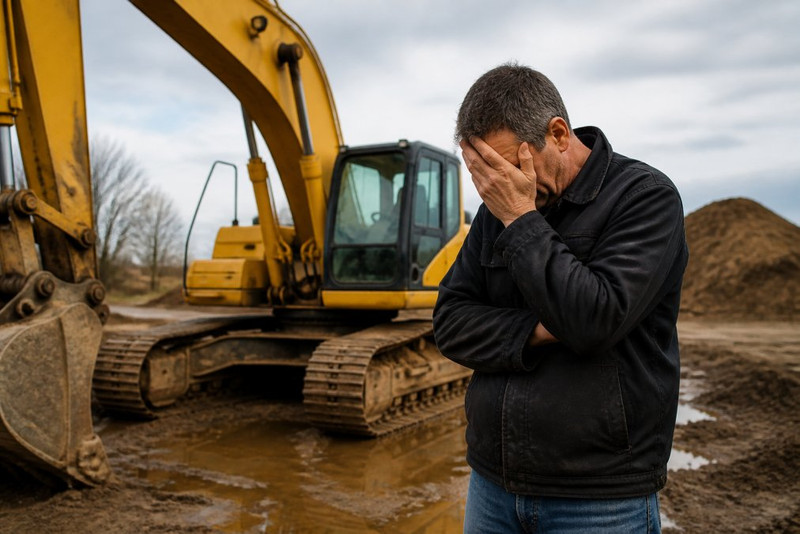
When you buy stolen equipment, you face potential criminal charges for possession of stolen goods, civil liability to the rightful owner, insurance complications, and operational nightmares from equipment seizure. The legal exposure extends beyond the buyer to your company's reputation, financing relationships, and ability to operate.
This guide covers what happens when you buy stolen heavy equipment, how to verify ownership before purchase, and immediate steps if you discover equipment is stolen. Understanding these risks is the first step toward protection. Working with a reputable equipment broker like Ironmartonline is the practical one.
The Immediate Legal Exposure When You Buy Stolen Heavy Equipment
Purchasing stolen heavy equipment creates immediate legal jeopardy, regardless of intent. The law cares about what you possess, not whether you knew it was stolen.
When you take ownership of stolen property, you become liable under possession of stolen goods statutes, criminal charges in most jurisdictions carrying potential fines and imprisonment. Even "innocent purchaser" status doesn't automatically shield you from prosecution, though it may reduce penalties if you can prove reasonable due diligence.
Civil liability runs parallel. The rightful owner can sue for conversion and demand return of equipment plus damages. If you've already sold it, you may owe its full value plus penalties. Insurance typically won't cover losses from stolen property you purchased, leaving you personally responsible.
Law enforcement can seize the equipment as evidence at any time, leaving you without the asset and without recourse if investigation takes months or years. Your project stops. Your cash flow stops. Your reputation takes a hit.
This is why verifying equipment ownership before purchase is essential protection.
Criminal Charges vs. Civil Liability for Possession of Stolen Goods
Understanding the difference between criminal and civil liability clarifies your actual exposure.
Criminal liability stems from possession of stolen goods statutes in every state. These are felony charges when equipment value exceeds $1,000, virtually all heavy equipment. Conviction results in prison time (typically 1-5 years), fines, and a permanent criminal record affecting employment, licensing, and financing.
Prosecution must prove knowing possession. However, "knowing" includes willful blindness, deliberately avoiding facts that would alert a reasonable person to theft. Skipping serial number verification, ignoring documentation red flags, or buying far below market value without questioning why can constitute willful blindness.
Civil liability is separate and doesn't require criminal conviction. The rightful owner can sue for conversion, claiming damages equal to equipment value plus costs. The burden of proof is lower in civil court, making judgments easier to obtain.
A single transaction can trigger both simultaneously. You could face criminal prosecution while the rightful owner pursues civil recovery. Even acquittal criminally doesn't prevent civil liability.
Legal consequences of possessing stolen property vary by state statute.
How to Check If Heavy Equipment Is Stolen Before Purchase
The most effective protection is verification before the transaction closes.
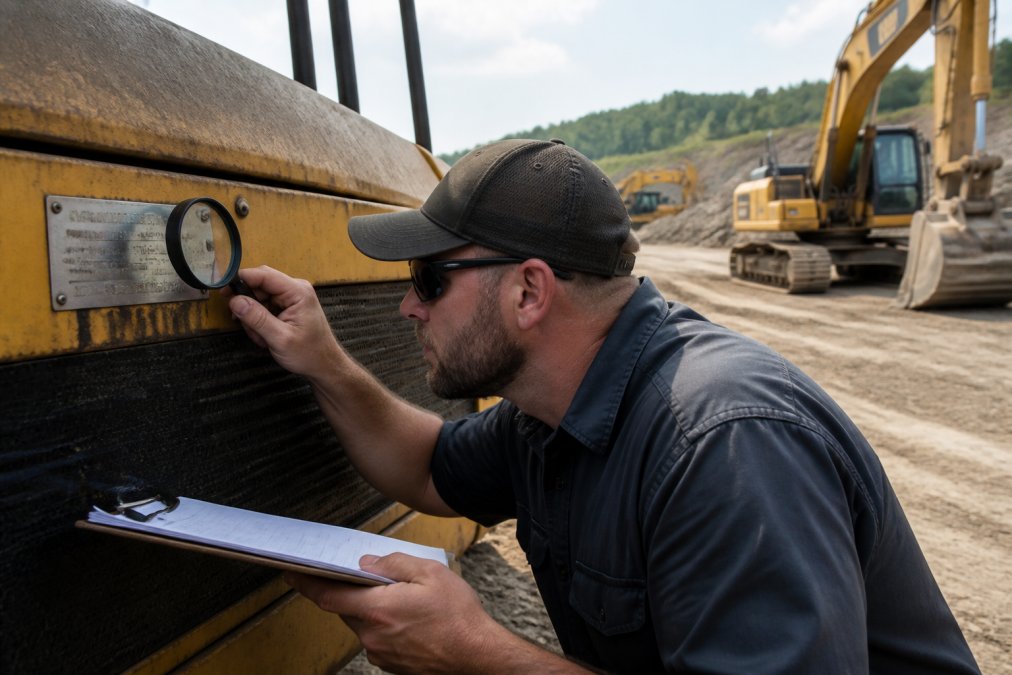
Start with the serial number. Every piece of heavy equipment has a unique equipment identification number (EIN) or serial number. Demand the seller provide this in writing. Cross-reference it against the National Equipment Register (NER) and the Construction Equipment Theft Information Clearinghouse (CETIC). If the serial number appears in either database, walk away immediately.
Verify bill of sale and title documentation. Request the original bill of sale from the seller's previous transaction. The document should include equipment serial number, description, sale price, and signatures. Cross-check the seller's name and contact information. For financed equipment, verify the lien holder is satisfied and equipment is free and clear.
Request maintenance and service records. Legitimate owners maintain service logs and repair receipts aligned with equipment age and hours. Stolen equipment often lacks documentation because thieves don't have access to original records.
Conduct a title search if available. Some equipment, particularly trucks and trailers, may have title documentation. Check with your state's department of motor vehicles or the equipment manufacturer to verify the seller is the legal owner.
Ask for proof of purchase. Request the original purchase receipt, invoice, or financing agreement. A seller who can't produce this documentation is a red flag.
Meet the seller in person. Meet at their business location or established facility. Ask detailed questions about maintenance and repair history. Legitimate owners answer without hesitation. Evasive answers warrant caution.
Use an equipment broker. Professional equipment brokers conduct background checks, verify ownership documentation, and vet sellers before listing. Their reputation depends on legitimate transactions. They have access to industry databases and law enforcement relationships that individual buyers lack.
Heavy Equipment Bill of Sale Requirements and Verification
A bill of sale is your primary legal document proving ownership transfer and your best defense if a theft claim emerges after purchase.
A valid bill of sale must include:
- Equipment description: Make, model, year, and equipment identification number
- Purchase price: The exact amount paid, in writing
- Seller identification: Full legal name, address, and signature
- Buyer identification: Your full legal name, address, and signature
- Date of sale: The specific transaction date
- Warranty disclaimer or "as-is" language: Clarifying title warranty status
- Lien release statement: Confirmation that no liens attach to the equipment
Notarization adds verification that the seller is who they claim to be and signed willingly.
Critical verification steps:
Ensure the serial number on the bill of sale matches the physical equipment. Inspect the equipment's nameplate or engine block where the manufacturer stamps the serial number. Photograph this alongside the bill of sale document.
Verify the seller's identity with government-issued ID. Match the name on the ID to the bill of sale name. Request a lien search to confirm no outstanding financing claims exist. Retain copies of all documentation in a secure location.
A professionally drafted bill of sale from an equipment broker includes protective language benefiting the buyer, such as representations that the seller has clear title and authority to sell.
Immediate Steps After Discovering Your Equipment Is Stolen
If you discover purchased equipment is stolen, immediate action is critical.
Step 1: Cease use immediately. Stop operating the equipment and remove it from job sites. Continuing use strengthens criminal charges by demonstrating knowing possession. Document that you've stopped using it.
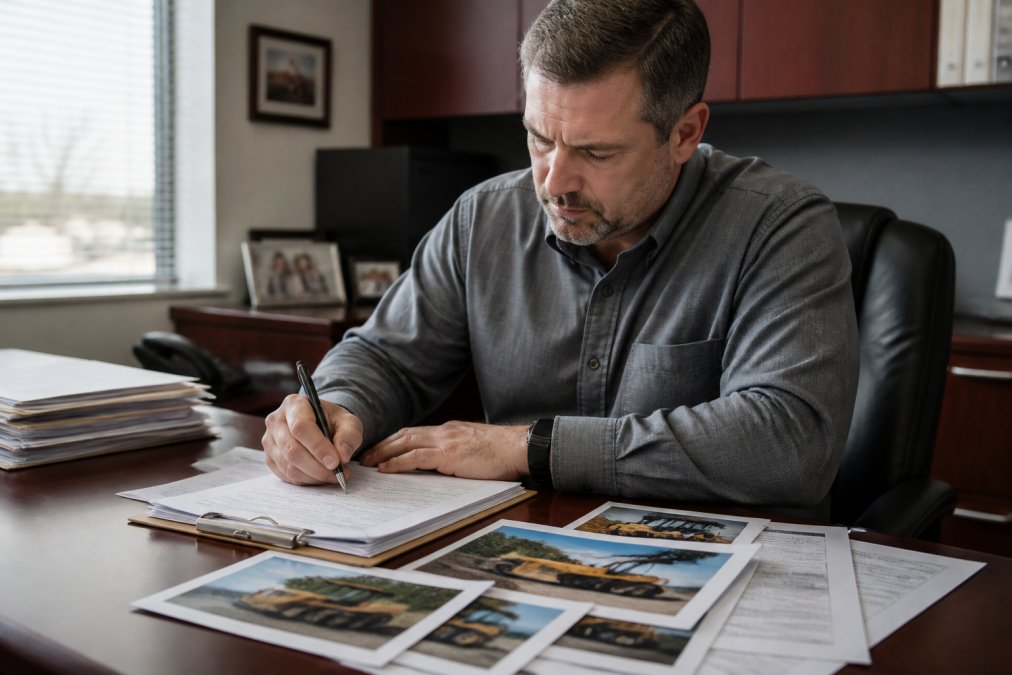
Step 2: Gather all documentation. Collect the bill of sale, title documents, lien releases, maintenance records, photos, and seller communications. Organize chronologically. This proves you conducted due diligence and purchased in good faith.
Step 3: Contact law enforcement. File a police report with your local police department or sheriff's office. Provide the equipment's serial number, description, purchase documentation, and seller information. Request a case number and keep a copy. preventing site theft.
Step 4: Notify your insurance company. Report the situation to your business insurance carrier with copies of the police report and purchase documentation. While theft coverage typically doesn't apply to stolen equipment you purchased, notification creates a record.
Step 5: Contact the rightful owner if identifiable. If the original owner is identifiable through the theft report, contact them directly. Explain your situation and offer cooperation in returning equipment. This demonstrates good faith and may prevent civil litigation.
Step 6: Consult an attorney. Hire a criminal defense attorney immediately if law enforcement indicates you may face charges. An attorney can negotiate with prosecutors, potentially reducing charges or obtaining dismissal based on good faith purchase and cooperation.
Step 7: Preserve all communications. Keep detailed records of all communications with law enforcement, the rightful owner, your insurance company, and your attorney. These demonstrate your cooperative stance and good faith efforts.
Acting within days of discovery shows you didn't knowingly possess stolen equipment. Delays suggest you knew or should have known the equipment was problematic.
Reporting Stolen Equipment to Law Enforcement and Authorities
Reporting stolen equipment to law enforcement is essential whether you're the original owner or innocent purchaser who discovered the theft.
File a police report. Contact your local police department's non-emergency line or visit in person. Provide the equipment's full description, serial number, purchase price, date and location of theft or discovery, and any photos. Request a case number and obtain a copy of the report.
Report to the National Equipment Register (NER). The NER maintains a database of reported construction equipment thefts. Filing here makes the equipment visible to law enforcement nationwide and alerts equipment brokers to the theft, increasing recovery chances significantly.
Contact the equipment manufacturer. Notify the manufacturer (John Deere, Kubota, Caterpillar, etc.) of the theft. Manufacturers maintain serial number records and can flag the equipment in their systems.
Report to your state's attorney general. If the theft involves fraud, report to your state's consumer protection division. This creates an official record and may trigger investigation into fraudulent equipment sales patterns.
Notify industry associations. Organizations like the Associated Equipment Distributors (AED) maintain theft alerts reaching industry professionals who may encounter the stolen equipment.
Work with law enforcement investigators. If law enforcement opens an investigation, cooperate fully. Provide additional documentation, photos, communications with the seller, and any leads about equipment location.
GPS-equipped assets with active tracking are recovered at far higher rates, often within 24 hours (lojack.com).
Legal Recourse for Stolen Construction Equipment Recovery
If you've purchased stolen heavy equipment, several legal avenues exist for recovery.
Civil lawsuit against the seller. You can sue for breach of warranty or fraud. Recovery depends on locating the seller and proving knowledge of theft or gross negligence. Many fraudulent sellers disappear after sale, making this remedy difficult.
Replevin action. This court process recovers specific property. If law enforcement recovers your stolen equipment, you can file a replevin action to obtain it from police custody by proving ownership through your bill of sale.
Insurance claims. If you have equipment coverage, file a claim. However, most policies exclude coverage for stolen equipment you purchased, treating it as loss due to seller fraud rather than a covered peril. Review your policy carefully.
Subrogation rights. If your insurance company pays a claim, they may pursue subrogation against the seller to recover their payout, which is typically more successful than individual lawsuits.
Restitution through criminal proceedings. If the seller is prosecuted, the court may order restitution as part of sentencing. However, restitution is only valuable if the seller has assets to pay it.
Small claims court. If equipment value falls within your state's small claims limit (typically $5,000-$15,000), you can file without an attorney. This is faster and cheaper but limited in recovery amount.
Recovery from a fraudulent seller is difficult. Prevention through proper verification before purchase is far more effective. This is why working with an equipment broker provides genuine protection.
Insurance Claims and Asset Recovery After Theft Discovery
Understanding insurance coverage and asset recovery processes is critical when stolen equipment is discovered.
Equipment coverage gaps. Most commercial general liability and property insurance policies do NOT cover losses from stolen equipment you purchased. These policies cover your own equipment, not equipment acquired from others. The loss is typically treated as financial loss due to fraud, falling outside standard coverage.
Business interruption coverage. If stolen equipment loss causes project delays or operational shutdowns, business interruption coverage may apply, reimbursing lost income during downtime.
Cyber liability and fraud coverage. If you purchased equipment through an online marketplace and were defrauded, cyber fraud coverage may apply.
Equipment rental reimbursement. Some policies cover emergency equipment rental costs while stolen equipment is recovered or replaced, keeping projects moving.
Asset recovery process:
Once law enforcement recovers stolen equipment, it enters police custody as evidence. You cannot simply claim it. Instead, file a replevin action in civil court, proving ownership through your bill of sale and proof of payment. The court will order release once you've established ownership.
This process can take weeks or months. During this time, equipment sits in police storage, potentially deteriorating. Storage fees may apply.
If the rightful original owner also claims the equipment, a dispute may arise. Courts typically award equipment to whoever proves legitimate ownership through clear title. If both have valid claims, the court may order the equipment sold with proceeds divided based on respective interests.
Recovery insurance. Some equipment owners purchase theft recovery insurance or GPS tracking services providing active recovery assistance. If your stolen equipment had this coverage, notify the service provider immediately.
The key to asset recovery is documentation. Every receipt, bill of sale, photograph, and communication creates a paper trail proving your ownership interest and good faith purchase.
Buying stolen heavy equipment creates legal, financial, and operational consequences extending far beyond the initial transaction. Criminal exposure, civil liability, project delays, and reputational damage accumulate quickly once discovery occurs.
The most effective protection is verification before purchase. Checking serial numbers against theft databases, verifying bill of sale documentation, requesting proof of ownership, and conducting due diligence on the seller all reduce risk substantially. When these steps are complex or time-consuming, working with a professional Heavy Equipment Broker eliminates friction. A Heavy Equipment Broker connects buyers and sellers while conducting verification work that protects you from purchasing stolen property. Their reputation depends on legitimate transactions, and their access to industry databases and seller vetting provides peace of mind that private party transactions cannot match.
=== FAQ ANSWERS (audit these too, same rules) ===
[1] Q: What are the legal consequences of possessing stolen property if I didn't know it was stolen? A: Even innocent purchasers can face serious consequences. Many states hold buyers liable for restitution to the original owner, and in some cases, criminal charges may apply depending on whether you exercised reasonable due diligence. Good faith purchases offer limited protection, courts expect buyers to verify ownership through serial numbers, bill of sale documentation, and title searches. The burden falls on you to prove you acted reasonably. Consulting legal counsel immediately after discovery is critical to understanding your exposure in your specific jurisdiction.
[2] Q: How do I check if heavy equipment is stolen before I buy it? A: Verify the equipment identification number (EIN) or serial number against the National Equipment Register and law enforcement databases. Request a bill of sale showing the seller's ownership history and matching VIN documentation. Cross-reference the serial number on the equipment itself with all paperwork, discrepancies are major red flags. For private party transactions, demand proof of title transfer and ask for the original purchase receipt. Run background checks on the seller and consider hiring an inspector to verify the equipment's history and condition before payment.
[3] Q: What should I do immediately if I discover the heavy equipment I bought is stolen? A: Stop using the equipment immediately and document everything: purchase receipts, bill of sale, seller contact information, and all communications. Contact law enforcement and file a police report with the equipment's serial number and details. Notify your insurance company to protect your claim and report the fraudulent transaction. Preserve all evidence of your good faith purchase, including your due diligence efforts. Consult an attorney before communicating further with the seller or any other parties. The faster you act, the stronger your legal position and the better your chances of asset recovery.
[4] Q: What does a proper heavy equipment bill of sale need to include for legal protection? A: A valid bill of sale must include the seller's and buyer's full legal names and addresses, complete equipment description with make, model, and serial number, purchase price and payment terms, date of sale, and the seller's signature and date. It should state that the seller owns the equipment free and clear or disclose any liens. Include a statement that the seller warrants ownership and the equipment is not subject to theft claims. Both parties should retain signed copies. Missing or vague details create legal vulnerabilities, never accept verbal agreements or incomplete documentation for heavy equipment transactions.
Frequently Asked Questions
What are the legal consequences of possessing stolen property if I didn't know it was stolen?
Even innocent purchasers can face serious consequences. Many states hold buyers liable for restitution to the original owner, and in some cases, criminal charges may apply depending on whether you exercised reasonable due diligence. Good faith purchases offer limited protection, courts expect buyers to verify ownership through serial numbers, bill of sale documentation, and title searches. The burden falls on you to prove you acted reasonably. Consulting legal counsel immediately after discovery is critical to understanding your exposure in your specific jurisdiction.
How do I check if heavy equipment is stolen before I buy it?
Verify the equipment identification number (EIN) or serial number against the National Equipment Register and law enforcement databases. Request a bill of sale showing the seller's ownership history and matching VIN documentation. Cross-reference the serial number on the equipment itself with all paperwork, discrepancies are major red flags. For private party transactions, demand proof of title transfer and ask for the original purchase receipt. Run background checks on the seller and consider hiring an inspector to verify the equipment's history and condition before payment.
What should I do immediately if I discover the heavy equipment I bought is stolen?
Stop using the equipment immediately and document everything: purchase receipts, bill of sale, seller contact information, and all communications. Contact law enforcement and file a police report with the equipment's serial number and details. Notify your insurance company to protect your claim and report the fraudulent transaction. Preserve all evidence of your good faith purchase, including your due diligence efforts. Consult an attorney before communicating further with the seller or any other parties. The faster you act, the stronger your legal position and the better your chances of asset recovery.
What does a proper heavy equipment bill of sale need to include for legal protection?
A valid bill of sale must include the seller's and buyer's full legal names and addresses, complete equipment description with make, model, and serial number, purchase price and payment terms, date of sale, and the seller's signature and date. It should state that the seller owns the equipment free and clear or disclose any liens. Include a statement that the seller warrants ownership and the equipment is not subject to theft claims. Both parties should retain signed copies. Missing or vague details create legal vulnerabilities, never accept verbal agreements or incomplete documentation for heavy equipment transactions.
This article was written using GrandRanker