
Table of Contents
- What Is Heavy Equipment Brokerage?
- Why Use an Equipment Broker for Your Machinery Sales
- Understanding Heavy Equipment Broker Commission Rates
- The Heavy Equipment Consignment Process Explained
- Step-by-Step: How Heavy Equipment Brokerage Works
- Choosing Between a Mideastequip Alternative for Heavy Machinery
- Pros and Cons of Using a Heavy Equipment Broker
- Legal and Contractual Considerations in Equipment Brokerage
- Digital vs. Traditional Brokerage Models
- Conclusion
Last Updated: August 26, 2026
What Is Heavy Equipment Brokerage?
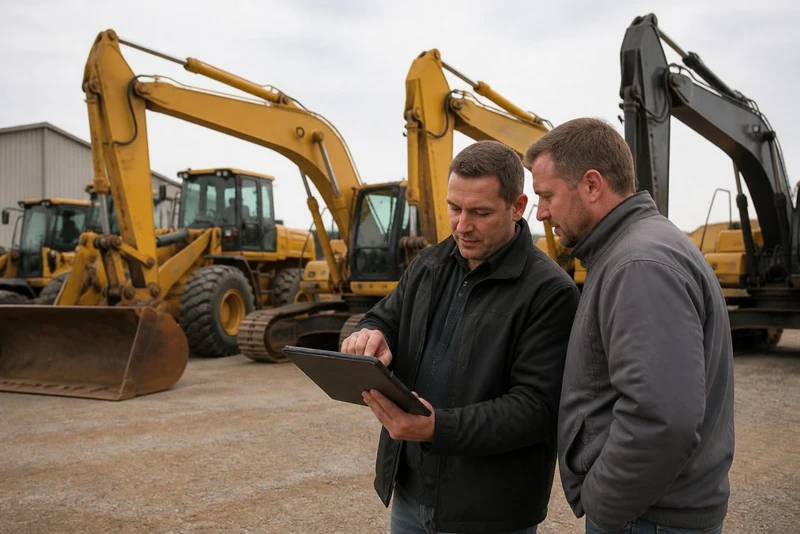
Heavy equipment brokerage connects buyers and sellers of used industrial machinery, excavators, dozers, loaders, cranes, tractors, and trucks, through specialized intermediaries who facilitate transactions, manage negotiations, and coordinate logistics. A broker acts as a transaction facilitator, using market reach and expertise to maximize value for sellers and help buyers source reliable machinery.

According to Mordor Intelligence's 2026 analysis, the global used construction equipment market sits at approximately $132.67 billion in 2026, projected to reach $174.28 billion by 2031, with auction platforms and brokerage services identified as the fastest-growing sales channel at 7.03% CAGR. This growth reflects how contractors, fleet managers, and equipment owners increasingly turn to specialized brokers rather than selling directly or listing on general marketplaces.
Why use an equipment broker instead of selling independently? When you list a $150,000 excavator on a generic platform, you compete against thousands of listings, rely on random traffic, and handle every inquiry yourself, including unqualified buyers and international complications. A reputable equipment broker like Ironmartonline eliminates this friction by pre-qualifying buyers, managing negotiations, coordinating inspections, and handling title transfer and logistics. The broker's commission, typically tiered, is paid from sale proceeds, meaning sellers pay no upfront fees.
The industry has matured significantly. MarketsandMarkets' 2026 report documents that the U.S. heavy construction equipment market is valued at $240.9 billion in 2026 and projected to reach $327.3 billion by 2031, with a steady CAGR of 4.5%. Brokers now operate across nine specialized web-based selling platforms, reaching millions of potential buyers globally and locally, transforming what was once a fragmented, relationship-driven business into a data-driven, technology-enabled marketplace.
Why Use an Equipment Broker for Your Machinery Sales
Selling heavy machinery directly introduces operational complexity most owners aren't equipped to handle. A dedicated equipment broker absorbs buyer sourcing, qualification, negotiation, and logistics coordination, allowing you to focus on your core business while maximizing your net proceeds.
Market reach is the primary advantage. A broker with access to multiple platforms simultaneously exposes your equipment to a vastly larger pool of potential buyers than you could reach independently. According to Coherent Market Insights, brokers capture a disproportionate share of qualified transactions through established channels. When an excavator is listed on nine different platforms instead of one, the probability of finding a buyer willing to pay top dollar increases substantially.
Buyer pre-qualification eliminates time-wasting inquiries. Equipment brokers maintain networks of vetted buyers, contractors with proven financing, fleet managers with purchase authority, and rental companies with active acquisition budgets. A broker matches machinery to the right buyer faster than a seller working alone.
Negotiation expertise directly translates to higher final sale prices. Brokers understand regional price variations, seasonal demand fluctuations, and how equipment condition impacts valuation. They navigate complex trade-offs involving price, delivery terms, payment method, and warranty disclaimers.
Logistics coordination requires specialized knowledge. Arranging transport for a 50-ton dozer across state lines, managing title transfer, handling insurance during transit, and coordinating delivery requires established relationships with heavy-haul carriers and understanding of regulatory requirements. This eliminates costly mistakes sellers often encounter managing logistics independently.
Understanding Heavy Equipment Broker Commission Rates
Commission structures are typically tiered, aligning broker incentives with seller outcomes. Ironmartonline differentiates itself through no contracts, no hidden fees, and straightforward commission rates applied to the final sale price.
The Heavy Equipment Consignment Process Explained
Equipment consignment is the operational backbone of most brokerage arrangements. When you consign machinery to a broker, you grant them authority to market, negotiate, and facilitate the sale on your behalf, typically without transferring legal ownership until a buyer is secured and payment terms are finalized.
The consignment agreement outlines the broker's responsibilities, your obligations, and the timeline for sale. Most arrangements run 30-90 days with periodic reporting on inquiries, showings, and offers.
Inventory management requires coordination. If equipment is at your facility, the broker arranges prospective buyer inspections with advance notice. Some brokers offer storage facilities for equipment awaiting sale. Ironmartonline's nine web-based selling platforms enable virtual or in-person inspections depending on buyer preference and equipment location.
Pricing strategy is collaborative. The broker researches comparable sales, auction results, and current market demand to recommend an opening price. Most brokers adjust pricing monthly based on market feedback. If equipment attracts no qualified offers in 30 days, the broker might recommend a 5-10% price reduction.
Offer management showcases the broker's negotiation skills. When a qualified buyer submits an offer, the broker presents it, discusses terms with you, and either accepts, rejects, or counters. You're kept informed but don't engage directly with buyers, allowing faster deal closure and better final terms.
Step-by-Step: How Heavy Equipment Brokerage Works
The brokerage process typically spans 6-12 weeks, depending on equipment type, market conditions, and buyer financing complexity.
Step 1: Equipment Assessment and Valuation
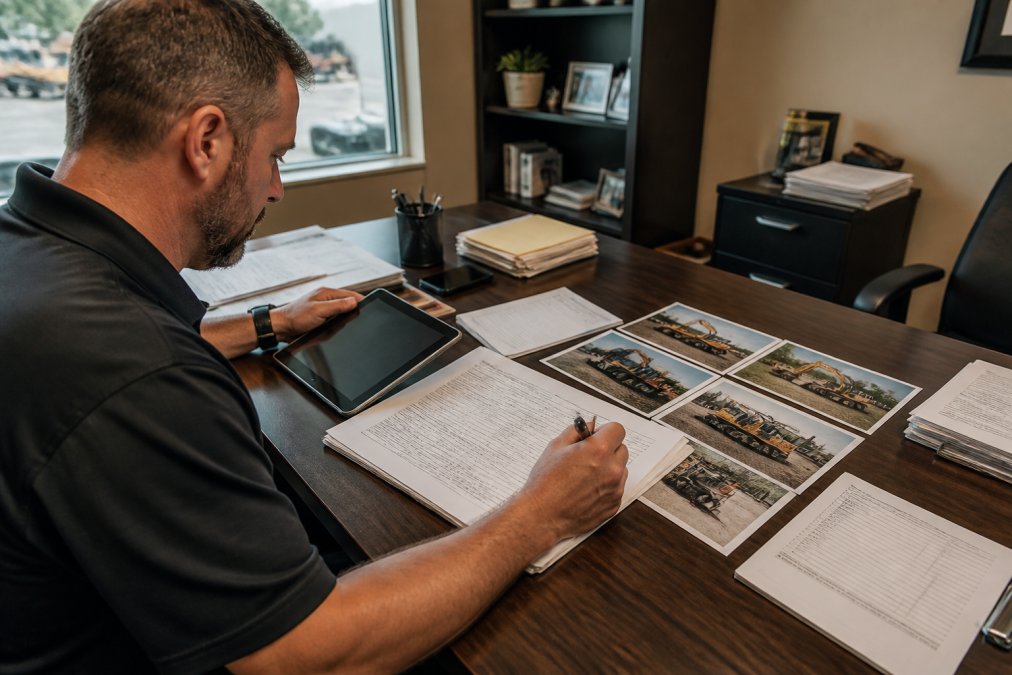
The process begins with comprehensive equipment assessment. The broker or third-party inspector documents condition, operational status, maintenance history, and any wear or damage. This assessment produces a detailed condition report that becomes the foundation for valuation and buyer communications.
Valuation considers equipment age and hours of operation, market comparables from recent sales and auctions, regional demand for that specific model, and current economic conditions. A 2015 Caterpillar 320 excavator with 6,000 hours in excellent condition commands a different price than an identical model with 12,000 hours and visible wear. According to Sandhills Global's January 2026 market report, inventory levels for used heavy-duty construction equipment fell 2.6% month over month and 13.05% year over year, indicating tightening supply that typically supports stronger pricing for well-maintained equipment.
Step 2: Listing and Marketing Across Multiple Channels
Once valuation is complete, the broker creates listings across its network of web-based platforms. Ironmartonline's nine specialized selling platforms ensure your equipment reaches millions of potential buyers, contractors, fleet managers, rental companies, and international buyers. Each platform has its own audience, so multi-channel listing dramatically increases exposure.
The listing includes high-quality photographs, detailed condition report, equipment specifications, pricing, and contact information. Brokers optimize listings for searchability using keywords buyers search for. Marketing also includes email outreach to the broker's buyer database, social media promotion, and targeted advertising to specific buyer segments.
Step 3: Buyer Qualification and Negotiation
As inquiries arrive, the broker qualifies each potential buyer by confirming financing, verifying purchase authority, and assessing seriousness. Unqualified inquiries are filtered quickly, saving you time.
Once a qualified buyer emerges, negotiation begins. The buyer may offer below asking price; the broker presents the offer, discusses terms with you, and either accepts, rejects, or counters. This phase typically involves 2-4 rounds before reaching agreement.
Step 4: Inspection, Documentation, and Title Transfer
After buyer and seller agree on price and terms, the buyer typically conducts a final pre-purchase inspection. The broker coordinates this, ensuring equipment is accessible and documented in its agreed-upon condition. If the buyer discovers undisclosed damage, the broker mediates resolution.
Documentation is prepared simultaneously, including bill of sale, title transfer forms, equipment specifications, maintenance records, and any warranties or disclaimers. The broker ensures all paperwork is accurate and compliant with state regulations.
Step 5: Logistics Coordination and Final Settlement
The final step involves coordinating equipment delivery and payment. For distant buyers, the broker coordinates with heavy-haul carriers to transport equipment, arranges insurance during transit, and confirms delivery to the buyer's location.
Payment is typically made via wire transfer or cashier's check. The broker collects payment, verifies it has cleared, deducts the agreed commission, and remits your net proceeds. The entire process typically takes 6-12 weeks, though straightforward transactions can close in 4-6 weeks.
Choosing Between a Mideastequip Alternative for Heavy Machinery
When evaluating equipment brokers, comparing service models, reach, and commission structures is essential. Ironmartonline stands out through its nine web-based selling platforms, which collectively reach millions of potential buyers, far exceeding single-platform alternatives. This multi-channel approach directly translates to faster sales and better pricing.
Key differentiators include platform diversity, buyer database size, geographic reach, and transparency. Ironmartonline's commitment to no contracts and no hidden fees eliminates uncertainty. Other brokers may lock sellers into exclusive contracts, restrict where equipment can be listed, or charge surprise fees for inspections, storage, or title transfer. equipment lease financing.
Buyer representation matters significantly. Does the broker actively market to contractors, fleet managers, and rental companies, or passively wait for buyers to find listings? Ironmartonline's proactive buyer outreach combined with multi-platform presence ensures your equipment is actively marketed to qualified prospects.
Commission rates should be competitive but not the only factor. A broker charging lower rates but taking six months to sell is more expensive than one charging higher rates but closing in eight weeks, because you recoup your commission through faster capital recovery and avoided carrying costs.
| Brokerage Model | Reach | Speed | Transparency | Cost |
|---|---|---|---|---|
| Traditional | Limited to local/regional networks | 12-16 weeks | Variable | Higher |
| Digital | Global, multi-platform | 6-10 weeks | High (automated pricing) | Lower |
| Hybrid | Global with personalized support | 8-12 weeks | High | Moderate |
Pros and Cons of Using a Heavy Equipment Broker
Pros:
Using a broker eliminates the operational burden of selling independently. You don't manage inquiries, qualify buyers, negotiate terms, coordinate inspections, arrange transport, or handle title transfer, the broker does all of this, freeing you to focus on your business.
Brokers achieve better prices for sellers. Their expertise in valuation, market timing, and buyer qualification means equipment typically sells for 8-15% more through a broker than through private sales. This premium often exceeds the broker's commission. According to Market Data Forecast's 2026 report, the North America heavy construction equipment market size was valued at USD 77.04 billion in 2025 and is anticipated to reach USD 80.92 billion in 2026, reflecting strong demand that brokers capitalize on by matching machinery to motivated buyers quickly.
Market reach is unmatched. A broker with access to multiple platforms reaches exponentially more buyers than you could alone, increasing the probability of finding a buyer willing to pay top dollar, especially for specialized or high-value equipment.
Risk mitigation is significant. Brokers handle contractual agreements, title transfer, and regulatory compliance, protecting you from legal liability. They also pre-qualify buyers for financing, reducing the risk of deals falling through.
Cons:
Commission costs are the most obvious drawback. Depending on sale price, you're paying 9-15% of gross proceeds to the broker.
Timeline uncertainty is another consideration. While brokers typically aim to close sales within 8-12 weeks, market conditions, equipment type, and buyer availability can extend timelines.
Pricing disagreements can arise. A broker may recommend an opening price lower than you think the equipment is worth. While brokers have market expertise, conflicts can emerge if you believe your equipment deserves premium pricing.
Limited control is a factor for some sellers. You're ceding day-to-day sales management to the broker. You won't control pricing adjustments, buyer communications, or negotiation strategy.
Legal and Contractual Considerations in Equipment Brokerage
Heavy equipment transactions involve significant legal complexity. Understanding your obligations and the broker's responsibilities protects you from costly mistakes and disputes.
Title and ownership transfer is foundational. You must have clear, unencumbered title before the broker can legally sell. If equipment is financed or leased, you cannot sell without the lender's or lessor's consent. The broker should verify title status early. State-specific title transfer procedures vary; some require notarized bills of sale, others require title certificates.
Liability and warranties are critical contractual elements. Most equipment is sold "as-is" with no warranties, meaning the buyer accepts equipment in its current condition. This protects you from post-sale claims. However, knowingly concealing significant defects or misrepresenting condition can create legal liability. The broker's detailed condition report protects both parties by establishing a baseline of equipment condition at sale time.
Regulatory compliance varies by equipment type and destination. Heavy equipment sales may involve environmental compliance, emissions certifications, or safety inspections. International sales introduce customs, import duties, and foreign equipment standards. The broker typically handles these complexities.
Financing contingencies are common. Many buyers finance equipment purchases, meaning the sale is contingent on securing financing. The broker should clarify whether the sale price is firm or subject to financing approval.
Dispute resolution mechanisms protect both parties. If a buyer claims post-sale defects or the seller disputes payment, how is conflict resolved? Understanding these mechanisms upfront prevents costly legal disputes later.
Digital vs. Traditional Brokerage Models
The equipment brokerage industry is shifting from traditional, relationship-driven models to digital, technology-enabled platforms.
Traditional brokers operate primarily through personal networks, phone calls, and in-person relationships. Strengths include personalized service and deep market knowledge. Weaknesses include limited geographic reach, slower response times, and less price transparency.
Digital brokers use web-based platforms, automated listing systems, and data-driven pricing to reach larger audiences faster. Ironmartonline exemplifies this model: nine specialized web-based selling platforms, automated buyer matching, real-time price analytics, and transparent commission structures. Digital brokers typically offer faster transaction cycles, broader market reach, and lower operating costs.
According to Mordor Intelligence's 2026 hard asset equipment online auction market analysis, the hard asset equipment online auction market size is estimated at USD 13.74 billion in 2025 and is expected to reach USD 32.14 billion by 2030, at a CAGR of 18.53%. This explosive growth reflects the market's shift toward digital platforms. Buyers increasingly prefer online marketplaces where they can browse thousands of listings, compare specifications, and submit offers digitally.
The hybrid model, combining digital reach with personalized service, is emerging as the industry standard. Digital platforms provide infrastructure for broad market access, while experienced brokers provide expert guidance on valuation, negotiation, and transaction management.
Conclusion
Heavy equipment brokerage transforms machinery sales from a time-consuming, uncertain process into a structured, efficient transaction. By connecting buyers and sellers through specialized platforms, managing negotiations, coordinating logistics, and handling legal compliance, brokers eliminate the operational burden of selling independently while typically achieving better prices than private sales.
The market is growing rapidly. According to recent data, the U.S. construction equipment market generated USD 34,463.5 million in 2025 and is expected to reach USD 60,749.5 million by 2033, growing at a CAGR of 7.4%. This expansion reflects strong demand from contractors, fleet managers, and equipment owners seeking efficient channels to buy and sell machinery.
When you're ready to sell excavators, dozers, trucks, or other heavy equipment, Ironmartonline connects your machinery to millions of potential buyers across nine specialized web-based selling platforms. With no contracts and no hidden fees, you get transparent commission rates, professional market expertise, and hassle-free transaction management. Get started with Ironmartonline and convert idle equipment into working capital.
=== FAQ ANSWERS (audit these too, same rules) ===
[1] Q: What does a heavy equipment broker do? A: A heavy equipment broker acts as an intermediary between buyers and sellers of industrial machinery and construction equipment. Brokers handle equipment valuation, marketing across multiple channels, buyer qualification, negotiation, and transaction facilitation. They manage the entire sales cycle, from initial listing through title transfer and logistics coordination. Brokers provide market reach, professional representation, and expertise that sellers typically cannot achieve independently. Their role is to connect equipment with qualified buyers while handling the complexities of heavy machinery transactions.
[2] Q: How do heavy equipment brokerage commissions work? A: Commission structures in heavy equipment brokerage typically use tiered models based on sale price. Standard rates often include 15% on sales up to $50,000, 12% on sales between $50,000-$150,000, and 9% on sales above $150,000. Some brokers charge flat rates or negotiate custom arrangements based on equipment type and sale complexity. Commission aligns broker incentives with seller outcomes, ensuring brokers work to maximize your net returns. Always confirm the exact commission structure before listing to understand your expected proceeds.
[3] Q: What is the difference between an equipment auction and a broker? A: Auctions are time-limited events where multiple pieces of equipment sell to the highest bidders, often resulting in lower prices due to competitive pressure and rapid sales cycles. Brokers, by contrast, market equipment to a broad buyer base over an extended period, allowing for negotiation and typically higher final prices. Brokers handle all transaction details, inspections, and logistics, while auctions place more responsibility on buyers. Brokers are better for maximizing returns; auctions work when you need quick liquidation.
[4] Q: How long does it typically take to sell equipment through a broker? A: The sales timeline varies based on equipment type, condition, market demand, and asking price. Most brokers list equipment across multiple platforms to reach millions of potential buyers, which can accelerate the process. Equipment in high demand or priced competitively may sell within weeks, while specialized or higher-priced machinery may take several months. Brokers work continuously to market your equipment and negotiate with qualified buyers, but timing depends on market conditions and buyer availability. Discuss expected timelines with your broker before listing.
Frequently Asked Questions
What does a heavy equipment broker do?
A heavy equipment broker acts as an intermediary between buyers and sellers of industrial machinery and construction equipment. Brokers handle equipment valuation, marketing across multiple channels, buyer qualification, negotiation, and transaction facilitation. They manage the entire sales cycle, from initial listing through title transfer and logistics coordination. Brokers provide market reach, professional representation, and expertise that sellers typically cannot achieve independently. Their role is to connect equipment with qualified buyers while handling the complexities of heavy machinery transactions.
How do heavy equipment brokerage commissions work?
Commission structures in heavy equipment brokerage typically use tiered models based on sale price. Standard rates often include 15% on sales up to $50,000, 12% on sales between $50,000-$150,000, and 9% on sales above $150,000. Some brokers charge flat rates or negotiate custom arrangements based on equipment type and sale complexity. Commission aligns broker incentives with seller outcomes, ensuring brokers work to maximize your net returns. Always confirm the exact commission structure before listing to understand your expected proceeds.
What is the difference between an equipment auction and a broker?
Auctions are time-limited events where multiple pieces of equipment sell to the highest bidders, often resulting in lower prices due to competitive pressure and rapid sales cycles. Brokers, by contrast, market equipment to a broad buyer base over an extended period, allowing for negotiation and typically higher final prices. Brokers handle all transaction details, inspections, and logistics, while auctions place more responsibility on buyers. Brokers are better for maximizing returns; auctions work when you need quick liquidation.
How long does it typically take to sell equipment through a broker?
The sales timeline varies based on equipment type, condition, market demand, and asking price. Most brokers list equipment across multiple platforms to reach millions of potential buyers, which can accelerate the process. Equipment in high demand or priced competitively may sell within weeks, while specialized or higher-priced machinery may take several months. Brokers work continuously to market your equipment and negotiate with qualified buyers, but timing depends on market conditions and buyer availability. Discuss expected timelines with your broker before listing.
This article was written using GrandRanker