
Table of Contents
- Why Accurate Excavator Valuation Matters in 2026
- Step 1: Locate Every Serial Number on the Machine
- Step 2: Run a Heavy Equipment Serial Number Lookup
- Step 3: Decode the Model Year from the Serial Number
- Step 4: Verify the Machine's History and Maintenance Records
- Step 5: Inspect Physical Condition and Operating Hours
- Step 6: Cross-Check Depreciation Curves for Your Excavator Class
- Step 7: Compare Market Prices for Similar Models
- Step 8: Calculate Excavator Value by Serial Number with a Pricing Formula
- Step 9: Watch for Serial Number Fraud and Red Flags
- Step 10: Document Your Valuation and Decide on Next Steps
- Frequently Asked Questions
Last Updated: September 6, 2026
Used excavator sales are shifting. New financed mini excavator sales in the U.S. fell 7.7% year-over-year to 32,500 units, according to Equipment World market data. That decline means more buyers are turning to the used market, where pricing transparency matters more than ever. Determining excavator value by serial number is the most reliable way to separate a fair deal from a costly mistake, and this guide walks through the exact process in ten steps.
At Ironmartonline, we broker heavy equipment daily, and we see the same pattern repeat: sellers who skip proper valuation leave thousands on the table, while buyers who skip it overpay. Why use Ironmartonline equipment broker for this process? Because our team handles valuation and sale across nine specialized web-based selling platforms, giving you access to millions of potential buyers without contracts or hidden fees. That reach only helps if your asking price is right, which is why understanding how to price used construction equipment starts with the serial number.
The steps below cover locating identification plates, running a heavy equipment serial number lookup, decoding model years, checking maintenance history, inspecting physical condition, applying depreciation curves, comparing market prices, and calculating a final figure. Excavators typically depreciate 20-25% in the first year after purchase, so timing and accuracy both matter (Five Star Equipment depreciation benchmark). We'll show you exactly how to work through each stage.
Why Accurate Excavator Valuation Matters in 2026
The market for used excavators has tightened, raising the stakes for accurate pricing. A machine priced too high sits unsold for months, accruing storage costs and losing value. A machine priced too low moves fast, but you lose the difference between your asking price and fair market value.
Serial number verification sits at the foundation of every credible valuation. Industry standards now emphasize checking serial plates, engine blocks, and cab glass stamps to verify manufacturing years against serial numbers, a process often formalized into 12-point field inspections (KY Used Excavator inspection guidance). These checks establish a machine's "passport" before any market value gets assigned.
The gap between book value and real-world sale price can be substantial. Standard heavy equipment models are frequently evaluated based on accumulated usage benchmarks, such as 6,800 hours, to determine the difference between tax-based depreciation and actual sale-day market value.
Step 1: Locate Every Serial Number on the Machine
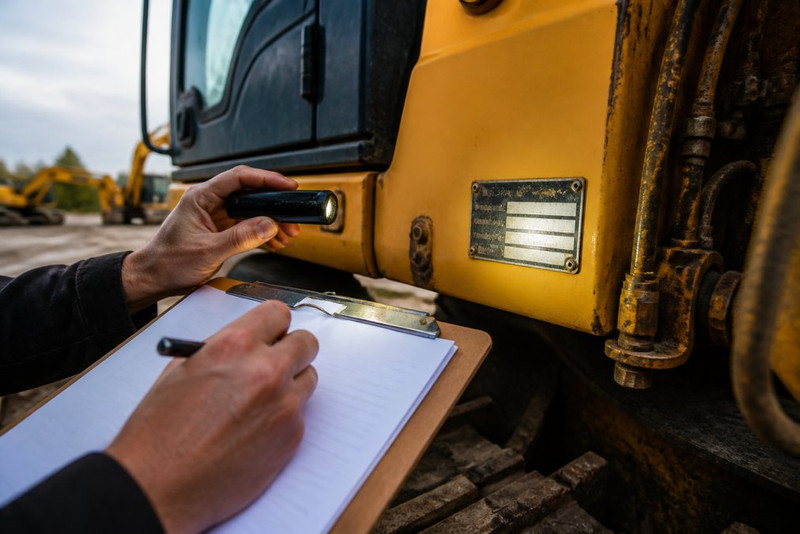
Start by finding every identification plate and stamped number on the excavator. The primary serial number plate is typically located on the upper structure, near the operator cab or on the side frame. You'll also find an engine serial number stamped into the engine block, plus component numbers on the hydraulic pump and final drives.
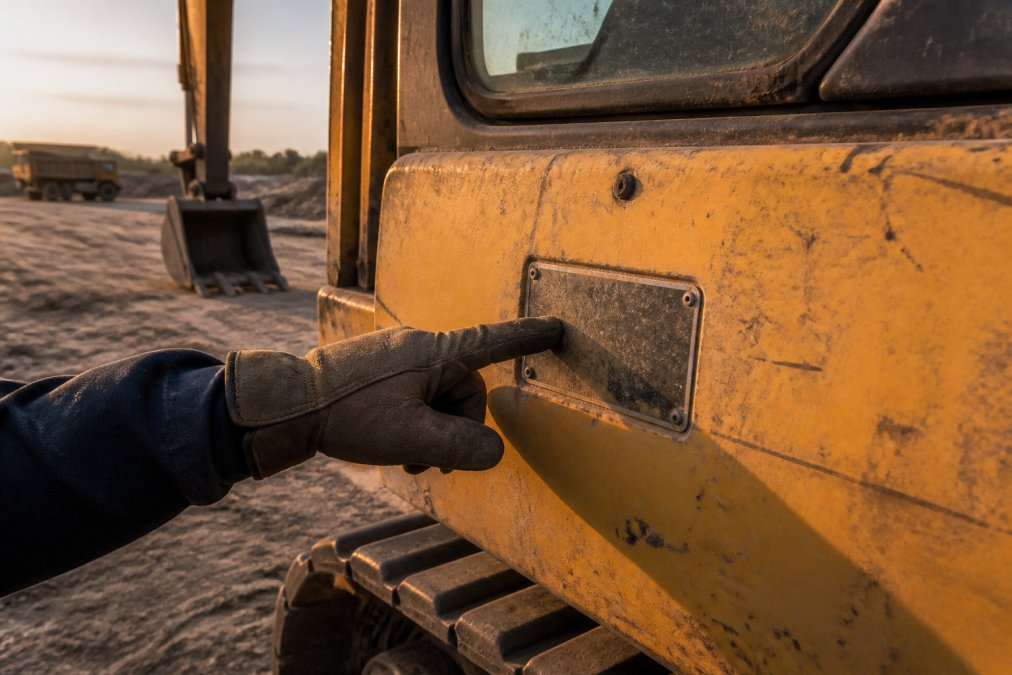
Check the operator cab for a secondary data tag, often placed near the door jamb or behind the seat. Some manufacturers also stamp the chassis number into the frame rail. Document every number you find, along with photos of each location. These multiple points of identification protect you later when verifying the machine's history.
The VIN equivalent for heavy equipment is the serial number, serving the same purpose: unique identification of the machine's origin, model year, and manufacturing plant.
Step 2: Run a Heavy Equipment Serial Number Lookup
A heavy equipment serial number lookup translates those stamped digits into usable data. Platforms like EquipmentWatch and Fast Track Iron provide instant verification of model year and machine specifications, and they have become the industry standard for this task (Machinery Trader serial verification tools). These services pull manufacturer records to confirm what the serial number actually represents.
Enter the primary serial number first, then cross-reference with the engine and component numbers. The lookup should confirm the model, manufacturing date, and original specifications. Discrepancies between what the lookup returns and what the seller claims are immediate red flags.
Most lookup services operate on a subscription model. For a single transaction, paying for one month of access is worth the investment; the alternative is relying on the seller's word, which is how costly mistakes happen.
Step 3: Decode the Model Year from the Serial Number
Manufacturers embed the model year within the serial number sequence, though the format varies by brand. Caterpillar uses a letter prefix system, Komatsu embeds year codes differently, and Deere follows its own pattern. Understanding the specific manufacturer's format is essential.
Serial numbers alone are insufficient for full valuation, as the Quinn Company notes: they provide age and origin but do not account for maintenance history, operational hours, or physical wear (Quinn Company valuation insights). The model year gives you a starting point, not the final answer.
Cross-check the decoded year against physical evidence. The cab glass often carries date codes, and the seat belt manufacturer date can confirm the assembly period. If the serial number decodes to 2019 but the glass stamps read 2021, something is wrong. These verification layers protect you from misrepresented machines.
Step 4: Verify the Machine's History and Maintenance Records
Service records tell the story that serial numbers cannot. Request complete maintenance logs, including oil changes, filter replacements, hydraulic fluid analysis, and any major component repairs. A machine with documented preventive maintenance holds higher value than one with gaps in its service history.
Run a UCC lien search to confirm the seller actually owns the machine free of debt. A lien against the equipment means the lender has a legal claim, and purchasing a machine with an outstanding lien transfers that problem to you. This step takes minutes and prevents significant legal headaches.
Check for outstanding recalls or manufacturer service bulletins. These can affect both safety and resale value. Documented compliance with recalls demonstrates responsible ownership and protects your investment.
Step 5: Inspect Physical Condition and Operating Hours
Hour meter readings provide a baseline, but physical wear tells the real story. Compare the hours shown on the meter against wear patterns on the undercarriage, pins, bushings, and bucket. A machine showing 2,000 hours with severely worn tracks has either been run hard or the meter has been tampered with.
The Digital vs. Physical Verification Gap
Most valuation guides stop at visual inspection. That is a mistake. The most reliable way to confirm a machine's true state is to cross-reference what you see with what the machine's computer says. This is the digital vs. physical verification step that separates professional appraisers from casual buyers. financing your excavator purchase.
Modern excavators are equipped with an Electronic Control Module (ECM) that records operational data far beyond the simple hour meter. To access it, you will need a diagnostic laptop with the manufacturer's software (e.g., Caterpillar ET, Komatsu Komtrax) or a universal heavy-duty diagnostic tool. Many independent equipment inspectors offer this service for a fraction of the cost of a mis-valuation.
Here is the step-by-step cross-reference process:
- Read the Physical Hour Meter: Note the number displayed on the dash. This is the number the seller advertises.
- Connect to the ECM: Plug your diagnostic tool into the service port, typically located in the cab or behind an access panel near the engine.
- Pull the ECM Hours: The ECM logs total engine running hours independently of the dash display. A discrepancy of more than 2-3% is a major red flag. For example, a machine with 4,000 dash hours but 5,500 ECM hours indicates the meter has been rolled back or replaced.
- Check the Idle vs. Load Time: The ECM also records how many of those hours were spent at idle versus under load. A machine with 8,000 hours, 70% of which were at idle, is in far better mechanical condition than one with 5,000 hours, 80% of which were in heavy digging. This data directly impacts value; a high-idle machine can be worth 5-10% more than its hour meter suggests.
- Review Event and Fault Codes: The ECM stores active and logged fault codes. A history of repeated high-temperature or low-oil-pressure codes indicates past mechanical stress, even if the engine sounds fine at idle.
Physical Wear Correlation
While the ECM gives you the digital truth, physical inspection confirms it. Here are the specific wear points to check and how they correlate to the data:
- Undercarriage: Measure track bushing wear with a caliper. Compare the measurement to the manufacturer's service limit. Sprocket and idler flange wear should be smooth, not hooked or sharp. Undercarriage replacement can cost $15,000-$30,000 on a 20-ton class machine, so a 50% worn undercarriage is a significant negotiating point.
- Pins and Bushings: Check for play in the boom, arm, and bucket linkage. Use a pry bar to feel for movement. Excessive play means the pins and bushings need replacement, a labor-intensive job that can swing value by 5-10%.
- Bucket and Teeth: Check for cracks, weld repairs, and general wear. A heavily worn bucket with structural cracks will need rebuilding or replacement.
- Hydraulic Cylinders: Look for scoring on the cylinder rods and seepage around the seals. Drift-down tests (raising the boom and watching how fast it settles) can reveal internal cylinder wear.
- Repainting and Body Work: Use a paint thickness gauge to check for bondo or filler. Look for overspray on hoses and fittings, which indicates recent cosmetic work to hide rust or damage. Check for weld marks on the boom and arm, which indicate structural repairs.
Document everything with photos. The combination of ECM data and physical inspection notes gives you a defensible position for adjusting the price by the range that physical condition warrants.
Step 6: Cross-Check Depreciation Curves for Your Excavator Class
Depreciation follows different curves depending on machine class, brand reputation, and market demand. Excavators typically lose 20-25% of their value in the first year after purchase, then continue depreciating at a slower rate (Five Star Equipment depreciation data). Mini excavators, compact units, and large mining-class machines each follow distinct patterns.
Compare your machine's current value against its original purchase price to establish a baseline depreciation figure. Then adjust for current market conditions, including the overall demand for used equipment in your region.
Regional market variance is real. A machine in high demand in one state may sit unsold in another due to local construction activity, fleet composition, and economic conditions. Research your specific regional market rather than relying on national averages.
Step 7: Compare Market Prices for Similar Models
Identify comparable machines by model, year, hours, and condition, then track their asking and sold prices. Sold prices matter more than asking prices, since asking prices often include negotiation room. Several industry databases track actual sale transactions.
Focus on machines sold within the last three to six months in your region. Older sale data may not reflect current market shifts. Pay attention to how long comparable machines stayed on the market before selling, as this indicates demand strength.
Consider equipment lifecycle position. A machine approaching major service intervals, such as undercarriage replacement or hydraulic system overhaul, commands less than one with recent major maintenance completed. Factor these upcoming costs into your comparison.
Step 8: Calculate Excavator Value by Serial Number with a Pricing Formula
A practical pricing formula combines all the data you have gathered. Start with the average market price for comparable models, then apply adjustments based on your findings:
- Base value: Average sold price for comparable machines
- Condition adjustment: Add or subtract 5-15% based on physical inspection
- Maintenance history adjustment: Add up to 10% for documented service records
- Hour meter adjustment: Adjust 2-5% per 1,000 hours above or below comparable machines
- Regional demand adjustment: Adjust 0-10% based on local market activity
Apply these adjustments systematically rather than guessing. The resulting figure represents your estimated fair market value. This is where the excavator value by serial number process comes together, since the serial number anchored every verification step above.
Step 9: Watch for Serial Number Fraud and Red Flags
Serial number fraud costs buyers and sellers real money. While most guides mention that fraud exists, very few explain how to actually spot it. This section gives you the forensic checklist used by law enforcement and professional inspectors to detect tampered or restamped serial plates.
The Three Primary Fraud Tactics
- Restamping: Grinding off the original serial number and stamping a new one from a clean-title machine. This is the most common tactic for masking a stolen or totaled machine.
- Plate Swapping: Removing the entire serial number plate from a salvaged or scrapped machine and bolting or riveting it onto a different machine.
- Document Forgery: Altering the title, bill of sale, or maintenance records to match the fraudulent serial number.
How to Detect Tampering
1. Examine the Plate and Rivets
Factory serial number plates are attached with specific rivets. Most manufacturers use drive rivets or specialized fasteners that are difficult to remove without damage. Look for:
- Freshly painted rivets: If the rivets are painted the same color as the surrounding metal but the plate is clean, they may have been replaced.
- Tool marks: Scratches, gouges, or pry marks around the plate edges indicate it was pried off.
- Adhesive residue: Some fraudsters use epoxy or heavy-duty adhesive to secure a swapped plate. Tap the plate; a factory-riveted plate will feel solid, while a glued plate may flex or sound hollow.
2. Analyze the Stamping
Factory stamping is done with a machine press, resulting in uniform depth, spacing, and alignment. Hand-stamped numbers (done with a hammer and punch set) will show:
- Inconsistent depth: Some digits will be deeper than others.
- Uneven spacing: The distance between digits will vary.
- Misalignment: Digits may not sit on a perfectly straight horizontal line.
- Double strikes: Look for ghost outlines or overlapping impressions.
Use a magnifying glass or take a high-resolution photo and zoom in. Compare the font style of the digits to other machines of the same brand and era. Manufacturers use specific fonts, and even small deviations are a red flag.
3. Check the Surrounding Metal
- Grinding marks: Look for a slightly recessed or dull area around the plate or stamp. Use a flashlight at a low angle to see sanding or grinding marks.
- Repainting: Check for overspray on adjacent hoses, wires, or components. A factory plate area will not have fresh paint on surrounding parts.
- Heat damage: Torch cutting or welding near the plate area indicates the original plate was cut out and a new one welded in.
4. Cross-Reference Every Number
You documented multiple numbers in Step 1. Now, verify them against each other and against the paperwork:
- Main Plate vs. Engine Stamp: The engine serial number should match the engine physically installed. Check for a separate engine data plate and compare it to the stamp on the block.
- Cab Glass Date Codes: All automotive glass has a DOT code that includes the month and year of manufacture. If the cab glass reads 2018 but the serial number decodes to a 2020 model, the cab has been replaced, or the machine has been reassembled from multiple units.
- Seat Belt Date Stamps: Seat belts have a manufacturer date tag. A seat belt dated after the machine's model year indicates replacement, which is normal, but a belt dated years before the machine's build date is a red flag.
- Component Serial Numbers: Hydraulic pumps, final drives, and swing motors often have their own serial numbers. While these are not always tied to the machine's VIN, a mismatch between the component's apparent age and the machine's year can indicate a major component was replaced, which affects value.
5. Run a National Theft Database Check
The National Insurance Crime Bureau (NICB) maintains a database of stolen vehicles and heavy equipment. While primarily for law enforcement, many commercial services and equipment brokers have access to this data. Running a VIN/serial number check against the NICB database takes minutes and can prevent a total loss.
What to Do If You Suspect Fraud
If any of these checks raise a red flag, do not walk away, run. Do not attempt to negotiate a lower price on a machine with a questionable serial number. The legal and financial consequences of owning stolen or misrepresented equipment are severe. Report your suspicions to the local law enforcement agency and the NICB. A legitimate seller will not object to a thorough verification process; a fraudulent one will pressure you to move quickly and skip the checks.
Step 10: Document Your Valuation and Decide on Next Steps
Compile all your findings into a written valuation report. Include photos of every serial number location, the lookup results, maintenance records reviewed, physical inspection notes, comparable market prices, and your final calculated value.
If you are selling, this report justifies your asking price to potential buyers. If you are buying, it gives you leverage in negotiations and prevents overpaying.
When you are ready to transact, consider working with a Heavy Equipment Broker who understands how to position your machine for maximum return. A Heavy Equipment Broker connects sellers with millions of potential buyers through nine specialized platforms, with no contracts and no hidden fees. The team handles the marketing and negotiation so you can focus on your operation.
| Valuation Factor | Adjustment Range | How to Verify |
|---|---|---|
| Physical condition | -15% to +15% | 12-point field inspection, photos |
| Maintenance history | 0% to +10% | Service logs, fluid analysis records |
| Operating hours | -5% to +5% per 1,000 hours | Hour meter vs. undercarriage wear |
| Regional demand | -10% to +10% | Local sales data, auction results |
| Documentation quality | 0% to +5% | Complete serial number verification |
Pricing used heavy equipment accurately requires methodical verification, not guesswork. The ten steps above give you a repeatable process for determining excavator value by serial number, from locating identification plates to calculating a defensible market figure. When you are ready to sell, working with a Heavy Equipment Broker provides the brokerage expertise and multi-platform reach to connect your machine with serious buyers. Get started with a Heavy Equipment Broker and turn your valuation work into a successful sale.
Frequently Asked Questions
How do I check an excavator serial number to find its value?
Start by locating the serial number plate on the upper structure, usually near the cab or engine compartment. Record the full number, then use a heavy equipment serial number lookup service like EquipmentWatch to verify the model year and manufacturing date. Cross-reference that data with hour meter readings and physical condition. The serial number confirms identity and age, but fair market value also depends on maintenance history, wear, and regional demand. Combine the lookup result with current market listings for the same model and year to arrive at a realistic price.
Does the serial number reveal the exact year of an excavator?
Yes, in most cases the serial number can be decoded to reveal the exact manufacturing year. Each manufacturer uses a specific serial number format where certain digits or letters correspond to the model year or production sequence. However, the serial number alone does not tell you when the machine was first sold or put into service. A machine may sit in inventory for months. For accurate valuation, verify the serial number against OEM records and also check the cab glass date codes and engine block stamps to confirm the manufacturing date.
What factors besides the serial number influence excavator value?
The serial number establishes the machine's identity and age, but several other factors drive value. Operating hours are critical: excavators typically depreciate 20-25% in the first year, then continue losing value as hours accumulate. Physical condition, maintenance history, and whether major components like the engine or hydraulics have been replaced all matter. Market conditions play a role too. New financed mini excavator sales fell 7.7% year-over-year to 32,500 units, which affects used supply and pricing. Regional demand and attachment availability also shift final sale prices.
How do I calculate the fair market value of an excavator?
Start with a heavy equipment serial number lookup to confirm the model year, then find comparable listings for the same make, model, and year with similar operating hours. Adjust the baseline price for condition: inspect the undercarriage, bucket wear, hydraulic leaks, and engine performance. Apply a depreciation factor based on age and hours, using industry benchmarks. Be aware that serial numbers alone are insufficient for valuation because they do not account for maintenance history or physical wear. For the most accurate figure, have a professional broker or appraiser assess the machine in person.
Where can I find reliable market pricing for used heavy equipment?
Several resources provide reliable used equipment pricing. EquipmentWatch offers subscription-based data on resale values and depreciation trends used by professional appraisers. Auction results from major houses give real transaction data. Online marketplaces show asking prices, though these run higher than final sale prices. For the most accurate picture, work with an equipment broker who monitors multiple platforms daily. A broker can tell you what similar excavators actually sold for, not just what sellers are asking, and can advise on how to price used construction equipment for your specific market.