

Last Updated: November 1, 2026
Quick Summary
The most common scams when selling used trucks are fake cashier's checks, overpayment schemes, third-party pickup requests, and title fraud, and each one exploits sellers who rush. Verify that funds have fully cleared before releasing the truck, and never refund money from a payment that has not settled. Selling used trucks safely means confirming payment, verifying the title, and meeting buyers in person.
- Confirm with your bank that funds have fully cleared before you release the truck.
- Never refund any amount from a payment that has not fully settled.
- Verify the buyer's government-issued ID in person before the test drive.
- Check your title for a lienholder and get a written lien release if one exists.
- Use a signed bill of sale that lists price, date, mileage, and VIN.
Table of Contents
- Why Use Ironmartonline Equipment Broker to Sell Your Truck?
- Warning Signs That a Truck Buyer Is Not Legitimate
- Fake Cashier's Check Car Sale Scams
- Overpayment Scam When Selling a Vehicle
- Unusual Offers, Shipping Requests and Third-Party Pickup Scams
- Safe Payment Methods for Selling a Truck
- How to Sell a Used Truck Safely, Step by Step
- Title, Lien and Ownership Transfer Steps for Sellers
- Booking Your Next Safe Truck Sale
- Frequently Asked Questions
Why use Ironmartonline equipment broker when you sell a used truck? Because selling used trucks can look simple from the listing page, yet a sale can turn into a fraud case within a day. Ironmartonline is a heavy equipment brokerage that connects buyers and sellers of used machinery. Knowing the common scam patterns is your first line of defense.
If you are a contractor, fleet manager, or owner-operator selling a truck privately, you are an easy target. Scammers look for sellers who answer quickly, accept any payment method, and ship without checking the money. This guide walks through nine common scams when selling used trucks, the warning signs behind each one, and the steps that protect you.
Why Use Ironmartonline Equipment Broker to Sell Your Truck?
A broker can take over parts of the sale that are otherwise handled by you directly. Ironmartonline lists your truck across nine web-based selling platforms, so it reaches a wide pool of buyers without you posting ads and answering strangers one by one. You can list your equipment for sale with IronMart and review how the process works.
Ironmartonline works on a model with no contracts and no hidden fees, so you can review the terms before you list.
Keep in mind that no broker removes every risk. You still need to verify payment and paperwork yourself, and the steps below show you how.
Warning Signs That a Truck Buyer Is Not Legitimate
Most scams show a few clear red flags before any money changes hands. Watch for these signals:
- Offers that are too high or too fast. A buyer who agrees to your full asking price without seeing the truck is a warning sign.
- Vague or copied messages. Generic lines like "Is this still available? Send me your details" often come from scam accounts.
- Refusal to see the truck in person. A real buyer usually wants an inspection or test drive.
- Requests to use a third-party shipper or pickup agent. This is one of the most common setups.
- Stories that push urgency. Claims about being overseas, a sudden family emergency, or a deadline to pay are common pressure tactics.
- Requests for personal information early. Scammers ask for ID, bank details, or copies of your title before a sale is real.
If you see two or more of these, pause and verify before you respond further.
Fake Cashier's Check Car Sale Scams
A fake cashier's check is one of the oldest tricks in vehicle sales. The buyer pays with a check that looks official, often for more than the agreed price, and asks you to wire back the difference. The check later bounces, and you lose the money you sent back along with the truck.
To protect yourself, do not rely on the check appearing in your account. Ask your bank to confirm that the funds have actually cleared, not just that they are "available," before you release the truck. Take the check to your bank in person when possible, and never send money back to a buyer from a check you have not verified.
Overpayment Scam When Selling a Vehicle
In an overpayment scam, the buyer sends extra money and asks you to refund the surplus. The story sounds reasonable: a mix-up, an extra fee, or a shipping cost they "forgot." The first payment is fake, so every dollar you return is real money gone.
The rule is simple. Never refund any amount from a payment that has not fully cleared. If a buyer's payment does not match your agreed price, stop the sale and ask them to resubmit at the correct amount.
Unusual Offers, Shipping Requests and Third-Party Pickup Scams
Some scammers ask you to ship the truck or hand it to a "pickup agent" they arrange. In these cases, the agent often disappears with the vehicle after payment clears, or the payment never clears at all. Trucks are high-value and hard to trace once they leave your hands.
Only release a truck to the buyer in person, after you have verified payment. If a shipping company is involved, pay it yourself through a trusted service and confirm the buyer's identity first. Be wary of any offer that asks you to change the deal to suit a middleman.
Safe Payment Methods for Selling a Truck
Payment is where most truck-sale scams succeed or fail. The method you accept determines how much time you have to verify funds before the truck, keys, and title leave your hands. For a high-value asset like a pickup or heavy-duty truck, that verification window matters more than it does on a passenger car. Securing a legitimate transaction requires the same level of diligence as preparing vehicles for sale, ensuring that every detail is documented before the final exchange occurs.
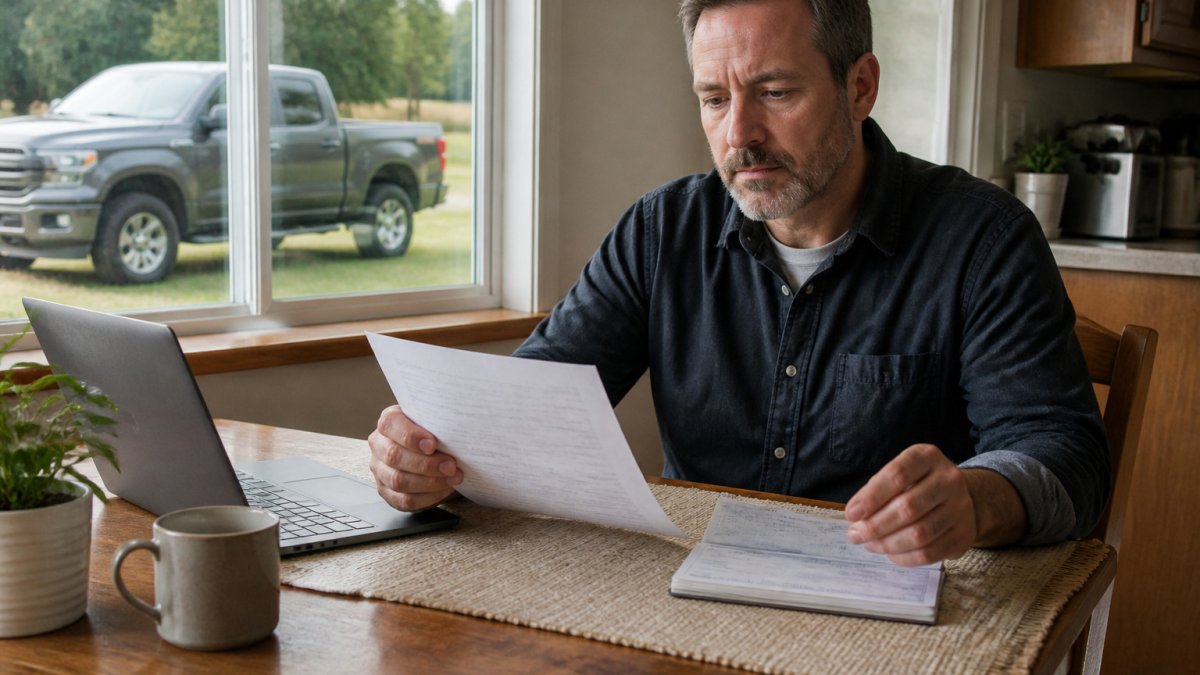
How each payment method actually behaves
- Cash in person. The safest method if you meet at your bank and deposit the funds before releasing the truck. Ask the teller to verify the bills, and never accept cash at a remote location or count it in a parking lot. For a truck priced in the tens of thousands, carrying that much cash creates its own risk, so meet inside a branch.
- Wire transfer. A domestic wire that posts to your account is effectively final once it settles. Confirm with your bank that the funds have settled, not merely that a pending credit appears. Be wary of any buyer who sends a wire confirmation screenshot instead of letting you see the funds in your own account.
- Cashier's check. A cashier's check can be forged convincingly. Take it to your own bank and ask them to verify it with the issuing institution before you sign anything. Do not rely on the check clearing provisionally; ask specifically whether the funds are guaranteed.
- Peer-to-peer apps. Many apps allow the sender to reverse a payment or file a dispute after you hand over the truck. Treat an app payment as unverified until your bank confirms the funds are fully settled and non-reversible.
- Gift cards and prepaid cards. No legitimate truck buyer pays with gift cards. Any request for this method is a scam, full stop.
Why overpayment and reversal schemes target truck sellers
Trucks carry high values, so a scammer who convinces a seller to refund a few thousand dollars from a fake payment walks away with real money. The pattern is consistent: the buyer sends more than the agreed price, invents a reason (shipping, an agent's fee, a supposed tax), and asks you to return the difference before the original payment fails. Never refund any amount from a payment that has not fully settled and been confirmed by your bank.
Pre-handoff payment checklist
- Funds have settled in your account, confirmed by your bank, not just shown as pending or available
- The amount matches your agreed price exactly, with no surplus to refund
- You have verified the buyer's government-issued ID in person
- You have a signed bill of sale listing the price, date, mileage, VIN, and both parties' names
- You have photographed the buyer's ID and the signed documents for your records
- You have confirmed with your state motor vehicle agency what seller notification is required after the sale
When to release the keys and title
Release the truck only after payment has fully settled and you have a signed bill of sale in hand. Hand over the title at the same time, and record the transfer date and mileage. If the buyer needs the truck moved before the title transfer is complete, that is a reason to slow down, not speed up. A legitimate buyer will accept a short wait for verified funds.
How to Sell a Used Truck Safely, Step by Step
Follow these steps for every sale to reduce your exposure:
- Set a clear asking price. Check recent comparable listings so you can spot offers that are unrealistically high or low.
- Screen buyers early. Reply only to specific, detailed questions. Decline buyers who refuse to meet in person.
- Meet in a safe, public place. Choose your location and bring someone with you if you can.
- Allow an inspection and test drive. Ask the buyer to show ID before the drive.
- Verify payment. Confirm funds have cleared before you sign anything or release the truck.
- Complete the paperwork. Use a written bill of sale and follow your state's transfer process.
- Keep records. Save messages, receipts, and copies of every document.
Title, Lien and Ownership Transfer Steps for Sellers
Title problems are the quietest scam risk in a truck sale. A buyer who pressures you to skip paperwork or sign a title with blanks is often setting up a title-washing or lien-evasion scheme that lands on you later. The steps below protect you as the seller, not just the buyer.
Confirm clear title before you list
Check your title document for a listed lienholder. If you are unsure how to confirm ownership, learn how to perform a heavy equipment title search to verify ownership and check for liens. If a lender holds a lien, the truck cannot be cleanly transferred until you obtain a lien release. Request the release from the lender in writing and keep a copy. If you cannot produce a clear title, do not accept a deposit or promise a sale date; a buyer who discovers a lien after paying has grounds to dispute the sale, and a scammer will use that opening.
Complete the title assignment correctly
Sign the title exactly as your state requires, in the seller section, with the date, sale price, and odometer reading where those fields exist. Do not leave blank fields for the buyer to fill in later. A title signed with blanks can be altered, and an altered title can be used to hide the truck's history or to shift liability back to you. If your state requires a separate bill of sale or odometer disclosure, complete both and keep copies.
Protect yourself after the sale
- Remove your license plates where your state requires it, and keep a record of the removal.
- Notify your state motor vehicle agency that you no longer own the truck, following that agency's seller-notification process. This step limits your exposure if the buyer later receives tickets or is involved in a collision.
- Keep copies of everything: the signed title, bill of sale, odometer disclosure, lien release, buyer ID, and payment confirmation. Store them for at least as long as your state's record-retention guidance suggests.
- Cancel or transfer insurance on the truck as of the sale date, and note the date in your records.
Why title fraud targets truck sellers
A truck with a clean title is worth more than one with a branded or washed title, which creates an incentive for a buyer to pressure a seller into an incomplete transfer. If a buyer asks you to sign a title in a different name, to leave the buyer section blank, or to backdate a sale, stop. Those requests are not shortcuts; they are the mechanism of title fraud, and the seller whose signature appears on the document is the one who has to explain it later.
Booking Your Next Safe Truck Sale
Scams work because sellers rush. Slow down, verify every payment, and keep the sale under your control. If you want a broker to handle listing, buyer contact, and reach across nine platforms, Ironmartonline can help you sell through a broker-managed process. Visit the Ironmartonline website for current details on the listing process.
Frequently Asked Questions
What are the most common scams when selling a used truck?
The most common scams include fake cashier's checks, overpayment schemes where a buyer sends too much money and asks for a refund, offers that are far above or below market value, buyers who refuse to see the truck in person, and requests to ship or pick up the vehicle through a third party. Many scams begin with vague messages on social media or online marketplaces. Treat any buyer who pushes for speed, secrecy or unusual payment terms as a warning sign, and verify every payment with your bank before releasing the truck.
Is it safe to accept a cashier's check when selling a truck?
Not without verification. Counterfeit cashier's checks are a frequent tool in vehicle sale fraud, and a check can look genuine while still being fake. Do not rely on the check's appearance or on a bank teller's first impression. Ask your bank to confirm that the funds have actually cleared, and do not release the truck or title until that confirmation is complete. Visiting the issuing bank in person to verify the check is a stronger safeguard than phone or email confirmation.
What should I do if a buyer overpays for my truck?
Do not send back the difference. An overpayment scam typically works by having the buyer send a check or transfer for more than the agreed price, then asking you to refund the excess before the original payment bounces. Once you send your money, it is generally gone. Tell the buyer the sale price is the agreed amount, and ask them to send the exact figure through a verified method. If you have already received a suspicious overpayment, stop communication, notify your bank, and notify your bank.
How do I safely sell a truck through an online marketplace?
Meet buyers in person at a public, well-lit location or at your home during daylight, and bring a friend if possible. Verify the buyer's identity before a test drive, keep your personal address and phone number private until you are comfortable, and confirm that payment has cleared before handing over keys or the title. Complete all title and ownership transfer paperwork at the time of sale, and keep copies of the bill of sale and any payment records for your files.
