
Table of Contents
- Why Timing Matters When Selling Excavators
- Understanding Used Excavator Market Trends
- Peak Seasons: When Excavator Demand Peaks
- How to Price Used Heavy Equipment for Maximum Returns
- Preparing Excavators for Sale: Condition and Hours
- Market Volatility and Inventory Levels in 2026
- Auction Cycles and Bidder Activity Throughout the Year
- Why Use a Heavy Equipment Broker to Sell Your Excavator
- Conclusion
- Frequently Asked Questions
Last Updated: October 3, 2026
Why Timing Matters When Selling Excavators
The best time of year to sell excavators isn't random, it's driven by construction cycles, tax incentives, and market inventory swings. If you're sitting on idle equipment, the month you choose to list it can mean the difference between a quick sale at strong prices and months of waiting while your asset depreciates.
Why use a Heavy Equipment Broker like Ironmartonline when selling your excavator? Because timing alone isn't enough. You need access to millions of potential buyers across multiple specialized platforms, professional pricing guidance, and the expertise to navigate market volatility, all without contracts or hidden fees. According to Ritchie Bros. Q2 2026 market data, used excavator sales rose 5.3% in the second quarter while new equipment sales declined, signaling strong secondary market demand for sellers who list at the right moment.
The excavator market moves in predictable patterns. Summer construction season drives demand. Year-end tax planning creates a buying frenzy. Inventory levels fluctuate based on seasonal equipment replacement cycles. Understanding these rhythms, and knowing your equipment's condition relative to market benchmarks, lets you position your machine for maximum returns.
This guide covers the data-backed timing strategies that matter most, the seasonal windows where bidder activity peaks, and how to prepare your excavator so buyers see value, not liability. We'll walk through pricing approaches, inventory trends, and the specific hours and condition markers that separate a quick sale from a slow one.
Understanding Used Excavator Market Trends
The used excavator market reflects broader construction activity and equipment replacement cycles. Equipment World's 2026 market pulse report documents that 12,725 mini excavators sold between June 2025 and May 2026, showing sustained demand across equipment classes. This isn't a market in decline, it's a market where timing and positioning determine outcomes.
Buyers purchasing used equipment in 2026 are doing so for specific reasons. Many are avoiding long delivery delays on new machinery. Others are managing capital expenditure constraints and prefer lower-cost used alternatives. A portion are seeking equipment with proven reliability before committing to larger fleet investments. Understanding buyer motivation helps you target your listing to the right window.
Inventory levels tell part of the story. My-Equipment.com's February 2026 analysis reported that medium-duty equipment inventory fell 13.24%, tightening supply and favoring sellers. When fewer machines are available, your excavator faces less direct competition, and buyers have fewer alternatives to negotiate with.
Market volatility has changed how sellers approach timing. According to Pete's Machinery Talk, since fall 2020, there hasn't been a definitively "bad" time to sell due to sustained high demand. This doesn't mean every month is equally profitable, it means the floor has risen. Your job is finding the peak, not avoiding the valley.
The global excavators market is valued at USD 90.75 billion in 2026, with projected 5.68% compound annual growth through 2035, according to Market Research Future's industry forecast. This expansion signals healthy long-term demand, but short-term pricing windows still matter significantly for individual sellers.
Peak Seasons: When Excavator Demand Peaks
Excavator demand peaks seasonally, but the peaks vary dramatically by region and buyer type. Understanding these regional and tax-driven windows lets you time your sale to the strongest local demand, not just the national average.
Regional Climate Calendars: North vs. South
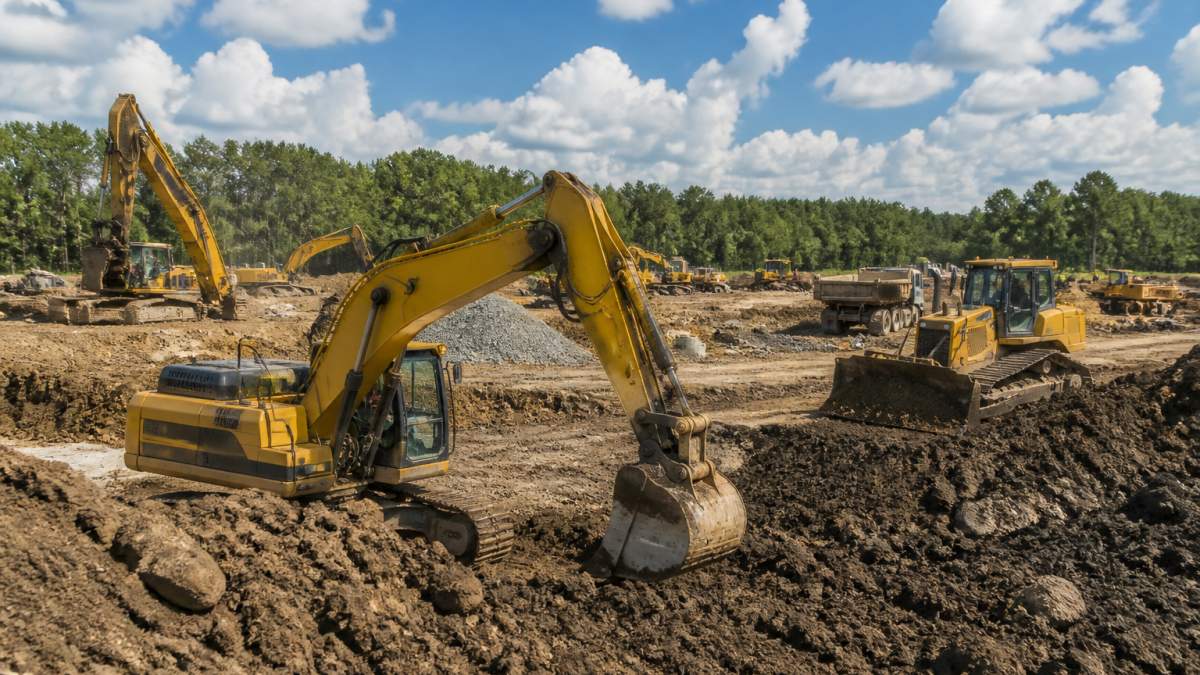
Construction seasons are geographically determined. The northern construction season compresses into 6-7 months; the southern season stretches across 10-11 months. Selling into the right regional peak can mean the difference between a quick sale and months of waiting.
Northern Construction Season (March-October)
In northern states (Minnesota, Wisconsin, Michigan, New York, Pennsylvania, and similar climates), construction activity is heavily compressed. Winter weather halts most outdoor work. Spring thaw (March-April) kicks off the season. Contractors accelerate projects through summer and early fall, then wind down by November as weather deteriorates.
For sellers in northern regions:
- March-May (Spring Rush): Contractors emerge from winter with pent-up project backlogs. Equipment rental companies restock aggressively. Demand is strong, but so is seller activity. Prices are solid, and competition is moderate.
- June-August (Peak Season): Highest demand and highest seller activity. Prices are strong, but you're competing with the most inventory. Machines in excellent condition with low hours sell in days; average equipment lingers.
- September-October (Fall Tail): Activity remains decent as contractors finish projects before winter. Bidder participation is still healthy, but declining. Prices soften slightly.
- November-February (Winter Dormancy): Construction largely stops. Equipment sales plummet. Avoid listing unless you're targeting year-end tax buyers (see below). Prices are weak.
Southern Construction Season (Year-Round with Peaks)
In southern states (Texas, Florida, Georgia, Louisiana, Arizona, and similar warm climates), construction runs year-round, but peaks still exist.
For sellers in southern regions:
- January-March (Post-Holiday Surge): After year-end tax closings, contractors resume projects. Equipment rental companies restock. Demand is strong, competition is moderate. This is a secondary peak unique to the South.
- April-September (Extended Peak): Construction activity remains high through summer and into early fall. Demand is steady. Seller activity is moderate compared to northern summer peaks. Prices are stable and competitive.
- October-December (Mild Decline): Activity slows slightly, but doesn't stop. Year-end tax buyers (see below) create a secondary peak in November-December. Prices remain reasonable.
Southern sellers have an advantage: they can sell in winter when northern competitors are dormant. A southern seller listing in January or February reaches northern buyers preparing for spring projects, plus local southern demand. This creates a less-crowded market window.
Tax-Advantaged Timing: The Year-End Window (November-December)
Year-end purchasing follows a different logic entirely, independent of construction season. Dealers, fleet managers, and equipment rental companies close purchases before December 31 for tax planning purposes, specifically to claim Section 179 deductions or bonus depreciation on equipment acquired in the current tax year.
Section 179 allows businesses to deduct the full purchase price of qualifying equipment (up to $1,160,000 in 2026) in the year it's placed in service, rather than depreciating it over years. For a buyer purchasing a $150,000 excavator in December, this can mean $45,000-$60,000 in immediate tax savings. This tax incentive creates artificial but powerful demand in November and December.
Year-end buyers are less price-sensitive than summer buyers. They need equipment by December 31 to claim the tax deduction; they don't need it at a specific price. This urgency favors sellers willing to list during the holiday season when many competitors have already sold or withdrawn inventory.
Year-End Auction Characteristics:
- Narrower seller competition: Many sellers have already sold in summer or fall. Inventory is tighter.
- Higher buyer urgency: Tax-motivated buyers bid more aggressively to meet year-end deadlines.
- Often more profitable per unit: Fewer machines compete for attention, and buyer desperation is higher. If your excavator didn't sell by October, repositioning for year-end auctions can recover value that summer market saturation cost you.
- Shorter window: The advantage compresses into November and early December. By mid-December, many buyers have already completed purchases.
Summer Construction Season (June-August), National Peak
Summer is peak construction season nationwide. Contractors accelerate projects, municipalities fund infrastructure work, and equipment rental houses stock inventory for the busiest months. Demand for used excavators peaks during this window because buyers need machines operational immediately; they can't wait for new equipment deliveries.
Summer listings attract the most bidder activity. Contractors expanding operations, rental companies restocking, and fleet managers replacing aging equipment all compete for available machines. This competition drives prices up and reduces time-on-market. If your excavator is in working condition, summer is your strongest selling window.
However, summer also attracts the most seller activity. More equipment hits the market, increasing competition for buyer attention. The advantage goes to sellers with well-maintained machines, transparent operating hour records, and realistic pricing. A hydraulic excavator with under 2,000 hours will sell faster than one approaching major service intervals.
Spring Auctions (March-May), Moderate Activity
Spring auctions attract equipment replacement buyers preparing for summer season. Activity is moderate, not peak, but reliable. Prices are stable, and competition is manageable. This window suits sellers with solid equipment who aren't chasing maximum value. Spring is also when southern sellers can reach northern buyers preparing for the construction season.
Fall Auctions (September-October), Weakest Window
Fall experiences declining activity. Contractors have completed summer projects. Rental companies have restocked. Bidder participation drops, and prices soften. This is the weakest window for most sellers. Avoid listing in September or October unless you have a specific reason (e.g., you need to clear inventory before winter).
Matching Your Sale to Your Region and Buyer Type
If you're in a northern state with a machine in excellent condition, list in May or June to capture the spring rush and early summer peak before saturation. If you're in a southern state, consider listing in January-February to reach northern buyers while local demand is also strong. If you're targeting tax-motivated buyers, hold your machine and list in early November to maximize year-end urgency. If your machine is approaching a major service threshold, don't wait for the "perfect" season, sell before the depreciation cliff hits.
How to Price Used Heavy Equipment for Maximum Returns
Pricing used heavy equipment requires balancing market data with machine-specific factors, but the real lever is understanding depreciation curves and how operating hours interact with equipment age to create pricing inflection points.
The Hour-Meter Sweet Spot
Operating hours are the primary value driver, but not linearly. Excavators follow a predictable depreciation curve tied to service intervals and major component lifecycles:
-
Under 2,000 hours: Premium pricing territory. Machines in this range command 15-25% premiums over market baseline because they're pre-major-service. Buyers perceive minimal near-term repair risk. A 2020 excavator with 1,800 hours sells faster and at higher per-hour value than a 2018 model with 3,500 hours.
-
2,000-5,000 hours: Market-rate zone. This is the sweet spot for balanced value. Machines have proven reliability but haven't yet approached major service intervals (typically 4,000-6,000 hours depending on manufacturer). Maintenance records become critical here, documented service history can justify pricing at the top of this band.
-
5,000-6,000 hours: The depreciation cliff. Equipment approaching major service intervals (boom rebuilds, track replacement, engine overhaul, hydraulic system servicing) experiences 10-15% price reductions. Buyers factor in imminent repair costs. However, this is where a seller with recent documented major work can recover value: a machine with 5,800 hours but a fresh engine rebuild or new undercarriage can command near-market pricing by proving the expensive work is behind it.
-
6,000+ hours: Steep discount territory (20-35% below baseline) unless the machine has exceptional maintenance records or recent major component replacement. Buyers assume multiple service cycles are due immediately.
Age vs. Hours: The Real Pricing Dynamic
Age alone doesn't drive price; hours do. A 2012 excavator with 1,200 hours outprices a 2019 model with 5,500 hours by 20-30%. This is the depreciation curve in action. Sellers often underestimate this, they assume newer machines command premiums regardless of usage. They don't. A well-maintained older machine with low hours is worth more than a newer machine that's been run hard.
This creates a timing opportunity: if your excavator is approaching a major service threshold (say, 5,800 hours), selling before crossing 6,000 hours can mean the difference between market-rate and steep-discount pricing. Conversely, if you've just completed major work, timing your sale immediately after (while documentation is fresh and components are new) maximizes the value of that investment.
Condition Factors and Price Multipliers
| Condition Factor | Price Impact | Timing Implication |
|---|---|---|
| Operating hours under 2,000 | +15-25% premium | List immediately during peak season; don't wait |
| Operating hours 2,000-5,000 with full service records | Market rate to +10% | Competitive pricing; emphasize maintenance documentation |
| Operating hours 5,000-6,000 with recent major work | −5% to +5% | Highlight repairs with receipts; consider year-end auctions for motivated buyers |
| Operating hours 6,000+ without recent service | −20-35% discount | Obtain pre-sale inspection; price aggressively to move inventory |
| Unknown or incomplete maintenance history | −20-30% discount | Obtain third-party inspection report before listing |
| Recent undercarriage, engine, or hydraulic work | +10-20% premium | Document all work; list during peak season to capitalize |
| Visible rust, corrosion, or cosmetic wear | −15-25% discount | Professional cleaning and detailing can recover 5-10% of this loss |
Market Saturation and Pricing Discipline
Summer auctions attract the most seller activity, which means pricing discipline is critical. Overpriced equipment lingers and depreciates further while sitting. Underpriced equipment sells instantly but leaves thousands on the table. The optimal approach: list at 5-10% above your minimum acceptable price, then adjust downward if bidder activity is weak after two weeks. In slower seasons (fall), you may need to be more aggressive; in peak seasons (summer and year-end), you can hold firmer pricing.
Use comparable sales data from recent auctions and broker listings as your baseline, then apply the hour-meter and condition multipliers above. Equipment World and Machinery Pete provide historical pricing benchmarks, but your machine's specific hours and documented maintenance history ultimately determine where within that range it sells.
Preparing Excavators for Sale: Condition and Hours
Condition determines whether your excavator sells in days or months. Professional preparation isn't optional, it's the difference between top-tier and discount pricing.
Start with a third-party inspection. Equipment appraisals from neutral inspectors provide credibility that seller claims cannot match. Buyers trust documented condition reports more than photographs. An inspection highlighting that your excavator's hydraulic system is sound, undercarriage wear is minimal, and engine compression is within spec justifies premium positioning.
Operating hours must be verifiable. Machines with documented service records and hour meter readings command trust. Equipment with unclear histories or suspiciously low hours relative to visible wear raises red flags. Transparency on hours, even if they're higher than ideal, builds buyer confidence and prevents post-sale disputes.
Cleanliness matters more than you'd expect. A professionally cleaned and detailed excavator photographs better, inspects better, and sells faster. Pressure washing the undercarriage, cleaning hydraulic lines, and detailing the cab take hours but justify thousands in price recovery. Buyers interpret cleanliness as a proxy for maintenance quality.
Attachment compatibility affects resale value. Excavators with standard bucket attachments sell faster than specialized machines. If your equipment has custom buckets, grapples, or thumbs, document their condition and compatibility. Buyers value flexibility, machines that accept standard attachments are easier to repurpose.
Market Volatility and Inventory Levels in 2026
Market conditions in 2026 favor sellers, but volatility remains. Inventory levels fluctuate based on seasonal demand and supply chain recovery. Understanding where inventory stands helps you time your listing.
Inventory of medium-duty equipment fell 13.24% as of February 2026, creating favorable conditions for sellers. Lower supply means less direct competition and higher buyer interest per listing. However, this tightness reverses seasonally. Summer brings new inventory to market as contractors and rental companies refresh equipment.
Price stability has improved compared to post-pandemic volatility. Used equipment values no longer spike or crash dramatically month-to-month. According to Jumbobee's 2026 analysis, used equipment pricing has stabilized for low-hour machines, with values remaining strong for units under 2,000 operating hours. This stability gives sellers confidence in pricing but reduces the upside from waiting for perfect market conditions.
Buyer preference for used machinery over new equipment persists in 2026. Supply chain constraints on new equipment, high capital costs, and regulatory price increases for new emission standards make used alternatives attractive. This sustained demand means you're not racing against a shrinking market, you're competing for placement in a healthy one.
Auction Cycles and Bidder Activity Throughout the Year
Auction cycles follow predictable patterns. Understanding them helps you choose between direct sales, online auctions, and broker-assisted sales.
Spring auctions (March-May) attract equipment replacement buyers preparing for summer season. Activity is moderate, not peak, but reliable. Prices are stable, and competition is manageable. This window suits sellers with solid equipment who aren't chasing maximum value.
Summer auctions (June-August) see peak bidder participation. Contractors, rental companies, and fleet managers actively bid. Competition is fierce, but prices are strong. If your excavator is in excellent condition, summer auctions maximize returns.
Fall auctions (September-October) experience declining activity. Contractors have completed summer projects. Rental companies have restocked. Bidder participation drops, and prices soften. This is the weakest window for most sellers.
Year-end auctions (November-December) reverse the fall decline. Tax-motivated buyers return. Dealers close inventory. Bidder activity spikes again. Prices recover. If your equipment didn't sell in fall, repositioning for year-end auctions often captures stronger pricing than waiting until spring.
Digital vs. physical auction timing matters. Online auctions reach global bidders and run continuously, but they lack the energy and urgency of live events. Physical auctions create bidding momentum and competitive psychology. In 2026, hybrid approaches, online bidding with scheduled live events, capture the benefits of both.
Why Use a Heavy Equipment Broker to Sell Your Excavator
Selling an excavator independently means managing listings across multiple platforms, fielding inquiries, arranging inspections, negotiating terms, and handling logistics. That's weeks of your time for a single machine. A Heavy Equipment Broker handles all of it.
Ironmartonline connects sellers to millions of potential buyers through nine specialized web-based selling platforms. Rather than listing once and hoping the right buyer finds you, your excavator reaches buyers across equipment marketplaces, auction sites, and dealer networks simultaneously. This multi-platform exposure dramatically increases bidder competition and reduces time-on-market.
Broker expertise matters most when market conditions shift. A broker tracks inventory levels, seasonal demand patterns, and pricing trends across hundreds of transactions. They know whether November is stronger than June for your specific equipment class. They understand which platforms attract the right buyer demographic. They price competitively without leaving money on the table.
Ironmartonline operates without contracts or hidden fees. You're not locked into terms or surprised by charges at closing. This transparency builds trust and lets you focus on selling rather than negotiating fine print.
The logistics alone justify broker involvement. Arranging international shipping, managing export documentation, coordinating inspections across time zones, these tasks consume time and create liability. Brokers have established relationships with shippers, inspectors, and logistics providers. They handle complications that would derail independent sellers.
Conclusion
The best time to sell your excavator depends on your specific situation, machine condition, operating hours, and financial timeline. But the data is clear: summer peaks and year-end windows offer the strongest bidder activity and pricing. Machines under 2,000 hours sell faster and command premiums. Inventory levels in 2026 favor sellers. And market demand for used equipment remains strong despite broader economic uncertainty.
Selling independently is possible but costly in time and opportunity. Ironmartonline's nine specialized platforms, no-contract approach, and transparent fee structure eliminate the friction that derails most private sales. Get started with Ironmartonline and connect your excavator to millions of qualified buyers across global and local markets.
Frequently Asked Questions
What is the most active season for heavy equipment sales?
Summer (June-August) and year-end (November-December) are the two strongest periods. Summer aligns with peak construction activity when contractors need equipment for active projects. Year-end buying is driven by tax advantages and fiscal-year budget cycles. Used excavator sales rose 5.3% in Q2 2026, reflecting strong mid-year demand. However, market volatility has made every season viable for sales since 2020, so condition and hours matter more than timing alone.
Does the age and operating hours of an excavator affect the best time to sell?
Yes, significantly. The optimal window to sell is before your excavator reaches 5,000-6,000 operating hours and before major undercarriage or engine repairs are needed. Machines with under 2,000 hours command premium prices year-round. Low-hour equipment sells faster regardless of season, while high-hour machines may require deeper discounts. Plan your sale around maintenance milestones, not just calendar months, to maximize resale value.
How do construction cycles influence excavator resale value?
Construction cycles directly affect demand and pricing. When the construction season peaks (spring through fall), demand for used equipment rises as contractors expand fleets for active projects. Winter slowdowns can reduce buyer activity, though supply chain constraints and equipment shortages have made off-season selling more viable. Understanding your region's construction calendar helps you time sales when local demand is highest and competition for buyer attention is lower.
Is it better to sell an excavator privately or through a heavy equipment broker?
A professional equipment broker reaches millions of potential buyers across multiple specialized platforms without the burden of managing contracts or handling logistics yourself. Brokers provide market expertise, handle negotiations, and manage the sales process efficiently. Private sales give you more control but require significant time and marketing effort. For most sellers, a broker maximizes reach and reduces the timeline to close a deal, especially during peak seasons when demand is high.