
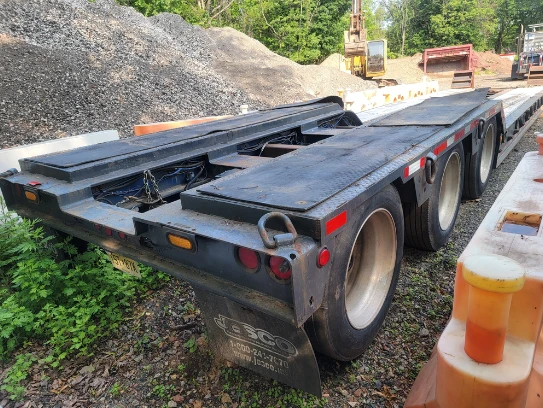
1999 Talbert RGN 50 Ton Lowboy Trailer: What Buyers Need to Know
Quick answer: The 1999 Talbert RGN 50 Ton Lowboy Trailer is a removable gooseneck (RGN) trailer built for hauling heavy equipment up to 50 tons. At 26 years old, its value depends entirely on maintenance history, deck condition, axle configuration, and tire wear — not age alone. Buyers should verify these four factors before negotiating price.
A 1999 model year sounds old on paper. But heavy haul trailers aren't judged like passenger vehicles, and a well-maintained Talbert RGN from this era can still outperform a neglected trailer half its age. The question isn't how many years have passed since manufacture. The question is what condition the deck, axles, hydraulics, and tires are in right now.
This guide breaks down exactly what to inspect, what specs matter, and what a fair price looks like for a 1999 Talbert RGN 50 Ton Lowboy Trailer in 2026's used equipment market. Skip the guesswork. Know what you're buying before you make an offer.
See 1999 TALBERT RGN 50 Ton Lowboy Trailer.
What is a Talbert RGN 50 Ton Removable Gooseneck Lowboy Trailer?
A Talbert RGN 50 Ton Lowboy Trailer is a talbert lowboy removable gooseneck trailer built for heavy-haul transport, designed to move heavy machinery — excavators, dozers, wheel loaders, cranes — with a rated capacity of 50 tons, or 100,000 lbs rated. The "RGN" designation means the gooseneck detaches and lowers to the ground, letting equipment drive directly onto the deck instead of requiring a ramp.
Talbert built a reputation in the heavy haul industry for durable frame construction, with high-strength steel framing, and dependable axle systems. The RGN 50 Ton line specifically targets contractors and equipment dealers who need to move mid-to-large-size machinery without exceeding standard permit weight thresholds in most states.
The 1999 model sits at the tail end of Talbert's earlier-generation build. It typically features a fixed or sliding Tri-Axle configuration, a mechanical detach gooseneck, and air brakes. Deck length commonly ranges from 24 to 29 feet depending on the specific build order, while overall width is typically 102 inches — Talbert customized many of these units to buyer specification. An ultra-low deck height improves stability during transit, and built-in tie-down points help secure heavy machinery loads.
What specs define the 1999 Talbert RGN 50 Ton Lowboy for heavy equipment?
Named specifications matter more than the model year. Here's what to confirm on any 1999 Talbert RGN 50 Ton unit before you evaluate price, especially since lowboy trailers like this are commonly used to move oversized machinery:
-
Capacity: 50-ton rated load capacity — confirm this hasn't been informally derated due to frame fatigue or axle wear.
-
Tare weight: Typically 18,000–19,200 pounds, depending on configuration and running gear.
-
Axle configuration: Most units from this era run 3-axle or 4-axle setups. More axles distribute weight better and reduce per-axle load, so verify axle spacing against state bridge law requirements.
-
Deck length: Typically 24–29 ft main deck, often with a beavertail and ramps for self-loading; if it has a wood floor, check deck condition for damage or age-related wear.
-
Gooseneck type: Mechanical detach (requires hydraulic jacks or a separate power unit) versus hydraulic detach (self-contained, faster to operate). Mechanical detach was standard on most 1999-era Talbert RGNs.
-
Tires: Look for matched tread wear across all positions, and inspect tires and brakes for wear and functionality. Mismatched wear can point to alignment, suspension, or wheels issues, and you should budget for replacements if the rubber is original or unbranded.
-
Suspension type: Spring or air-ride. Many units are equipped with Air Ride Suspension, and it provides a smoother ride for heavy loads while reducing frame stress over time.
A trailer advertised simply as "good condition" tells you nothing. A trailer advertised with axle count, tire brand and tread depth, deck condition, and gooseneck type gives you the information you need to negotiate with confidence and know whether it's work-ready.
What's the difference between a mechanical and hydraulic detach gooseneck in Talbert Manufacturing trailers?
A mechanical detach gooseneck requires the operator to use hydraulic jacks or a separate power source, such as a pony motor, to lower the gooseneck to the ground before equipment loads, and this detachable setup is the removable gooseneck design buyers are evaluating. A hydraulic detach gooseneck is self-contained, using the trailer's own hydraulic system to raise and lower without external equipment.
Most 1999 Talbert RGN 50 Ton units shipped with mechanical detach as standard. This isn't a flaw — it's simply older technology. Mechanical detach takes longer to operate (typically 10–15 minutes versus 2–3 minutes for hydraulic) but has fewer components that can fail, which often means lower long-term repair costs. Before treating that simpler setup as an advantage, inspect the gooseneck and neck pin for wear.
Choose mechanical detach if you value simplicity and lower maintenance costs over speed. Choose hydraulic detach — meaning you'd look at a newer or upgraded unit — if your operation loads and unloads multiple times per day and time savings outweigh the added complexity.
Frequently Asked Questions
How much weight can a 1999 Talbert RGN 50 Ton Lowboy Trailer haul?The trailer is rated for up to 50 tons of cargo capacity, though actual safe hauling weight depends on axle configuration, current structural condition, and state permit limits for the route being traveled, and it is safer to operate once those structural and brake checks have been verified.
Is a 1999 Talbert RGN 50 Ton Lowboy Trailer too old to buy?Age isn't the disqualifying factor — condition is. A well-maintained 1999 unit with documented service history and no structural damage can still be a reliable long-term asset. A 1999 model should be checked carefully for wear at the gooseneck and other structural components. Two high-risk areas are cracks near the rear axle suspension mounts and deck rot or warping. An undocumented unit with visible frame wear is a risk regardless of price, and fresh paint alone doesn't prove condition.
What's the biggest risk when buying a used lowboy trailer this old?Undisclosed structural fatigue at the frame or gooseneck hinge points is the biggest risk. This kind of damage isn't always visible without a hands-on inspection, and repairs can run $15,000–$25,000 or more. A pre-purchase inspection usually costs $300–$600 and is worth it on a trailer of this age. Clean, documented units tend to bring more on the market, while examples priced below $20,000 can signal structural issues.