
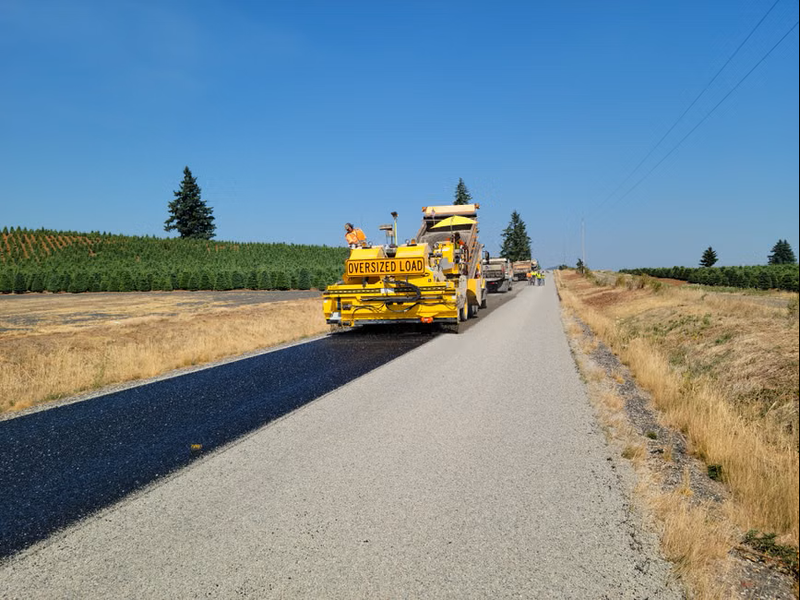
Asphalt pavers are the machines that turn loose paving material into the smooth, durable surfaces found on roads, parking lots, and airport runways. Contractors rely on them to lay material evenly and consistently across large areas. Understanding what these machines do, how they are built, and what makes one different from another helps buyers make confident equipment decisions.
What Is an Asphalt Paver?
An asphalt paver, sometimes called a road paver finisher, asphalt finisher, or road paving machine, is a piece of construction equipment used to lay asphalt concrete or Portland cement concrete on roads, bridges, parking lots, and other similar places. The machine evenly distributes, compacts, and smooths asphalt. In simple terms, a paving machine distributes and levels asphalt to transform rough terrain into smooth surfaces that can handle traffic.
Pavers are a central part of paving operations of all sizes. They receive material from haul trucks, spread it across the paving width, and work it into a uniform layer before compaction equipment finishes the surface. The paver is the piece of equipment that determines how evenly the material is placed and how consistent the final mat will be.
The Main Types of Asphalt Pavers
Caterpillar offers a broad range of asphalt paving equipment that competes in the rubber tire, steel track, and rubber belted markets. Each configuration serves different conditions and job requirements. Understanding the difference starts with the undercarriage.
Rubber Tire Pavers
Rubber tire pavers are built on wheels and are one of the three main paver configurations available in the market. They are a common choice in paving fleets and work well across a wide range of applications where standard ground conditions are present.
Steel Track Pavers
Track-equipped pavers offer superior traction for challenging projects that have poor underfoot conditions or the need to push large haul units. The added grip helps the machine keep moving and working evenly when the ground beneath it is soft or unstable. On difficult sites, a track machine can maintain steadier performance than a wheeled design.
Rubber Belted Pavers
Rubber belted pavers round out the main paver configurations. Manufacturers such as Caterpillar offer equipment in the rubber belted market as an additional option alongside rubber tire and steel track machines. The variety of configurations means paving contractors can match the paver to the specific demands of each project.
Screeds: The Finishing Component
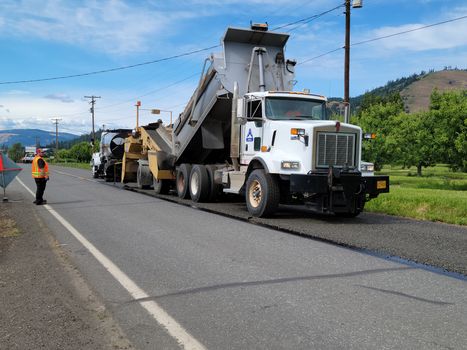
The screed is the part of the paver that levels and smooths the asphalt as it is laid. Caterpillar offers a broad range of asphalt paving machines from wheel and track asphalt pavers to tamper bar and vibratory screeds. Tamper bar screeds use a tamping action to pre-compact the material, while vibratory screeds use vibration to settle and smooth the asphalt layer.
The screed has a direct effect on the quality of the finished mat. A consistent screed setup helps produce a uniform surface, reduce material segregation, and improve the efficiency of the compaction equipment that follows. Operators pay close attention to screed adjustments because small changes in temperature, speed, or slope can show up in the finished surface.
How an Asphalt Paver Works
The asphalt paving process involves several steps, including grading and preparing the surface, applying a base and binder layer, and finally laying the asphalt layer itself. The paver operates at the final stage of this sequence, receiving hot mix asphalt from a truck and distributing it across the paving width.
As the paver moves forward, the material is spread in front of the screed. The screed then levels the material to the desired thickness and gives it an initial compaction. The result is a smooth mat ready for final compaction by rollers and other equipment.
The operator controls paving speed, material flow, and screed settings to keep the mat consistent. Any pause or variation in speed can affect the finished surface, so steady operation matters. The goal is to lay a uniform layer that will perform well for years under traffic.
Compact, Midsize, and Heavy-Duty Pavers
Asphalt pavers come in several size classes, and new and used compact, midsize, and heavy-duty asphalt pavers are key construction equipment for small to large paving operations. The right class depends on the scale of the work being done.
Compact pavers fit smaller jobs such as driveways, parking lot repairs, and residential streets. Midsize pavers handle a broader range of projects and offer a balance of mobility and output. Heavy-duty pavers are built for large-scale paving and high production demands. Matching the paver size to the typical job size helps contractors work efficiently without overspending on machine capacity.
Large Asphalt Pavers for Highways and Airports
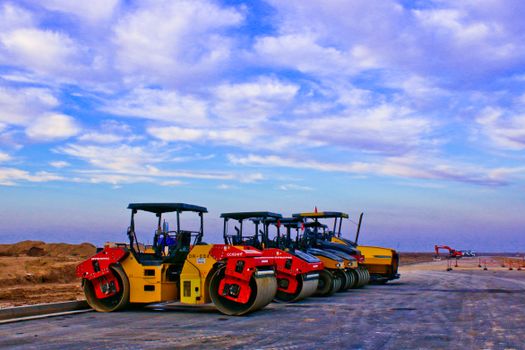
Large asphalt pavers are ideal for paving interstates, highways, airports, and parking lots. These projects demand high production, consistent mat quality, and the ability to cover wide paving widths over long workdays.
One example is the Cat AP1055 asphalt paver. The machine is powered by a 225 horsepower engine and has an operating weight of 36,800 pounds. A walkaround video published by Cat Paving provides an overview of the AP1055 and highlights large asphalt pavers and screeds. For contractors looking at production-scale paving, large machines like the AP1055 are built to handle the demands of major road projects.
What to Consider When Choosing an Asphalt Paver
Several factors separate one paver from another. The paving width needed, the type of projects, and the conditions at the job site all influence the choice. Track-equipped pavers bring superior traction for challenging projects with poor underfoot conditions or the need to push large haul units, which makes them a strong option for sites where wheeled machines may struggle.
Production capacity also matters. A large paving operation on an interstate requires a different machine than a small crew resurfacing a parking lot. Compact, midsize, and heavy-duty classes give contractors a way to match the machine to the workload.
Screed type is another factor. Tamper bar and vibratory screeds each handle material differently, and the right choice depends on the mix and the finished surface requirements. Understanding how the screed affects mat quality helps operators produce better results on every job.
Buying and Selling Asphalt Pavers
Both new and used asphalt pavers are available through equipment marketplaces, and used machines are a practical option for contractors looking to expand capacity without paying new machine prices. A web-based marketplace such as Ironmartonline connects buyers and sellers of used heavy equipment, trucks, and machinery. Sellers list equipment across nine platforms to reach millions of potential buyers, with no contracts or hidden fees.
Buyers can browse a wide inventory that includes pavers, rollers, and other paving equipment alongside excavators, wheel loaders, dozers, motor graders, backhoes, forklifts, dump trucks, trailers, crushers, screeners, trenchers, and more. Financing options are available for buyers, and the marketplace also carries brand-specific listings, including used Caterpillar equipment.
For sellers, the value is reach. Listing equipment on a marketplace that connects with millions of potential buyers expands exposure far beyond a local area. Dealers, owner-operators, and businesses can list used heavy machinery and connect with contractors looking for dependable equipment.
Making the Right Paving Equipment Decision
Choosing the right asphalt paver comes down to matching the machine to the work. Start by looking at the typical conditions on the job site. If the ground is soft or the paver needs to push large haul units, track-equipped machines offer superior traction. If versatility across different jobs matters, consider the full range of options from rubber tire to steel track to rubber belted designs.
Size the machine to the projects. Compact and midsize pavers keep smaller operations efficient, while heavy-duty pavers handle large-scale highway, interstate, airport, and parking lot work. Pay attention to the screed as well, since tamper bar and vibratory screeds affect the quality of the finished mat.
Finally, consider the total equipment picture. A paver works as part of a complete paving spread that includes rollers and support machinery. Whether buying new or used, working with a marketplace that carries a broad inventory and connects buyers with sellers makes it easier to find the right machine for the job.