
Introduction to Ford Trucks
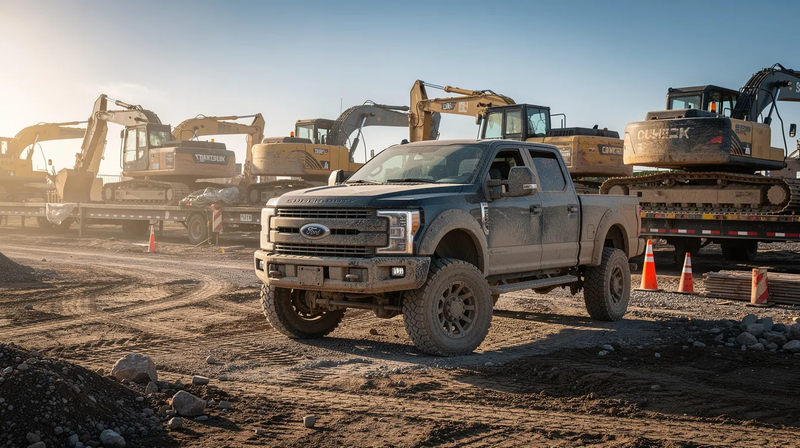
Few names in the American truck market carry as much weight as Ford. Since the Ford F-Series was introduced in 1948, these trucks have anchored construction sites, farming operations, and commercial fleets across the country. From the raw, mechanical simplicity of a 1970s Highboy to the technology-packed Super Duty models rolling off the line today, Ford trucks offer a diverse lineup from compact pickups to heavy-duty models that handle nearly any job you can throw at them.
The lineup is broad: Ford trucks include the Maverick, Ranger, F-150, and Super Duty (F-250, F-350, F-450, and above). Each fills a distinct role, from light daily hauling to moving excavators on gooseneck trailers across state lines. The Super Duty line launched for model year 1999, separating the heavy-duty F-250 and up from the half-ton F-150 - a split that redefined how contractors and fleet managers spec their work trucks.
At IronMartOnline, we specialize in helping owners sell and buyers find used Ford work trucks and heavy-duty units. Every listing includes transparent specs, detailed photos, and the kind of documentation that matters when you're spending real money on a truck that needs to earn its keep. This article gives you quick answers up front on what Ford trucks are best for towing, work, and long-term ownership, then digs into the technical and practical detail you need to make a smart purchase or sale.
See 2018 FORD F-550 XL Service Truck.
Ford F-Series Overview: From Workhorse to Industry Standard
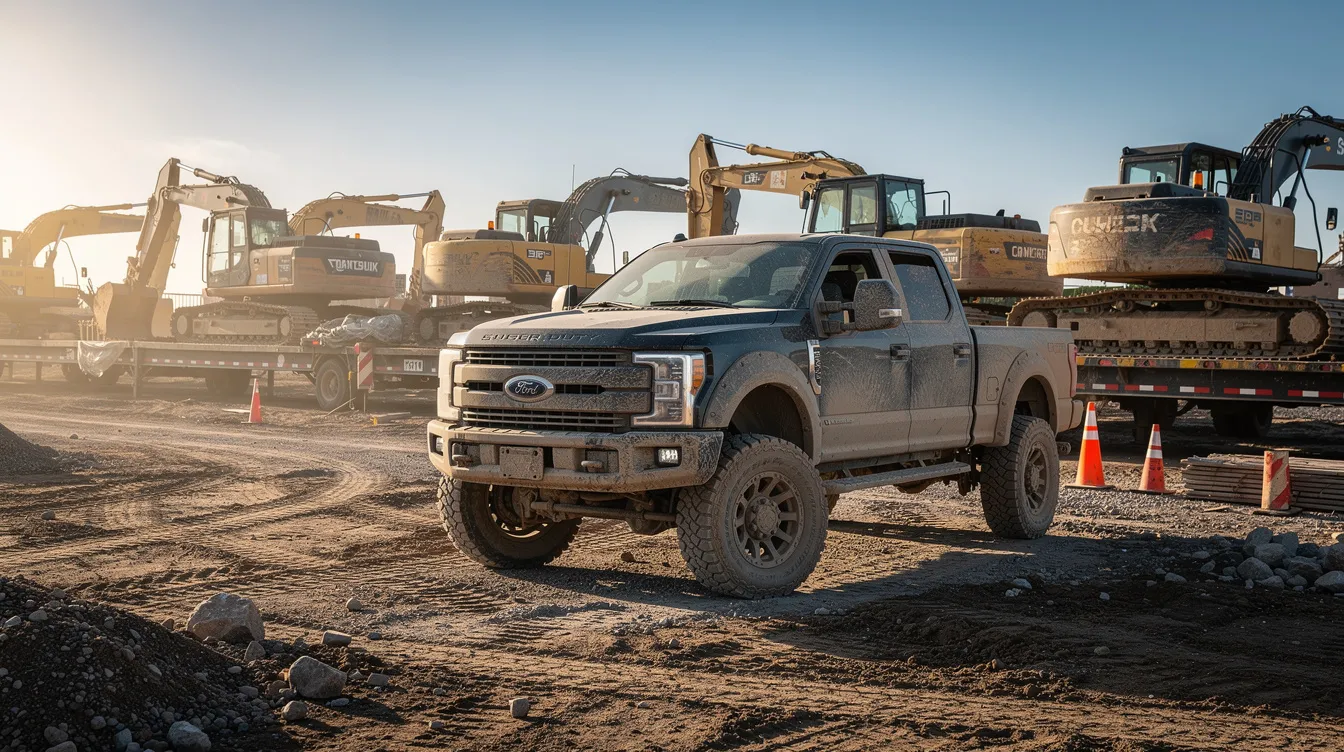
The Ford F-Series started in 1948 as a postwar redesign, replacing earlier Ford truck models with a range spanning from the half-ton F-1 up through the heavy F-8. Ford trucks have been popular since the 1950s, when the introduction of the F-100 and F-250 model designations sharpened the lineup. The Ford F-350 was introduced in 1953 as a heavy-duty model, filling a gap for buyers who needed more payload than a three-quarter-ton could deliver.
Key milestones in the F-Series timeline include:
-
1953: F-350 enters the lineup as a dedicated one-ton truck.
-
1973–1979 ("Dentside" era): Pronounced body panel styling defines the look; the F-150 name debuts in 1975 to navigate emissions and weight mandates.
-
1999 Super Duty split: Ford separates F-250 and above into the Super Duty line with heavier frames, distinct suspension, and stronger axles.
-
2015: Aluminum-alloy body design contributes to weight reduction without sacrificing strength on the redesigned F-150. Ford uses military-grade aluminum-alloy bodies for improved efficiency and payload capacity.
-
Recent additions: The Pro Power Onboard feature turns the Ford truck bed into a mobile power source, letting crews run tools and compressors directly from the truck.
Model numbers map directly to capability. The F-150 handles light-duty work - daily driving, moderate towing, and lighter payloads. The F-250 and F-350 step into three-quarter-ton and one-ton territory, built for serious trailer loads. The F-450 and F-550 serve as chassis cab platforms for dump bodies, service rigs, and commercial upfits. The Ford Ranger features traditional body-on-frame construction for enhanced durability, filling the mid-size segment beneath the F-150.
Classic Ford Trucks of the 1970s: Highboys, Rangers, and Crew Cabs
The 1970s produced some of the most sought-after Ford trucks in the used market today. If you've spent any time browsing antique truck listings, you've seen the reactions these rigs generate - and the prices they command.
Here are some standout models from that era:
-
1970 F-250: Often equipped with the 390 FE big-block V8, 4-speed manual or 3-speed automatic, leaf springs front and rear. A straightforward, torque-heavy work truck.
-
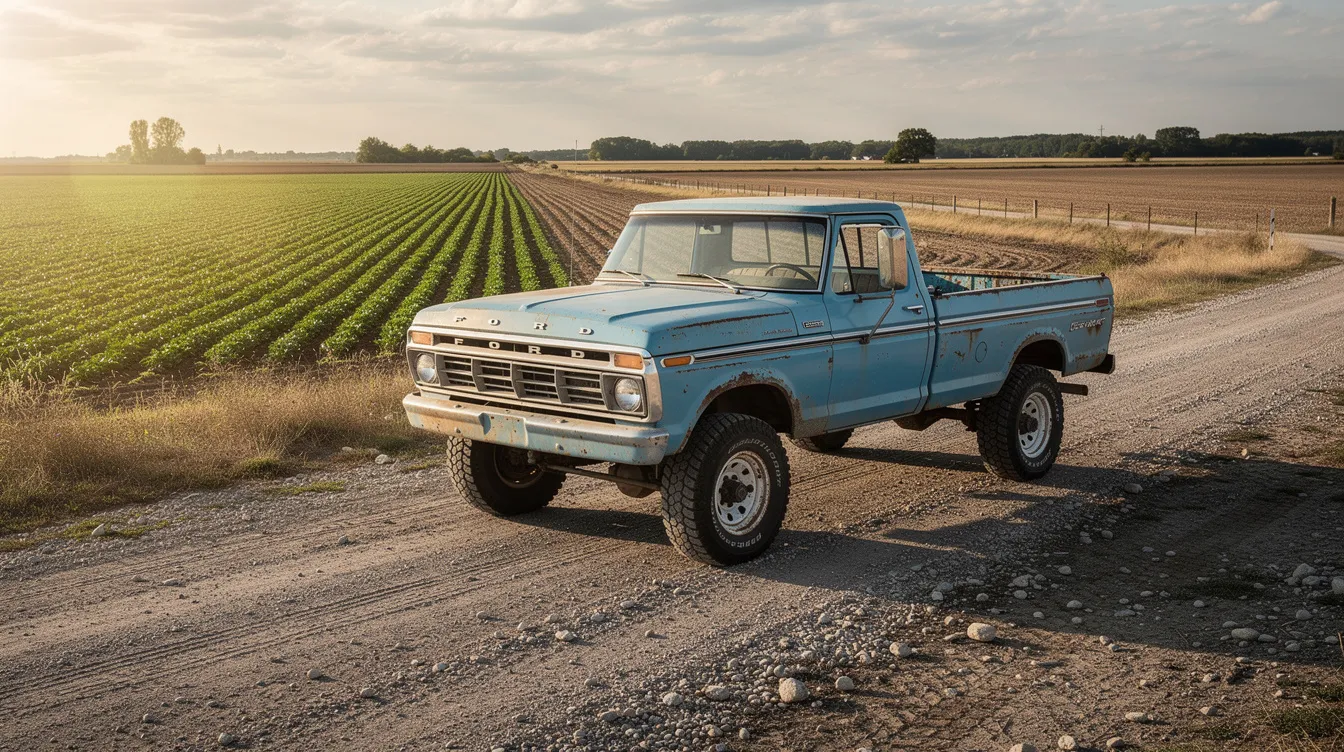
1975 F-250 Highboy: The 1975 F-250 has a stroked 390 engine with C6 transmission. Factory 4-wheel drive, divorced transfer case, and tall stance made it a natural for farm roads and off-road work.
-
1976 F-250 Ranger XLT: The 1976 Ford F-250 Ranger XLT featured a 390FE engine with upgraded interior trim, tinted glass, and specific chrome appointments. The 1976 F-250 Highboy is equipped with a 390 engine and 4-speed manual transmission for buyers who wanted a more hands-on driving experience.
-
1978 F-150 and F-250: The 1978 Ford F-150 was built for durability and performance. The 1978 F-250 features a 400 engine with C6 transmission - a reliable combination for daily hauling.
-
1979 F-350 Crew Cab: The 1979 Ford F-350 is equipped with a 460 engine. With modifications, the 1979 Ford F-350 can produce 600–700 hp, making it a favorite among builders who want big-block power in a crew cab platform.
The "Highboy" designation (roughly 1967 through mid-1977) refers to F-250 4x4s with a divorced transfer case and a tall factory ride height - typically around 34 inches of frame clearance. Common mods on these trucks include Edelbrock Performer intakes, C6 automatic swaps, and ZF 5-speed manual conversions.
These classic Ford trucks remain attractive as collectible work rigs and farm trucks on the used market. A lot of buyers who've bought one as a project find themselves with a truck that's worth more restored than the day it left the factory.
Engines and Drivetrains in Ford Trucks
Ford has offered a wide range of powertrains over the decades. Diverse powertrain options cater to varying customer needs, including hybrid configurations on the latest models. Here's a practical breakdown.
Gasoline engine families:
-
FE-series big blocks (360, 390, 400M, 460): Heavy, simple, torque-rich. Power ranges from roughly 250–375 hp depending on displacement and modifications. Fuel-thirsty but mechanically straightforward.
-
Small-block gas (5.0L/302, 5.8L/351W): Lighter, more fuel-efficient; common in 1980s–1990s F-150 and F-250 trucks.
-
Triton V8s (5.4L, 6.8L V10): Found in late-1990s through 2010s trucks. Known spark plug issues on early 5.4 versions.
-
Godzilla 7.3L gas V8: Current-generation Super Duty option; strong towing power without diesel emissions complexity.
Diesel engine families:
-
7.3L Power Stroke: Legendary for longevity and simplicity. Fewer electronics, known weak items limited to cam position sensor and under-valve-cover harnesses. Trucks like this 2000 Ford F250 XL Super Duty Power Stroke 7.3 Diesel remain in high demand.
-
6.0L Power Stroke: Notorious for EGR cooler failures, head gasket leaks, and injector problems. Requires careful inspection before purchase.
-
6.4L Power Stroke: Improved over the 6.0 but still challenged by exhaust temperatures and emissions hardware.
-
6.7L Power Stroke: Current diesel, available since 2011 in three generations. Strong power and torque; emissions hardware adds complexity; first-generation models had NOx sensor and CP4 fuel pump issues.
Transmissions:
-
C6 3-speed automatic: Paired with big blocks through the 1970s–1980s. Robust and rebuildable.
-
ZF 5-speed manual: Popular swap for older trucks needing an overdrive gear.
-
E4OD / 4R100: Electronic 4-speed automatics found behind 7.3 Power Strokes.
-
TorqShift 5/6/10-speed: Modern automatics in Super Duty trucks, designed for heavy towing duty cycles.
For heavy towing, a 6.7 Power Stroke paired with the TorqShift 10-speed and a 4.30 rear axle ratio is the current benchmark. For mixed daily use and simpler maintenance, the 7.3 Godzilla gas V8 avoids diesel emissions complexity entirely.
Ford Half-Ton vs. Super Duty: F-150, F-250, F-350 and Beyond
Understanding the difference between these classes saves you from buying more truck than you need - or not enough.
F-150 (light-duty, half-ton):
-
The Ford F-150 is noted for its high towing capabilities and broad engine options. Late-model F-150s tow up to approximately 13,000 lbs when properly equipped.
-
Best suited for jobs with trailer weights under 10,000–13,000 lbs, moderate payloads, and daily driving comfort.
-
Aluminum body panels (post-2015) reduce weight and improve corrosion resistance.
F-250 / F-350 (Super Duty, three-quarter and one-ton):
-
The Ford Super Duty trucks are designed primarily for heavy-duty towing and hauling. A properly equipped F-350 DRW with 6.7 diesel and correct gearing can exceed 30,000 lbs GCWR.
-
Heavier gauge steel frames, Dana/Sterling axles, larger brakes, and multi-leaf or air suspension handle payloads of 6,000–8,000+ lbs.
-
Dual-rear-wheel (DRW) configurations add rear stability for fifth-wheel and gooseneck towing.
F-450 / F-550 and above (chassis cab specialists):
-
Class 4–5 and higher; designed for dump bodies, utility upfits, flatbeds, and roll-backs.
-
Payloads can reach into the upper teens of thousands of pounds on properly spec'd F-450 and F-550 chassis cabs.
Advice for fleet managers: Use an F-150 when the job involves light loads and occasional towing. Choose an F-250 or F-350 when you regularly haul trailers, run fifth-wheel equipment, or mount service bodies. The stronger suspension, frame, and brakes offset the higher purchase cost over time - especially when downtime from an under-spec'd truck costs more than the price difference.
Work and Commercial Ford Trucks: Chassis Cabs, Dumps, and Service Bodies
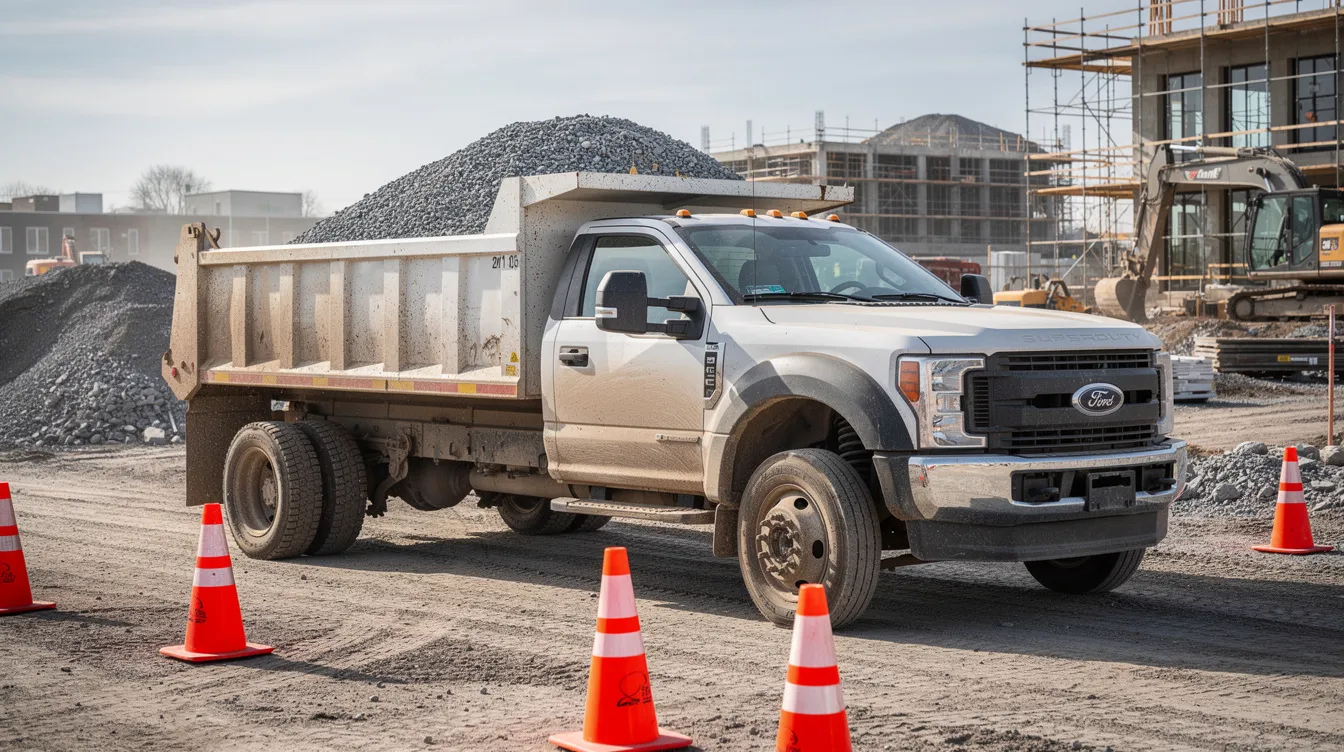
Ford F-350, F-450, and F-550 chassis cab trucks serve as the foundation for nearly every type of commercial body you see on the road. Expanded cargo bed features enhance utility and functionality for work-related tasks, and the chassis cab platform takes that a step further by letting operators mount specialized upfits.
Typical configurations you'll find on IronMartOnline include:
-
F-550 dump trucks for paving and road crews - like this Ford F-550 Super Duty 4x4 mason body dump truck.
-
F-450 service trucks with cranes or boom equipment - such as this FORD F550XL Super Duty Crew Cab with Reading utility body equipped for crane.
-
F-350 utility beds for electricians, plumbers, and general contractors - including service trucks with 4x4 F-350 chassis.
-
F-450 mason dump trucks for landscaping and small excavation work.
Buying used upfitted Ford trucks has clear advantages: reduced upfront cost compared to purchasing a bare chassis and body separately, proven configurations, and PTO/hydraulic systems already installed and tested. The fit between cab length, wheelbase, and rear frame spacing is done - buyers avoid costly body-engineer mismatches.
When shopping, match GVWR to the job. A dump body can add thousands of pounds before you load a single shovel of material. Verify PTO gear, hydraulic plumbing condition, and quality of welds before committing.
Off-Road and Lifted Ford Trucks
Classic Ford F-250 and F-350 trucks from the 1970s through 1990s remain popular platforms for off-road builds. Solid front axles, leaf springs, and simple drivetrains make them easy to modify and maintain far from a dealership or shop.
Ford offers a range of specialized off-road packages and trims for various models in their current lineup, but the aftermarket community for older trucks is where things get interesting. Common upgrades include:
-
Lift kits: 4–6 inches is typical for 1970s Highboys; modern trucks often go higher.
-
Super Duty spring swaps: 1999–2007 Super Duty springs are a well-known upgrade for older F-250 frames, adding load capacity and ride height.
-
Tires: 35–37 inch mud-terrain tires are standard choices. Specific sizes like 315/70R17 and 37x12.50R17 are common.
-
Drivetrain upgrades: Locking hubs, upgraded steering components, beefed differential covers, and heavy-duty tie rods.
Buyers considering a lifted truck should understand the trade-offs. Lifts increase center of gravity and reduce towing stability. Driveline angles change, steering components wear faster, and braking performance can suffer. When inspecting a modified Ford truck, check for tire rubbing, proper load ratings, spring seat condition, shackle wear, frame cracks, and steering linkage play.
Towing, Payload, and Real-World Capability
Ford trucks feature advanced technologies for towing and payload management, but the numbers on the sticker only tell part of the story. Ford trucks have high maximum towing capacities compared to competitors in their classes, yet the specific truck you're looking at may vary significantly based on how it's equipped.
Key specs every buyer should understand:
-
GVWR (Gross Vehicle Weight Rating): Maximum total vehicle weight including passengers, cargo, and fuel.
-
GCWR (Gross Combined Weight Rating): Vehicle plus trailer and its load.
-
Towing capacity: Varies by hitch type. Fifth-wheel and gooseneck setups allow higher tongue weights and trailer weights than bumper-pull hitches.
-
Payload: Weight the truck can carry onboard after subtracting curb weight.
How configuration changes the numbers:
A 6.7 Power Stroke with a 4.30 rear axle ratio will tow significantly more on a gooseneck setup than the same engine with a 3.31 ratio. Cab type (Regular, SuperCab, Crew) and bed length add weight, potentially reducing towing and payload capacity. DRW adds stability but also curb weight.
Practical scenarios:
-
Contractor hauling a 20,000 lb excavator on a gooseneck trailer: Needs an F-350 DRW with 6.7 diesel, proper gearing, and a suitable tow package.
-
Farmer pulling grain wagons: Repeated stop-and-go demands a robust transmission, good cooling, and strong brakes - an F-350 DRW with diesel is the right call.
-
Landscaper with a dump trailer: Payload matters more than extreme towing. An F-450 or F-550 chassis cab with a dump bed covers it.
Always confirm door-jamb labels and build sheets on used Ford trucks to verify exact capabilities. This is one area where IronMartOnline's emphasis on detailed spec documentation pays off.
Reliability, Common Issues, and What to Inspect on Used Ford Trucks
Every era of Ford trucks has its known trouble spots. Here's what to watch for:
By era and engine:
-
1970s frames and cabs: Rust in cab mounts, rocker panels, floors, and leaf spring seat areas. Frame rot is common in northern trucks.
-
6.0 Power Stroke (2003–2007): Frequent EGR cooler failures, head gasket leaks, oil cooler issues, and excessive carbon buildup. The most expensive to repair of all Ford diesel generations.
-
6.4 Power Stroke: Overheating under sustained load; emissions components wear prematurely.
-
6.7 Power Stroke (2011–2014 early models): NOx sensor issues, high-pressure fuel pump (CP4) failures. Later generations are improved but emissions hardware remains expensive.
-
5.4 Triton V8: Spark plug ejection and coil failures on early versions; intake manifold leaks.
Used Ford truck inspection checklist:
-
Cold start: Listen for how the engine fires. Black or white smoke can indicate fuel, oil, or coolant problems.
-
Transmission: Check for smooth shifts, delayed engagement, slipping, or whining.
-
4x4 engagement: Test front axle, hubs, and transfer case in both high and low range.
-
Fluid leaks: Inspect engine oil, coolant, transmission fluid, and power steering.
-
Suspension: Look for bushing wear, spring sag, and leaf spring pad condition.
-
Body and frame rust: Examine underbody, cab mounts, rocker panels, and frame rails - especially on trucks from salt-belt states.
-
Emissions equipment (post-2007 diesels): Check DPF, EGR, DOC, and NOx sensors for regen issues and fault codes.
Ford trucks are equipped with advanced driver assistance features tailored for towing on late-model units, but those systems also need inspection - verify cameras, sensors, and integrated brake controllers function correctly.
IronMartOnline encourages detailed, high-resolution photo sets and videos on every listing. For high-value trucks, arranging a third-party pre-purchase inspection is always worth the investment.
Ford Trucks in Construction, Agriculture, and Industrial Fleets
On construction sites, F-250s and F-350s haul tools, tow compressors, and pull trailers loaded with skid steers and small dozers every day. F-450 and F-550 chassis cabs - like this 1989 Ford F-350 Mason Dump Truck - carry dump bodies, concrete mixers, and welding rigs directly to the work zone.
In agriculture, the story is similar. Farm F-250 Highboys have hauled hay and pulled livestock trailers for decades. Modern F-350 dually trucks move seed tenders and heavy feed loads across rural roads where conditions demand low-RPM torque and simple, serviceable components.
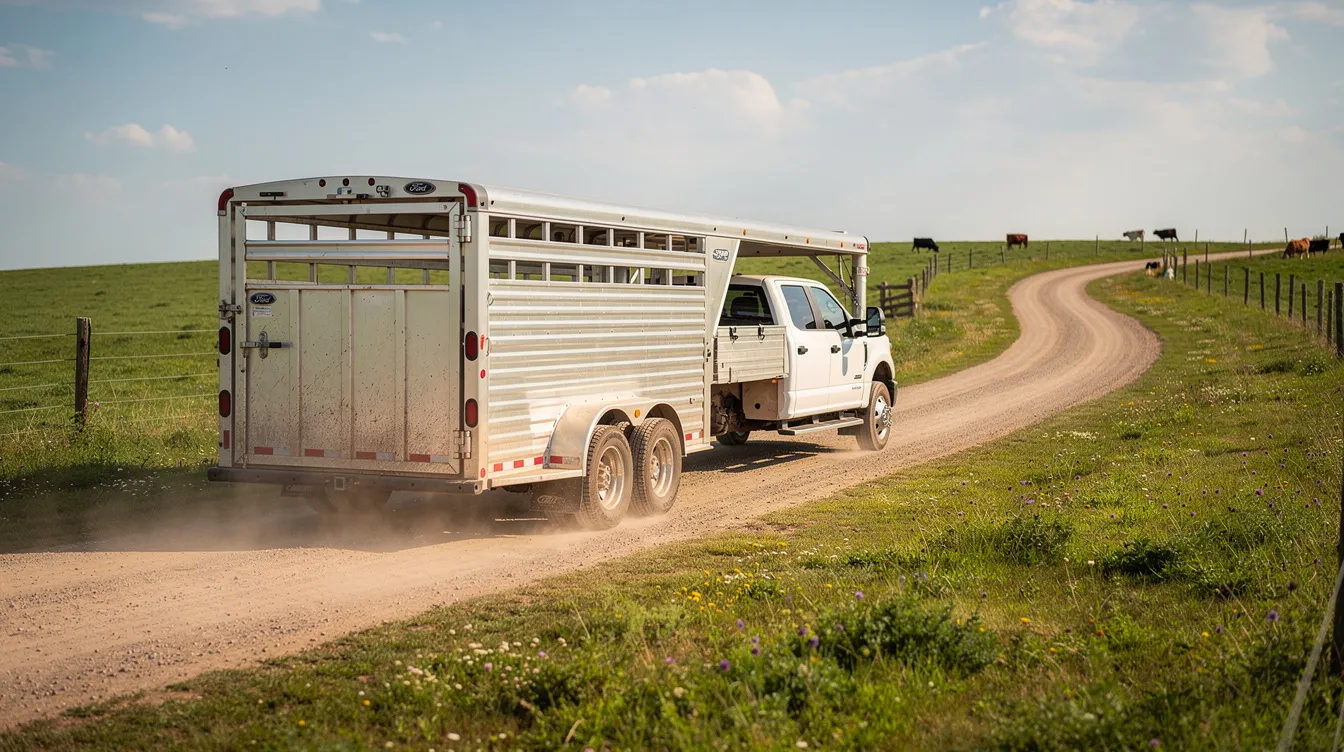
Matching the right Ford truck to the right trailer and equipment is crucial. A paving contractor might run three F-550 dumps and an F-350 service truck. A farmer might need an F-350 DRW for gooseneck cattle trailers and an F-250 SRW for daily ranch errands. IronMartOnline connects these buyers with the broader heavy equipment fleet - dozers, excavators, and trailers - so the truck and the load it's pulling are properly matched.
Buying Used Ford Trucks Online with IronMartOnline
IronMartOnline operates as both a marketplace and brokerage for used heavy equipment and trucks, including work-ready Ford pickups and chassis cabs. Unlike generic classifieds, every listing is built around the details that matter: VIN, mileage, engine model, transmission type, drive configuration, cab and bed style, rear axle ratio, and component condition.
For sellers, the process starts with providing basic truck information. IronMartOnline handles valuation recommendations, professional listing creation, multi-platform marketing, and buyer communication. If you want to sell heavy equipment fast, the same streamlined approach applies to trucks.
For buyers, the experience means browsing curated Ford truck inventory with clear specs and photos, requesting additional documentation or video, arranging third-party inspections, and getting help with paperwork, title transfer, and logistics.
The core value is trust and transparency. In high-value transactions - a used diesel Super Duty with a $40,000 service body, for example - mis-specified items cost thousands. IronMartOnline's brokerage model reduces that risk for both sides compared to generic listing sites where you're on your own.
Pricing, Financing, and Resale Value of Ford Trucks
Several factors drive used Ford truck pricing:
-
Model year and series: F-350 Super Duty commands more than an F-150 of the same year.
-
Engine: Diesel trucks typically carry a premium over gas equivalents.
-
Upfits: Dump bodies, service bodies, and utility boxes add value when they're in good condition.
-
Mileage/hours and maintenance: A well-documented service history can add thousands to a truck's sale price.
-
Geography: Trucks from southern states with minimal rust sell for more than identical units from the salt belt.
Strong resale values and aftermarket support benefit Ford trucks due to high sales volumes. Well-maintained Super Duty trucks hold value particularly well in construction and agriculture, where demand remains consistent year after year.
Financing options for B2B buyers typically include equipment financing, working capital loans, and lease arrangements. Lenders require accurate valuation and condition reporting - which is exactly what IronMartOnline's detailed listings provide.
For sellers, timing matters. Listing trucks before spring construction season, when demand rises, tends to maximize return on used trucks.
Selling Your Ford Truck Through IronMartOnline
Here's how the process works, step by step:
-
Initial contact: Reach out with basic information - year, make, model, engine, mileage or hours, cab and bed configuration, and overall condition.
-
Evaluation and pricing: IronMartOnline provides a valuation recommendation based on comparable used trucks, current market conditions, and your truck's specific specs.
-
Listing creation: Professional photos, a detailed spec sheet, upfit and body details, and drivetrain documentation are compiled into a comprehensive listing.
-
Marketing: The listing goes live on IronMartOnline and is syndicated to partner platforms for maximum exposure.
-
Buyer communication and closing: Inbound inquiries are handled, negotiation is supported, and guidance on title transfer and proper paperwork is provided.
What sellers should prepare:
-
VIN and engine/transmission serial numbers
-
Records of recent work (e.g., rebuilt 7.3 Power Stroke in 2022, new turbo, transmission rebuild)
-
Upfit details: dump body brand, PTO type, hydraulic system specs
-
Photos of wear items: tires, brakes, frame condition, cab interior
-
Usage history: construction, agriculture, highway, or mixed
The goal is to save sellers time. Fleet managers have enough to manage without fielding calls from tire-kickers. Use the Sell Your Machine contact path - it works for Ford trucks just as well as it does for excavators and dozers.
Ford Trucks vs. Other Work Truck Brands
Ford's primary competitors in the work truck space are Chevrolet/GMC (Silverado/Sierra HD, with Duramax diesel) and Ram (with the Cummins inline-six). All three have loyal followings, and mixed-brand fleets are common across construction and agriculture.
Where Ford consistently stands out:
-
Dealer and service network: Ford vehicles are well-supported by a large dealer network and service options - critical when a truck goes down on a job site and you need parts the same day.
-
Parts availability: High sales volumes mean aftermarket and OEM parts are stocked widely, reducing downtime.
-
Spec consistency: Ford's Super Duty line has maintained relatively stable platforms, making it easier to cross-reference parts and train mechanics across model years.
Standardizing a fleet on Ford F-250 and F-350 platforms can simplify maintenance, reduce parts inventory, and cut diagnostic tool costs. IronMartOnline lists multiple brands but is experienced in accurately representing Ford truck specs and conditions - making it straightforward for buyers to compare options without guesswork.
Future of Ford Trucks: Electrification and Advanced Technology
Late-model Ford trucks have introduced a wave of innovations that affect how fleets plan their purchases.
-
Aluminum F-150 bodies (2015 onward): Reduced curb weight improved payload capacity and fuel economy while maintaining strength.
-
Advanced driver-assist systems: Adaptive cruise control, trailer backup assist, and integrated trailer brake controllers come standard or optional on recent Super Duty models. Ford's pickup trucks utilize innovative technology including infotainment and connectivity features that keep operators connected on the job.
-
PowerBoost Hybrid: PowerBoost Hybrid technology integrates electric torque with traditional engine power on the F-150, offering improved fuel economy and onboard power generation.
-
F-150 Lightning: Ford's all-electric half-ton entered production in 2022, introducing battery-electric capability for local utility and service applications. Charging infrastructure and range limitations mean it currently coexists with - rather than replaces - diesel Super Duty trucks for heavy towing.
For fleet planning, the near-term reality is a mixed strategy. Diesel trucks remain the strongest option for long-distance towing and remote operations. Gas engines like the 7.3 Godzilla offer simpler maintenance for moderate-duty work. Electric and hybrid options will grow in the light-duty segment, and IronMartOnline expects to see increasing numbers of used Lightning and PowerBoost trucks entering the marketplace over the next several years.
Staying informed about technology and resale trends helps both buyers and sellers maximize the lifecycle value of their Ford trucks. Battery degradation on EVs, diesel emissions compliance costs, and shifting buyer preferences will all shape the used market. Whether you bought your truck five years ago or are shopping for one today, understanding where the market is headed is as important as knowing what's under the hood.
Whether you're upgrading your fleet or selling a Ford truck that's earned its keep, having the right platform and the right information makes all the difference. Browse Ford truck listings or list your own through IronMartOnline's Sell Your Machine portal - detailed specs, professional marketing, and the transparency that high-value truck transactions demand.