
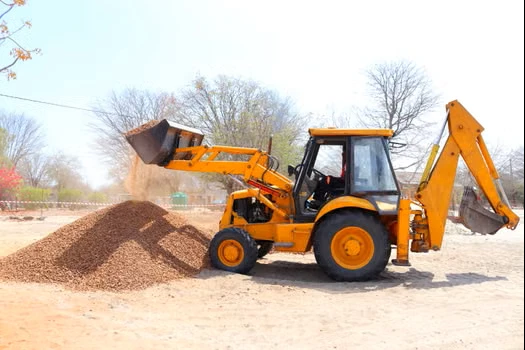
How to Buy Used Heavy Equipment in 2026 (Without Overpaying)
The used heavy equipment market in 2026 looks fundamentally different than it did two or three years ago. Pandemic-era bidding wars have cooled, supply chains continue to normalize, and buyers finally have room to negotiate. But softer prices don't mean every deal is a good deal. This guide walks you through each step of buying used construction equipment in 2026 - from defining the right machine to closing the transaction without leaving money on the table.
2026 at a Glance: Is This the Right Year to Buy Used Heavy Equipment?
Is 2026 a good year to buy used heavy equipment? Yes - with preparation. Heavy equipment prices are stabilizing in early 2026 after the volatility of 2022–2024, and the secondary market has shifted from a seller's playground to a more balanced field. Asking prices for used heavy equipment dipped year over year across most categories, while available inventory has tightened, creating a window where informed buyers can find real value before supply gets too scarce.
Here's what the construction equipment market looks like in early-to-mid 2026:
-
Used heavy-duty construction equipment inventory fell over 13% year over year in January 2026, with wheel loaders, loader backhoes, and mini-excavators showing double-digit declines.
-
Auction prices for used heavy equipment increased by 2.0% month over month in February 2026, signaling that the floor may be forming.
-
Clean, late model machines (2019–2023) are holding value well due to high demand, while older machines with high hours are seeing steeper discounts.
-
Compact equipment - skid steers, compact track loaders, mini-excavators - remains tight in inventory and commands premiums.
-
The global used industrial machinery market will reach $813.99 billion in 2026, reflecting just how massive the secondary market has become.
Since the pandemic, the equipment market has evolved. Fewer bidding wars, more realistic seller pricing, and better documentation standards mean buyers who do their homework can negotiate meaningful discounts. Contractors prefer used machinery to avoid long delivery times for new equipment, and many buyers prefer used machinery in 2026 to avoid high capital costs associated with new machines.
At IronMartOnline, we help both buyers and sellers navigate this environment through curated listings, verified specs, and full-service brokerage support - so neither side walks into a bad deal.
Step 1: Define the Right Machine for Your Work (Before You Look at Prices)
The fastest way to overpay is to start browsing before you know what you need. Define specific needs - specifications, lift capacities, and required attachments - before you ever look at prices. This prevents chasing a "good deal" on a machine that's wrong for your job site.
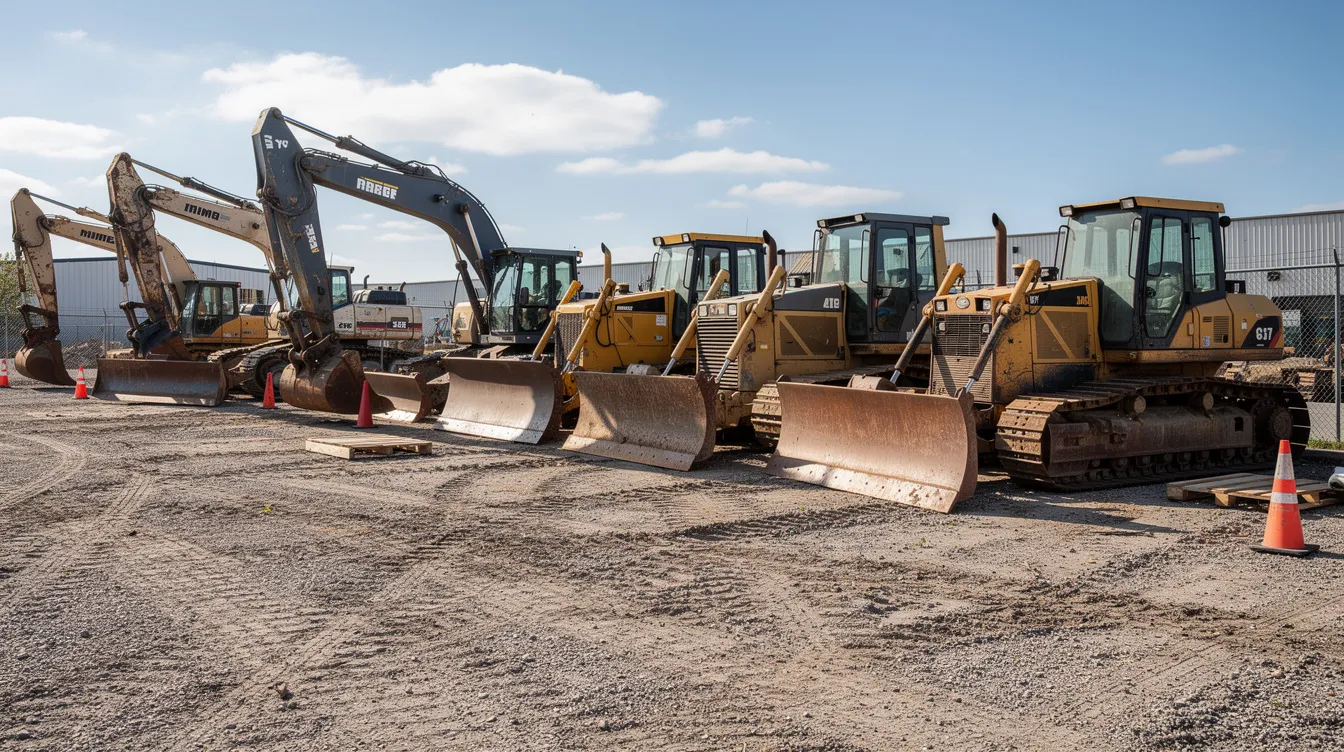
Your project type, frequency of use, and jobsite conditions drive the choice between heavy equipment and compact equipment. Here's how applications map to machine types:
-
Earthmoving and demolition: Excavators are used for earthmoving and demolition tasks. Pair them with dozers, which are essential for grading and site preparation. For high-volume moves, 35–50 ton crawler excavators such as a used Hitachi EX150 excavator with under 5,000–6,000 hours are ideal.
-
Roadwork: Motor graders, rollers, compactors, and asphalt pavers. Late-model hydraulic systems and grade control matter here.
-
Materials handling: Wheel loaders are vital for material handling in construction. Backhoe loaders are used for digging and transferring heavy loads, and articulated trucks are designed for hauling materials over rough terrain, especially when paired with portable soil and gravel screeners.
-
Residential and landscaping: Skid steers, compact track loaders, and mini-excavators in the 10,000–12,000 lb class are easier to transport and maintain on smaller lots, and a well-equipped used skid steer loader can handle many of these tasks.
Quick decision checklist before shopping:
-
Expected hours per year of use
-
Typical terrain (paved, gravel, mud, rock)
-
Standard load weights and lift requirements
-
Local transport weight and width limits
-
Emissions zone restrictions at your primary work area
Step 2: Read the 2026 Market: How Construction Equipment Prices Are Really Moving
Understanding how the used construction equipment market is moving in 2026 lets you spot overpricing and time your purchase better. You don't need to be an economist - just know the general direction.
By category:
|
Segment |
Price Trend (2026) |
Inventory |
|---|---|---|
|
Heavy earthmoving (excavators, dozers) |
Stable to slightly soft |
Down 10–15% YoY |
|
Compact equipment (CTLs, minis) |
Firm; premiums on low-hour units |
Tight |
|
Wheel loaders |
Slightly soft asking prices |
Down 13%+ YoY |
|
Trucks and trailers |
Mixed |
Variable by region |
|
Used heavy equipment prices are stabilizing in early 2026 after previous volatility. Auction prices for late model units remain competitive because demand hasn't disappeared - it's just more selective. Meanwhile, 80% of manufacturing executives plan to increase smart technology investment in 2026, which means telematics-equipped machines hold value better than those without. |
Several macro factors are shaping equipment prices right now: elevated interest rates (7–22% APR depending on credit), continued federal infrastructure spending that significantly influences used equipment demand, tariffs on steel and components, and OEM lead times for new machines that remain longer than pre-pandemic norms. New equipment prices stay high enough that buying used remains a strong alternative for most contractors.
If you want a data-driven read on what your target machine is worth today, comparing recent auction results and dealer asking prices across multiple platforms is the gold standard for establishing a fair price range.
Step 3: Choose the Best Buying Channel in 2026 (Auction, Dealer, Marketplace, or Private Seller)
The same used machine can cost - and risk - very different amounts depending on where you buy it. Here's how the main channels compare in 2026:
Live and online auctions: Auction markets often deliver lower hammer prices, but carry higher risk. Buyer premiums (typically 10–15%), limited or no inspection windows, no recourse after the gavel drops, and transport coordination fall entirely on you. Research current auction prices and value benchmarks to establish fair retail pricing before you bid.
Franchised dealers: Authorized dealerships often provide certified inspections or limited warranties for used equipment. You'll pay a higher asking price, but you get documented condition reports, possible service support, and greater peace of mind. For high-value machines, this premium can be worth it.
Private sellers: Lowest prices in theory, highest risk in practice. Documentation is often incomplete, and you have little recourse.
Marketplace and brokerage (IronMartOnline): A brokerage model bridges the gap between auction risk and dealer cost. At IronMartOnline, listings are curated with detailed specs, photos, and verified machine information. We assist with inspections, logistics, and secure transaction facilitation - giving you dealer-level transparency closer to market pricing.
Understand the context of sale to gauge potential issues with the machine. A dealer trade-in tells a different story than a bankruptcy liquidation.
Step 4: Run the Numbers: Total Cost of Ownership, Not Just the Sticker Price
In 2026, labor and maintenance inflation means a cheap machine can become an expensive one fast. The total cost of ownership - not just the sticker price - determines whether you actually got a good deal.
Factor in purchase price, transportation costs, taxes, and immediate repair needs in your budget, along with:
-
Financing costs (interest over the loan term)
-
Insurance
-
Fuel consumption
-
Preventive maintenance and wear parts
-
Major component risk (engine overhaul, undercarriage, hydraulic pumps)
Worked example: A 2021 excavator at $150,000 with 2,500 hours versus a 2015 model at $90,000 with 7,500 hours. The cheaper machine saves $60,000 upfront but may need an undercarriage rebuild ($25,000–$40,000), an engine service ($8,000–$15,000), and carries higher fuel costs and downtime risk. Over five years, the late model unit often costs less to own.
Budget roughly 8–12% of the machine's market value per year for maintenance. Machines over 6,000 hours push toward the higher end. Components like undercarriage, hydraulic pumps, and engines are the high-impact items that can erase your upfront savings overnight.
Interest rates affect monthly payments on financed purchases - and in 2026, they're elevated. A one-point interest rate change alters payments by roughly $30 per month on a $60,000 machine financed over 60 months, adding approximately $1,700 over the life of the loan. Pre-approval for financing is essential in a high-rate environment so you know your real budget before making offers.
Step 5: Dig Into the Machine's History (Paperwork Before Paint)
In 2026, a documented machine's history can be as valuable as low hours. Well maintained equipment commands a premium in the resale market for good reason - it signals lower risk.
Key documents and data to request:
-
Title and serial verification (obtain the serial number and contact a local dealership to verify it is not a grey market machine)
-
Prior ownership records and lien or encumbrance checks
-
Review maintenance records for oil, fuel, and filter changes
-
Review the machine's maintenance record for past repairs, part replacements, and fluid changes over time
-
Telematics or GPS history reports (usage, idle time, fault codes)
Evaluate age versus hours and check maintenance records to assess how the machine was treated over its lifespan. A 2018 unit with 4,000 hours and a complete dealer service binder tells a far better story than a 2020 model with 2,000 hours and zero paperwork.
Red flags:
-
Frequent ownership changes in a short period
-
Missing years in the service history
-
Inconsistent hour readings between the display and ECM or telematics data
-
Look for extensive welding as a warning sign of previous structural damage
-
Mismatched serial numbers between frame, engine, and paperwork
At IronMartOnline, we vet listings for ownership and lien issues and encourage sellers to provide full maintenance documentation, so buyers can verify the machine's history before committing.
Step 6: Inspect the Machine Like a 2026 Pro (On-Site or Remote)
A methodical inspection - on-site or through a qualified third party - is non-negotiable for used heavy equipment in 2026. Conduct in-person inspections to test operations and look for leaks in wear-prone areas whenever possible. For remote purchases, high-resolution photo sets, walk-around videos, and telematics data reports have become standard practice, and IronMartOnline supports all of these.
Bring a technician or hire a reputable third-party inspector, especially on machines valued above $50,000. Test the equipment before purchase to ensure functionality across every system.
Engine and Powertrain
Engine and transmission failures are among the most expensive risks in used heavy equipment, often running $15,000–$50,000+ to repair.
-
Conduct a cold start to check engine responsiveness and exhaust smoke during initial operation
-
Inspect the engine for abnormal noises during startup - knocking, ticking, or excessive blow-by
-
Check fluid levels to assess maintenance history (dark or gritty oil, low coolant, metallic particles)
-
Evaluate transmission shift quality under load: hesitation, slipping, or harsh engagement
-
Verify engine hours against ECM or telematics data - discrepancies are a major red flag
-
Review maintenance records to track part replacements and fluid changes over time, looking for recent engine or transmission rebuild documentation
Hydraulics and Work Equipment
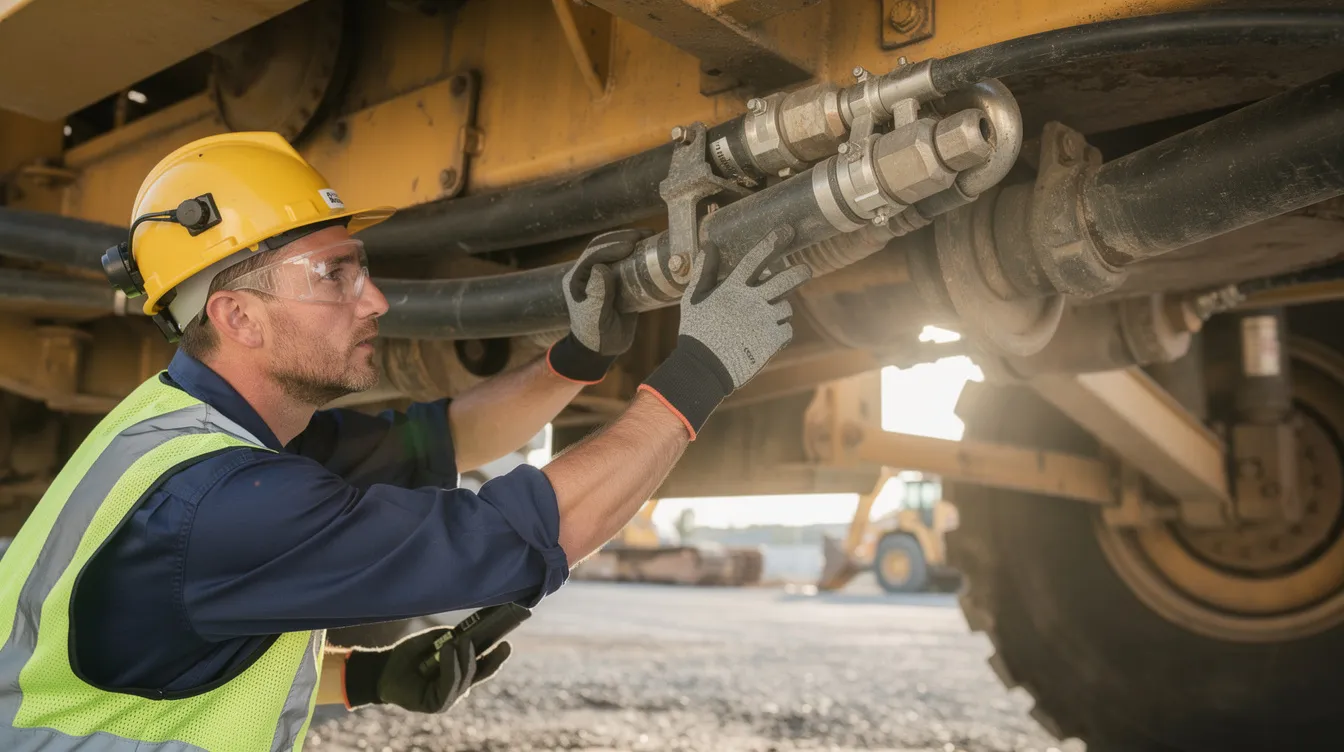
Hydraulic performance directly affects productivity and operating cost. Sluggish cylinders or a failing pump can ground a machine for weeks.
-
Visually inspect cylinder packings for leaks and body panels for damage
-
Check for cylinder rod pitting, scoring, and hose deterioration
-
Listen for pump noise (whining or cavitation sounds under load)
-
Test component function such as the bucket swing and blade articulation - cycle times should be consistent
-
Inspect fluid levels including hydraulic oil and coolant before purchasing
-
Evaluate attachment coupler compatibility with modern quick-coupler interfaces, which are increasingly expected in 2026
Undercarriage, Tires, and Structural Integrity
Undercarriage replacement on a mid-size excavator can easily run $20,000–$40,000. This is where cheap machines become expensive.
-
Inspect wear parts like cutting edges and tracks for significant wear
-
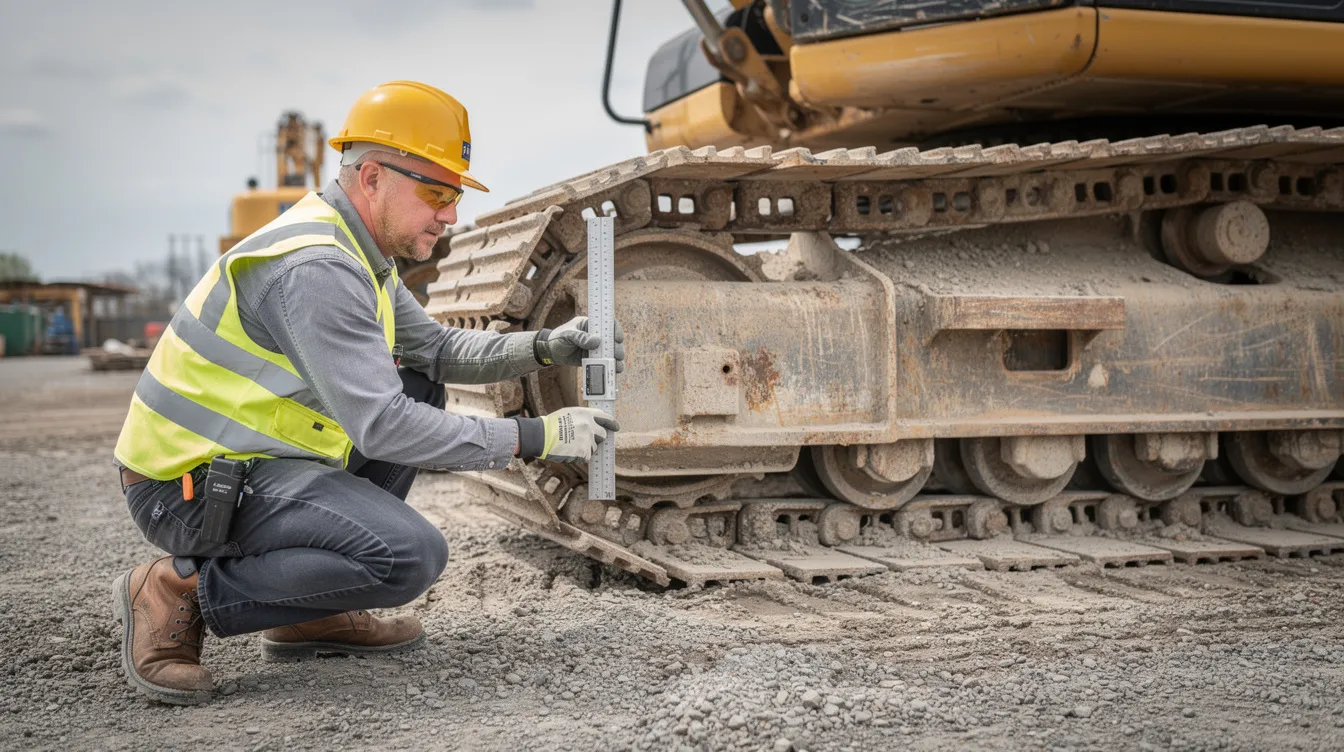
Use an undercarriage measurement kit to check track life and wear for tracked machines - measuring link height, bushing diameter, and roller wear against OEM specs
-
Inspect undercarriage and tracks for wear, checking sprocket tooth profiles and idler condition
-
On wheeled machines, check tire sidewalls and tread depth
-
Inspect frames, arms, and booms for cracks or heavy non-factory welding - distinguish between acceptable cosmetic welds and structural welds that indicate prior failure or frame damage
Electronics, Telematics, and Cab
In 2026, buyers expect functional electronics and data connectivity, not just mechanical soundness. Machines lacking telematics features may come at a discount but also carry valuation risk.
-
Perform a function test to check controls and listen for unusual sounds during operation
-
Check displays, joystick responsiveness, safety interlocks, and backup cameras
-
Verify any grade control or GPS systems are operational
-
Evaluate cab condition by checking cleanliness and structural integrity - cracked glass, damaged seats, and non-functioning HVAC lower resale value
-
Review telematics data: fault code history, idle-time percentage, and fuel consumption patterns confirm how the machine was actually operated
Step 7: Late Model vs High-Hour Units: Finding the Best Value in 2026
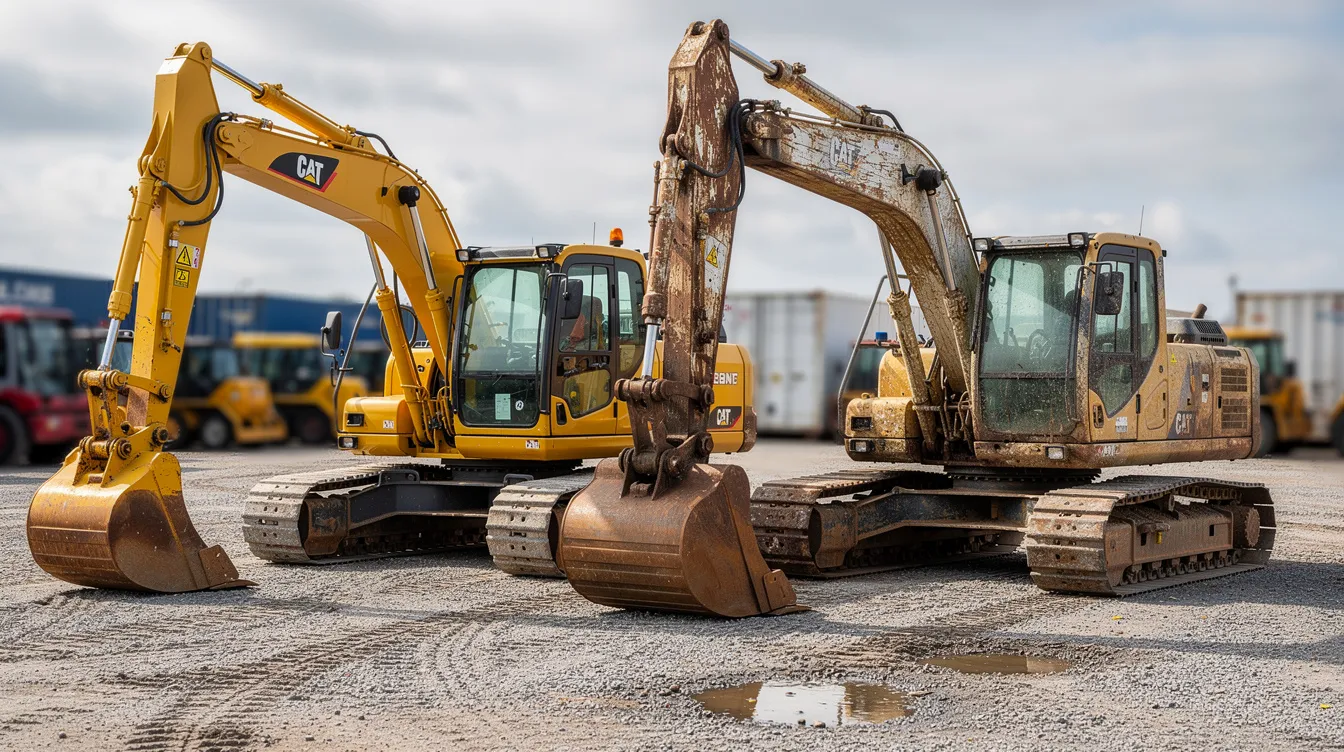
The core tradeoff in the 2026 heavy equipment market is simple: pay more upfront for a late model unit (2020–2023) or save cash now with an older high-hour machine (2014–2018).
Late model benefits: Improved fuel efficiency, Tier 4 Final emissions compliance, better cab ergonomics, factory telematics, and higher resale value later in the decade. These machines typically carry lower maintenance risk and less downtime.
High-hour bargain profile: Lower cash outlay, shorter remaining service life, higher maintenance risk. But for lower-utilization jobs - seasonal work, backup duty, short-term projects - they can deliver strong ROI if you buy at the right price, especially with well-maintained classics like a 1970 Caterpillar D9G dozer.
To calculate realistic ROI over a 3–5 year window, combine: purchase price + total financing cost + annual maintenance + expected depreciation − projected resale value at exit. For older units, add a contingency line for major component replacement (engine, undercarriage, hydraulic pump).
Well-maintained equipment commands a premium for a reason. A high quality used equipment listing with full documentation, low idle time, and verified hours from a platform like IronMartOnline lets you compare late model versus high-hour options side by side with the data that matters.
Step 8: Financing and Negotiation in a Higher-Rate Environment
Even with softened equipment prices, 2026 interest rates keep financing a major part of the buying decision. Buyers prefer used equipment to avoid high borrowing costs on new machinery, but financing options are crucial for purchasing used heavy equipment at any price point.
Key financing sources:
-
Bank loans (best rates for strong credit)
-
Captive finance from manufacturers like John Deere Financial or Cat Financial
-
Independent and specialty lenders (more flexible on older units)
-
Lease-to-own structures and zero-down options for qualified borrowers
In 2026, A-tier borrowers typically see 7–9% APR, mid-tier (680–719 credit) around 10–14%, and lower credit profiles higher still. Used machines often add 1–3 points versus new equipment rates (Axiant Partners).
Secure pre-approval and compare total cost - interest plus fees over the full term - not just the monthly payment.
Negotiation tactics that work in 2026:
-
Use recent auction prices as benchmarks for your offer
-
Consider future repairs in negotiations to account for component replacement costs - a machine needing new tracks is worth less than its asking price
-
Check how long the unit has been listed; sellers holding older machines for 90+ days are often motivated
-
Reference documented condition issues as leverage, not insult
Step 9: Logistics, Regulations, and Compliance in 2026
Buying the machine is only half the job. Moving it and operating it legally matters just as much - and the costs can surprise you.
Transport considerations:
-
Oversize or overweight units require state permits. Federal limits (80,000 lbs gross vehicle weight, 8'6" width) trigger permit requirements when exceeded (Legal Clarity).
-
Single-trip permits cost tens to hundreds of dollars; "superload" permits for extreme dimensions require engineering review and can take weeks.
-
Plan routes for bridge weight limits, overpass clearances, and seasonal restrictions.
Regulatory pressure in 2026:
-
The EPA's Tier system governs nonroad diesel engines. Tier 3 or older machines may face restrictions in certain metro clean-air zones.
-
Some jurisdictions are already limiting pre-Tier 4 machines on public projects or within city boundaries. Before buying an older diesel unit, confirm it can legally operate at your primary job site.
-
Emissions compliance increasingly affects brand reputation and contract eligibility for contractors bidding on public work.
IronMartOnline can coordinate with reputable transport providers and help buyers confirm compliance documentation before shipping, so the machine that arrives is the machine you can actually put to work.
Step 10: Why Working With a Trusted Marketplace Like IronMartOnline Lowers Your Risk
Everything in this guide - defining needs, reading the market, inspecting condition, running numbers - takes time and expertise. Working with a trusted marketplace turns that complexity into a structured process.
IronMartOnline operates as a full-service marketplace and brokerage for selling heavy equipment and buying it. For buyers navigating the 2026 equipment market, that means:
-
Curated inventory with detailed photography, specs, and verified machine information - browse current used heavy equipment listings to see the difference
-
Inspection support through coordination of third-party evaluations and detailed remote documentation
-
Paperwork and title assistance to confirm clean ownership and avoid lien surprises
-
Introductions to finance and insurance partners aligned with 2026 lending conditions
-
Logistics coordination for transport, permitting, and delivery
Compared to going it alone at auction or chasing private-party ads, you get broader reach to motivated sellers, safer payment handling, and data-backed pricing guidance that reflects where the market actually stands - not where a seller wishes it was.
The 2026 used heavy equipment market rewards prepared buyers. Whether you're adding one machine or expanding a fleet, the steps above turn a high-stakes purchase into a calculated decision.
Ready to find the best value on your next machine? Browse IronMartOnline's current equipment offers or contact our team to source a specific machine matched to your requirements, budget, and timeline.