Description
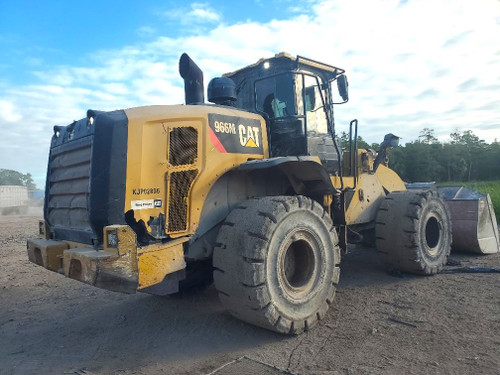
2014 CATERPILLAR 950GC Wheel Loader - 4yrd Bucket w/24,604lb Lift Cap, Cat 7.1 225hp w/11,586hrs, Runs and Operates Super Strong-Cat Dependable, Priced to Sell! Located in Naples, Florida 34117
Specs and Dims
Description Continued...
2014 Caterpillar 950GC Wheel Loader: Specs and Buying Guide
The Caterpillar 950GC is a medium wheel loader, and Cat built it for the kind of work that fills most of a contractor's day: moving material, building stockpiles, loading trucks, and keeping a general construction site supplied. The machine is described by Cat as purpose-built, easy to operate, and reliable, with low fuel consumption and low owning and operating costs as core design goals. For buyers shopping the used market, a 2014 model sits in a useful spot. It has enough service years behind it that the price reflects depreciation rather than new-machine markup, and enough machine left in it to be a working asset rather than a project.
This breakdown covers what the 950GC is designed to do, the published specifications for the model line, how to read the power ratings, and what to inspect before handing over money for a used unit. Where a specification can vary by build or market, the safe answer is always the same: confirm the exact configuration with the serial number and the machine's own documentation.
What the Caterpillar 950GC Was Built to Do
Cat positions the 950GC around four core applications: material handling, stockpiling, truck loading, and general construction. That list describes a wheel loader used as a production support machine rather than a single-task specialist. On a typical site, that means the loader swings between tasks several times a day, and the design priorities follow from there. Fast cycle times matter more than peak hydraulic output. Visibility and control layout matter more than a long list of optional features. Fuel burn and maintenance cost matter because the machine runs long shifts at moderate load rather than short bursts at maximum output.
The GC designation signals the value end of Cat's medium wheel loader range. The machine is built around proven components and straightforward systems, which is also why the model has a reputation for solid performance and proven reliability rather than cutting-edge complexity. For a used buyer, that is usually good news. Simpler systems are easier to inspect, easier to service, and less likely to produce expensive surprises in the first year of ownership.
Published Caterpillar 950GC Wheel Loaders Specifications at a Glance
The figures below come from Cat's published 950GC technical specification material. They describe the model line rather than one specific 2014 build, and Cat notes that emission configurations differ by market. Treat these numbers as the reference point for a conversation with a seller, not as a substitute for the machine's own spec sheet.
|
Specification |
Metric |
Imperial / Standard |
|---|---|---|
|
Engine model |
Cat C7.1 |
Cat C7.1 |
|
Maximum gross power at 1,700 rpm (SAE J1995) |
180 kW |
241 hp |
|
Maximum gross power at 1,700 rpm (ISO 14396:2002) |
179 kW |
240 hp |
|
Maximum net power at 1,700 rpm (SAE J1349) |
168 kW |
225 hp |
|
Maximum net power at 1,700 rpm (ISO 9249:2007) |
168 kW |
225 hp |
|
Maximum gross torque at 1,400 rpm (SAE J1995) |
1,099 N·m |
811 lbf-ft |
|
Peak gross torque at 1,400 rpm (ISO 14396:2002) |
1,092 N·m |
805 lbf-ft |
|
Maximum net torque at 1,100 rpm (SAE J1349) |
1,041 N·m |
768 lbf-ft |
|
Operating weight |
18,392 kg |
40,547 lb |
|
Tire choices include |
23.5R25 L3 |
23.5R25 L3 |
|
Radio ready |
Yes |
Yes |
Reading the Cat C7.1 Power Ratings Correctly
The 950GC runs the Cat C7.1 engine, and the published ratings split into gross and net figures measured under different standards. Gross power lands at 180 kW, or 241 hp, under SAE J1995 at 1,700 rpm. The ISO 14396:2002 gross rating is 179 kW, or 240 hp, and the metric figure is listed at 243 hp. Net power at the same 1,700 rpm point comes in at 168 kW, or 225 hp, under both SAE J1349 and ISO 9249:2007, with a metric listing of 228 hp.
That gap between gross and net is not a marketing trick. Gross ratings measure the engine on a test stand without the parasitic loads the machine itself imposes, while net ratings account for the accessories and systems that draw power in real operation. When you compare a used 950GC against another loader, compare net to net. Mixing a gross figure from one machine with a net figure from another makes the Cat look stronger than it is or weaker than it is, depending on which way the numbers are paired.
Torque figures follow the same pattern. Maximum gross torque is listed at 1,099 N·m, or 811 lbf-ft, at 1,400 rpm under SAE J1995. Peak gross torque under ISO 14396:2002 is 1,092 N·m, or 805 lbf-ft, at the same engine speed. Maximum net torque is 1,041 N·m, or 768 lbf-ft, listed at 1,100 rpm under SAE J1349 and at 1,400 rpm under ISO 9249:2007. The low-rpm torque delivery is what a loader operator actually feels when the bucket goes into a pile, and it is one reason the C7.1 suits repeated digging and lifting cycles rather than steady-state hauling.
Emissions Configuration Varies, So Verify Before You Buy
Cat's published material shows the 950GC offered in more than one emissions setup depending on the market. One configuration meets U.S. EPA Tier 4 Final, EU Stage V, and India CEV Stage V standards. Another configuration meets Brazil MAR-1 standards, which Cat describes as equivalent to U.S. EPA Tier 3 and EU Stage IIIA.
This matters for a used purchase because emissions package affects the engine hardware, the service requirements, and whether the machine is legal to operate in your jurisdiction. A 2014 build could fall into different configurations depending on where it was originally sold and what was installed for that market. Do not assume. Ask the seller for the engine arrangement and the serial number, then confirm the emissions configuration against Cat documentation or with a Cat dealer before you commit. If the seller cannot or will not supply that information, that is your answer.
Fuel Burn and Owning Costs in Real Use
Low fuel consumption is one of Cat's stated design goals for the 950GC, alongside low owning and operating costs. In practice, fuel burn on any used loader depends far more on the operator, the material, and the cycle layout than on the brochure. A machine doing short cycles in loose aggregate will burn differently from one digging compacted material and carrying it across a site. Tire pressure, bucket fill factor, and idle time all move the number.
Owning cost is where the GC designation earns its keep. The model is built around proven components and straightforward systems, which generally translates into predictable parts availability and service procedures a working shop can handle. For a used buyer, the practical move is to ask the seller for service records and to budget for a full fluid and filter baseline in the first weeks of ownership, so you know exactly where the machine stands rather than inheriting someone else's maintenance schedule.
Where the 950GC Fits on a Jobsite
The 950GC handles material handling, truck loading, construction support, and stockpiling. Those tasks share a pattern: the loader works in a defined area with a short travel distance, loads or lifts, and returns. That pattern rewards a machine with good breakout feel, responsive hydraulics, and an operator station that does not wear the operator down over a ten-hour shift.
At an operating weight of 18,392 kg, or 40,547 lb, the 950GC is a medium wheel loader rather than a small utility machine. It is sized for production support work in aggregate yards, construction sites, and material yards, and it pairs naturally with a dump truck fleet where the loader's job is to keep trucks moving rather than to move material long distances. Tire selection matters here as well. The published choices include 23.5R25 L3, and the right tread pattern depends on whether the machine spends its time on hard packed surfaces or loose stockpile material.
Inspecting a Used 2014 Caterpillar 950GC
An eleven-year-old wheel loader will show wear somewhere. The question is whether the wear is in a consumable or in a structure. Work through the machine in a fixed order so nothing gets skipped.
-
Check the loader linkage, pins, and bushings for play. Grease points that have been neglected show up here first.
-
Inspect the bucket for cracks, especially around the shell, cutting edge, and wear plate welds. Many listings show a bucket capacity of 4 cu yd, so confirm the installed bucket matches the machine's setup and wear condition.
-
Look at the lift and tilt cylinders for scoring, weeping seals, and bent rods.
-
Examine the frame and articulation joint for cracks and for play in the hitch.
-
Review the tires for uneven wear, sidewall damage, and matching across the axle. Tire condition alone can swing the value of a used loader considerably.
-
Run the machine through a full cycle with a loaded bucket. Listen for hydraulic whine and watch for drift in the lift arms.
-
Check the engine for blowby, leaks, and any signs of overheating history.
-
Sit in the cab and operate every control, including the radio-ready panel, to confirm accessories function.
-
Request service records and compare the hour meter against documented maintenance intervals.
Questions to Put to the Seller
The paperwork tells you as much as the walkaround. Ask for the serial number first, then ask how the machine was used. A 950GC that spent its life in a stockpile yard has a different wear profile from one that worked demolition debris. Ask whether the machine has been used with a bucket only or with forks and other attachments, since attachment work stresses different parts of the linkage.
Then cover the service history directly. Ask about the last hydraulic oil change, the last transmission service, and whether any major component has been rebuilt or replaced. Ask about the emissions configuration and whether any related service or software updates were performed. Finally, ask whether the machine can be inspected under load rather than sitting parked. A cold start and a working demonstration reveal things a static inspection cannot.
Buying and Selling a 2014 Caterpillar 950GC Through Ironmartonline
Ironmartonline is a web-based marketplace that connects buyers and sellers of used heavy equipment, trucks, and machinery. Listings are distributed across nine platforms to reach a broad buyer base, and sellers work without contracts or hidden fees. For a buyer hunting a specific machine like a 2014 Caterpillar 950GC wheel loader, that reach matters, because medium wheel loaders trade on condition and hours rather than on a single standard configuration.
Sellers listing a 950GC get the most interest when the listing answers the questions buyers ask first: hours, serial number range, emissions configuration, tire condition, attachment included, and service history. Buyers should treat every listing as a starting point and confirm the machine's exact specification, emissions package, and condition directly with the seller and, where needed, a Cat dealer before purchase. Financing options are available through the marketplace for qualified buyers.
Frequently Asked Questions
What is the operating weight of a Caterpillar 950GC wheel loader?
Cat's published specifications list the 950GC operating weight at 18,392 kg, or 40,547 lb. That figure places it in the medium wheel loader class rather than the small utility category. Operating weight can change with attachments, counterweight configuration, and tire choice, so confirm the figure for the specific machine using its serial number and the seller's documentation.
What engine powers the 950GC and how much horsepower does it make?
The 950GC uses the Cat C7.1 engine. Published ratings show 180 kW, or 241 hp, maximum gross power at 1,700 rpm under SAE J1995, and 168 kW, or 225 hp, maximum net power at the same engine speed under SAE J1349 and ISO 9249:2007. Compare net figures when evaluating used machines against other loaders.
Which emissions standard does the 950GC meet?
It depends on the market configuration. Cat publishes one version meeting U.S. EPA Tier 4 Final, EU Stage V, and India CEV Stage V, and another meeting Brazil MAR-1, which Cat describes as equivalent to U.S. EPA Tier 3 and EU Stage IIIA. Because configurations vary by build and region, verify the exact emissions package by serial number before buying.
What jobs is the 950GC designed to handle?
Cat built the 950GC for material handling, stockpiling, truck loading, and general construction work. It is a production support machine rather than a single-task specialist, so it typically cycles between tasks through a shift. That makes short cycle times, good visibility, and low operating cost more important than specialized capability for most owners.
What should I check before buying a used 2014 950GC?
Inspect the loader linkage, pins, bushings, bucket welds, cylinder rods, frame, and articulation joint. Review tire condition carefully, since it affects both value and near-term cost. Run the machine under load, check for engine blowby and leaks, and request service records. Always confirm the emissions configuration and serial number with a Cat dealer when documentation is incomplete.
-
Financing provided or arranged by marketplace partners is for qualified commercial applicants; any estimate assumes a secured commercial loan transaction, and actual loan payment, actual loan payment amount, lender terms, and eligibility apply by file, while additional state restrictions may apply, including limits on consumer financing for consumers and consumers residing in Nevada, plus notices for California residents under a California finance lender license and NMLS ID pursuant to applicable licensing.
-
By submitting a loan inquiry, information received may be shared in connection with a loan solicitation with parties involved in the loan transaction; some financing is arranged through third parties, the lender may be subject to federal lending laws and, for Vermont residents, may not be subject to all Vermont lending laws, so click for disclosures, state licenses, and more state licenses; equal opportunity lender.