
Table of Contents
- What Is Fair Market Value for Heavy Equipment?
- Heavy Equipment Depreciation Schedule 2026
- Private Resale vs. Public Auction Markets
- Factors Influencing Heavy Equipment Fair Market Value
- Current Market Trends and Supply Dynamics
- How to Calculate Equipment Fair Market Value
- How to Sell Heavy Equipment Online for Maximum Value
- Heavy Equipment Appraisal Tools and Valuation Methods
- Impact of Supply and Demand on Equipment Pricing
- Macroeconomic Factors and Market Volatility
- Best Time to Buy or Sell Heavy Equipment in 2026
- Tax and Accounting Implications of Fair Market Valuation
- Regional Market Variance and Pricing Differences
- Frequently Asked Questions
Last Updated: August 31, 2026
What Is Fair Market Value for Heavy Equipment?
Fair market value (FMV) for heavy equipment is the price at which an asset would sell between a willing buyer and a willing seller, neither being under pressure to buy or sell, and both having reasonable knowledge of relevant facts. This definition matters because it forms the basis for equipment sales, insurance claims, tax reporting, and equipment financing decisions across the construction, agriculture, and industrial sectors.
The global heavy equipment market is projected to reach $242 billion by the end of 2026, expanding at a CAGR of 8.7% through to 2033 CSG Talent Heavy Equipment Industry Trends. Within that market, the used equipment segment represents a substantial portion, the global used industrial machinery market is projected to reach $813.99 billion in 2026 The Business Research Company industrial machinery analysis. Understanding what your equipment is actually worth in this landscape isn't just academic. It directly impacts your bottom line when you decide to sell.
Why does FMV matter? Because auction prices, private asking prices, and dealer quotes can all differ dramatically from true market value. The difference between what you list your excavator for and what it's genuinely worth can cost you tens of thousands in lost revenue, or expose you to risk if you overvalue equipment for financing or insurance purposes.
So why work with a Heavy Equipment Broker at all? Why not just list your dozers on an auction site or post them directly to buyers? The answer lies in market access and valuation expertise. A heavy equipment broker connects sellers with millions of potential buyers across specialized platforms, ensuring your equipment reaches the right audience without the friction of managing multiple listings yourself. More importantly, accurate FMV assessment requires understanding current market conditions, regional demand variations, and condition-based adjustments that most sellers handle poorly on their own.
Heavy Equipment Depreciation Schedule 2026
Equipment doesn't hold its value. Understanding depreciation patterns is essential for calculating realistic FMV at any point in an asset's lifecycle.
First-Year Depreciation Impact
Heavy machinery typically depreciates 20 to 30% in the first year Cleveland Brothers equipment depreciation analysis. For a mid-size excavator (20-30 ton class) that costs $200,000 to $350,000 new, that first-year drop represents $40,000 to $105,000 in lost value, a brutal reality that catches many first-time equipment buyers off guard.
Excavators follow a more predictable pattern: they depreciate 15-20% in the first year, then stabilize into a gradual decline. This distinction matters because it tells you when to sell. If you're holding equipment past year two, the depreciation curve flattens significantly, meaning your equipment's residual value becomes more stable, but you're also fighting against accumulated operating hours and maintenance wear.
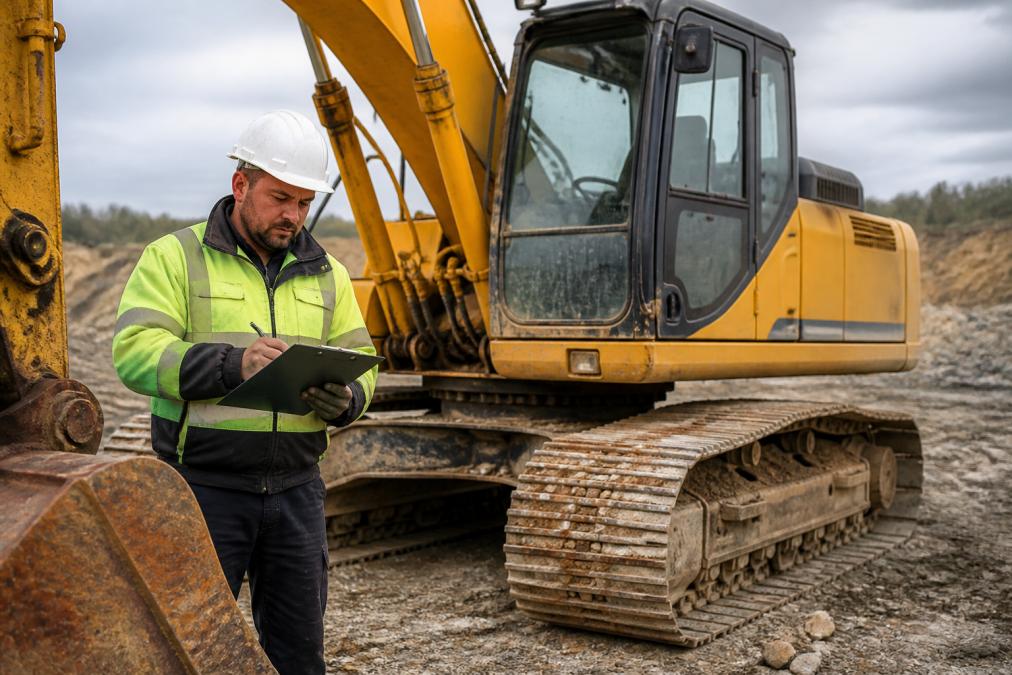
The first-year hit is steepest because new equipment carries a premium that disappears the moment it's put into service. A comparable used unit with 3,000-5,000 operating hours costs $80,000 to $160,000, representing $120,000 to $190,000 in savings on a single machine compared to new pricing. That gap is the depreciation tax you pay for being the first owner.
Five-Year Residual Value Trends
After five years, heavy machinery retains only 40 to 60% of its original value Cleveland Brothers five-year residual value study. A $250,000 excavator purchased new is worth $100,000 to $150,000 at the five-year mark, assuming it's been maintained properly and hasn't accumulated excessive hours.
The key variable here is operating hours. Equipment with 8,000-12,000 hours at year five is worth substantially less than equipment with 3,000-5,000 hours. This is why tracking maintenance history and actual usage becomes critical for FMV calculations. A well-maintained 5,000-hour machine is worth 15-25% more than a poorly maintained 12,000-hour machine of the same age and model.
Regional demand also influences residual value at the five-year mark. Agricultural equipment holds value better in farming regions where demand is consistent. Construction equipment in areas experiencing economic downturns depreciates faster. By year five, geographic market variance becomes more pronounced than in year one.
Private Resale vs. Public Auction Markets
Not all sales channels produce the same price. Understanding where your equipment sells and why matters for calculating realistic FMV.
Approximately 85 to 95 percent of equipment transactions occur through private-party sales or consignment channels where pricing data is not publicly reported Crane & Transport Briefing market analysis. This is the critical insight most sellers miss: auction prices are not representative of true market value.
Auction equipment is typically considered distressed or tired inventory. It sells at materially lower pricing levels than comparable equipment sold privately. If you're using auction results to estimate FMV, you're systematically undervaluing your asset. A bulldozer that sells for $85,000 at auction might command $110,000-$125,000 in a private sale where the buyer isn't bidding in a time-pressured environment.
Private resale markets reward condition, documentation, and presentation. Equipment with complete maintenance records, transparent operating-hour logs, and professional photography commands 10-20% premiums over equipment with incomplete histories. When you work with a heavy equipment broker, your equipment reaches private buyers who value documentation and are willing to pay accordingly.
Auction markets are efficient for volume liquidation but inefficient for maximizing price on individual assets. If you're selling one or two pieces of equipment and timeline isn't critical, private channels almost always deliver better FMV outcomes.
Factors Influencing Heavy Equipment Fair Market Value
FMV isn't determined by a single variable. Multiple factors interact to establish what your equipment is actually worth in 2026's market.
Operating Hours and Maintenance History
Operating hours are the primary determinant of equipment value after age. A 10-year-old excavator with 5,000 hours is worth significantly more than a 10-year-old excavator with 15,000 hours, often 30-40% more.
But raw hours don't tell the whole story. A machine with 12,000 hours and complete maintenance documentation is worth more than a machine with 8,000 hours and spotty records. Buyers in 2026 place more value on documented maintenance, inspection transparency, and proven reliability when assessing used heavy machinery Deloitte 2026 equipment buyer preferences. They're calculating total cost of ownership, not just purchase price.
Maintenance history becomes your equipment's FMV insurance policy. Regular oil changes, filter replacements, hydraulic system servicing, and documented repairs all reduce perceived risk for buyers. Equipment with service records that show consistent, professional maintenance commands 15-25% premiums over identical machines without documentation.
Equipment Condition and Age
Visible condition drives first impressions and FMV expectations. Rust, hydraulic leaks, cracked glass, worn paint, and damaged controls all reduce value, sometimes substantially. A 5-year-old excavator in pristine condition is worth 20-35% more than an identical machine showing heavy wear and corrosion.
Age interacts with condition in complex ways. A 15-year-old machine in excellent condition might be worth more than a 10-year-old machine in poor condition. This is why professional inspection and presentation matter for FMV. When you sell through a platform with professional photography and condition assessment, buyers understand what they're purchasing and justify fair pricing.
Structural integrity is non-negotiable. Bent frames, cracked welds, or compromised hydraulic cylinders can reduce FMV by 40-60% or make equipment unsellable entirely. This is why pre-sale inspection isn't optional, it's the foundation of accurate valuation.
Current Market Trends and Supply Dynamics
2026 presents a unique market environment for equipment valuation. Inventory levels of used construction equipment were trending down across all markets except for forklifts in March 2026, with asking prices and auction values showing a mix of sideways and upward trends Sandhills Global inventory analysis. Tight supply is pushing prices upward in most categories, but not uniformly.
Used equipment resale prices have been climbing steadily in 2026, with values rising through the first quarter as newer models enter the secondary market and contractors refresh their fleets. This is the best year to sell heavy machinery in recent memory, if you're holding equipment you don't need, the market is rewarding you for selling.
The supply constraint is real. Equipment that would have sat for months in 2024 or 2025 is now moving within weeks. Buyers are growing pickier about condition and documentation, but they're also willing to pay for equipment that meets their standards. This means FMV is rising for well-maintained machines while poorly-maintained equipment faces steeper discounts.
How to Calculate Equipment Fair Market Value
Calculating FMV requires systematic methodology. Three primary approaches exist, each with distinct strengths, limitations, and tax implications. Choosing the right method depends on your equipment type, your timeline, and whether the valuation will be used for tax reporting, insurance, or financing.
Replacement Cost Method
The replacement cost method asks: what would it cost to replace this equipment with a new equivalent? Subtract depreciation, and you have a baseline FMV estimate.
How it works: Research the current new price for an equivalent model. Apply the appropriate depreciation percentage for your equipment's age and hours. Adjust for condition and regional factors. For a 3-year-old excavator with 6,000 hours, you'd research the current new price (typically $280,000-$380,000 depending on size class), apply 45-55% depreciation for a 3-year-old machine, and adjust up or down based on condition.
Strengths: This method is straightforward for relatively new equipment (under 5 years) where new pricing is stable and depreciation schedules are predictable. It's also the method the IRS prefers for equipment valuation in tax disputes because it's based on objective, verifiable new pricing.
Limitations: This method breaks down for older equipment where new models have changed significantly, where new pricing has shifted due to regulatory changes (emissions standards, for example), or where the equipment is specialized and new pricing is difficult to establish. A 12-year-old excavator might have no direct new equivalent if the manufacturer has discontinued that model line.
Tax consideration: The IRS accepts replacement cost as a valuation method for depreciation recapture, charitable donations, and casualty loss claims. Documentation of new pricing (manufacturer quotes, dealer invoices, industry pricing databases) strengthens the defensibility of your valuation.
Market Comparison Approach
This is the most reliable method for 2026: find comparable equipment that recently sold and adjust for differences. This method is grounded in actual market transactions, not theoretical depreciation schedules.
How it works: Identify three to five pieces of equipment that sold recently and match your equipment on:
- Model and manufacture year (exact match preferred)
- Operating hours (within 2,000-hour ranges)
- Condition (similar wear, maintenance history, attachment condition)
- Geographic location (adjusted for regional demand variance)
- Time of sale (recent sales are more relevant than sales from six months ago)
When you find true comparables, you establish a price range. Equipment with premium condition or documentation sits at the high end. Equipment with defects or incomplete records sits at the low end. Your equipment's FMV falls somewhere within that range, adjusted for specific differences.
Example: You're valuing a 2018 Caterpillar 320 excavator with 7,500 hours. You find three recent sales: (1) a 2018 CAT 320 with 6,800 hours, excellent condition, sold for $118,000; (2) a 2018 CAT 320 with 8,200 hours, good condition, sold for $109,000; (3) a 2017 CAT 320 with 7,100 hours, fair condition, sold for $102,000. Your machine is 2018 (matches #1 and #2), has 7,500 hours (between #1 and #2), and is in good condition. FMV range is $109,000-$118,000, likely $112,000-$115,000 depending on specific condition details.
Strengths: This method reflects what actual buyers are paying in the current market. It accounts for supply, demand, regional factors, and buyer preferences automatically because it's based on real transactions. It's the most defensible method for insurance claims and financing because it's grounded in observable market data.
Limitations: Finding true comparables is challenging. Your equipment must match on multiple dimensions simultaneously. Incomplete data (you don't know what a comparable actually sold for, only what it was listed for) introduces error. Regional markets with low transaction volume may not have enough comparables to establish a reliable range.
Tax consideration: The IRS accepts market comparison as a valuation method and often prefers it over replacement cost because it's based on actual transactions. For tax purposes, document your comparable sales research thoroughly: where you found the comparables, the sale dates, the specific adjustments you made, and your reasoning.
Income Capitalization Method (Rental Equipment)
For equipment that generates rental income (construction equipment leased to contractors, agricultural equipment rented seasonally), FMV can be estimated by capitalizing expected rental income.
How it works: Calculate annual rental income the equipment generates. Divide by a capitalization rate (typically 8-15% depending on equipment type and risk) to estimate FMV. Equipment generating $18,000 annually, capitalized at 12%, implies FMV of $150,000.
Strengths: This method is useful for equipment held primarily for income generation. It ties valuation to cash flow, which is economically meaningful.
Limitations: This method is rarely used for equipment that's primarily held for operational use rather than rental income. Rental rates vary by region and season, making capitalization rate selection subjective. This method is not accepted by the IRS for most equipment valuations.
Choosing the Right Method for Your Situation
For equipment you're selling: Use market comparison if you can find recent comparable sales. This reflects what buyers are actually paying. If comparables are unavailable, use replacement cost adjusted for condition.
For tax reporting (depreciation, donations, casualty loss): Use replacement cost if new pricing is available and equipment is under 7 years old. Use market comparison if you have documented comparable sales. Document your methodology thoroughly; the IRS may request justification.
For insurance valuation: Use replacement cost (what it would cost to replace) or market comparison (what it would sell for). Insurance companies typically prefer replacement cost because it determines claim payout. Ensure your insurance is based on current FMV, not historical purchase price.
For financing (equipment loans, lines of credit): Lenders typically use market comparison or replacement cost, whichever is lower. They want conservative valuation to protect their collateral. Provide documentation of your valuation method; lenders will often require a professional appraisal for loans exceeding $50,000.
Layering Condition Adjustments on Your Valuation
Regardless of which method you choose, apply condition-based adjustments to your baseline estimate. If replacement cost suggests $120,000 but your equipment has significant hydraulic leaks and incomplete maintenance records, reduce that estimate by 10-20%. If market comparables suggest $95,000 but your equipment has documented recent major service and excellent condition, increase that estimate by 8-15%.
This is where working with a heavy equipment broker becomes valuable. A broker with access to millions of buyers and years of market data can identify true comparables, apply condition adjustments accurately, and position your equipment within realistic FMV ranges. You're not guessing; you're basing valuation on actual market transactions and professional assessment.
How to Sell Heavy Equipment Online for Maximum Value
Selling online requires strategy beyond simply posting a listing and waiting for offers.
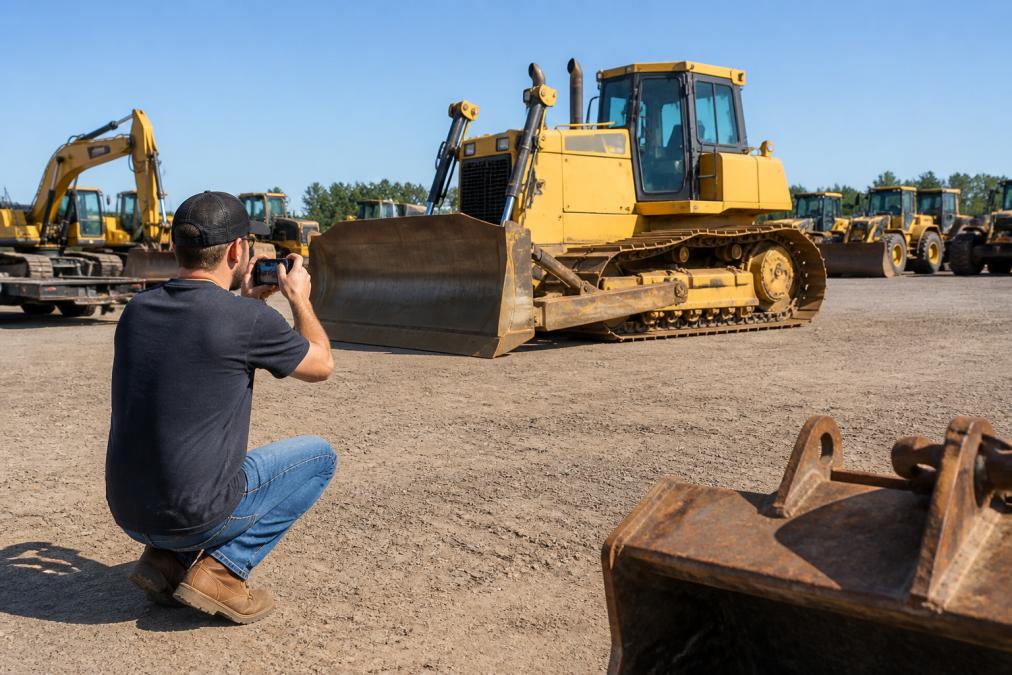
Professional presentation is non-negotiable. High-quality photography from multiple angles, in good lighting, showing both overall condition and specific details (hydraulic connections, wear patterns, control conditions) increases buyer confidence and FMV. Poor photos suggest poor maintenance.
Complete documentation is your second lever. Gather maintenance records, service history, inspection reports, and operating-hour logs. Transparency about equipment condition, including known issues, builds credibility. Buyers expect problems on used equipment; they're suspicious of sellers who claim perfection. securing equipment financing.
Detailed descriptions matter. Don't just list specifications. Explain what the equipment has been used for, how many hours per year it typically ran, what maintenance was performed, and why you're selling. This context helps buyers calculate total cost of ownership and justifies fair pricing.
Timing impacts FMV substantially. Equipment listed during peak construction season (spring through early fall) typically sells faster and at higher prices than equipment listed during winter slowdowns. If you have flexibility, time your sale for maximum market demand.
Platform selection determines reach. A bulldozer listed only on one marketplace reaches a fraction of potential buyers. A heavy equipment broker's multi-platform approach ensures your equipment is visible across multiple channels simultaneously, reaching contractors, rental companies, dealers, and international buyers. Broader reach typically produces higher FMV outcomes because you're accessing the full buyer pool, not just a subset.
Heavy Equipment Appraisal Tools and Valuation Methods
Multiple tools and methodologies exist for calculating FMV, but most fail to address the single largest variable: how specific condition factors adjust the baseline value. Understanding which tools apply to your situation, and how to layer condition adjustments on top, improves valuation accuracy dramatically.
Condition-Based Valuation Adjustments
FMV calculators and appraisals start with a baseline derived from model, age, and operating hours. But baseline is only the starting point. Professional appraisers and experienced brokers apply systematic adjustments based on observable condition factors:
Engine and Mechanical Systems, A complete engine overhaul or recent transmission rebuild adds 8-15% to baseline FMV. Conversely, evidence of internal corrosion, metal shavings in hydraulic fluid, or a history of major repairs reduces FMV by 10-25%. An engine with documented regular oil analysis (trending wear metals) commands a 5-10% premium over an engine with no fluid analysis history.
Hydraulic System Condition, Visible leaks reduce FMV by 5-15% depending on severity. A machine with a recent hydraulic fluid flush and filter replacement adds 3-8%. Hose condition (cracking, bulging, age) is assessed visually; replacement-grade hoses cost $2,000-$8,000 depending on equipment type, so buyers discount FMV accordingly. A machine with less than two years of hose life remaining loses 6-12% of value.
Structural and Welding Integrity, Hairline cracks in the frame or boom reduce FMV by 15-40% depending on location and repairability. Bent frames that require straightening (cost: $3,000-$15,000) trigger 20-35% discounts. Corrosion that's surface-level (cosmetic) costs 2-5% in FMV; corrosion that's penetrating (structural) costs 25-50%.
Attachment Wear and Functionality, Bucket teeth on excavators wear predictably; a bucket with 60% tooth wear remaining is worth 10-15% less than one with 90% wear remaining. Bucket hydraulic cylinders that drift (slow leakage) reduce value 8-12%. Grapple or magnet attachments with worn electrical contacts or hydraulic seals lose 15-25% of attachment value.
Paint, Glass, and Controls, Cosmetic condition affects buyer perception and FMV. Equipment with fresh paint, intact glass, and functioning controls commands 5-10% premiums. Equipment with significant rust, cracked windows, or non-functional gauges loses 8-15%. This is where professional presentation matters: high-quality photography showing condition detail helps buyers assess these factors accurately and justifies fair pricing.
Maintenance Documentation Quality, This is the multiplier. Equipment with complete service records (oil analysis trends, filter replacement dates, hydraulic servicing logs, major repair documentation) commands 12-20% premiums over identical machines with spotty or missing records. A machine with five years of consecutive maintenance logs is worth 15-25% more than a machine with the same age and hours but no documentation.
Professional Appraisals vs. Market-Based Valuation
Professional appraisals remain the gold standard for high-value equipment, contested valuations (insurance claims, financing disputes, legal matters), or when FMV documentation is required for tax purposes. A certified equipment appraiser conducts physical inspection, researches comparable sales, applies condition adjustments, and produces a detailed report supporting a specific FMV figure. Cost is typically $500-$2,000 depending on equipment complexity and travel distance. The documentation is defensible for IRS audit, insurance claim, or litigation purposes.
For routine sales, market-based valuation through comparable research is faster and often more accurate than appraisals. Appraisers apply standardized adjustment rubrics; market research captures what actual buyers are paying right now. A machine that an appraiser values at $85,000 might sell for $92,000 in a tight market where demand exceeds supply.
Online Calculators and Dealer Quotes
Online valuation calculators provide quick estimates but lack accuracy for used equipment. These tools work from age and model data, applying generic depreciation schedules without accounting for condition, maintenance history, operating hours, or regional demand, variables that swing FMV by 20-40%. Use calculators as a rough starting point only, not as your valuation basis.
Dealer quotes are useful reference points but systematically biased. Dealers typically offer 10-20% below FMV because they're buying for resale and need margin. If a dealer quotes $80,000, true FMV is likely $95,000-$105,000. Dealer quotes tell you the floor, not the market.
Market Research Through Real Comparable Sales
Market research through real transaction data provides real-time FMV information grounded in actual sales. You can see what comparable equipment is listed for and what it's actually selling for, the gap between asking price and sale price is instructive. This is current, market-based information far more reliable than generic calculators or dealer quotes. When you research comparables, apply the condition adjustments above to understand why one machine sold for $88,000 and a similar machine sold for $102,000.
Impact of Supply and Demand on Equipment Pricing
Supply and demand dynamics drive FMV fluctuations throughout the year and across equipment categories.
When supply is tight and demand is strong, FMV rises. Contractors need equipment; fewer machines are available; prices move upward. This is 2026's current environment in most categories. Equipment that would have been hard to move two years ago is now selling quickly.
When supply exceeds demand, FMV falls. Rental companies liquidating end-of-lease fleets, contractors downsizing after project completion, and economic slowdowns all increase supply. Buyers know they have options; prices compress.
Regional demand creates localized FMV variations. Agricultural equipment commands premium prices in farming regions and lower prices in urban areas. Construction equipment prices vary based on local construction activity. A bulldozer worth $120,000 in a booming construction market might be worth $95,000 in a region experiencing economic contraction.
Seasonal demand is predictable. Spring and summer see peak demand for construction equipment; prices are highest. Winter demand drops; prices soften. Agricultural equipment follows harvest cycles. Understanding seasonal patterns helps you time sales for optimal FMV.
Macroeconomic Factors and Market Volatility
Broader economic conditions influence equipment FMV in ways that aren't always obvious.
Interest rates directly impact equipment purchasing. When financing is expensive, buyers delay purchases or shift toward used equipment (lower capital outlay). When rates are low, new equipment sales increase and used equipment demand softens. Current interest rate environment in 2026 is moderating, which is supporting used equipment demand and FMV.
Construction spending cycles drive FMV for construction equipment. When infrastructure investment is strong, contractors buy equipment; demand is high; FMV rises. When public spending slows, equipment supply increases as contractors liquidate; FMV falls.
Regulatory changes create technology transition risk. Emission standards have shifted multiple times in recent years. Equipment that met 2020 standards but not 2026 standards depreciates faster. Buyers are increasingly concerned about regulatory compliance and future resale value. Equipment that's compliant with current standards commands FMV premiums.
Labor costs influence equipment demand. When labor is expensive, contractors invest in equipment to reduce labor dependency. When labor is cheap, equipment demand softens. This macro variable affects FMV indirectly but measurably.
Inflation affects replacement costs and financing. In inflationary environments, new equipment prices rise; used equipment FMV often rises proportionally. Deflation works the opposite direction.
Best Time to Buy or Sell Heavy Equipment in 2026
Timing decisions should be based on supply, demand, and your personal circumstances, not speculation.
For sellers, 2026 is a favorable environment. Inventory is tight, demand is strong, and prices are rising. If you have equipment you don't need, selling sooner rather than later captures current market strength. Waiting for further price increases is speculative; the market could shift.
For buyers, 2026 requires patience and selectivity. Tight inventory means fewer options. Prices are higher than they were in 2023-2024. However, used equipment remains substantially cheaper than new equipment, and quality machines are available if you're willing to wait for the right asset.
Seasonal timing matters for both buyers and sellers. Equipment sells faster and at higher prices during spring and summer construction seasons. Winter slowdowns create buyer advantage, less competition for available machines. If you're buying, winter is optimal. If you're selling, spring is optimal.
Your specific timeline should drive the decision. If you need cash within 60 days, accept current market FMV. If you can wait six months, you have flexibility to time the market. But don't confuse flexibility with speculation, FMV in six months is unknowable.
Tax and Accounting Implications of Fair Market Valuation
FMV isn't just a sales concept. It has significant tax and accounting consequences.
For tax purposes, the IRS requires FMV assessment when equipment is donated, traded, or used for business deductions. Overstating FMV on tax returns creates audit risk. Understating FMV leaves money on the table if you're claiming depreciation deductions.
Depreciation schedules for tax purposes are tied to FMV at purchase. If you buy equipment for $100,000 (its FMV), you depreciate that $100,000 over the asset's useful life. If you overpay, you're depreciating inflated value. If you get a deal, you're depreciating less.
For business accounting, equipment is recorded at FMV on balance sheets. Overstated FMV inflates asset values and distorts financial ratios. Understated FMV understates company worth. Accurate FMV is essential for financial reporting integrity.
Insurance claims require FMV documentation. If equipment is damaged or destroyed, insurers pay based on FMV at the time of loss. Underinsuring (basing insurance on less than FMV) leaves you exposed to loss. Overinsuring (basing insurance on more than FMV) wastes premium dollars.
When you sell equipment, the difference between your basis (what you paid) and the sale price is taxable gain or deductible loss. Accurate FMV at purchase and at sale is essential for tax reporting.
Regional Market Variance and Pricing Differences
Equipment FMV varies significantly by region. A machine worth $120,000 in one region might be worth $95,000 in another.
Agricultural equipment pricing is driven by farming intensity and crop types. Equipment worth premium prices in the Corn Belt (intensive farming, high equipment use) is worth less in regions with smaller farms or different crops. Specialty equipment (combines for specific crops) has narrow geographic markets where FMV is high and broad markets where FMV is low.
Construction equipment pricing follows construction activity. Major metropolitan areas with ongoing development have strong demand and higher FMV. Rural areas with less construction activity have softer demand and lower FMV. Equipment that's in high demand locally is worth more than identical equipment in low-demand regions.
Transportation costs create regional FMV differences. Equipment that's expensive to move (large bulldozers, specialized machinery) commands regional premiums in areas where supply is tight. Equipment that's cheap to transport (compact excavators, skid steers) has more uniform national pricing.
International demand affects regional pricing. Equipment located near ports or in regions with strong export demand to specific countries can command FMV premiums. A used bulldozer in a port city might be worth 8-12% more than an identical machine 200 miles inland because international buyers will pay for equipment that's already positioned for export.
This is why working with a heavy equipment broker matters. A broker with access to both local and international buyers can position your equipment where demand is strongest, maximizing FMV regardless of your location.
Understanding fair market value for heavy equipment in 2026 requires balancing current market conditions, equipment-specific factors, and regional demand dynamics. The market is moving fast, inventory is tight, prices are rising, and buyers are selective. If you're holding equipment you don't need, the window for optimal pricing is now. Work with a heavy equipment broker to connect with millions of qualified buyers, get professional valuation guidance, and sell without unnecessary friction. The right broker ensures your equipment reaches fair market value quickly and efficiently.
Frequently Asked Questions
How do I calculate the fair market value of equipment?
Fair market value is calculated using three primary methods: the replacement cost approach (what it costs to replace the equipment new, minus depreciation), the market comparison method (analyzing recent sales of similar equipment), and the income approach (based on revenue generation potential). For heavy equipment in 2026, the market comparison method is most reliable since it reflects actual transaction data. Operating hours, maintenance history, and current condition adjustments are applied to baseline valuations. Professional appraisers typically use multiple methods and cross-reference results for accuracy.
What is the typical depreciation schedule for heavy equipment?
Excavators depreciate 15-20% in the first year, then stabilize into gradual decline. Most heavy equipment retains only 40-60% of its original value after five years, with depreciation ranging from 20-30% annually in early years. The depreciation rate varies by equipment type, maintenance quality, and market demand. Mid-size excavators costing $200,000-$350,000 new typically resale for $80,000-$160,000 with 3,000-5,000 operating hours, representing $120,000-$190,000 in total depreciation. Tracked equipment generally depreciates faster than wheeled variants due to component wear.
How does equipment depreciation impact fair market value in 2026?
In 2026, depreciation directly determines fair market value because buyers calculate residual value based on historical depreciation patterns. Equipment entering the secondary market earlier experiences steeper depreciation curves, while newer models entering resale channels command higher values. The used construction equipment market is projected to grow from $142.60 billion in 2026 to $243 billion by 2035, meaning demand is rising faster than supply, which can slow depreciation rates. However, technology transition risks, such as electrification and smart manufacturing standards becoming baseline, are accelerating depreciation for legacy machinery.
What factors influence the resale value of heavy-duty trucks and equipment?
Operating hours, maintenance records, equipment age, and current condition are primary factors. Secondary factors include market supply and demand, macroeconomic conditions, regulatory changes (especially emissions standards), and equipment type specialization. Documented maintenance and inspection transparency significantly increase buyer confidence and resale value. Regional market variance also affects pricing; equipment demand fluctuates based on local construction activity, agricultural cycles, and infrastructure spending. Newer models with telematics and AI-driven predictive maintenance capabilities command premium pricing, while equipment lacking connectivity features faces steeper depreciation.
Is there a Kelley Blue Book equivalent for construction equipment?
No single equivalent exists, but several resources provide fair market value benchmarks: Sandhills Global platforms track auction and asking prices across equipment categories; NADA Guides covers some machinery; and specialized brokers like Ironmartonline maintain proprietary pricing data across nine web-based selling platforms reaching millions of buyers. Auction data can distort true market values since approximately 85-95% of equipment transactions occur through private-party sales or consignment channels where pricing is not publicly reported. Professional equipment brokers provide the most accurate valuations by analyzing actual transaction data rather than auction-only metrics.
Why is professional brokerage recommended for equipment valuation?
Professional brokers access real-time transaction data, understand regional market variance, and account for condition-based adjustments that individual sellers miss. They recognize that asking prices and auction values often diverge significantly from fair market value. Brokers with access to multiple selling platforms, such as specialized channels for excavators, dozers, trucks, and tractors, can position equipment in front of millions of qualified buyers, ensuring competitive pricing and faster sales. They also manage documentation, inspection transparency, and buyer verification, reducing risk of undervaluation or extended holding periods that increase carrying costs.
How can I verify the condition of used equipment before purchase or sale?
Request complete maintenance records, operating hour documentation, and third-party inspection reports. Visual inspection should assess frame integrity, hydraulic condition, tire or track wear, and cab/interior condition. For major purchases, hire an independent equipment inspector certified in your equipment category. Documented maintenance history significantly increases fair market value and buyer confidence. In 2026, buyers place more value on inspection transparency and proven reliability than ever before, so comprehensive condition documentation directly impacts resale value. Photos, service records, and inspection certificates should accompany all listings.
What macroeconomic factors are driving heavy equipment market shifts in 2026?
Electrification and emissions standards are reshaping equipment value, with older diesel equipment facing steeper depreciation. Infrastructure spending levels, interest rates, and construction activity directly affect demand and pricing. The global heavy equipment market is projected to reach $242 billion by end of 2026, expanding at 8.7% CAGR through 2033, driven by urbanization and infrastructure investment. Technology transition risk, with AI and smart manufacturing moving from pilot to baseline, is accelerating depreciation for legacy machinery. Supply chain normalization and inventory levels also influence pricing; used construction equipment inventory was trending down in early 2026 except for forklifts, supporting higher residual values in other categories.
This article was written using GrandRanker