
Table of Contents
- Why Use an Equipment Broker for Heavy Machinery Sales
- Standard Commission Rates for Machinery Brokers by Equipment Type
- Factors That Influence Machinery Broker Commission Rates
- Understanding Machinery Consignment Fee Structure
- Gross Margin vs. Net Sales Commission Models
- Heavy Equipment Broker Commission Agreement Essentials
- How to Negotiate Broker Fees for Industrial Equipment
- Tiered Commission Structures and Volume Incentives
- Legal and Contractual Considerations in Broker Agreements
- Conclusion
Last Updated: August 5, 2026
Why Use an Equipment Broker for Heavy Machinery Sales
Why use an equipment broker for heavy machinery sales? It's a question construction contractors, fleet managers, and owner-operators face when they're sitting on surplus equipment that needs to move. Selling heavy machinery independently means managing listings across fragmented platforms, vetting buyers, handling logistics negotiations, and absorbing the cost of failed deals. An equipment broker consolidates that burden.
The standard commission rates for machinery brokers typically range across the industry, but what matters more than the percentage itself is what you actually receive after fees are deducted. Brokers operate on commission structures that vary based on equipment type, sale complexity, and market conditions. Understanding how these fees work, and what value justifies them, separates a good brokerage relationship from one that leaves money on the table.
This guide from Ironmartonline covers the mechanics of machinery broker compensation, the factors that drive commission percentages, and how to evaluate whether a broker's fee structure aligns with your financial goals. We've analyzed how standard commission rates for machinery brokers break down by equipment category, what influences those rates, and the contractual terms that protect both seller and buyer.
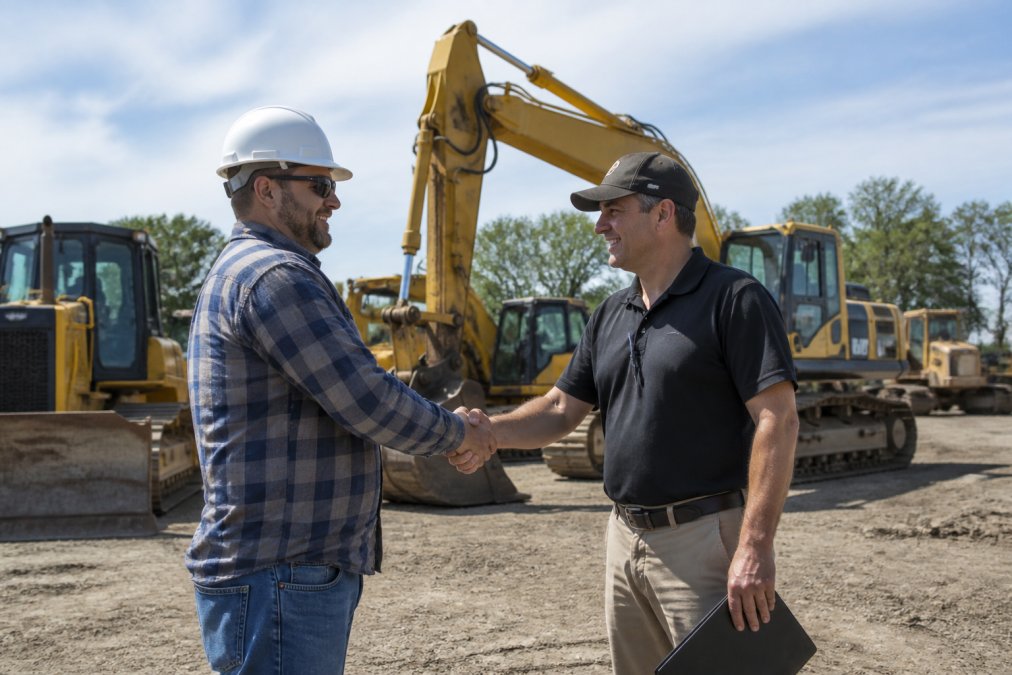
Brokers bring three concrete advantages. First, they connect your equipment to millions of potential buyers across specialized web-based platforms, a reach most individual sellers cannot replicate. Second, they handle the sales cycle from initial listing through closing, which compresses your time-to-cash. Third, they absorb the friction: they negotiate with serious buyers, manage international logistics if applicable, and handle the paperwork that would otherwise fall on you.
The tradeoff is commission. But when you understand how those fees are structured, what drives them up or down, and which commission models align with your situation, you can make an informed decision about whether brokerage makes financial sense for your equipment.
Standard Commission Rates for Machinery Brokers by Equipment Type
Heavy machinery broker commission rates vary significantly by equipment category. There's no single "standard", instead, rates cluster around industry norms based on what equipment typically sells for and how easily it moves.
Excavators and dozers typically fall in the 8-15% commission range, depending on unit value and market demand. A $50,000 excavator might command a 12% commission; a $200,000 dozer might negotiate down to 8%. The higher the equipment value, the lower the percentage commission tends to be, because the absolute dollar amount still justifies the broker's effort.
Heavy-duty trucks and trailers generally see commissions between 5-10%. These assets move faster than construction equipment in many markets, and the sales cycle is shorter, which can reduce commission rates. A used semi-truck selling for $40,000-$80,000 might carry a 7% fee.
Tractors and agricultural equipment operate in the 10-18% range. Farm equipment often requires specialized marketing to reach the right buyer pool, and the sales cycle can be longer. A used combine harvester might carry a 15% commission; smaller tractors might be higher.
Rental company end-of-lease machinery sometimes negotiates volume-based discounts. A rental house moving 20 units annually might secure 6-9% commissions across the board, versus a one-off seller paying 12-15% for a single machine.
The commission structure itself matters as much as the percentage. Some brokers charge a percentage of the gross sale price; others work on net sales (after buyer's financing costs or transportation). Some use tiered commissions that decrease as volume increases. Understanding which model applies to your deal prevents surprises at closing.
Factors That Influence Machinery Broker Commission Rates
Commission percentages aren't arbitrary. Several variables push rates up or down, and understanding them gives you use during negotiation.
Equipment value is the primary driver. High-ticket items, machinery selling for $150,000 or more, typically command lower percentage commissions because the absolute dollar payout is substantial even at 6-8%. A $10,000 piece of equipment might carry 18-20% commission because the broker's effort-to-reward ratio demands it.
Deal complexity increases commission. A straightforward domestic sale of a standard piece of equipment costs less to broker than an international transaction involving customs documentation, currency conversion, and logistics coordination. Expect to pay 2-4 percentage points higher on cross-border deals.
Sales cycle length affects the fee. Equipment that moves in 30 days commands lower commission than machinery sitting for 120 days. Faster sales reduce the broker's carrying cost and marketing spend, which they often pass back as a rate reduction.
Market demand for your specific equipment type matters. If you're selling a common model in high demand, brokers compete for your business and rates drop. If you're selling a niche or older unit, brokers price in the higher marketing effort required to find a qualified buyer.
Volume and relationship history create use. A fleet manager moving equipment regularly can negotiate better rates than a one-time seller. Brokers discount for predictable, repeat business.
Gross margin versus net sales commission models change the effective rate. A broker working on net sales (after buyer financing or transportation) effectively takes a smaller percentage of your proceeds than one working on gross sale price. Always clarify which model applies.
Understanding Machinery Consignment Fee Structure
Machinery consignment is a specific brokerage model where you retain ownership until the equipment sells. The broker markets and sells on your behalf, taking commission only on completed sales. This differs from outright purchase, where the broker buys your equipment and resells it for profit.
In a consignment arrangement, you avoid the upfront capital loss of selling at a discount. The broker absorbs the marketing cost and sales effort, then takes a percentage of the final sale price as compensation. This model protects you if the broker's valuation is conservative, you only pay commission on what the equipment actually sells for, not on an estimated price.
Consignment fee structures typically range 8-15%, but the terms vary. Some brokers charge a flat percentage regardless of sale price. Others use tiered rates: 15% on the first $50,000, 10% on amounts between $50,000-$150,000, and 6% on anything above $150,000. Tiered structures reward you for higher valuations and incentivize the broker to maximize sale price.
The consignment agreement itself is critical. It should specify:
- Commission percentage and calculation method (gross or net)
- How long the broker holds the equipment (typically 90-180 days)
- What happens if the equipment doesn't sell within that window
- Who pays for storage, insurance, and maintenance during the consignment period
- Whether the broker can accept offers below a reserve price you set
Many brokers waive storage and insurance costs as part of their service, which effectively reduces your net cost. Others pass these expenses to you. The machinery consignment fee structure should be transparent about what's included in the commission versus what's billed separately.
Gross Margin vs. Net Sales Commission Models
The difference between gross margin and net sales commission models can represent thousands of dollars in your pocket, or out of it.
Gross margin commission means the broker calculates their fee on the full sale price. If your equipment sells for $100,000, and the commission is 10%, the broker takes $10,000. You receive $90,000 before any other costs (transportation, buyer financing, etc.).
Net sales commission means the broker calculates their fee after certain deductions. If your equipment sells for $100,000, but the buyer finances $40,000 through a third party, the broker's commission applies to the $60,000 net proceeds. At 10%, they take $6,000, and you receive $94,000 (before other costs).
Net sales models favor you because they reduce the broker's commission base. However, they're less common in heavy machinery brokerage because they're harder to administer and create disputes about what counts as a "deduction."
Some brokers use a hybrid: they charge gross margin commission on the sale price, but offer a small discount (0.5-1%) if you agree to cover certain logistics costs directly. This shifts some expense to you but reduces their commission percentage.
The best approach is to clarify exactly how commission is calculated before signing. Ask:
- Is commission calculated on gross sale price or net proceeds?
- What deductions, if any, reduce the commission base?
- Are there separate charges for storage, insurance, or transportation during the listing period?
- Does the broker take commission before or after buyer financing is applied?
A broker offering net sales commission at 9% may actually be more expensive than one offering gross margin at 8%, depending on your specific deal. The math matters more than the label.
Heavy Equipment Broker Commission Agreement Essentials
A heavy equipment broker commission agreement is a legal contract that defines the relationship, sets commission rates, and protects both parties. Before you list equipment with any broker, you need a written agreement that covers these elements.
Scope of services should be explicit. Does the broker handle photography, listing creation, buyer outreach, and negotiation? Do they arrange shipping, handle documentation, or coordinate with financing companies? Some brokers provide full-service brokerage; others list and wait for buyers to contact you directly. Know what you're paying for.
Exclusivity and term matter. Some agreements grant the broker exclusive rights to sell your equipment for 90 or 180 days. During that period, you cannot sell the equipment yourself or through other brokers. Non-exclusive agreements let you list elsewhere simultaneously, which increases your chances of a quick sale but may reduce the broker's motivation to push your equipment hard.
Commission payment timing should specify when the broker gets paid. Most take commission at closing, but some demand payment upfront or in installments. If the deal falls through after the broker takes their fee, can you recover it? The agreement should address this.
Reserve price and acceptance authority define your control over the sale. Can you set a minimum price the broker cannot go below without your approval? Can the broker accept offers on your behalf, or do you have final say? Clarity here prevents disputes.
Liability and insurance protect you if the broker damages equipment during storage or if a buyer files a claim. The agreement should specify who carries liability insurance and what's covered.
Dispute resolution should outline how disagreements are handled. Will you arbitrate, mediate, or litigate? Arbitration is faster and cheaper than court, but you give up your right to appeal.
Termination clause lets you exit the agreement if the broker isn't performing. Specify how much notice you must give and what happens to equipment already listed.
Most brokers provide a standard agreement. Have an attorney review it before signing, especially if the equipment value exceeds $50,000. The cost of legal review (typically $300-$800) is negligible compared to the risk of a bad agreement.
How to Negotiate Broker Fees for Industrial Equipment
Broker fees are not fixed. They're starting points for negotiation, especially if you have use: high-value equipment, repeat business, or multiple units to sell.

Start by understanding market rates. Research what standard commission rates for machinery brokers are in your equipment category and region. If you're selling a $200,000 excavator, you should know that 8-12% is typical. If a broker quotes 18%, you have data to push back.
Emphasize equipment condition and marketability. If your machinery is well-maintained, low-hour, and in high demand, use that as use. A broker moving a pristine unit faster than average can afford to take lower commission because their sales cycle is shorter.
Propose volume incentives. If you have multiple units or plan to sell equipment regularly, offer to commit to the broker in exchange for tiered commission rates. "I have five dozers to move over the next year. What rate do you offer if I list all five with you?" Volume creates predictability, which brokers value.
Negotiate what's included. Don't just haggle over percentage points. Instead, negotiate what services are bundled into the commission. "Will you cover storage and insurance during the listing period if I accept 10% commission instead of 12%?" This reframes the conversation around total cost, not just percentage.
Ask for performance bonuses. Propose a structure where the broker earns a lower base commission (say, 9%) but gets a bonus (1-2%) if they sell above a target price or within a target timeframe. This aligns incentives, the broker works harder to maximize your sale price.
Get multiple bids. Contact three to five brokers and ask for written fee proposals. Competition forces brokers to justify their rates. A broker quoting 15% commission needs to explain why they're worth 3-5 points more than competitors.
Lock in rates in writing. Once you negotiate a rate, insist on a written agreement that specifies the exact percentage, what it covers, and when it's due. Verbal agreements disappear when disputes arise.
Watch for hidden fees. Some brokers quote low commission but charge separately for storage, insurance, photography, or listing upgrades. Ask for an all-in estimate: "What's the total cost to sell my equipment, including all fees?" This reveals whether a low commission is actually a good deal.
The goal isn't to squeeze the broker, it's to align incentives so they're motivated to sell your equipment quickly and for the highest possible price. A broker earning 10% on a $150,000 sale (making $15,000) is more motivated than one earning 8% on a $100,000 sale (making $8,000). Frame negotiation around what drives broker behavior, not just the percentage.
Tiered Commission Structures and Volume Incentives
Tiered commission structures reward larger sales and higher volumes by reducing the percentage commission as the deal size or volume increases. They're increasingly common in heavy machinery brokerage because they align broker and seller incentives.
A typical tiered structure looks like this:
- 15% commission on sales up to $50,000
- 12% on sales between $50,000-$150,000
- 9% on sales above $150,000
This structure incentivizes the broker to push for higher sale prices, because they earn more absolute dollars by selling at $160,000 (9% = $14,400) than at $140,000 (12% = $16,800). Wait, that math reverses the incentive. Actually, the broker earns $14,400 at the higher price tier even though the percentage is lower, because the base is much larger. The point is: tiered structures reward brokers for handling bigger deals, which are typically more profitable anyway.
Volume incentives work similarly but apply to multiple units. A fleet manager with five dozers might negotiate:
- 12% on the first unit
- 10% on the second and third units
- 8% on the fourth and fifth units
This encourages the broker to move all five units quickly, because the commission rate improves with each sale. It also creates predictability, the broker knows they're earning $X across five sales, which justifies dedicated effort.
Some brokers combine tiered and volume structures. "First unit: 12%. Second through fifth: 10%. Sixth and beyond: 8%." This creates a clear incentive ladder.
The catch: Make sure the tiered structure is written into your commission agreement. A broker might verbally agree to tiered rates, then claim you never discussed it when the second unit sells. Get it in writing.
Also clarify whether tiers reset annually or apply cumulatively. If you sell two units in January and two in December, does the December sale still qualify for the lower tier, or do tiers reset each calendar year? This matters for negotiating long-term relationships.
Legal and Contractual Considerations in Broker Agreements
Machinery broker agreements exist in a legal gray area. They're not as heavily regulated as real estate brokerage or securities trading, but they still carry legal weight and expose you to liability if terms aren't clear.
Fiduciary duty is a key concept. In some states, brokers are considered fiduciaries, meaning they're legally obligated to act in your best interest, not their own. In others, brokers are merely agents with a duty of honesty but no fiduciary obligation. Your agreement should clarify this. A fiduciary broker must disclose conflicts of interest and cannot benefit from your sale without your explicit consent. A non-fiduciary agent has fewer obligations.
Indemnification clauses protect you if the broker's actions cause harm. If a broker misrepresents equipment condition to a buyer, and the buyer sues, who pays the legal costs? A strong indemnification clause requires the broker to cover costs they caused. Weak clauses leave you liable for the broker's mistakes.
Non-compete and non-solicitation clauses prevent brokers from poaching your customers or selling competing equipment. If you've built relationships with specific buyers, you don't want the broker selling similar equipment to them directly after your deal closes. This clause protects your long-term business.
Dispute resolution methods should specify arbitration or mediation rather than litigation. Court cases are expensive and slow. Arbitration is faster and cheaper, though you give up the right to appeal. Make sure the agreement specifies who pays arbitration costs.
Liability caps limit how much the broker owes you if something goes wrong. Some agreements cap liability at the commission earned on the specific deal. Others cap it at a percentage of the sale price. These limits protect the broker but leave you at risk. Negotiate for higher caps on high-value equipment.
Insurance requirements should specify that the broker carries general liability and, if they're storing equipment, warehouse liability. Ask to be named as an additional insured on their policy. This ensures you're covered if something happens to your equipment while in the broker's care.
Governing law and jurisdiction matter if disputes arise. If the broker is in Texas and you're in California, which state's laws apply? Which state's courts have jurisdiction? Specify this clearly to avoid expensive jurisdictional disputes.
Before signing any broker agreement, have a business attorney review it. The cost ($300-$800) is trivial compared to the risk of a bad agreement on a six-figure equipment sale. An attorney can identify one-sided clauses, flag missing protections, and negotiate better terms on your behalf.
Selling heavy machinery requires finding the right buyer and structuring a deal that makes financial sense. Understanding standard commission rates for machinery brokers, and the factors that drive those rates, puts you in control of the process. The commission you pay should reflect the value the broker delivers: access to a broader buyer pool, a faster sales cycle, and professional handling of complex negotiations.
Ironmartonline connects buyers and sellers of used machinery across nine specialized web-based platforms, reaching millions of potential customers globally and locally. With no contracts and no hidden fees, you maintain control over your sale while gaining access to a professional marketplace designed to maximize your equipment's exposure. Whether you're a construction contractor, fleet manager, or owner-operator, understanding how broker fees work helps you evaluate whether brokerage aligns with your financial goals. Explore how Ironmartonline can help move your equipment efficiently and transparently.
Frequently Asked Questions
What is the typical commission percentage for machinery brokers?
Machinery broker commission rates typically range from 5% to 15% of the sale price, depending on equipment type, sale complexity, and market conditions. Heavy equipment like excavators and dozers often fall in the 8-12% range, while high-ticket industrial machinery may command higher rates. Commission structures vary between brokers, some charge percentage of sale, others use tiered models based on transaction value. Always clarify the exact commission percentage in your broker agreement before listing.
Are machinery broker commissions negotiable?
Yes, machinery broker commissions are often negotiable, especially for higher-value equipment or multiple listings. Factors that strengthen your negotiating position include sale volume, equipment condition, market demand, and your willingness to commit to longer listing periods. Independent sales representatives and fleet managers moving multiple units frequently secure reduced rates. Request a quote and ask about volume discounts or tiered commission structures that reward larger transactions.
What's included in a machinery consignment fee structure?
A machinery consignment fee structure typically covers listing services, marketing across multiple platforms, buyer inquiries, and transaction coordination. Some brokers include inspection, photography, and logistics support in their base commission, while others charge separate fees for these services. Review your machinery consignment fee structure carefully to understand what's included and what costs are passed to you. Hidden fees for documentation, storage, or administrative work can significantly reduce your net returns.
How do I calculate my net return after broker commission?
To calculate net return, subtract the broker commission from the gross sale price. For example, if you sell equipment for $50,000 with a 10% commission, you pay $5,000, leaving $45,000 net. Some agreements use gross margin calculations, subtracting only direct expenses before applying commission. Others base commission on net sales after expenses. Clarify whether your heavy equipment broker commission agreement uses gross or net sales as the calculation basis, this can significantly impact your final payout.
This article was written using GrandRanker