
Table of Contents
- Why Clean Heavy Equipment Before Selling
- Initial Debris Removal and Equipment Inspection
- Pressure Washing Techniques for Heavy Equipment
- Choosing the Best Degreaser for Heavy Equipment
- Degreasing Engine Components and Hydraulic Systems
- Cleaning Undercarriages, Tracks, and Hard-to-Reach Areas
- EPA Regulations for Heavy Equipment Wash Water and Environmental Compliance
- Heavy Equipment Detailing Checklist and Final Preparation
- Safety Precautions, PPE, and Drying for Rust Prevention
- Frequently Asked Questions
Last Updated: September 18, 2026
Why Clean Heavy Equipment Before Selling
Learning how to clean heavy equipment for resale is essential because selling used heavy equipment is a high-stakes transaction. A dirty machine signals poor maintenance and kills buyer confidence instantly. The reality is brutal: a grimy excavator or dozer loses thousands in resale value before a single bid comes in.
Deep cleaning isn't cosmetic. It's a critical maintenance function that protects your bottom line. When you remove corrosive buildup, salt deposits, and grease, you're not just improving appearance, you're preventing structural damage that inspectors will catch. Buyers perform close inspections of undercarriages, tracks, and engine components. They look for hidden rust, hydraulic leaks, and wear patterns. A professionally cleaned machine tells them you've maintained it properly.
According to Ironmartonline's 2026 equipment resale guidelines, deep cleaning of the undercarriage and engine is a mandatory step before listing. The market data confirms this: used heavy equipment inventory levels shifted significantly in 2026, with pricing influenced heavily by presentation quality. My-Equipment.com's 2026 market analysis shows that high demand and emission deadlines are driving factors for selling machinery now, and clean equipment moves faster.
Here's what separates a quick sale from a listing that sits for months: preparation. The equipment that sells commands premium prices because buyers see it's been cared for. But before you invest time and resources into cleaning your equipment, ask yourself a critical question: Why use a Heavy Equipment Broker instead of selling privately? The answer comes down to reach and efficiency. A Heavy Equipment Broker operates specialized web-based selling platforms that connect your equipment to millions of potential buyers globally and locally. You clean the machine. The broker handles the exposure. This guide walks you through the complete process of how to clean heavy equipment for resale, from initial debris removal through final detailing.
Initial Debris Removal and Equipment Inspection
Start by removing loose debris and assessing the machine's overall condition. This step takes 30-60 minutes depending on equipment size.
What to do:
- Walk the entire machine with a pressure washer set to low pressure (under 1,500 PSI) to blow off loose dirt, leaves, and mud
- Use a stiff brush to scrub dried mud from tracks, undercarriage, and crevices
- Check for obvious damage: bent hydraulic lines, cracked seals, missing bolts
- Document problem areas with photos, these inform your cleaning strategy
Power washing prevents the buildup of corrosive materials like salt and moisture, extending machinery lifespan. ServiceMaster Clean's 2025 maintenance guidelines confirm that initial debris removal is essential before deep cleaning begins.
Don't use high pressure yet. You're removing surface material, not blasting paint. High-pressure jets damage seals and force water into compartments where it causes rust.
Inspection checklist:
- Hydraulic hoses for leaks or cracks
- Engine compartment for oil residue or coolant seepage
- Undercarriage for bent or broken components
- Electrical connections for corrosion
- Decals and paint for damage requiring touch-up
Document everything. Buyers want to see that you know your equipment's condition and haven't hidden problems under a fresh coat of dirt.
Pressure Washing Techniques for Heavy Equipment
Pressure washing is the backbone of equipment cleaning. Done correctly, it removes years of buildup. Done wrong, it damages seals, electronics, and paint.
The right approach:
- Start at 1,500-2,000 PSI for general surface cleaning
- Increase to 2,500-3,000 PSI for stubborn grease and caked-on mud
- Never exceed 4,000 PSI on painted surfaces or near electrical components
- Use a 25-40 degree nozzle, never a 0-degree jet
- Keep the nozzle 12-18 inches from the surface
- Work from top to bottom to avoid recontaminating cleaned areas
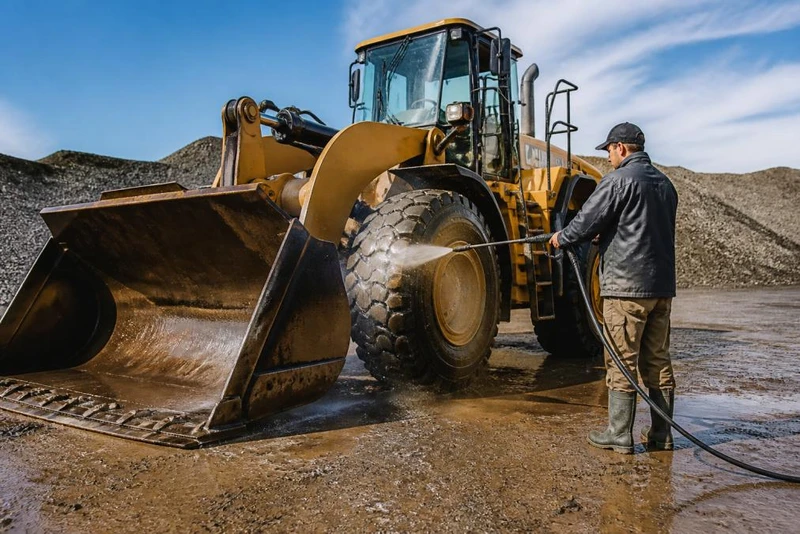
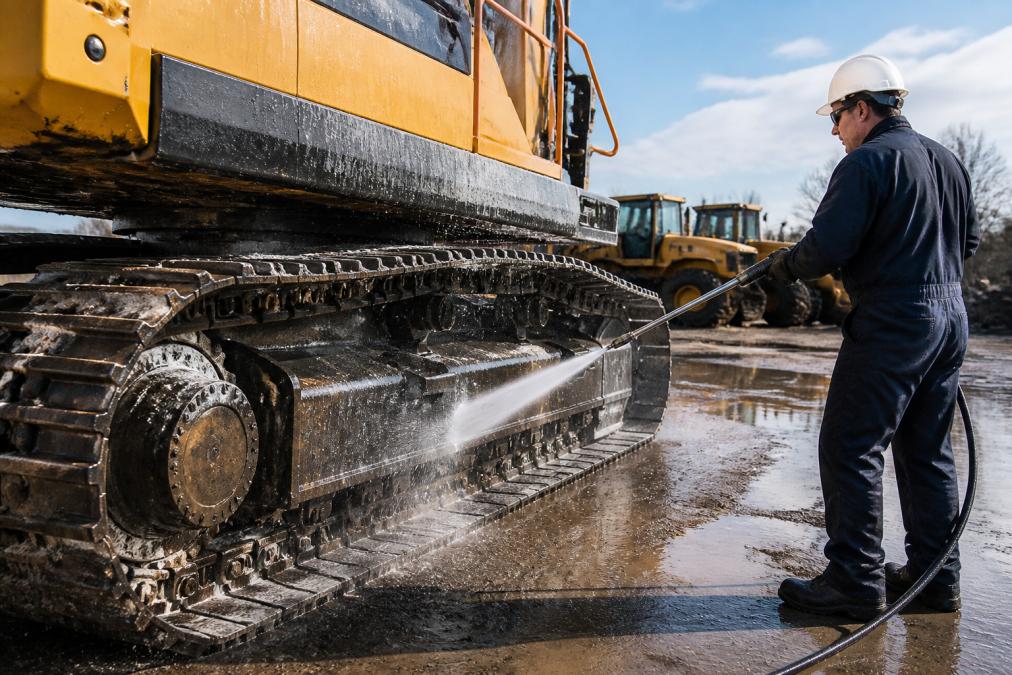
Track and undercarriage cleaning: Tracks collect the most debris and require special attention. Use a water cannon with moderate pressure to flush between track links. Spray perpendicular to the track direction so water flushes out trapped mud and stones.
For undercarriages, work systematically. Start at the front axle and move toward the rear. Angle the nozzle to force water and debris downward and outward. Repeat passes until water runs clear.
Engine compartment: Use lower pressure (1,500-2,000 PSI) around the engine. Protect the alternator, starter, and air intake with your hand or cardboard. Spray from a distance to avoid forcing water into sealed components.
Allow 45-90 minutes for complete pressure washing, depending on equipment size and dirt accumulation.
Choosing the Best Degreaser for Heavy Equipment
Pressure washing alone won't remove heavy grease and hydraulic fluid buildup. You need the right degreaser.
Degreaser types:
Biodegradable degreasers work well for general cleanup and are environmentally compliant. They break down oils without harsh chemicals and are safer for operators. Expect to spend 20-30 minutes for application and dwell time.
Solvent-based degreasers cut through heavy hydraulic fluid and caked grease faster. They're more aggressive but require proper ventilation and PPE. Dwell time is typically 15-20 minutes.
Enzymatic degreasers use natural enzymes to break down organic matter. They're gentler on paint and seals but work slower on heavy deposits.
Selection criteria:
- Type of buildup (grease, hydraulic fluid, road salt, rust)
- Equipment material (steel, aluminum, painted surfaces)
- Environmental regulations in your area
- Drying time needed before next steps
For most resale preparation, a biodegradable degreaser balances effectiveness with environmental compliance and safety. Apply with a sprayer, let it sit for 15-20 minutes, then pressure wash at 2,000-2,500 PSI.
Degreasing Engine Components and Hydraulic Systems
Engine cleanliness directly impacts buyer confidence. A clean engine signals proper maintenance and reduces perceived mechanical risk.
Engine degreasing steps:
- Cover sensitive electronics (alternator, starter, air filter housing) with plastic bags
- Spray degreaser liberally on engine block, valve covers, and hoses
- Use a soft brush to agitate stubborn deposits
- Let degreaser sit for 15-20 minutes
- Pressure wash at 1,500-2,000 PSI, keeping the nozzle moving
- Rinse thoroughly with clean water
- Remove plastic covers and inspect for remaining residue
Hydraulic system cleaning:
Hydraulic fluid leaves dark, sticky buildup on cylinders, hoses, and fittings. This buildup indicates age and wear to buyers.
- Spray degreaser on hydraulic cylinders and hoses
- Use a stiff brush on stubborn deposits
- Pressure wash at 2,000-2,500 PSI
- Pay special attention to cylinder rod seals and connection points
- Inspect for leaks after cleaning, pressure washing can expose small weeps
Never use excessive pressure on hydraulic hose connections. Water forced into a fitting can damage internal seals and cause future leaks.
Cleaning Undercarriages, Tracks, and Hard-to-Reach Areas
The undercarriage is where buyers spot neglect. Tracked equipment (excavators, dozers, skid steers) requires meticulous track cleaning. Wheeled equipment needs undercarriage attention.
Tracked equipment:
Tracks collect mud, stones, and debris between links. This buildup traps moisture and accelerates corrosion.
- Use a water cannon at 2,500-3,000 PSI
- Spray perpendicular to track direction, forcing debris outward
- Work each track section multiple times
- Use a brush to scrub visible corrosion on track shoes
- Inspect idlers and rollers for damage or excessive wear
- Check track tension, buyers evaluate this during inspection
Wheeled equipment:
- Pressure wash wheel wells thoroughly
- Clean brake components and suspension components
- Use a brush on rust spots and caked-on mud
- Inspect tires for damage and clean sidewalls
Hard-to-reach areas:
- Use a thin nozzle (0-degree tip, held at distance) for tight spaces
- Access points under the cab require careful pressure control
- Battery compartments and cable runs need gentle cleaning
- Fuel tank area should be cleaned but never pressurized directly
Allow 2-3 hours for complete undercarriage and track cleaning on large equipment.
EPA Regulations for Heavy Equipment Wash Water and Environmental Compliance
Cleaning heavy equipment generates wastewater containing oils, grease, heavy metals, suspended solids, and detergent residue. The EPA and state environmental agencies regulate how this water is handled. Non-compliance can result in fines ranging from $5,000 to $50,000 per violation, plus liability for environmental damage. For commercial sellers and brokers, compliance documentation is also a credibility signal to buyers, it proves the equipment was cleaned responsibly.
Federal and state regulatory framework:
The Clean Water Act (CWA) prohibits the discharge of pollutants into navigable waters and storm drain systems without a permit. The EPA defines "pollutants" broadly to include oils, grease, heavy metals, and suspended solids, all present in equipment wash water. State environmental agencies enforce CWA provisions and often impose stricter local standards.
Key compliance requirements:
1. Wastewater containment and disposal: You cannot discharge wash water directly into storm drains, surface water, or ground. You must either:
- Contain and dispose of wastewater through a licensed waste disposal service. Use absorbent mats, tarps, or bermed areas to capture runoff. Allow water to settle, then dispose of solids as hazardous waste and water through a licensed facility.
- Use an oil-water separator to treat water on-site before discharge. These systems remove oils and suspended solids, allowing treated water to be discharged to a sanitary sewer (not storm drains).
- Perform cleaning at a licensed facility with proper drainage, containment, and treatment systems. Many equipment dealers and wash facilities offer this service.
2. Storm drain protection: Storm drains connect directly to rivers, streams, and wetlands without treatment. Discharging wash water into storm drains is a direct CWA violation. Identify storm drains on your property and ensure wash water flows away from them. Use secondary containment (plastic sheeting, bermed areas, or collection tanks) to capture all runoff.
3. Sanitary sewer discharge (if permitted): If you have an oil-water separator or use a licensed facility, treated water can be discharged to the sanitary sewer system. However, you must:
- Notify your local wastewater authority before discharging
- Ensure water meets local discharge standards (typically <10 mg/L oil and grease)
- Maintain records of treatment and discharge
Practical compliance setup for equipment sellers:
Option A: Portable containment (suitable for occasional cleaning):
- Use heavy-duty plastic sheeting (6-mil minimum) to create a berm or collection area
- Place absorbent mats or oil-absorbent booms around the equipment
- Direct wash water into the contained area using a slight slope or dike
- Allow water to settle for 24-48 hours
- Dispose of solids as hazardous waste (contact your local hazardous waste facility for pickup)
- Dispose of water through a licensed waste disposal service or municipal wastewater treatment plant
Option B: Oil-water separator (suitable for regular cleaning):
- Purchase or rent a coalescent oil-water separator
- Direct all wash water into the separator inlet
- The separator removes oils and suspended solids; treated water exits to the sanitary sewer
- Dispose of separated oil and solids as hazardous waste
- Maintain the separator according to manufacturer specs (typically every 500-1,000 gallons treated)
Option C: Licensed facility (suitable for high-volume sellers):
- Transport equipment to a licensed wash facility or dealer with proper containment and treatment
- Facility handles all wastewater treatment and disposal
- You receive documentation of compliant cleaning
Compliance documentation checklist:
Keep detailed records to prove compliance and protect yourself from liability. This documentation also adds credibility when selling through a broker, it shows the buyer that the equipment was cleaned responsibly.
Required records:
- Date and time of cleaning
- Equipment cleaned (make, model, serial number)
- Cleaning method (pressure washing, degreasing, etc.)
- Wastewater disposal method (containment, separator, licensed facility)
- Disposal vendor name and license number (if using a third party)
- Photos of containment setup (showing berms, absorbent mats, or separator in use)
- Waste disposal receipts (proof that wastewater was disposed of properly)
- Oil-water separator maintenance records (if applicable)
- Discharge permits or notifications (if discharging to sanitary sewer) Maintaining these detailed logs ensures regulatory compliance while you utilize pressure cleaning equipment to restore the machine to its optimal market condition.
Why documentation matters for resale: Buyers, especially commercial operators and fleet managers, increasingly ask about equipment cleaning practices. Documentation proves:
- You cleaned responsibly and didn't cut corners
- The equipment was not cleaned in a way that caused environmental damage
- You understand regulatory requirements and operate professionally
Include a brief compliance statement in your listing: "Equipment cleaned using EPA-compliant wastewater containment and disposal methods. Documentation available upon request." This signals professionalism and reduces buyer hesitation.
State and local variations:
Some states impose stricter standards than federal EPA rules. Examples:
- California requires all wash water to be contained and disposed of; no discharge to storm drains or sanitary sewers without treatment.
- New York requires oil-water separators for any facility cleaning more than one vehicle per month.
- Texas allows discharge to sanitary sewers if water meets local standards, but requires notification to the wastewater authority.
Check your state environmental agency website or contact your local wastewater authority to confirm local requirements before cleaning.
Common compliance mistakes to avoid:
- Discharging to storm drains. This is the most common violation. Storm drains are not treated; water flows directly to surface water.
- Assuming "a little water" is harmless. Even small amounts of oil or grease are regulated. The EPA enforces the Clean Water Act strictly.
- Cleaning on unpaved ground without containment. Water seeps into groundwater, which is regulated under the Safe Drinking Water Act.
- Failing to maintain records. If inspected, you must prove compliance. No records = presumed violation.
- Using a non-licensed disposal vendor. Verify that any waste disposal company is licensed and insured. You remain liable for improper disposal even if you hire a contractor.
Inspection and enforcement: The EPA and state environmental agencies conduct inspections of equipment cleaning operations, especially in industrial areas. If you're caught discharging wash water improperly, penalties include:
- Civil penalties for violations
- Criminal penalties (for knowing violations)
- Liability for environmental remediation
Compliance is not optional, it's a legal and financial requirement.
Heavy Equipment Detailing Checklist and Final Preparation
Detailing is where cleaning transforms into resale strategy. While pressure washing removes dirt, detailing removes buyer objections. Machines with professional detailing and documentation often command higher bids than machines that are merely clean. The difference lies in perception: a clean machine looks maintained; a detailed machine looks investment-grade.
The resale psychology of detailing:
Buyers evaluate equipment in seconds during online browsing and minutes during in-person inspection. Detailing targets the visual cues that signal value:
- Paint and decals communicate brand integrity and care. Faded or missing decals suggest age and neglect, even if the machine is mechanically sound. Buyers unconsciously associate worn branding with worn internals.
- Seat and cab condition directly influence perceived operator experience. A worn, cracked seat signals heavy use; a conditioned seat suggests the machine was valued and protected.
- Chrome, mirrors, and trim create a "halo effect", polished metal catches light and draws attention to the overall presentation, making the entire machine appear newer.
- Undercarriage cleanliness is the trust factor. Buyers inspect undercarriages specifically to catch hidden damage. A spotless undercarriage proves you cleaned thoroughly, implying you maintained thoroughly.
Detailing task breakdown with resale impact:
| Task | Duration | Resale Impact | ROI Justification |
|---|---|---|---|
| Paint touch-up (chips, scratches, cab) | 1-2 hours | High | Recovers significant value per machine |
| Decal removal/replacement | 1-2 hours | High | Restores brand appearance; missing decals reduce perceived value |
| Seat conditioning (leather/vinyl) | 1 hour | High | Interior condition is a top three buyer concern; conditioning recovers substantial value |
| Chrome and metal polishing | 1-2 hours | Medium | Improves visual appeal; essential for cab trim and mirrors |
| Undercarriage final inspection and touch-ups | 1 hour | Critical | Confirms cleanliness for photography; catches missed spots that undermine buyer confidence |
| Professional photography (multiple angles, lighting) | 2-3 hours | Critical | Photos drive initial buyer interest; poor photos lose qualified buyers before they inquire |
Execution steps:
**1.
Shoot from these angles:
- Front three-quarter view (shows overall profile and cab)
- Side profile (shows boom, arm, or bucket positioning)
- Rear three-quarter view (shows counterweight and rear condition)
- Undercarriage detail shots (proves cleanliness)
- Engine compartment (demonstrates mechanical care)
- Cab interior (controls, seat, dashboard)
- Close-ups of serial plates, hour meter, and condition details (builds credibility)
Safety Precautions, PPE, and Drying for Rust Prevention
Pressure washing and degreasing create hazards. Proper safety practices protect you and your equipment.
Personal protective equipment:
- Safety glasses to protect eyes from high-pressure spray and debris
- Hearing protection (pressure washers exceed 85 decibels)
- Heavy-duty gloves to prevent chemical burns and cuts
- Steel-toed boots for foot protection
- Respirator or N95 mask when using solvent degreasers
- High-visibility clothing if working near traffic or other equipment
Pressure washer safety:
- Never point the nozzle at yourself, others, or animals
- Secure the equipment before starting the pressure washer
- Use a water cannon attachment for large surfaces, handheld wands tire quickly
- Check hoses for damage before each use
- Release pressure before disconnecting hoses
Chemical safety:
- Read the degreaser label before use
- Ensure adequate ventilation when using solvent-based products
- Wash hands thoroughly after handling chemicals
- Store degreasers in a cool, dry location away from ignition sources
Drying and rust prevention:
- Use compressed air to dry hard-to-reach areas
- Allow 2-4 hours of air drying in dry conditions
- Wipe down surfaces with clean towels
- Start the engine and run it for 10-15 minutes to warm components and evaporate water
- Apply a rust inhibitor to exposed metal surfaces
Frequently Asked Questions
What is the best way to clean heavy equipment before resale?
Start with debris removal and visual inspection, then pressure wash the exterior using a water cannon at 3000-4000 PSI. Deep clean the undercarriage and engine with a biodegradable degreaser, rinse thoroughly, and allow complete drying. Protect exposed metal with a rust inhibitor. Professional detailing, including decal removal and paint restoration, significantly boosts resale value. Documentation with before-and-after photos strengthens buyer confidence.
What is the best degreaser for heavy equipment?
Biodegradable degreasers are preferred because they break down grease and hydraulic fluid buildup without harming the environment or equipment seals. Look for products specifically formulated for heavy machinery that are EPA-compliant and safe for use around sensitive electronics and paint. Always follow manufacturer instructions for dilution and contact time to ensure effective cleaning without surface damage.
What EPA regulations apply to heavy equipment wash water?
Wastewater from heavy equipment cleaning must comply with EPA standards under the Clean Water Act. Runoff containing oil, grease, and hydraulic fluid cannot drain directly into storm drains or surface water. Use an oil-water separator or containment system to capture contaminants. Check local regulations, as some jurisdictions impose stricter limits. Proper disposal documentation protects you from fines and strengthens buyer confidence in your equipment's maintenance history.
How much does cleaning impact heavy equipment resale value?
Clean, well-maintained machinery commands higher prices because buyers perceive lower operational risk and reduced future maintenance costs. A properly detailed machine with documented cleaning and maintenance attracts serious buyers willing to pay premium prices. Professional presentation, including high-quality photography of a clean, corrosion-free machine, is essential in the online marketplace where inventory is tight and competition is fierce.
Selling heavy equipment demands preparation. Cleaning transforms a tired machine into a marketable asset. But cleaning alone isn't enough, you need exposure to serious buyers. That's where Ironmartonline makes the difference. Our nine web-based platforms connect your cleaned equipment to millions of potential buyers globally and locally. You handle the preparation; we handle the reach. List with Ironmartonline and turn your cleaned equipment into cash faster.