
Last Updated: November 14, 2026
Quick Summary
Get a machinery appraisal for insurance before a policy is written or renewed, after buying or upgrading a machine, and soon after any damage, theft, or total loss. Start the appraisal 60 to 90 days before renewal so you have time to review the report and adjust your coverage limits.
- Order an appraisal within 30 days of buying or financing a major machine.
- Re-appraise after installing a high-value attachment that changes replacement cost.
- Start the appraisal 60 to 90 days before your policy renewal date.
- After a loss, call an appraiser before the machine is repaired or sold.
- An appraisal does not guarantee a claim payment; your policy terms still control payout.
Table of Contents
- When to Get a Machinery Appraisal for Insurance: The Main Triggers
- Equipment Appraisal for Insurance: Replacement Cost vs. Actual Cash Value
- Machinery Replacement Cost Appraisal: How the Number Is Built
- Market Value vs. Replacement Cost: Which One Your Policy Needs
- The Equipment Appraisal Process, Step by Step
- Documents to Gather Before the Appraiser Arrives
- How Often to Re-Appraise Your Machinery
- Scheduling Your Next Machinery Appraisal Before Renewal
- Frequently Asked Questions
Why use Ironmartonline equipment broker when your machinery is on the line? If you own a fleet, rent out equipment, or run a single excavator, the answer comes down to protecting value. Ironmartonline is a heavy equipment brokerage that connects buyers and sellers of used machinery, and it works with nine web-based selling platforms, so your equipment can reach a large pool of potential buyers. A broker also takes the legwork off your desk, which matters when a claim or a sale is already under pressure.
This guide from Ironmartonline explains when a machinery appraisal makes sense for insurance, how the number is built, and what to gather before the appraiser arrives. Insurance is the one place where a machine's value directly controls what you get paid after a loss, so getting the timing right matters.
When to Get a Machinery Appraisal for Insurance: The Main Triggers
An equipment appraisal gives you a documented value for a machine. Insurers and claims adjusters use that value to decide how much a policy should cover. The most common triggers fall into two groups: before a policy is written or renewed, and after damage or loss. The timing matters because an appraisal built for one purpose may not satisfy the other.
Before a Policy Is Written or Renewed
Get an appraisal before your policy is written or renewed if your coverage amounts were set years ago. A machine's value drops as it ages, and a policy based on an old number may leave you short. Replacement cost can also rise with new purchases and parts prices.
Watch for these signals:
- You bought or financed a major machine recently.
- Your policy limits were set from an old purchase invoice.
- You added attachments, upgrades, or new hours to a machine.
- Your renewal is coming up and the last valuation is more than a few years old.
- Your insurer asks for a current valuation or scheduled equipment list before binding coverage.
A practical timing checklist looks like this:
- New machine acquisition: Order an appraisal within 30 days of purchase or financing so the scheduled value matches what you paid and what the lender expects.
- Major upgrades or attachments: Re-appraise after installing a new boom, bucket, hydraulic kit, or other high-value attachment that changes replacement cost.
- Policy renewal: Start the appraisal 60 to 90 days before renewal. That gives you time to review the report, ask questions, and adjust limits before underwriting locks in terms.
- After a significant repair or overhaul: If you replaced an engine or rebuilt a major component, get a current valuation so the machine's condition and value are documented.
- Multi-location or fleet changes: If you add a location or move equipment between states, update the schedule so each machine is insured where it operates.
A common pattern is to treat the appraisal as part of renewal preparation rather than an emergency purchase. Insurers often request a current valuation when a schedule has not been updated, and having the report ready shortens underwriting delays. Learn why certified appraisals matter for financing, insurance, taxes, and asset decisions on this certified appraisal benefits page.
After Damage, Theft, or Total Loss
A post-loss appraisal documents what the machine was worth and what it would cost to replace. That document supports your claim and helps you check the insurer's offer.
Call an appraiser soon after the loss, while the machine and its records are still intact. Take photos of the damage from several angles before anything is moved or repaired. If the machine is a total loss, the appraiser can establish both pre-loss value and replacement cost, which the adjuster will compare against policy limits and deductibles.
Watch out: waiting until the machine is repaired or sold can erase the evidence an appraiser needs to support your claim.
What an Appraisal Does Not Guarantee
An appraisal is not insurance coverage and does not guarantee a claim payment. Policy terms, exclusions, deductibles, and limits still control what the insurer pays. The appraisal's job is to give you and the insurer a defensible number, not to override the policy contract. Review your policy's valuation clause alongside the appraisal so you know which figure the adjuster will use.
Equipment Appraisal for Insurance: Replacement Cost vs. Actual Cash Value
Insurance policies usually settle a loss on one of two bases, and the difference can be large. Replacement cost pays what it costs to buy a comparable new or like-kind machine today. Actual cash value pays replacement cost minus depreciation, so an older machine pays out less.
Know which basis your policy uses before you order an appraisal. An appraisal built for replacement cost will not match an actual cash value settlement, and mixing them up leads to disputes.
Machinery Replacement Cost Appraisal: How the Number Is Built
A replacement cost appraisal estimates what it would cost to buy a comparable machine today. The appraiser looks at the make, model, year, hours, condition, options, and attachments, then compares the machine to recent sales of similar equipment. The result is a documented opinion of value, not a quote for a specific machine.
Replacement Cost New vs. Actual Cash Value vs. Agreed Value
Insurance policies usually settle a loss on one of several bases, and the difference can be large:
- Replacement cost new (RCN): What it would cost to buy a new machine of like kind and quality today, without deducting depreciation.
- Replacement cost: What it would cost to buy a comparable used machine in similar condition, often called like-kind replacement.
- Actual cash value (ACV): Replacement cost minus depreciation, so an older machine pays out less.
- Agreed value: A fixed amount the insurer and insured agree to at policy inception, often used for specialized or custom equipment where market evidence is thin.
Know which basis your policy uses before you order an appraisal. An appraisal built for replacement cost will not match an actual cash value settlement, and mixing them up leads to disputes. Read the valuation clause and ask the adjuster which figure the policy will use.
How Depreciation and Policy Wording Affect the Insured Amount
Depreciation is the difference between what a machine cost new and what it is worth now. ACV policies subtract depreciation from replacement cost, so the payout declines as the machine ages. Replacement cost policies may pay the cost to replace without that deduction, but they often require you to actually repair or replace the machine before the full amount is paid.
Policy wording also controls deductibles, limits, and exclusions. A current appraisal helps you set limits that reflect real replacement cost, but the policy still governs the final payment. Review both documents together.
What the Appraiser Examines
A replacement cost appraisal typically covers:
- Make, model, year, and serial number
- Hour meter reading and usage history
- Condition of major components and attachments
- Options and upgrades that affect value
- Recent sales of comparable machines
- Replacement availability, transport, and installation costs for specialized equipment
Ironmartonline's heavy equipment appraisal services cost guide notes that appraisal fees depend on the machine and scope. For pricing on your specific machine, ask the appraiser for a written quote rather than relying on a general estimate.
Industry- and Equipment-Specific Considerations
Mobile, specialized, obsolete, custom-built, and multi-location machinery can be harder to value because replacement availability and market evidence vary. For custom-built equipment, an appraiser may rely on build records and replacement cost new rather than comparable sales. For obsolete models, the appraiser may consider the cost of a functional equivalent. For multi-location fleets, each machine's location and transport cost can affect replacement cost. Mention these factors when you request the appraisal so the scope matches the equipment.
Market Value vs. Replacement Cost: Which One Your Policy Needs
Market value is what a machine would sell for on the open market. Replacement cost is what you would pay to buy a like machine now. The two often differ, especially for older or specialized equipment.
Most insurance decisions turn on the policy's own language. Read the valuation clause before you choose which number to request. If your policy pays on replacement cost, a replacement cost appraisal is the right document. If it pays on actual cash value, expect the adjuster to subtract depreciation from whatever figure you present.
Here is a quick guide:
- Replacement cost policy: Request a replacement cost appraisal.
- Actual cash value policy: Ask for both values and the depreciation method.
- Financing or sale: Market value often matters more than replacement cost.
The Equipment Appraisal Process, Step by Step
Most appraisals follow the same basic steps:
- Request the appraisal. Tell the appraiser the purpose, such as insurance renewal or a post-loss claim.
- Gather records. Send the documents listed in the next section.
- Schedule the inspection. The appraiser inspects the machine, checks hours, and notes condition.
- Research comparable sales. The appraiser compares your machine with similar sales.
- Receive the report. Review the final valuation and check that the make, model, serial number, and hours are correct.
The appraisal process and timeline guide describes single-machine appraisals as typically taking a few business days from first contact, though timing varies with scope. Plan ahead rather than waiting for a deadline.
Documents to Gather Before the Appraiser Arrives
Good records make the appraisal faster and more accurate. See the full list of six documents appraisers require before you start gathering your file. Collect these before the inspection:
- Purchase invoice or bill of sale
- Serial number and model details
- Maintenance and service logs
- Hour meter readings and usage history
- Photos of the machine, including attachments
- Records of upgrades, repairs, or past damage
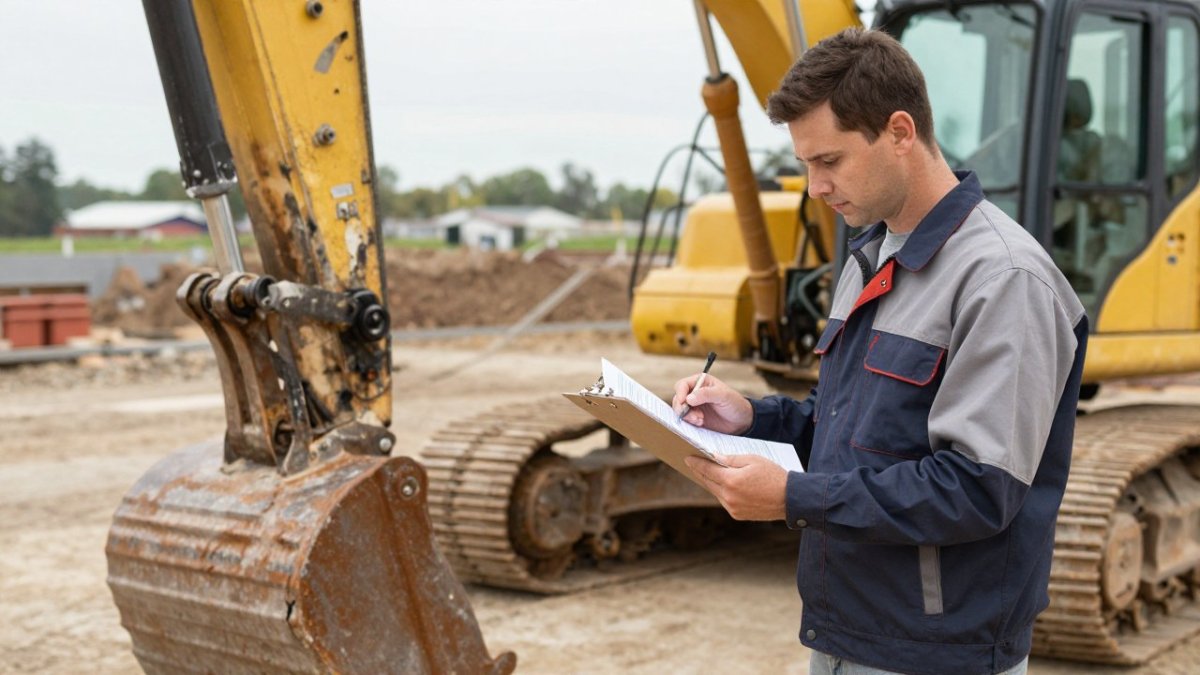
A contractor reviewing purchase records and maintenance logs beside a parked excavator at a job site is a good picture of this step in practice.
How Often to Re-Appraise Your Machinery
Re-appraise whenever your coverage or your machine changes in a meaningful way. A practical schedule is to review the valuation at each policy renewal, after major upgrades, and after any significant repair or loss.
Machines lose value over time, so an appraisal from several years ago may understate what you need to replace. Keep your appraisal reports with your insurance file so you can compare them to new numbers.
Scheduling Your Next Machinery Appraisal Before Renewal
Book your appraisal well before your renewal date. You can request a machinery appraisal through our valuation services page. That gives you time to review the report, ask questions, and adjust your coverage limits if needed. Waiting until the last week often means rushed paperwork and fewer options.
If you need help, [request a machinery appraisal through our equipment appraisal services | page:2] for current valuation support. For background on what drives appraisal fees and timing, see [our heavy equipment appraisal services cost guide | page:1]. Also review [the documents appraisers usually require before an inspection | page:4] so your file is ready.
Ironmartonline can also help you sell or source machinery once you know its value. Our nine web-based selling platforms put your equipment in front of potential buyers. Join our email list to hear about new listings and market updates.
Frequently Asked Questions
When should I get a machinery appraisal for insurance?
Get a machinery appraisal before a new policy is written, at renewal when coverage amounts are set, after significant upgrades or major repairs, and immediately after damage, theft, or a total loss. An appraisal before a loss helps set coverage limits that match replacement cost. An appraisal after a loss documents the value the insurer will use in the claim, so the record should be prepared promptly while the equipment's condition and records are still clear.
How often should machinery be appraised for insurance?
There is no single required interval in most policies, so many owners review their equipment values at each policy renewal and whenever the fleet changes significantly. Machinery appraisal frequency should also rise after large additions, rebuilds, or a sharp shift in used-equipment market prices. Confirm with your insurance agent which valuation basis your policy uses, because that determines how often updated figures actually matter for claims.
What is the difference between replacement cost and actual cash value for machinery?
Replacement cost estimates what it would take to buy a comparable new or like-kind machine today, while actual cash value reflects the replacement cost minus depreciation for age, wear, and condition. Your policy's valuation basis determines which figure the insurer pays on a claim. Equipment appraisal for insurance should state both figures when possible so you can compare coverage options at renewal.
What does an equipment appraisal process involve?
The process usually starts with sharing the asset list, serial numbers, purchase records, and maintenance history with the appraiser. The appraiser then inspects each machine's condition, reviews comparable sales, and prepares a written report with a stated value and valuation basis. Turnaround and cost vary with the number of machines and their complexity, so ask for a timeline and fee quote before scheduling.
