
Table of Contents
- Why Use an Equipment Broker Like Ironmartonline Instead of Self-Listing?
- Machinio vs. Truck Paper: Platform Overview and Core Functionality
- Inventory and Market Reach in 2026
- How to Sell Used Excavators Online: Platform Capabilities Compared
- Search Engine Capabilities and Listing Filters
- Heavy Equipment Brokerage Services: What Each Platform Offers
- Lead Quality, Conversion Rates, and Sales Speed
- Subscription Tiers, Advertising, and Dealer Features
- Which Platform Should You Choose?
- Frequently Asked Questions
Last Updated: September 2, 2026
Why Use an Equipment Broker Like Ironmartonline Instead of Self-Listing?
Selling heavy equipment independently sounds straightforward until you're managing listings across multiple platforms, fielding tire-kicker inquiries, and watching weeks slip by without serious buyers. This is where the real question emerges: why use an equipment broker like Ironmartonline instead of posting your excavators, dozers, or trucks yourself?
The answer lies in reach and efficiency. When you list independently on a single platform, you're competing in a fragmented marketplace where your equipment visibility depends entirely on that one site's traffic and search ranking. An equipment broker like Ironmartonline operates across nine specialized web-based selling platforms simultaneously, exposing your machinery to millions of potential buyers across global and local markets. That's not just multiple listings, it's strategic distribution designed to move equipment faster and at better prices.
Self-listing also means handling inquiries from unqualified buyers, managing negotiations, coordinating inspections, and dealing with logistics complications. A professional equipment broker filters leads, qualifies buyers, negotiates on your behalf, and manages the entire transaction process. For fleet managers, construction contractors, and owner-operators, this saves hundreds of hours that could be spent on actual business operations instead of equipment sales administration.
There's also the credibility factor. Buyers trust established brokers with verified track records more than private listings. When your equipment is marketed through a professional brokerage with no hidden fees and transparent processes, serious buyers take it more seriously. The difference in offer quality, and closing speed, is measurable.
The choice between DIY listing and professional brokerage ultimately comes down to whether your time is worth more than the difference in selling speed and final price. For most equipment sellers, it isn't close.
Machinio vs. Truck Paper: Platform Overview and Core Functionality
When evaluating digital marketplaces for heavy equipment sales, two platforms consistently dominate conversations: Machinio and Truck Paper.
Machinio's Global Marketplace Approach
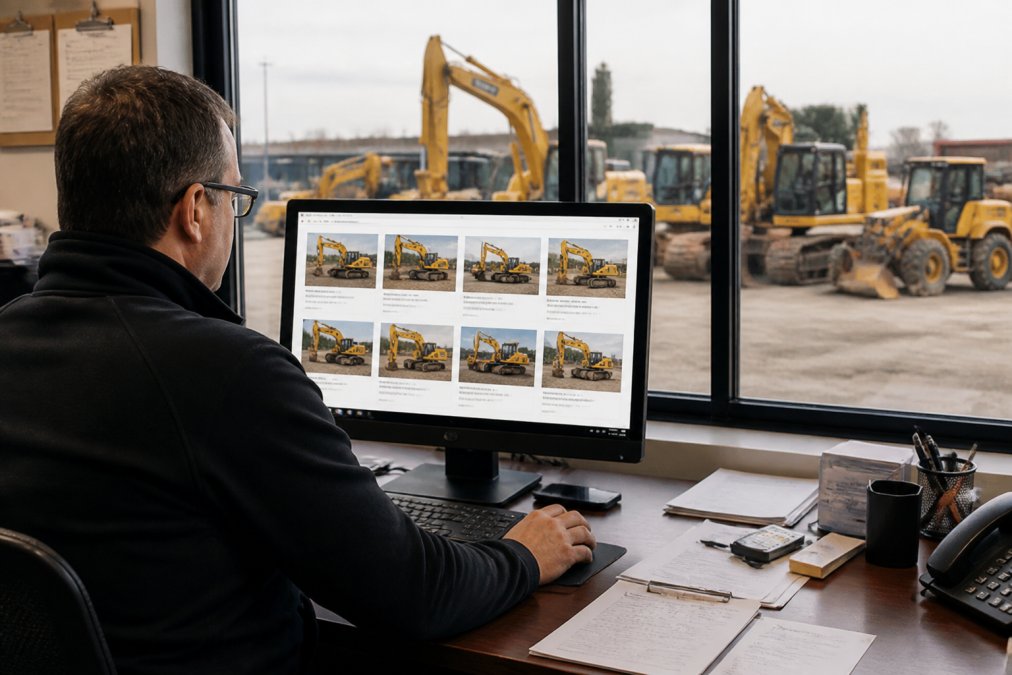
Machinio positions itself as a global online marketplace and search engine for new and used equipment spanning construction, agriculture, trucks, and industrial machinery. The platform emphasizes international reach, making it attractive for sellers targeting buyers across multiple countries. Machinio operates as a free platform for buyers, which increases traffic volume and inquiry frequency. The interface prioritizes search functionality, allowing buyers to filter equipment by detailed specifications and location parameters.
For sellers, Machinio's strength lies in its breadth. Your excavator listing reaches a genuinely global audience, not just domestic buyers. This matters if you're selling specialized equipment with limited local demand or if you want to maximize competitive bidding from international purchasers. The platform's search-engine-style interface means your equipment appears in organic search results, not just within the platform itself, a significant advantage for discoverability.
The tradeoff is that Machinio's global focus means less specialization in any single equipment category. Construction equipment shares platform space with agricultural machinery, trucks, and industrial goods. For sellers of heavy-duty trucks specifically, this generalist approach may feel diluted.
Truck Paper's Specialized Heavy-Duty Focus
Truck Paper operates with laser focus on heavy-duty commercial vehicles: Class 8 trucks, trailers, day cabs, sleeper cabs, and flatbeds. This specialization creates a self-selecting audience of serious truck buyers and dealers. The platform has recently introduced AI-driven search capabilities that deliver more relevant results and personalized recommendations to buyers, a meaningful advantage in a crowded marketplace.
Truck Paper's concentrated focus means less competition for visibility within your category. If you're selling a specific truck configuration, you're competing against other trucks, not against excavators or agricultural equipment. Buyers arriving at Truck Paper are already committed to purchasing trucks, not browsing casually.
The limitation is obvious: Truck Paper only serves the heavy-duty truck segment. If your equipment portfolio includes dozers, excavators, or other construction machinery, you can't use this platform. For truck-only sellers, however, this specialization is precisely the point.
Inventory and Market Reach in 2026
The heavy equipment marketplace shifted notably in early 2026. According to recent market analysis, used heavy-duty truck inventory on platforms like Truck Paper declined over 20% compared to the previous year through April 2026, continuing a five-month downward trend. This tight supply environment creates favorable conditions for sellers, fewer listings mean less competition and stronger buyer interest.
Construction equipment inventory patterns tell a parallel story. Across the broader equipment market, excavators remained the fastest-selling used category in 2026, driven by their central role in diverse project types (bls.gov). This velocity matters: fast-selling categories mean your listing moves quickly if priced competitively.
The global used industrial machinery market continues expanding, with projections reaching $813.99 billion in 2026 (peer-reviewed research). This scale indicates sustained buyer demand across multiple channels and geographies. However, market reach depends entirely on which platform you choose. Machinio's global positioning captures a slice of that international demand. Truck Paper dominates the concentrated domestic heavy-duty truck segment where inventory scarcity is pushing prices upward.
For sellers, this environment favors strategic platform selection. In a tight supply market, the platform that reaches the most qualified buyers for your specific equipment type will generate offers faster and at better prices.
How to Sell Used Excavators Online: Platform Capabilities Compared
Selling used excavators requires platforms that understand equipment specifications, maintenance history, and operational condition. Both Machinio and Truck Paper offer listing capabilities, but their approaches diverge significantly.
Machinio's listing process emphasizes detailed specification fields. You input bucket capacity, operating weight, engine hours, hydraulic specifications, and attachment compatibility. The platform's search filters allow buyers to narrow results by these exact parameters, meaning your excavator appears when buyers search for machines matching its precise configuration. This specification-level matching increases the likelihood that inquiries come from genuinely interested parties rather than casual browsers.
The platform also supports multimedia uploads, allowing you to showcase equipment condition through photos and videos. Buyers can assess wear, operational status, and overall presentation before contacting you, a significant advantage in reducing tire-kicker inquiries.
Truck Paper's excavator capabilities exist within its broader construction equipment section, though the platform primarily emphasizes trucks and trailers. If you're selling excavators, Truck Paper becomes less relevant unless you're bundling equipment with trucks.
For excavator sellers specifically, Machinio's specification-driven matching and global reach create a more targeted selling environment. The platform's emphasis on detailed equipment data means buyers searching for excavators with your machine's exact specifications will find your listing. This targeted visibility converts more inquiries into actual sales.
Search Engine Capabilities and Listing Filters
Search functionality determines whether your equipment appears to the right buyers at the right moment. This is where platform differences become operationally critical.
Machinio operates as a search engine for equipment, not just a listing directory. The platform indexes equipment across its network and returns results based on relevance algorithms similar to Google's approach. Buyers can filter by equipment type, location, price range, operational hours, and detailed specifications. Your listing's visibility depends on how completely you've filled specification fields and how closely your equipment matches search queries.
This search-engine approach means your excavator might appear in results even if a buyer searches for a similar model with slightly different specifications, the algorithm recognizes functional equivalence. Over time, as your listing accumulates views and inquiries, the platform's algorithm likely increases its visibility, similar to how Google ranks content.
Truck Paper's search emphasizes truck-specific parameters: transmission type, axle configuration, sleeper versus day cab, mileage, and price. The filters are highly specialized because the audience is highly specialized. A buyer searching for a specific truck configuration gets results filtered to that exact specification, not approximations.
For equipment variety, Machinio's broader search capability serves you better. For truck-only sellers, Truck Paper's specialized filters reduce noise and connect you with buyers actively seeking your specific truck type.
Heavy Equipment Brokerage Services: What Each Platform Offers
Direct platform comparison reveals important service differences. Machinio and Truck Paper both facilitate listings, but neither operates as a full-service brokerage handling negotiations, inspections, and transaction logistics.
This is where Ironmartonline's value proposition distinguishes itself. Rather than requiring you to manage every aspect of the sale, from initial inquiry screening to final payment and logistics coordination, a professional equipment broker handles the entire process. Ironmartonline leverages nine specialized web-based selling platforms to distribute your equipment across multiple channels simultaneously, accessing millions of potential buyers without requiring you to manage nine separate listings.
A brokerage approach also means professional lead qualification. Not every inquiry represents a serious buyer. Brokers filter inquiries, verify buyer credentials, and screen for financing capacity before connecting you with genuine prospects. This dramatically reduces wasted time on unqualified leads.
Platforms like Machinio and Truck Paper are marketplaces, they provide the venue and tools. Brokerages like Ironmartonline provide the service layer: strategic positioning, buyer qualification, negotiation support, and transaction management. For sellers prioritizing speed and simplicity, this distinction matters significantly.
The trade-off is straightforward: marketplace platforms cost less but require more of your time and attention. Brokerages cost more but handle operational complexity, allowing you to focus on your core business.
Lead Quality, Conversion Rates, and Sales Speed

The true cost of selling equipment extends beyond listing fees to include the time and resources required to qualify leads, manage inquiries, and close transactions. This is where marketplace platforms and professional brokerages diverge most significantly in measurable outcomes.
Lead Composition on Marketplace Platforms
On Machinio and Truck Paper, all inquiries arrive in your inbox without pre-screening. A serious buyer actively financing a purchase appears identically to a casual browser, a competitor gathering pricing intelligence, or a parts-only inquirer. You must personally assess each inquiry's legitimacy, respond to tire-kickers, and manage negotiations. For a dealer receiving 20 inquiries per week, perhaps only 4-6 represent genuine purchase intent. The remaining 14-16 inquiries consume time without advancing a sale.
This lead-quality problem compounds over time. A dealer spending 2 hours per week responding to unqualified inquiries across 50 listings is investing 100+ hours annually on non-converting activity. At a dealer principal's hourly value, that represents significant annual opportunity cost before any equipment sells.
Conversion Rate Mechanics: Marketplace vs. Brokerage
Marketplace platforms typically see conversion rates (inquiries to closed sales) ranging from 5-15%, depending on equipment category, pricing accuracy, and seller responsiveness (the NIH). A dealer receiving 100 inquiries per month might close 5-15 sales. The variance reflects lead quality: some inquiries are serious, others are not.
Professional brokerages operate with different conversion mechanics. By pre-qualifying leads before they reach the dealer, a brokerage filters out tire-kickers, unfinanced buyers, and non-serious inquiries upstream. A dealer receiving 20 pre-qualified inquiries from a broker may close 8-12 sales, a conversion rate of 40-60%. Fewer inquiries, but higher-quality prospects.
The economic calculation: 100 unqualified inquiries with 10% conversion (10 sales) versus 20 qualified inquiries with 50% conversion (10 sales). Both result in 10 closed transactions, but the second path requires dramatically less dealer time and attention.
Sales Speed: Time-to-Close Comparison
On marketplace platforms, sales speed depends on listing visibility, pricing competitiveness, and buyer availability. In tight inventory markets (like heavy-duty trucks in 2026), equipment may sell within days. In slower categories, listings can remain active for weeks or months. Average time-to-close on marketplace platforms ranges from 14-45 days, depending on equipment type and market conditions.
Brokerages typically accelerate time-to-close through multi-platform exposure and buyer network depth. Rather than waiting for a single platform's algorithm to surface your listing, your equipment appears across multiple channels where different buyer segments congregate. A brokerage's existing relationships with qualified buyers, dealers, fleet operators, contractors, also compress the sales cycle. Average time-to-close through brokerage channels is often 7-21 days, particularly for fast-moving categories like excavators and Class 8 trucks.
Cost-Per-Lead and Cost-Per-Sale Analysis
Marketplace platforms create hidden costs that don't appear as line-item fees. If you're paying for a featured listing and receiving 50 inquiries, your cost-per-inquiry is easily calculated. But if only a fraction of those inquiries convert to sales, your cost-per-sale is higher in listing fees alone, plus the dealer time spent managing non-converting inquiries.
A brokerage model reverses this calculation. If you pay a broker a commission on an equipment sale and close sales per month through their network, your cost-per-sale is the commission plus minimal dealer time. The total cost-per-sale is lower, and the dealer's time is freed for other business activities.
Segmentation: Which Model Fits Which Dealer
Small dealers (1-10 annual sales) benefit from low-cost marketplace platforms despite lower conversion rates; the absolute dollar cost is manageable. Mid-size dealers (20-50 annual sales) often find brokerage models more economical because the time savings and higher conversion rates offset commission costs. Large fleet dealers (100+ annual sales) almost universally prefer brokerage or integrated distribution models because coordinating multiple marketplace platforms becomes operationally prohibitive.
The measurable difference: brokerage clients typically see faster transaction completion, higher closing prices (due to qualified buyer competition), and dramatically lower dealer time investment per sale.
Subscription Tiers, Advertising, and Dealer Features
Platform monetization and feature architecture reveal important operational differences, especially for dealers managing large inventories across multiple locations.
Machinio's Listing and Visibility Model
Machinio operates on a freemium structure: buyers access the platform at no cost, while sellers pay for featured listings and premium visibility. Basic listings are free or low-cost, but visibility upgrades, such as homepage placement, category-level featured positioning, and priority search ranking, carry per-listing fees. For a dealer managing 50+ pieces of equipment simultaneously, these per-listing costs compound quickly. The platform offers tools for inventory management, lead tracking, and CRM. This creates operational friction: a piece of equipment sells offline, but the Machinio listing remains active until manually removed, potentially generating wasted inquiries.
Truck Paper's Dealer-Focused Features
Truck Paper similarly uses tiered visibility: basic listings appear in search results, while featured placements command premium positioning and algorithmic priority. The platform's AI-driven recommendation engine likely surfaces featured listings more prominently, creating economic incentive to pay for visibility upgrades. Truck Paper offers tools for sellers to list equipment and access market reports. A dealer using Truck Paper alongside their internal inventory database must maintain data separately, creating duplication and sync risk.
The Integration Gap: Why It Matters for Fleets
Neither marketplace platform offers native integration with industry-standard dealer management systems (DMS) or enterprise resource planning (ERP) software. This is a significant operational limitation for high-volume dealers. When a piece of equipment sells through one channel, updating availability across all platforms requires manual intervention. A dealer with 200+ trucks listed across Machinio, Truck Paper, and other channels faces a coordination problem: each platform operates as a data silo.
Professional equipment brokers like Ironmartonline address this gap through coordinated distribution. Rather than requiring dealers to manage individual platform integrations, a broker handles multi-platform synchronization, ensuring that when equipment sells, it's removed from all channels simultaneously. This eliminates the operational burden of maintaining separate inventory databases and reduces the risk of double-selling or stale listings.
Subscription Economics for Different Dealer Sizes
For a small dealer selling 5-10 pieces of equipment annually, marketplace platform fees remain manageable. Pay-per-listing or per-visibility-upgrade costs might be a consideration. For a mid-size dealer managing 50+ vehicles, those costs escalate significantly. A brokerage model with negotiated commission or flat-fee arrangements often delivers better economics at scale, particularly when combined with inventory integration and lead qualification services that reduce wasted inquiries and manual coordination overhead.
The choice between marketplace platforms and brokerage services ultimately reflects operational complexity: simple, low-volume selling favors marketplace platforms; high-volume fleet management favors integrated brokerage services.
Which Platform Should You Choose?
The answer depends on your specific situation and priorities.
Choose Machinio if: You're selling diverse equipment types (excavators, dozers, trucks), you have time to manage listings and inquiries personally, you want global buyer access, and you prefer lower upfront costs with pay-for-visibility pricing. The platform's search-engine approach and specification-driven matching work well for equipment sellers targeting international markets.
Choose Truck Paper if: You're exclusively selling heavy-duty trucks and trailers, you want specialized buyer access, you prefer concentrated visibility within a single category, and you're comfortable with marketplace-style listing management. The platform's tight inventory environment and specialized audience create favorable conditions for truck sellers specifically.
Choose a professional broker like Ironmartonline if: You want to move equipment quickly, you prefer not managing inquiries and negotiations personally, you're selling multiple pieces of equipment, you want coordinated distribution across multiple platforms, and you value professional lead qualification and transaction support. A brokerage approach eliminates the operational burden of managing individual platform listings while accessing the broadest qualified buyer pool.
The choice ultimately reflects your priorities: lowest cost with personal involvement (marketplace platforms), or faster sales with professional support (brokerage services).
Selling heavy equipment involves more than posting a listing and waiting for offers. The platform you choose determines who sees your equipment, how quickly it sells, and at what price. Machinio and Truck Paper each serve specific seller needs, global reach and specification matching versus specialized truck-focused distribution. But if your priority is moving equipment quickly without managing marketplace complexities, a professional equipment broker delivers measurably faster results. Ironmartonline's multi-platform approach connects your equipment with millions of qualified buyers while handling lead qualification, negotiations, and transaction logistics. That combination of reach and service support typically generates faster sales and better outcomes than managing marketplace platforms independently. Explore how Ironmartonline's nine specialized selling platforms can accelerate your equipment sales and connect you with serious buyers ready to close.
=== FAQ ANSWERS (audit these too, same rules) ===
[1] Q: What is the primary difference between Machinio and Truck Paper? A: Machinio operates as a global online marketplace for new and used equipment across construction, agriculture, and trucks, with a free platform for buyers. Truck Paper specializes in heavy-duty commercial trucks and trailers with an AI-driven search experience. The choice depends on your equipment type: Machinio works better for diverse machinery categories, while Truck Paper dominates the semi-truck and trailer segment. In early 2026, used heavy-duty truck inventory on platforms like Truck Paper declined over 20% compared to the previous year, reflecting tight supply and rising values in that specific market.
[2] Q: Is Machinio better for heavy construction equipment or commercial trucks? A: Machinio excels for diverse heavy equipment including excavators, dozers, and construction machinery due to its broad industrial machinery marketplace. Truck Paper is purpose-built for commercial trucks and trailers, offering specialized filters and dealer features tailored to that segment. Excavators remained the fastest-selling used equipment category in 2026 across the broader market, making Machinio's multi-category platform effective for construction equipment sales. If you're selling specialized trucks, Truck Paper's focused audience delivers stronger conversion potential.
[3] Q: How do listing fees compare between Machinio and Truck Paper? A: Both platforms operate with subscription-based models and tiered pricing, but specific fee structures vary by subscription level and listing duration. Machinio offers free access for buyers with seller subscription options. Truck Paper uses a dealer-focused approach. Exact pricing depends on your subscription tier, the number of listings, and any premium advertising features you select. Contact each platform directly for current rates, or consider working with a heavy equipment brokerage service that handles listings across multiple platforms simultaneously to maximize your reach without managing individual subscriptions.
[4] Q: Which platform is more effective for reaching international buyers? A: Machinio is explicitly designed as a global online marketplace, making it the stronger choice for international reach. The platform connects buyers and sellers across various countries, supporting global equipment trade. Truck Paper focuses primarily on the domestic heavy-duty truck market. If international sales are your goal, Machinio's global infrastructure provides better exposure. However, the global used industrial machinery market is projected to reach $813.99 billion in 2026, so both platforms benefit from strong international demand for quality equipment.
Frequently Asked Questions
Q: What is the primary difference between Machinio and Truck Paper?
A: Machinio operates as a global online marketplace for new and used equipment across construction, agriculture, and trucks, with a free platform for buyers. Truck Paper specializes in heavy-duty commercial trucks and trailers with an AI-driven search experience. The choice depends on your equipment type: Machinio works better for diverse machinery categories, while Truck Paper dominates the semi-truck and trailer segment. In early 2026, used heavy-duty truck inventory on platforms like Truck Paper declined over 20% compared to the previous year, reflecting tight supply and rising values in that specific market.
Q: Is Machinio better for heavy construction equipment or commercial trucks?
A: Machinio excels for diverse heavy equipment including excavators, dozers, and construction machinery due to its broad industrial machinery marketplace. Truck Paper is purpose-built for commercial trucks and trailers, offering specialized filters and dealer features tailored to that segment. Excavators remained the fastest-selling used equipment category in 2026 across the broader market, making Machinio's multi-category platform effective for construction equipment sales. If you're selling specialized trucks, Truck Paper's focused audience delivers stronger conversion potential.
Q: How do listing fees compare between Machinio and Truck Paper?
A: Both platforms operate with subscription-based models and tiered pricing, but specific fee structures vary by subscription level and listing duration. Machinio offers free access for buyers with seller subscription options. Truck Paper uses a dealer-focused approach. Exact pricing depends on your subscription tier, the number of listings, and any premium advertising features you select. Contact each platform directly for current rates, or consider working with a heavy equipment brokerage service that handles listings across multiple platforms simultaneously to maximize your reach without managing individual subscriptions.
Q: Which platform is more effective for reaching international buyers?
A: Machinio is explicitly designed as a global online marketplace, making it the stronger choice for international reach. The platform connects buyers and sellers across various countries, supporting global equipment trade. Truck Paper focuses primarily on the domestic heavy-duty truck market. If international sales are your goal, Machinio's global infrastructure provides better exposure. However, the global used industrial machinery market is projected to reach $813.99 billion in 2026, so both platforms benefit from strong international demand for quality equipment.
This article was written using GrandRanker