
Last Updated: November 16, 2026
Quick Summary
After-sales support for exported used trailers is the structured help a buyer receives once a trailer ships: inspection records, documentation, warranty terms, troubleshooting, parts sourcing, and a defined response path. It is not a phone number and a promise. A complete package covers five areas, and missing any one means you inherit the risk.
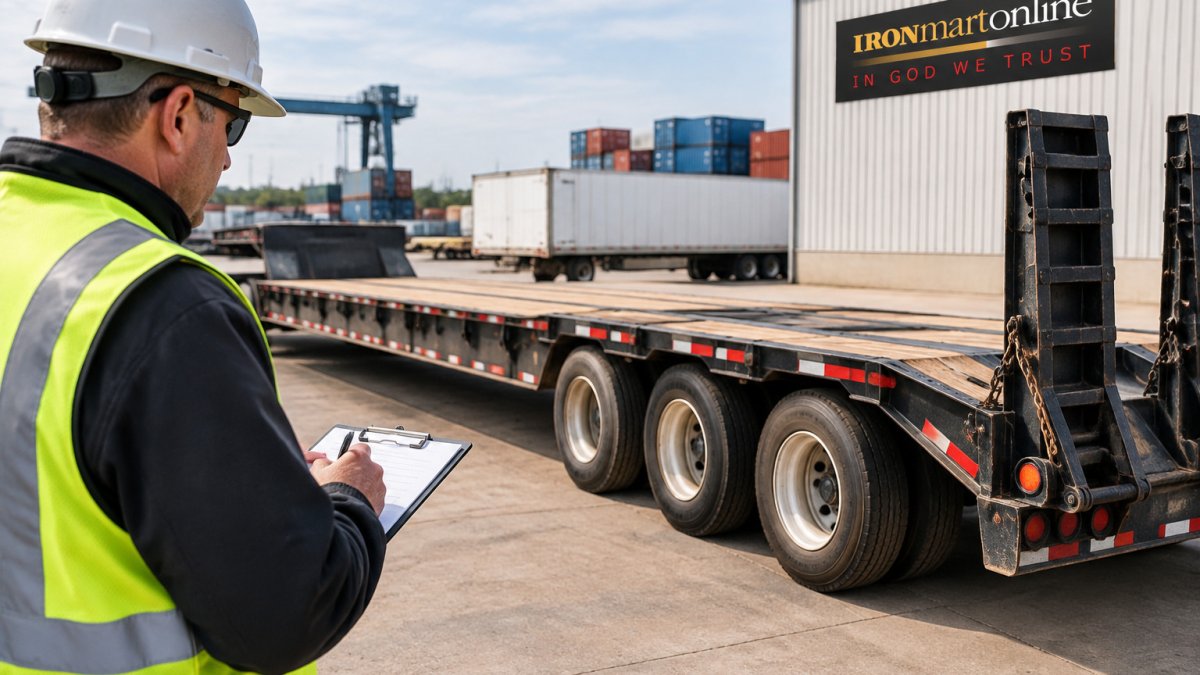
- Support begins before the sale closes with a pre-shipment inspection report including photos and condition notes.
- Settle export trailer warranty and repairs in writing before the trailer ships, naming covered defects and the claim process.
- Build a standard evidence package with serial number, photos, video and recent history before reporting any fault.
- Agree on measurable service terms in the contract, including first response window and a named second contact.
- Build a local repair network before delivery by briefing shops and leaving the inspection report with them.
Table of Contents
- Why Use Ironmartonline as Your Equipment Broker?
- What After-Sales Support for Exported Used Trailers Should Include
- Used Trailer Pre-Shipment Inspection: The First Step in Support
- Used Trailer Export Documentation That Protects Your Purchase
- Export Trailer Warranty and Repairs: What to Agree Before Delivery
- Remote Troubleshooting and Support Across Time Zones
- Sourcing Spare Parts and Replacement Parts for Semi-Trailers
- Building a Local Repair Network for Pre-Owned Equipment
- Setting Service Response and Downtime Expectations
- Join the Ironmartonline Email List Before Your Next Export
- Frequently Asked Questions
Why Use Ironmartonline as Your Equipment Broker?
After-sales support for exported used trailers rarely gets the attention it deserves until something breaks in a distant yard. That is the wrong time to discover your seller has gone quiet. This guide covers how to build real support into an export deal before the trailer leaves the lot.
Here is the uncomfortable truth most buyers learn the hard way: the sale is not finished at the port. It is finished the first time a brake chamber fails and someone actually answers.
So why use Ironmartonline as your equipment broker? Because a broker who moves pre-owned equipment across borders needs to handle more than the price. We run nine web-based selling platforms with no contracts and no hidden fees. If you want the full service picture, see our heavy equipment broker overview.
The sections below walk through inspections, documentation, warranty terms, parts sourcing, and realistic response expectations. Each one protects your investment.
Federal Motor Carrier Safety Administration guidance on commercial vehicle safety
What After-Sales Support for Exported Used Trailers Should Include
After-sales support for exported used trailers is the structured help a buyer receives once a trailer ships: inspection records, documentation, warranty terms, troubleshooting, parts sourcing, and a defined response path. It is not a phone number and a promise.
A complete support package covers five areas. Miss any one and you inherit the risk.
- Pre-shipment inspection report with photos and condition notes
- Export documentation the destination country will accept
- Written warranty terms listing what is covered and what is not
- A named contact for technical questions after delivery
- Parts sourcing with realistic shipping timelines
Most export deals include the first two and skip the rest. That gap is where downtime starts.
Used Trailer Pre-Shipment Inspection: The First Step in Support
Support begins before the sale closes. A used trailer pre-shipment inspection documents the condition of the equipment at the moment it changes hands, giving both sides a shared baseline.
Ask for photos of the frame, landing gear, suspension, brake components, tires, and deck surface. A listing like our DORSEY 35' STEEL GIANT step deck shows the level of detail a serious inspection should capture: dimensions, ownership history, and condition notes you can compare against on arrival.
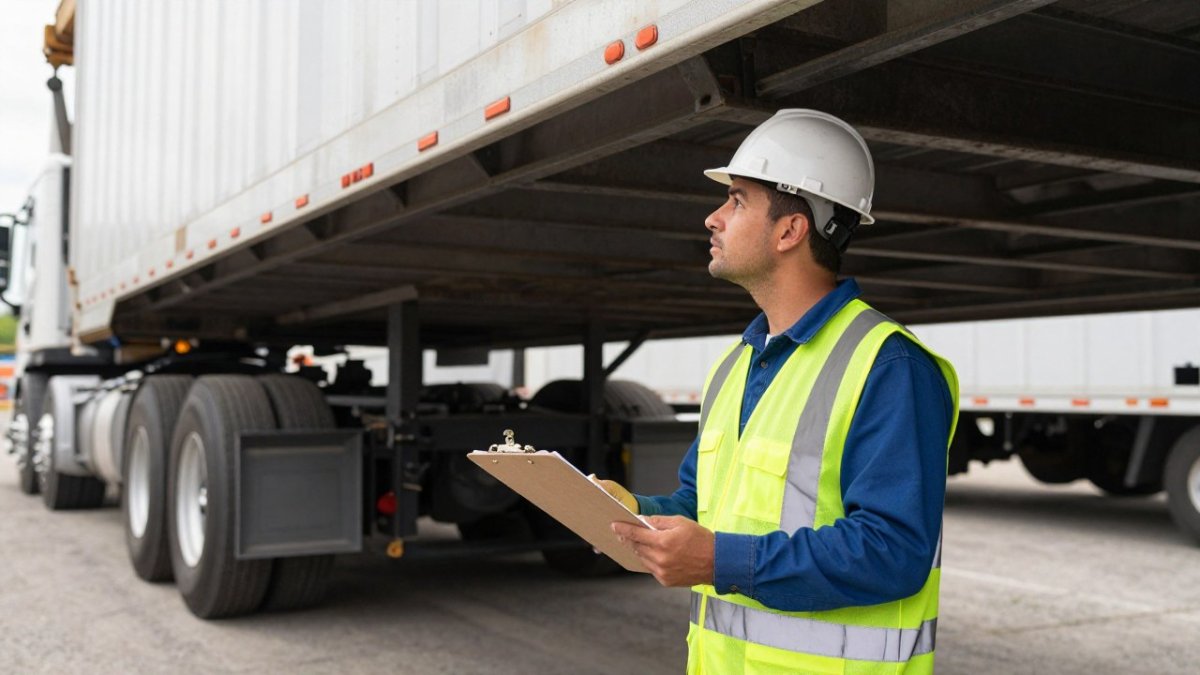
Watch out: a photo set that shows only the clean side of a trailer tells you nothing. Insist on underside and brake shots, or you will be arguing about rust from another continent.
Used Trailer Export Documentation That Protects Your Purchase
Correct used trailer export documentation is your main protection if a dispute arises. It proves what was sold, in what condition, and under which terms.
Your file should hold a sales contract, a bill of sale, vehicle identification details, a condition report, and shipping records. Keep digital copies. Paper disappears in transit.
The stakes rise with international commerce. Fraud and compliance problems in cross-border equipment sales are common enough that working through a broker who handles the paperwork is worth the effort. Our article on selling heavy equipment overseas explains how a broker protects the sale and gets the seller paid in full.
Watch out: a handshake and a wire transfer with no written condition report is not a deal, it is a gamble.
Export Trailer Warranty and Repairs: What to Agree Before Delivery
Export trailer warranty and repairs need to be settled in writing before the trailer ships. Used equipment rarely carries a manufacturer warranty, so the terms you negotiate are the terms you live with. The gap most export deals leave open is not the warranty length, it is the claim process. A warranty with no defined evidence standard and no named decision-maker is a promise, not coverage.
Decide these six points up front and write each one into the sales contract:
- Covered defects. Name the components: frame cracks, kingpin wear, suspension hangers, landing gear, axle tubes. State plainly that tires, brake linings, lights, seals, and other wear items are excluded.
- Parts and labor split. Say who pays for the replacement part, who pays the technician, and whether labor is reimbursed at a flat rate or at the local shop's invoice.
- Coverage window. A common pattern is a short window measured from the delivery date at the destination port, not from the ship date, so transit time does not eat the coverage.
- Claim evidence. Require dated photos, a short video of the failure, the trailer's serial number and data plate photo, and the repair shop's written diagnosis. Without these, a seller cannot verify the claim and will usually deny it.
- Decision timeline. State how many business days the seller has to approve or deny a claim after receiving complete evidence. Silence should be treated as denial so the buyer is not left waiting.
- Dispute path. Name the governing law, the forum for disputes, and whether mediation is required before arbitration.
A workable claim workflow looks like this: the owner documents the failure, sends the evidence package to the named contact, receives an approval or denial within the stated window, then either authorizes the local repair or waits for a parts shipment. Reimbursement follows the original invoice and the approval letter. Keep every message in writing.
Watch out: a warranty that covers "structural defects" without defining which components are structural will be read narrowly by the seller and broadly by the buyer, settle that definition before delivery, not after a frame crack appears.
Cross-border limitations are real. A seller cannot dispatch a technician to another country economically, so most export warranties are parts-only or parts-plus-reimbursed-labor. Ask directly which model applies, and confirm whether the seller will ship a replacement part internationally or only credit its value against a local purchase.
Remote Troubleshooting and Support Across Time Zones
Remote troubleshooting is where most exported used trailers succeed or fail as an ownership experience. A trailer sitting idle in another hemisphere costs money every day, and the difference between a two-day fix and a two-week fix is usually the quality of the first message the owner sends.
Build a standard evidence package before you report a fault. Every support case should open with:
- Trailer identification: serial number and a clear photo of the data plate.
- Fault description: what the trailer is doing, when it started, and whether it is constant or intermittent.
- Photos: the failed component from two angles, plus a wider shot showing its location on the trailer.
- Video: thirty to sixty seconds showing the symptom in motion, air leaking, a brake dragging, a light flickering.
- Recent history: any repair, tire change, or impact in the weeks before the fault appeared.
With that package, a technical contact can usually narrow the cause to one or two components and decide between a local repair and a parts shipment on the first reply. Without it, the case turns into a week of back-and-forth questions.
Set up a simple escalation path and write it down: first contact for technical questions, a named second contact for escalation, and a stated window for replies. Time zones are manageable if you agree on a window rather than expecting instant answers at 3 a.m. A practical arrangement is a defined overlap block, for example, a few hours when both sides are awake, for live calls, with everything else handled by message.
Watch out: a video call is only useful if the person on the trailer end has a charged phone, a light, and permission to be under the trailer, confirm those before scheduling, or the call gets wasted.
Keep a simple log of every case: date opened, evidence sent, diagnosis, action taken, date closed. That log becomes your leverage if a warranty claim is disputed later, and it shows the seller you are a serious operator worth prioritizing.
Sourcing Spare Parts and Replacement Parts for Semi-Trailers
Spare parts sourcing decides how long downtime lasts. Semi-trailers use widely available components, but availability at your location is the real question.
Build a parts list from the inspection report before shipping. Note brake chambers, slack adjusters, seals, lights, and suspension bushings. Then confirm which of those you can source locally.
For reference on how complete equipment details look, our TALBERT RGN 50 ton lowboy listing shows the specifications worth recording.
- Identify part numbers from the trailer's data plate
- Ask the seller which components are standard versus proprietary
- Price local equivalents before ordering internationally
- Keep one spare of each fast-wearing part on hand
Commercial vehicle maintenance guidance from the American Trucking Associations
Building a Local Repair Network for Pre-Owned Equipment
A local repair network turns a crisis into a scheduled job. Pre-owned equipment will need maintenance, and having a shop already briefed saves days.
Start before delivery. Ask other fleet operators in your area who they trust for trailer frame and brake work. Visit two shops, explain the equipment, and leave the inspection report with them.
Technician familiarity matters. A shop that works on semi-trailers weekly will diagnose faster than a general garage seeing one for the first time.
Setting Service Response and Downtime Expectations
Realistic service response expectations prevent frustration. No broker can promise same-hour answers across every time zone, and any that does is overselling.
Agree on measurable terms in the contract:
| Support Element | What to Agree | Why It Matters |
|---|---|---|
| First response | A stated window for replies | Sets a clear expectation |
| Parts quote | Days to receive a quote | Controls downtime planning |
| Warranty claim | Steps and timeline | Avoids disputes later |
| Escalation | A named second contact | Prevents dead ends |
Write these into the sales contract. Verbal promises fade once the trailer clears the port of export.
Join the Ironmartonline Email List Before Your Next Export
The best time to line up after-sales support for exported used trailers is before you buy, not after something fails. Buyers who plan inspections, documentation, warranty terms, and parts sourcing in advance spend far less time with equipment sitting idle.
If you are still weighing your options, our equipment broker alternatives comparison lays out how auction sites, consignment, and direct brokerage differ. Read it before you commit.
Cross-border equipment deals carry real risk, and the support you arrange up front decides how much of that risk you keep. Ironmartonline connects buyers and sellers of used machinery through nine web-based selling platforms, with no contracts and no hidden fees, so the conversation continues long after delivery. Start with a clear inspection, a complete documentation file, and a named contact. Get started with Ironmartonline and protect your next export from the first inspection onward.
Frequently Asked Questions
What after-sales support should a buyer expect when purchasing a used trailer for export?
A practical support package covers four things: a documented pre-shipment inspection, a written warranty or repair agreement with clear exclusions, a named contact for remote troubleshooting, and a parts sourcing path for replacement components. Ask for the inspection report, the warranty terms, and response expectations in writing before you sign the sales contract. Exported used trailers move far from the seller, so the paperwork you collect at purchase is what you rely on months later when a brake chamber or landing gear needs attention.
What documents should accompany an exported used trailer?
Expect a bill of sale, certificate of origin or title, vehicle identification details, and a commercial invoice. Depending on the destination country, you may also need a packing list and any import permits the buyer's customs broker requests. Used trailer export documentation should match the trailer's actual condition and identification exactly; mismatches at the port of export cause delays and extra freight charges. Keep digital copies of everything and share them with your customs broker before the trailer reaches the terminal.
Who handles repairs if an exported used trailer has a problem after delivery?
That depends on what the sales contract says. Some sellers offer a limited warranty covering specific components for a set period; others sell as-is and the buyer arranges repairs locally. Before shipping, agree in writing who pays for what, which parts are excluded, and how a claim is filed. For export trailer warranty and repairs, the strongest arrangements name a local shop or technician in the destination country and set a response window for remote troubleshooting so downtime stays short.
How can I inspect a used trailer before it is shipped overseas?
Commission a used trailer pre-shipment inspection covering the frame, suspension, brakes, lights, tires, landing gear, and body panels. Photograph every defect and record the trailer's identification number in the report. If you cannot inspect in person, hire a third-party inspector and require dated photos and a written summary. That report becomes your baseline for any warranty claim later, so keep it with the export documentation and reference it in the sales contract.
