

Last Updated: November 8, 2026
Quick Summary
Marketing used trailers to European buyers means pricing against real comparables, listing on marketplaces European importers actually browse, and leading with full specifications and honest condition notes. Demand is returning, with trailer sales expected to grow in the low double digits in 2026, so sellers who plan and present well win the sale.
- Price at or slightly below the midpoint of comparable listings when you need speed.
- Importers buy on specification and photos, so send axle configuration, deck length, and payload first.
- Germany is the default first target, accounting for 18% of EU semi-trailer sales in 2016.
- Track listing views, qualified inquiries, inspection requests, and days to close per platform.
- Verify the buyer's business identity and never ship before funds clear.
Table of Contents
- Building a Marketing Plan for Used Trailers Aimed at European Buyers
- Why use Ironmartonline as your equipment broker
- How to Sell a Used Trailer Internationally Without Losing Margin
- Where to Find European Importers for Used Trailers
- Used Trailer Listing Best Practices That Convert Browsers Into Buyers
- Comparing International Truck and Trailer Selling Platforms
- Country-by-Country Buyer Preferences and Channel Selection
- Cross-Border Logistics, VAT, and Documentation for Trailer Sales
- Measuring Marketing Performance and Avoiding Common Scams
- Preparing Your Trailer for an International Sale
- Listing Your Used Trailer With Ironmartonline
- Frequently Asked Questions
Building a Marketing Plan for Used Trailers Aimed at European Buyers
Marketing used trailers to European buyers starts with one reality check: demand is returning, but buyers are choosier than they were three years ago. According to ING Think's European trailer market analysis, trailer sales are expected to return to growth in 2026, likely in the low double digits, after three years of contraction. That recovery rewards sellers who plan. It punishes sellers who list and wait.
At Ironmartonline, we broker heavy equipment across nine web-based selling platforms, with no contracts and no hidden fees, so listings reach international buyers instead of sitting in one regional pool.
Why use Ironmartonline as an equipment broker? Because a trailer listed on a single site competes with whatever local demand exists that week. A trailer marketed through a brokerage with nine platforms and global reach competes for international buyers, and that wider pool is what supports your asking price.
Here is the uncomfortable part most guides skip: a big buyer pool does not guarantee strong resale values on its own. ING notes that remarketing values were low and used trailers plentiful in recent years, which means presentation and pricing discipline now decide who sells. Below, we'll show you exactly how to build a plan around that.
Why use Ironmartonline as your equipment broker
The short answer: reach plus process. Ironmartonline connects buyers and sellers of used machinery on a global and local scale, and the brokerage model means you are not managing nine separate listings yourself.
What most sellers miss is the time cost of going direct. Photographing, writing specs, answering inquiries, vetting buyers, and chasing paperwork across time zones adds up fast. A broker absorbs that work.
We built Ironmartonline around three things: nine web-based selling platforms, no contracts, and no hidden fees. That combination matters for owner-operators with two trailers as much as for fleet managers moving a whole lot.
One honest limitation: a brokerage cannot invent demand. If your trailer is overpriced against comparable inventory, no platform will fix that. What the platforms do is put your trailer in front of millions of potential buyers so the market, not a single region, sets the outcome.
How to Sell a Used Trailer Internationally Without Losing Margin
Margin leaks in three places: pricing, timing, and transaction terms. Fix those and international selling stops being a gamble.
Start with replacement demand. MarketsandMarkets projects the European semi-trailer market at $8,088.2 million in 2026, rising to $11,334.5 million by 2031. Growing markets pull used inventory through faster, which supports firmer pricing than a flat market would.
Then price against real comparables, not hope. Pull asking prices for the same trailer type, age band, and condition grade, then position at or slightly below the midpoint if you need speed.
- Set a floor price before you list, and do not negotiate below it
- Quote in USD to keep cross-border conversations simple
- State condition honestly up front; surprises kill deals at inspection
- Agree who pays freight and duties before signing anything
The margin killer is a trailer that sits for months. Every week on market invites lower offers.
Where to Find European Importers for Used Trailers
European importers concentrate where commercial transport runs: freight corridors, port hinterlands, and distribution hubs. You reach them through marketplaces, dealer networks, and direct outreach, not through cold guessing.
International marketplaces are one proven route. TIP Used describes Truck1.eu as an international marketplace linking buyers and sellers with middleman services, which shows the model works for commercial vehicles crossing borders.
A practical sequence:
- List on marketplaces with European buyer traffic
- Identify importers and dealers already buying your trailer category
- Send a short spec sheet with photos and your asking price
- Follow up once, then move on
What most guides miss is that importers buy on specification and photos, not sales copy. Give them axle configuration, deck length, payload, brake type, and tire condition in the first message.
Used Trailer Listing Best Practices That Convert Browsers Into Buyers
A listing converts when it answers the buyer's questions before they ask. That means complete specs, honest condition notes, and photographs that show what a buyer would inspect in person.
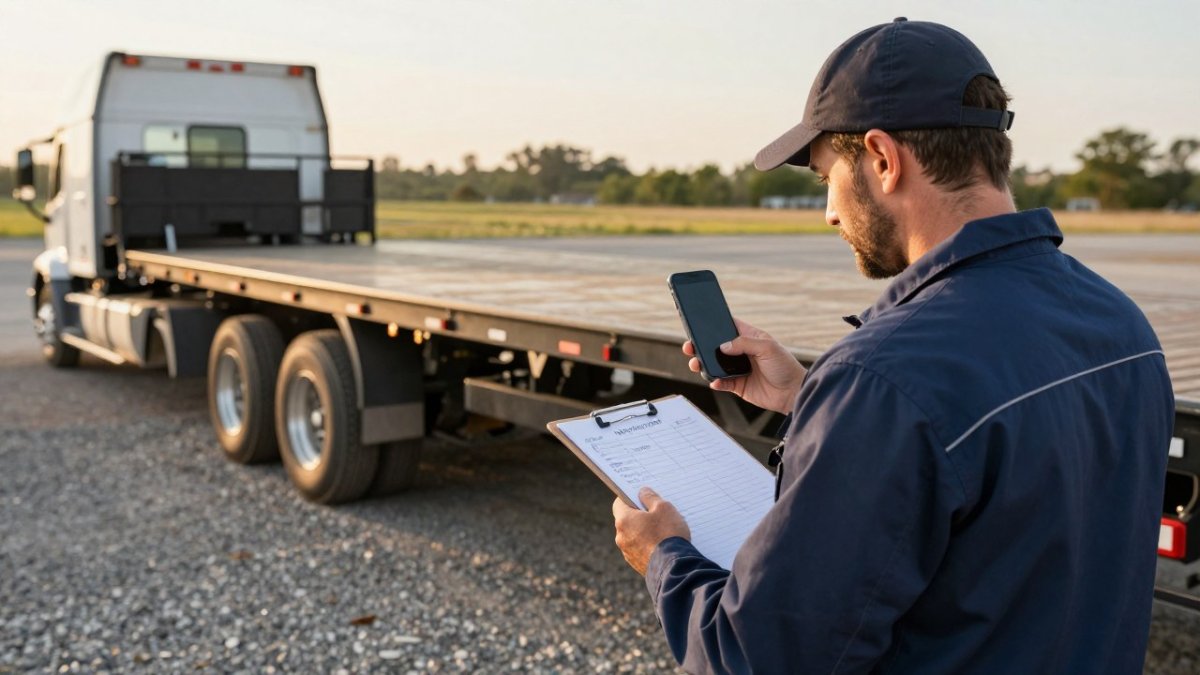
Write the headline around the trailer, not the seller: type, year, capacity, and condition grade. Buyers scan headlines and open only the ones that match their filter.
Photographs and condition details that answer buyer questions
Photograph the trailer the way an inspector would. Shoot all four sides, the deck surface, the underside frame, the axles, the tires with tread visible, the landing gear, and the rear doors or ramps. Use daylight, clean the trailer first, and skip filters.
Condition notes should name flaws plainly. "Surface rust on rear frame crossmember, no structural damage" builds more trust than silence, and it prevents a buyer from walking away at inspection.
Include:
- Tire brand, size, and remaining tread
- Brake and suspension type
- Any repairs or welds
- Service records if you have them
Comparing International Truck and Trailer Selling Platforms
Platform choice comes down to buyer reach, listing effort, and cost structure. The table below is a starting point; how well your listing performs on whichever platform you choose matters just as much.
| Platform type | Buyer reach | Listing effort | Best for |
|---|---|---|---|
| Regional classifieds | Local dealers | Low | Quick local sale |
| International marketplaces | Cross-border importers | Medium | European buyer access |
| Brokerage with multiple platforms | Global and local | Handled for you | Sellers who want reach without the admin |
| Auction channels | Dealers and resellers | Medium | Fast liquidation, variable price |
For a deeper look at where heavy equipment actually sells, see our guide to trusted platforms to sell used heavy equipment online, and if you are weighing marketplaces side by side, this comparison of the best platforms to sell used industrial machinery covers the trade-offs.
What most reviews miss is that platform count matters less than platform fit. A trailer suited to European importers belongs on marketplaces those importers actually browse. The practical test: search the platform for your trailer type, year band, and axle configuration. If fewer than a handful of comparable listings appear, that platform's buyers are not shopping your category. Once a platform shows a real pool of comparable listings, compliant trailer sourcing helps keep the next step aligned with the requirements of the market.
Listing optimization that separates a sale from a scroll-past
Once you pick a platform, the listing itself decides whether buyers inquire. Here is a sequence that helps a listing convert.
Headline formula. Lead with year, trailer type, capacity, and condition grade, for example, "2019 53' Step Deck, 40-Ton Capacity, Good Condition." Buyers filter by these attributes, so the headline should read like a filter result, not a slogan.
Photography set. Shoot in daylight after washing the trailer. The minimum set: all four sides, deck surface, underside frame, axles, tires with tread visible, landing gear, and rear doors or ramps. Add a short walkaround video if the platform allows it, video reduces inspection requests from buyers who are far away.
Specification block. List axle configuration, deck length and width, payload, brake type, suspension type, tire brand and remaining tread, and any repairs or welds. Importers buy on specification and photos, not sales copy, so put the numbers where they can be scanned.
Condition disclosure. Name flaws plainly. "Surface rust on rear frame crossmember, no structural damage" builds more trust than silence and prevents a buyer from walking away at inspection.
Pricing position. Pull asking prices for the same trailer type, age band, and condition grade on the same platform, then position at or slightly below the midpoint if you need speed. A trailer priced above every comparable listing will sit regardless of platform reach.
Watch out: listing the same trailer on multiple platforms without a single point of contact creates duplicate inquiries and confused buyers, route every listing to one response channel.
Measuring whether the platform is working
Track four numbers per platform: listing views, qualified inquiries, inspection requests, and days to close. Views without inquiries means the photos or headline are weak. Inquiries without inspections means the price or condition notes are off. A platform that produces views but no qualified inquiries is not a reach problem, it is a listing problem, and switching platforms will not fix it.
Country-by-Country Buyer Preferences and Channel Selection
Buyer behavior shifts by market, and the same trailer can attract different interest depending on where it is listed. The practical edge is matching channel to market. Germany has historically been the largest single market in the region; International Council on Clean Transportation analysis found Germany accounted for 18% of EU semi-trailer sales in 2016, when roughly 188,000 units sold. That scale makes it the default first target, but it is not the only one.
A workable regional logic looks like this:
- High-volume freight markets (Germany, the Netherlands, Belgium): international marketplaces and dealer networks. Buyers here comparison-shop across borders and expect full specification blocks.
- Port-adjacent regions (Rotterdam, Antwerp, Hamburg hinterlands): importers and export consolidators who buy for resale or redeployment. They move fast on priced-right inventory and care about documentation readiness.
- Smaller or peripheral markets: regional classifieds plus direct outreach. Volume is lower, but competition for good used inventory is often thinner, which can support firmer pricing.
- Nordic and Alpine markets: buyers often prioritize winter-specific specs such as brake condition and corrosion resistance, so lead with those details in the listing.
Language matters too. A listing written only in English narrows your pool in markets where buyers search in their own language. Add a translated summary of the key specs, axle configuration, deck length, payload, brake type, where the platform allows it. You do not need a full translation; a spec summary in the buyer's language signals that you are serious about the market.
How to test a market before committing
You do not need to guess which market will respond. Run a small test: list the trailer on one international marketplace with a translated spec summary, track views and inquiries by country for two to three weeks, then concentrate follow-up where the qualified inquiries come from. A common pattern is that one or two markets produce most of the serious interest, and doubling down there beats spreading effort evenly.
Watch out: assuming a large market is automatically the best market, a smaller market with thinner competing inventory can produce a faster sale at a firmer price than a crowded one.
Cross-Border Logistics, VAT, and Documentation for Trailer Sales
Cross-border trailer sales can stall on paperwork as easily as on price. Get the documentation sequence right and the transaction moves; get it wrong and a sold trailer stalls at a border.
Core documents: a commercial invoice, a bill of sale, the certificate of title or ownership documentation, and export or import declarations as required by the destination country. Confirm the specific requirements with a customs broker before you quote freight, because rules vary by destination.
VAT treatment depends on the destination country and the buyer's registration status, so confirm it with a qualified tax advisor rather than guessing. For the shipping sequence itself, our guide on how to ship used heavy equipment internationally walks through the export steps.
Watch out: quoting a delivered price before you have a freight and duty estimate is how sellers lose margin after the handshake.
Measuring Marketing Performance and Avoiding Common Scams
Track four numbers: listing views, qualified inquiries, inspection requests, and days to close. Views without inquiries means the photos or headline are weak. Inquiries without inspections means the price or condition notes are off.
Scam prevention follows simple rules. Verify the buyer's business identity before releasing documents. Use traceable payment methods, never ship before funds clear, and be suspicious of overpayment offers or buyers who refuse an inspection.
- Confirm company registration and trading history
- Insist on a written purchase agreement
- Keep all communication in writing
- Use escrow or verified bank transfer for high-value sales
What most sellers learn too late is that a fast, clean transaction beats a higher offer from an unverified buyer every time.
Preparing Your Trailer for an International Sale
Preparation is the cheapest margin protection available. A clean, documented trailer photographs better, inspects better, and commands firmer offers.
Start with a wash and a walkaround. Note every defect, then decide which are worth fixing. Tires and brakes top the list because buyers price those into offers immediately.
Then assemble a file: service records, tire ages, brake inspection notes, and any repair invoices. A seller who hands over a documented history shortens the buyer's decision cycle.
Finally, confirm the trailer is legally ready to transfer, with clear title and no outstanding liens.
Listing Your Used Trailer With Ironmartonline
Listing with Ironmartonline puts your trailer on nine web-based selling platforms at once, with no contracts and no hidden fees. You keep selling; we handle the reach.
Before you list, browse the used heavy equipment categories on our marketplace, including low boys, step decks, tags, and heavy haul trailers, so you can see how comparable inventory is presented.
For current fee details, contact Ironmartonline directly.
Selling a used trailer into Europe in a recovering market rewards sellers who plan the listing, price against real comparables, and document condition honestly. Ironmartonline connects your trailer to international buyers through nine selling platforms, with no contracts and no hidden fees, and a brokerage process built to remove the admin from your side. Get started with Ironmartonline and put your trailer in front of the buyers most likely to pay your price.
Frequently Asked Questions
What is the best way to market used trailers to European buyers?
Start with a complete listing: clear photographs, a written condition report, and the trailer's specifications. Then place it on platforms that reach international buyers, and price it against comparable trailers already selling in Europe. Remarketing values have been low and used trailers plentiful in recent years, so realistic pricing matters more than volume of listings. A broker with access to multiple selling platforms can widen your reach without you managing each channel separately.
How do I find European importers for used trailers?
Importers tend to gather where inventory is listed, so international marketplaces and broker networks are the practical starting point. Look for buyers who already handle cross-border purchases and ask about their typical trailer types and volumes. Country matters too: Germany accounted for 18% of EU semi-trailer sales in 2016, per the International Council on Clean Transportation, which suggests a deep buyer base there. Verify each importer's registration and trading history before negotiating.
What documents are needed to export a used trailer?
At minimum you will need a bill of sale, the trailer's title or registration documents, and a commercial invoice for customs. Cross-border sales within Europe also involve VAT treatment, so confirm the rules that apply to your buyer's location before quoting a final price. Keep service records and any inspection reports with the paperwork, since European buyers often ask for them. A brokerage that handles international sales can tell you which documents a specific buyer requires.
How can I build trust with overseas trailer buyers?
Transparency does most of the work. Publish detailed photographs, an honest condition report, and the trailer's history, and answer questions about shipping and delivery promptly. Verified seller status on a reputable platform helps, as does working through a broker with an established name in used heavy equipment. Buyers who have been burned by fake listings will check whether your contact details, paperwork, and listing all match before they commit.
