
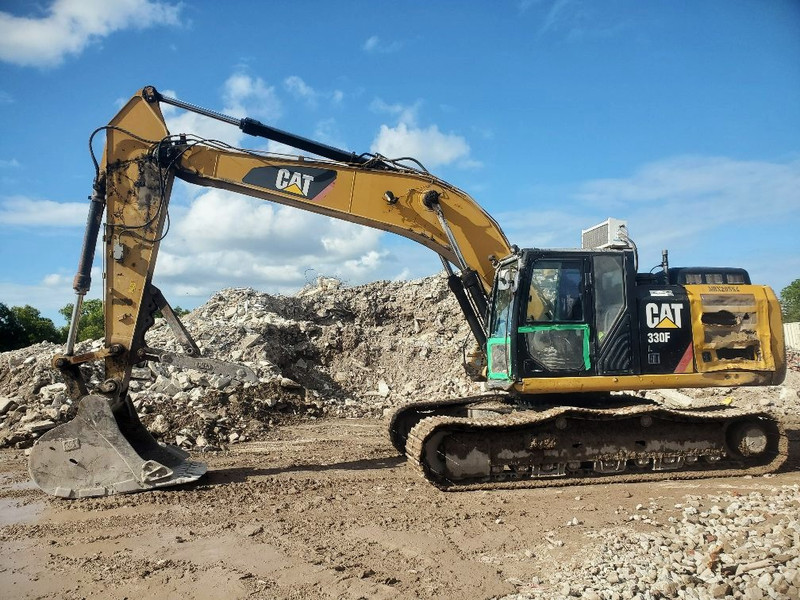
Last Updated: November 6, 2026
Quick Summary
An auction scam typically involves fake listings, seller impersonation, and pressure to wire money before inspection. Protect yourself by verifying the platform and seller, reading written auction terms, confirming the machine's location with a live walkaround, and never wiring full payment before independent inspection.
- Reported losses tied to a single online equipment scam totaled about $51,000.
- More than one in nine used-machinery checks in 2026 uncovered a theft.
- A domain registered weeks ago is not an established auction platform.
- Wire transfers and crypto are hard to reverse, so scammers prefer them.
- Less than 25% of stolen construction equipment is recovered each year.
Table of Contents
- Why Heavy Equipment Auction Scam Awareness Matters Now
- How Online Heavy Equipment Scams Actually Work
- Heavy Equipment Auction Red Flags to Watch For
- How to Verify an Equipment Auction Website
- Equipment Auction Payment Scams and Safer Ways to Pay
- Buying Machinery Online Without Seeing It
- Title, Lien, and Serial Number Checks Most Buyers Skip
- What to Do If You've Already Sent Money
- Join the Ironmartonline Email List Before Your Next Bid
- Frequently Asked Questions
Why Heavy Equipment Auction Scam Awareness Matters Now
Heavy equipment auction scam awareness starts with one uncomfortable number. According to reporting on a Better Business Bureau equipment scam alert, reported losses tied to a single online equipment scam totaled about $51,000, with victims across the country wiring money for machines that never existed.
That is not a rounding error. That is a down payment on a dozer, gone.
So why use Ironmartonline as an equipment broker? Because a broker who lives on repeat business has a reason to vet every listing and every seller. For buyers weighing auction risk, why buying used heavy equipment makes financial sense lays out the case for sourcing through vetted channels. Ironmartonline is a heavy equipment brokerage that connects buyers and sellers of used machinery through nine web-based selling platforms, with no contracts and no hidden fees.
The risk is real and it is rising. TER research reported by Pro Arb Magazine found that more than one in nine used-machinery checks in 2026 uncovered a theft.
Below, we break down how the scams work, the red flags to catch early, and a verification checklist you can run before you bid.
How Online Heavy Equipment Scams Actually Work
Most equipment auction scams follow a simple script: show a machine that does not exist, demand money fast, then disappear.
The pattern repeats because it works. A scammer posts a tractor or excavator at a greatly reduced rate, answers questions with polished replies, and pushes you toward a wire transfer before you can inspect anything.
Seller Impersonation and Fake Listings
Impersonation is the engine behind most of these schemes. The Federal Trade Commission alert on farm equipment impersonation describes scammers posing as farm-equipment businesses and selling equipment that does not exist.
Here is how the con usually runs:
- The seller copies a real dealership's name, logo, and contact layout
- Photos get lifted from a legitimate listing and reused
- The "sales rep" only communicates by text or email
- Payment goes to a personal account or a third-party wire
- The listing vanishes once funds clear
AgDirect notes that equipment fraud shows up through dealerships, auctions, and private-party transactions alike. The channel changes. The playbook does not.
Heavy Equipment Auction Red Flags to Watch For
The clearest heavy equipment auction red flags are price, photos, and pressure. Any one of them is a warning. Two together should end the conversation.
Prices, Photos, and Pressure Tactics
Start with the number. An unusually low price on a machine with low hours is the oldest hook in the book.
Then look at the listing itself:
- Poor-quality images, or photos that appear on other sites
- No serial number or hours listed
- A seller who refuses a video walkaround
- Contact information that is a free email address only
- Urgency language like "first deposit takes it"
- Requests for upfront payment before any inspection
Payment pressure is the tell that matters most. A legitimate seller will hold a machine for a reasonable deposit through a traceable channel. A scammer needs your money moved before you think.
How to Verify an Equipment Auction Website
Verifying an equipment auction website is not the same as verifying a dealership listing. An auction platform sits between you and the seller, so you are checking two things at once: whether the platform is real, and whether the platform's rules actually protect your money. The auction-specific checks below help separate a real platform from a convincing front.
Step 1: Confirm the platform, not just the listing
Start with the business behind the site, not the machine.
- Check the domain age and registration. A domain registered weeks ago is not an established auction platform. Look up the registration date through a public WHOIS lookup.
- Search the business name plus "scam," "complaint," and "lawsuit." Read consumer affairs threads and court records, not testimonials hosted on the site itself.
- Confirm a physical address and a real phone number. Call it during business hours. Ask for the yard manager, not a general sales line.
- Look for a state business registration or auctioneer license where the platform claims to operate. Where auctioneers are licensed, ask for the license number and verify it with the issuing agency.
- Reverse-image search the equipment photos. Stolen images surface fast across other listings.
Step 2: Read the auction terms before you register
This is the step buyers skip, and it is where auction scams hide. A legitimate auction publishes its terms in writing. Request them and read them before you place a bid.
- Buyer's premium. Most auctions add a percentage on top of the hammer price. Confirm the exact percentage and whether it applies to the winning bid only.
- Deposit and registration requirements. Real auctions often require a refundable deposit or a pre-authorization to bid. Confirm how and when it is refunded if you do not win.
- Payment deadline and accepted methods. Legitimate auctions state the deadline (often a set number of business days) and the accepted channels. Be wary of any platform that accepts only wire transfers to a personal account.
- Removal and storage deadlines. Confirm how many days you have to remove the machine and what storage fees apply after that.
- Bid retraction and default rules. Understand what happens if you win and cannot pay, and what recourse you have if the seller fails to deliver.
Watch out: a platform that will not send written terms, or that changes the terms after you register, is a warning sign regardless of how professional the site looks.
Step 3: Test the escrow and payment claims
Many scam sites advertise "escrow protection" without naming a licensed escrow provider. Ask which licensed escrow company holds the funds and verify that company independently. A claimed escrow service can itself be fake. If the platform cannot name a verifiable, licensed escrow provider, treat the "protection" as marketing. Because false escrow claims can make a fraudulent sale look credible, apply the same checks to the auction itself when you verify legitimate auctions.
Step 4: Confirm the machine's location and a live walkaround
Ask for the machine's physical location and a live video walkaround the same day. A real auction can arrange this because the machine is in its yard or a known consignor's yard. A scam cannot, because the machine does not exist. Ask a technical question about the machine (hydraulic hours, undercarriage condition, service history) and see whether the answer is specific or generic.
Step 5: Cross-check the listing against real inventory
When you are ready to compare against legitimate inventory, you can browse used heavy equipment listings from known makes and see how real listings present serial numbers, hours, and photos. A real listing shows the machine's identifying details; a scam listing hides them.
The woman is American.
Equipment Auction Payment Scams and Safer Ways to Pay
Wire transfers and crypto are the payment methods scammers want, because both are hard to reverse. Equipment auction payment scams almost always end with money sent by wire to an account that closes within days.
Here is how the common methods stack up:
| Payment Method | Reversible? | Risk Level | Best For |
|---|---|---|---|
| Wire transfer | No | High | Verified sellers only, after inspection |
| Cryptocurrency | No | Very high | Never for equipment purchases |
| Gift cards or prepaid cards | No | Very high | Never, in any transaction |
| Credit card | Yes, with dispute rights | Low | Deposits and small payments |
| Escrow service | Yes, if licensed | Low to medium | Large remote purchases |
| Letter of credit | Conditional | Low | Cross-border deals with contracts |
A few rules cover most of it. Never wire a full payment before you or a trusted inspector has seen the machine. Use a licensed escrow service for remote deals. Keep every receipt, email, and listing screenshot.
Buying Machinery Online Without Seeing It
Buying machinery online without seeing it is workable, but only with independent verification. Skip that step and you are gambling on a photo.
Remote inspection options that hold up:
- Hire a third-party equipment inspector in the machine's area
- Request a live video call with the machine running
- Ask for a cold-start video showing the hour meter
- Have a local mechanic pull fluid samples
- Confirm the machine's location matches the seller's claimed yard
The used-versus-new math also matters here. If you are weighing a remote purchase, our breakdown of used heavy equipment versus new equipment pros and cons covers depreciation, maintenance, and tax angles before you commit.
One more point. A seller who resists any form of independent inspection has told you everything you need to know.
Title, Lien, and Serial Number Checks Most Buyers Skip
Ownership checks are the step buyers skip most, and they are the cheapest insurance in the deal. A machine can look perfect, run well, and still be unsellable because someone else holds a lien on it or because it was reported stolen. The checks below confirm that the seller can legally transfer the machine and that the identifying details match the documentation.
Match the serial number in three places
The serial number is the machine's identity. It should appear in three places, and all three should match:
- On the machine itself, the data plate or stamped frame number.
- On the listing, the number the seller advertised.
- On the bill of sale, the number on the document you will sign.
If any of the three disagree, stop. A mismatched serial is either a clerical error the seller can explain in writing or a sign the machine's identity has been altered.
Confirm the seller can produce ownership documentation
Ask what document proves the seller owns the machine. Depending on the machine and state, that may be a title, a manufacturer's statement of origin (MSO), or a bill of sale from the prior owner. Not every piece of heavy equipment is titled in every state, so ask the seller what documentation they have and why. A seller who cannot explain the chain of ownership has a problem you should not inherit.
Run a lien search
A lien search confirms whether a lender or lessor has a security interest in the machine. Run it through the appropriate state agency, typically the secretary of state's UCC filing database where the seller is located, and the state where the machine is kept. Ask the seller for a lien release if a filing appears. A machine sold with an outstanding lien can be repossessed from you even after you pay.
Check theft databases
The serial number should be checked against theft databases before money moves. If you are buying remotely, have your independent inspector photograph the data plate and compare it to the listing and paperwork.
Get a clean bill of sale
The bill of sale should include the seller's legal name, the machine's make, model, year, serial number, hours, and the sale price, signed and dated. If the seller signs under a business name, confirm the signer is authorized to sell for that business.
Why this matters more than buyers think
The recovery numbers explain why this matters. construction equipment theft statistics from LiveViewGPS report that less than 25% of stolen construction equipment is recovered each year. Buy a stolen machine and you can lose both the equipment and your money, and you may face questions from law enforcement about how you came to possess it.
For a full walkthrough on matching a machine's identity to its value, see our guide on how to determine excavator value by serial number.
What to Do If You've Already Sent Money
Act fast. The first 24 to 48 hours matter most for recovery.
- Call your bank or wire provider immediately and request a recall on the transfer.
- Report the fraud to the FTC at ReportFraud.ftc.gov and to your state attorney general.
- File a report with local law enforcement and get the report number.
- Report the listing to the auction platform or website host.
- Preserve everything: emails, texts, listing screenshots, wire receipts, and caller numbers.
- Flag the domain to the hosting provider and to consumer affairs sites.
- Watch for follow-up scams. Fake "recovery agents" often target victims next.
If the deal has collapsed and you still need to move equipment, our guide on how to sell used construction machinery online walks through a verified process from pricing to closing.
Join the Ironmartonline Email List Before Your Next Bid
The best defense against a heavy equipment auction scam is a short list of habits: verify the seller, inspect the machine, check the paperwork, and never wire money on trust alone. That is the whole game.
At Ironmartonline, we connect buyers and sellers of used machinery through nine web-based selling platforms, with no contracts and no hidden fees. Our reach puts listings in front of millions of potential buyers, and our team works with owner-operators as readily as fleet managers.
Visit the Ironmartonline website for current listings and details on how the platform works.
Frequently Asked Questions
Do online equipment auctions have fake bidders?
They can. Shill bidding, where a seller or someone working with them places bids to push the price up, is one of the harder patterns to spot because it looks like normal competition. Watch for a bidder who repeatedly appears only on one seller's listings, or bidding that jumps in odd increments right before close. Reputable auction platforms track bidder behavior and remove accounts that manipulate results. If a platform will not explain how it monitors bidding, treat that as a reason to look elsewhere.
How can you verify that a heavy equipment auction website is legitimate?
Start with the business identity, not the listings. Search the company name plus the word scam, check whether the physical address matches a real commercial location, and confirm a working phone number that a person answers. Look at how long the domain has existed and whether the site has a published terms-of-sale page. Then test the listing itself: ask for a photo of the machine's serial plate next to a dated item. A legitimate operation answers these requests without pressure or delay.
What should you do if you think you have been scammed in an equipment sale?
Contact your bank or wire provider immediately and ask about a recall or fraud claim, since speed matters more than anything else at this stage. Report the incident to the FTC at ReportFraud.ftc.gov and to your state attorney general. File a report with the FBI's Internet Crime Complaint Center if money crossed state lines. Save every message, listing screenshot, and payment receipt. Then report the listing to the platform that hosted it so the page comes down before the next buyer wires money.
Can you inspect heavy equipment before bidding online if the machine is far away?
Yes, and you should. Hire a third-party inspector near the machine rather than relying on the seller's photos or a video walkaround. Ask the inspector to confirm the serial number on the plate matches the listing, check hour meter readings against service records, and photograph any leaks or frame repairs. A seller who refuses an independent inspection, or who insists the machine will sell to someone else unless you skip it, is telling you what you need to know.
