

Last Updated: November 9, 2026
Quick Summary
International trailer financing is any loan or lease used to fund a trailer purchase where the buyer, seller, or trailer sits in a different country from the lender. You can arrange it through a buyer-arranged loan, which travels better across borders, or dealer financing, which is faster but usually limited to domestic lender networks.
- Dealer financing is faster but its lender network is usually domestic, so overseas buyers may get a referral rather than an approval.
- Buyer-arranged financing takes longer but lets you compare annual percentage rates and control loan term and down payment.
- Marketplace lenders like My Financing USA offer trailer loans starting at $10,000, often through U.S.-based banks and credit unions.
- Lenders typically advance funds based on a percentage of the trailer's invoice value, not the total landed cost.
- Confirm in writing that the lender will fund a purchase where the seller or trailer is outside the country before paying any application fee.
Table of Contents
- Why Choose Ironmartonline for International Trailer Financing?
- International Trailer Financing at a Glance: Buyer Loans vs Dealer Financing
- Trailer Financing Companies: Who Actually Lends Across Borders
- Equipment Trailer Financing: Matching the Loan to the Load
- Trailer Financing vs. Leasing: Which Fits an International Purchase?
- Trailer Financing with Bad Credit: What Cross-Border Buyers Can Do
- Import Duties, Customs, and Currency Risk in the Total Cost
- How to Vet International Lenders and Sellers Before You Sign
- Next Step: Source and Finance Your Trailer Through Ironmartonline
- Frequently Asked Questions
Why Choose Ironmartonline for International Trailer Financing?
Financing options for international trailer purchases rarely fail because the buyer can't find a lender. They fail because the buyer picks a lender before they've picked the trailer, the shipping terms, and the customs broker. This guide from Ironmartonline covers the whole chain, from loan comparison to the final delivery milestone.
So why use Ironmartonline, an equipment broker, for a financing question? Because the financing terms follow the machine. A lender prices a lowboy differently than a tag-along, and the bill of lading decides when your loan payments actually start. We list used trailers across nine web-based selling platforms and work with buyers and sellers globally. No contracts, no hidden fees, and no pressure to finance through us.
Below, we'll show you exactly how buyer loans stack up against dealer financing, where the total cost hides, and how to vet a lender or seller before you sign. The comparison table further down gives you the short version.
Consumer Financial Protection Bureau guide to auto loans
International Trailer Financing at a Glance: Buyer Loans vs Dealer Financing
International trailer financing is any loan or lease used to fund a trailer purchase where the buyer, the seller, or the trailer itself sits in a different country from the lender. The two main routes are a buyer-arranged loan and dealer-arranged financing, and they behave very differently once borders are involved.
Dealer financing is often faster, since the paperwork can happen at the point of sale. The catch is that a dealer's lender network is usually domestic, so an overseas buyer may end up with a referral rather than an approval.
Buyer-arranged financing takes longer but travels better. You shop lenders yourself, compare annual percentage rates, and keep control of the loan term and down payment. The trade-off is legwork: more applications, more documentation, and more explaining why a trailer in another country is still good collateral.
| Factor | Buyer-Arranged Loan | Dealer Financing |
|---|---|---|
| Speed to approval | Slower, multiple applications | Faster, single point of contact |
| Rate shopping | You compare offers directly | Dealer's network only |
| Cross-border fit | Better, you choose the lender | Limited to dealer partners |
| Down payment | Varies by lender | Often set by the dealer |
| Collateral control | You hold the title terms | Dealer and lender negotiate |
Neither route is wrong. The mistake is choosing one before you know whether the trailer will clear customs and who insures it in transit.
Trailer Financing Companies: Who Actually Lends Across Borders
Many trailer financing companies lend in one country and stop at the border. A lender has to be able to repossess collateral, and that gets complicated when the trailer is on a ship. U.S. lenders also operate under a patchwork of state licensing rules and federal consumer protection laws, and many are reluctant to perfect a security interest in collateral that will be titled and registered in another country.
The practical answer is to sort lenders into three buckets:
- Marketplace lenders that match you with several institutions. My Financing USA works this way for trailer and RV loans, with loan amounts starting at $10,000. These platforms typically partner with U.S.-based banks and credit unions, so cross-border deals may require additional documentation or a U.S. co-borrower.
- Dealer-affiliated finance teams with institutional partners. Sun State International finances commercial trucks and trailers through banks such as BMO Harris and Navistar Financial. Dealer financing is convenient, but the lender network is usually domestic and may not extend to buyers or collateral outside the country.
- Business lenders that treat a trailer as equipment. Biz2Credit runs digital equipment loan applications and pushes borrowers to compare total borrowing cost, not just the monthly payment. Equipment lenders may be more flexible on collateral location, but they often require a U.S. business entity and personal guarantee.
What most guides miss is that a marketplace quote and a dealer quote are not the same product. The marketplace rate assumes you'll handle import and shipping separately. The dealer rate may bundle delivery, which hides cost inside the loan. More importantly, neither quote may disclose how the lender will perfect its lien if the trailer is exported. Under the Uniform Commercial Code (UCC), a lender typically files a UCC-1 financing statement to perfect its security interest. If the trailer will be titled in another country, the lender may require a power of attorney to retitle or a guarantee from a U.S.-based entity. Ask each lender directly: "How will you perfect your lien if the trailer is exported, and what happens if I default while the trailer is outside the United States?"
For cross-border purchases, also check whether the lender is licensed in your state. State banking regulators publish licensing records that can be searched directly. A lender that is not licensed in your jurisdiction may still offer the loan through a partner bank, but the disclosure and complaint process can be murkier.
Watch out: some online marketplaces advertise "international financing" but simply pass your application to a domestic lender that requires a U.S. cosigner. Confirm upfront whether the lender will fund a purchase where the seller or trailer is outside the country, and get that confirmation in writing before you pay any application fee.
Equipment Trailer Financing: Matching the Loan to the Load
Equipment trailer financing should match the loan term to how the trailer earns money, not to how long you want to pay. A trailer that hauls every day wears differently than one that sits between jobs. Because daily use and idle periods affect how quickly a trailer earns back its cost, comparing equipment financing options such as leasing and borrowing can help keep the repayment term aligned with its working life.
Start with the machine. If you're shopping used heavy equipment trailers, inspect the deck, axles, and ramps before you apply, because the lender's appraisal will follow the same checklist. A trailer with a soft deck gets a shorter term and a bigger down payment.
Then match the term to the asset's working life. Heavy-haul and lowboy trailers tend to justify longer terms than light utility units. Ask the lender two questions: what loan term does the appraisal support, and what down payment does that term require.
Watch out: borrowers routinely stretch the term to lower the monthly payment and end up owing more than the trailer is worth halfway through. If the term outlasts the trailer's useful life, you've financed depreciation, not equipment.
Trailer Financing vs. Leasing: Which Fits an International Purchase?
Trailer financing vs. leasing comes down to one question: do you want to own the trailer at the end of the term? A loan builds equity toward ownership. A lease buys use for a fixed period, and a lease-to-own agreement adds a purchase option at the end.
Leasing suits buyers who need capacity for a defined project or who want to test a trailer type before committing. It also sidesteps some of the collateral problem in cross-border deals, because the lessor often retains title and handles recovery terms.
Financing suits buyers who plan to keep and resell. Used trailers hold value, and ownership lets you capture it. If you want to see how capacity translates into return before you commit, read our breakdown of what ROI means for a 25-ton tag-along trailer buyer.
The honest limitation: leases are harder to compare than loans because the total cost depends on residual value, mileage limits, and end-of-term fees. Ask for the full lease schedule in writing.
Trailer Financing with Bad Credit: What Cross-Border Buyers Can Do
Trailer financing with bad credit is possible, but the terms change shape. Lenders often compensate for a weak credit profile with a larger down payment, a shorter term, a higher interest rate, or a co-signer. Cross-border buyers add another variable: a thin credit history in the lender's country.
Four moves improve approval odds:
- Put more down. A larger down payment reduces the lender's exposure and often offsets a lower credit score.
- Bring a co-signer or guarantor with a credit history the lender can verify.
- Apply with a business entity rather than as an individual, if the business has financial statements.
- Start with the lender most likely to say yes, then compare offers once you have one approval in hand.
A common mistake is applying to six lenders in a week. Multiple hard inquiries in a short window can hurt the credit profile you're trying to protect.
Import Duties, Customs, and Currency Risk in the Total Cost
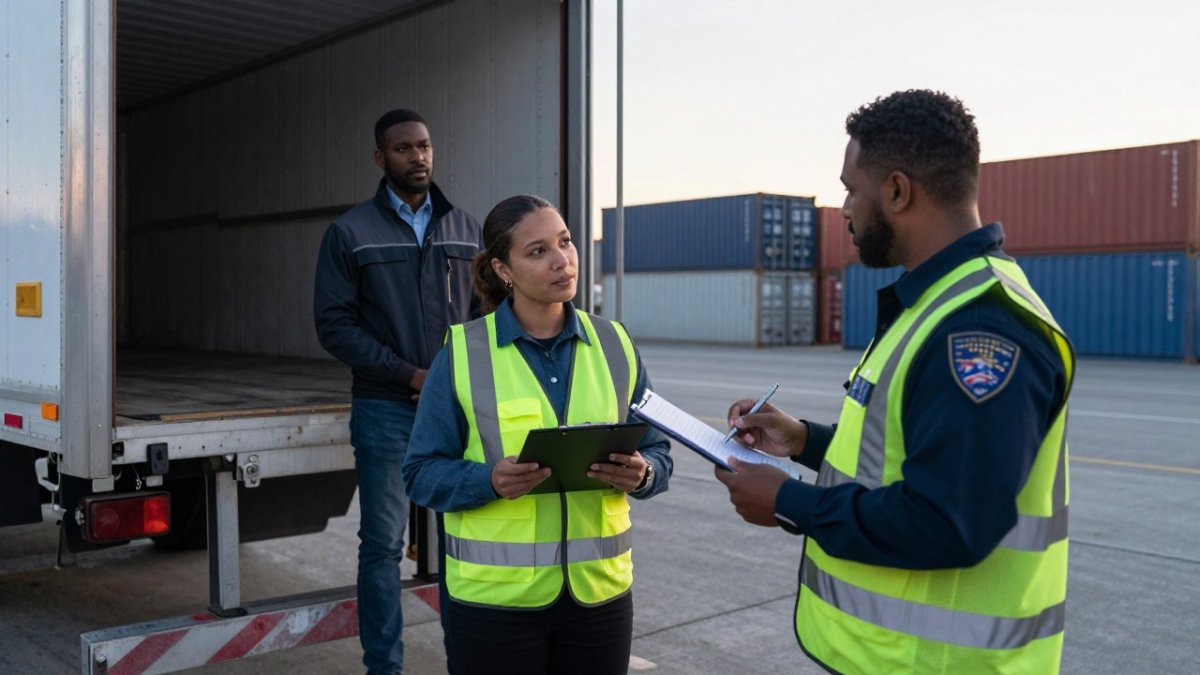
The loan amount is not the total cost. Import duties, customs fees, freight, marine insurance, and currency movement all land on the buyer, and none of them appear on the lender's disclosure. More importantly, these costs affect how much you can borrow and when the lender releases funds.
Budget for these line items before you apply:
- Duties and tariffs on the trailer's declared value. The U.S. Harmonized Tariff Schedule (HTS) assigns a classification and duty rate to trailers and trailer parts. Most trailers fall under HTS Chapter 87, and duty rates vary by configuration and country of origin. Check the specific HTS code with a licensed customs broker before you finalize your loan amount.
- Customs brokerage and clearance fees. A licensed customs broker typically charges a flat fee plus disbursement costs. These fees are not financed by most trailer lenders, so plan to pay them out of pocket.
- Ocean or overland freight to the destination. Freight costs can rival a significant portion of the trailer's value, especially for heavy-haul units. Some lenders will finance freight if it is bundled into the invoice, but many will not.
- Marine cargo insurance for the transit window. Lenders often require proof of insurance before disbursing funds, and the policy must name the lender as loss payee.
- Currency conversion and transfer fees if you're paying a seller in another currency. Banks and payment processors charge spreads and wire fees that can add up to several percent of the transaction value.
Currency risk deserves its own line. If you sign a loan in one currency and pay a seller in another, an exchange-rate move between signing and delivery changes your real cost. Some buyers lock a forward contract to remove that uncertainty. A forward contract fixes the exchange rate for a future date, but it also locks you in: if the rate moves in your favor, you won't benefit. For smaller purchases, a multi-currency account or a specialist FX broker may be cheaper than a forward.
How these costs interact with financing is the part most guides skip. Lenders typically advance funds based on a percentage of the trailer's invoice value, not the total landed cost. If duties, freight, and insurance add 20% to the invoice, you may need to cover that 20% from your own cash. Ask the lender two questions: "Will you finance any portion of freight, duties, or insurance?" and "When will you disburse funds relative to customs clearance and delivery?" Some lenders disburse at bill of lading, others at delivery, and the timing affects your cash flow and the seller's willingness to release the trailer.
For the paperwork side, our guide to marketing used trailers to European buyers covers how to present specs and verify the counterparty before money moves. The same documentation, commercial invoice, packing list, certificate of origin, and bill of lading, supports both the customs entry and the lender's collateral file.
Watch out: if you finance the trailer based on the invoice value but the landed cost is much higher, you may be underwater on the loan from day one. Build a landed-cost worksheet before you apply, and share it with the lender so the loan structure matches the real cash outlay.
How to Vet International Lenders and Sellers Before You Sign
Due diligence is the cheapest part of an international trailer purchase and the one buyers skip most often. Verify both sides of the deal before any deposit leaves your account.
Run this checklist on the lender:
- Confirm the lender is licensed to lend in your jurisdiction
- Get the annual percentage rate and total finance charge in writing
- Confirm whether the loan is in your currency or the seller's
- Ask what happens if the trailer is delayed in customs
- Read the prepayment penalty terms
Run this checklist on the seller:
- Verify the business registration and physical address
- Request the trailer's title and serial number
- Ask for photos and video of the specific unit, not stock images
- Confirm who handles export documentation
- Use an escrow or letter of credit for the deposit
Our guide on how to verify heavy equipment buyers covers the same due-diligence steps from the seller's side, and the logic runs both directions. If a counterparty resists any item on this list, that resistance is your answer.
Next Step: Source and Finance Your Trailer Through Ironmartonline
The financing is the easy part once you know which trailer you're buying and how it's getting to you.
At Ironmartonline, we connect buyers and sellers of used heavy equipment across global and local markets through nine web-based selling platforms. No contracts and no hidden fees. Browse the used trailers for sale inventory, including lowboys, step decks, and heavy-haul units, then line up financing against a specific machine rather than a hypothetical one.
Start with the trailer, not the loan. Ironmartonline gives you access to millions of potential buyers and sellers, nine specialized selling platforms, and a hassle-free process with no contracts or hidden fees. Get started with Ironmartonline and put your next trailer purchase on solid ground.
Frequently Asked Questions
Can you finance a trailer purchased from an international seller?
Yes, but the route matters. U.S. banks and credit unions rarely lend against a trailer that is still overseas and unregistered, so most cross-border buyers use a trailer financing company that funds the purchase at delivery, or a dealer or manufacturer program tied to the sale. Expect lenders to ask for the bill of sale, shipping and insurance documents, and proof of import clearance before releasing funds. Ironmartonline connects buyers with sellers across borders and can point you toward financing that fits the transaction.
How do currency exchange and import costs affect international trailer financing?
Both change the number you actually finance. If the trailer is priced in a foreign currency, the dollar amount on your loan depends on the exchange rate on the day funds move, so a swing of a few cents can add or remove hundreds of dollars from the principal. Import duties, customs brokerage, and freight are usually paid upfront and are not rolled into the trailer loan, so budget for them separately. Ask the lender whether it funds the trailer price only or the delivered cost.
Is trailer financing or leasing better for a business buying internationally?
Financing wins when you want ownership and the trailer will stay in service long enough to build equity. Leasing lowers the monthly outlay and keeps capital free, but you return the equipment at the end of the term and cross-border lease paperwork is heavier because the lessor retains title. Compare the total cost over the full term, not the monthly payment. For a used trailer you plan to keep, a loan is usually the simpler path.
What do lenders require for trailer financing with bad credit?
Expect a larger down payment, a shorter loan term, and a higher interest rate. Some trailer financing companies work specifically with lower credit profiles and weigh business revenue, time in operation, and the trailer's resale value alongside your credit score. Bringing bank statements, tax returns, and a clear description of the equipment helps. Getting pre-qualified with two or three lenders before you commit to an international seller keeps you from losing a deposit on a deal you cannot fund.
How long does approval for international trailer financing usually take?
Online trailer financing companies can return a decision in hours for straightforward applications, while banks and credit unions often take several business days because they verify business financials and the equipment. Cross-border deals add time for documents like the bill of sale, shipping terms, and import paperwork. Start the application before you finalize the purchase so funding is ready when the trailer clears customs, not weeks after.
