
Table of Contents
- Why Use a Heavy Equipment Broker?
- Access to Wider Market Inventory and Global Reach
- Time Efficiency and Faster Transaction Speed
- Expert Equipment Appraisal and Valuation Services
- How to Find a Reputable Heavy Equipment Broker
- Negotiation Leverage and Deal Management
- Heavy Equipment Logistics and Shipping Coordination
- Handling Paperwork, Title Transfer, and Legal Documentation
- Risk Mitigation and Fraud Prevention in Equipment Sales
- Heavy Equipment Inspection Checklist for Buyers
Last Updated: August 6, 2026
Why Use a Heavy Equipment Broker?
When you're sitting on surplus excavators, dozers, or trucks that need to move, the question isn't whether to sell, it's how to sell fast and for top dollar. That's where heavy equipment brokers come in. A heavy equipment broker connects buyers and sellers of used machinery, handling everything from market exposure to negotiation to logistics. Instead of posting your equipment on a classifieds site and hoping someone local finds it, you tap into a professional network with global reach.
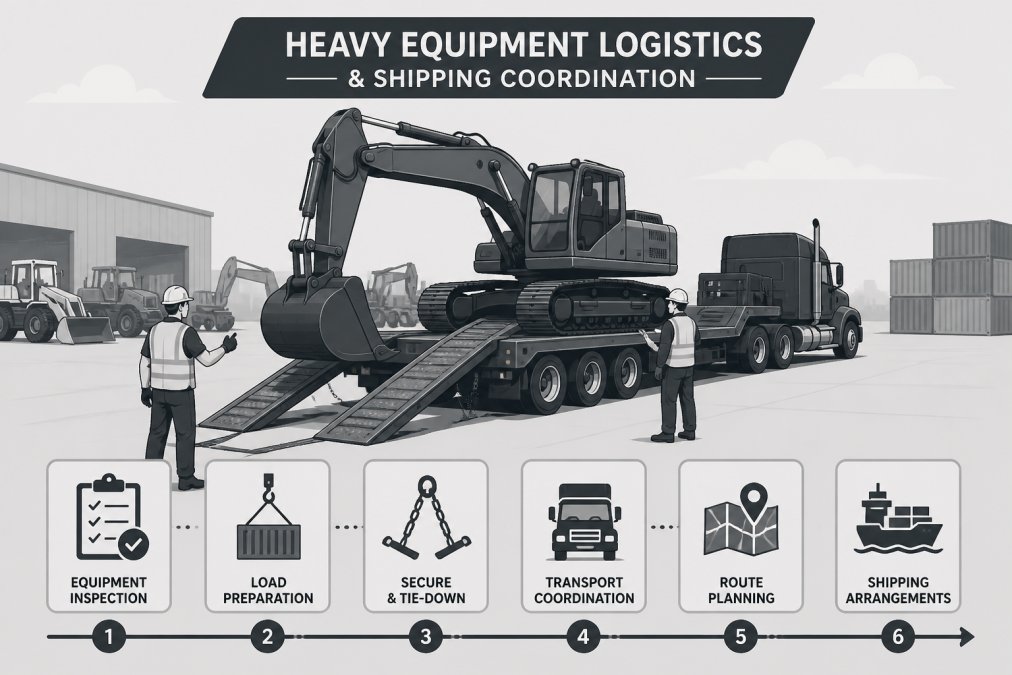
Here's the real question: Why use an equipment broker instead of going solo? The answer matters because the difference between a quick sale at fair value and a months-long slog with lowball offers can be six figures. Brokers like Ironmartonline use specialized platforms, nine web-based selling channels in Ironmartonline's case, that expose your equipment to millions of potential buyers. They handle buyer vetting, negotiate on your behalf, coordinate logistics, manage title transfers, and absorb the friction that makes private sales exhausting.
For construction contractors with surplus fleets, fleet managers needing to liquidate end-of-lease equipment, agricultural operators clearing older machinery, and owner-operators moving individual assets, the value proposition is straightforward: you get access to a wider buyer pool, faster transaction speed, expert appraisal, and professional deal management, all without the stress of managing the sale yourself.
The benefits of using heavy equipment brokers extend far beyond convenience. They reduce risk, accelerate cash flow, and often recover more net proceeds than you'd get selling independently. Below, we'll walk through exactly how brokers create that value and what to expect from the process.
Access to Wider Market Inventory and Global Reach
A heavy equipment broker's primary advantage is access. When you list equipment through a broker, you're not limited to local buyers or whoever happens to search your region's classifieds. Brokers maintain connections across regional, national, and international networks. They can expose your dozer to contractors in three states, equipment rental companies across the country, and international buyers all simultaneously.
This reach matters because equipment markets are fragmented. A used excavator that sits unsold for three months in your local market might have three qualified buyers waiting in another region. Brokers know where demand clusters and how to match equipment to the right geography. They understand that a fleet of telehandlers might move faster through a broker network serving agricultural equipment than through a general marketplace.
The nine specialized web-based platforms that brokers like Ironmartonline use serve different buyer segments and geographies. One platform might specialize in construction equipment, another in agricultural machinery, a third in international transactions. This segmentation means your equipment gets in front of the specific buyers most likely to purchase it, not just anyone browsing a general listing site.
Global reach also solves a critical problem: equipment that's hard to move domestically might have strong demand internationally. A loader that's slow to sell in the U.S. might attract serious interest from Canadian operators or overseas markets. Brokers handle the complexity of international sales, including documentation and compliance, so you don't have to figure out export logistics on your own.
Time Efficiency and Faster Transaction Speed
Selling heavy equipment independently is a time sink. You photograph it, write descriptions, field calls from tire-kickers, negotiate with unqualified buyers, coordinate inspections, and manage paperwork that stretches across weeks. A broker compresses that timeline significantly.
Most brokers can get your equipment listed and in front of buyers within days. They handle photography, detailed descriptions, condition assessments, and initial buyer outreach. Instead of spending your time answering "Is this still available?" emails from unqualified prospects, the broker pre-qualifies buyers and brings serious offers to you.
Transaction speed varies by equipment type and market conditions, but brokers typically move equipment faster than private sales. A broker's existing buyer network means there's often qualified interest waiting, they don't have to start from zero finding someone interested in your specific machine. They also know the market price range, so negotiations move faster because both sides have realistic expectations from the start.
For businesses that need cash quickly, whether you're upgrading your fleet, liquidating after a contract ends, or managing seasonal equipment, a broker's speed is worth the fee. The difference between a 30-day sale and a 90-day sale can be significant when you're carrying carrying costs or need working capital.
Expert Equipment Appraisal and Valuation Services
One of the biggest risks in equipment sales is underpricing. If you don't know the market value of your excavator, you might accept an offer that's 15-20% below fair market value without realizing it. Brokers eliminate that risk through professional appraisal.
Heavy equipment brokers have deep knowledge of market pricing. They track sales data, understand what similar equipment actually sells for, and know how condition, hours, maintenance history, and market timing affect value. They can tell you whether your dozer is worth more in this market or if waiting six months makes sense. They assess equipment condition objectively and price it competitively, not so high that it sits unsold, not so low that you leave money on the table.
This expertise prevents the two most common pricing mistakes: overpricing (equipment sits for months, gets stale, and eventually sells for less) and underpricing (you accept the first offer without knowing you could get more). A broker's appraisal anchors the price in reality, which speeds sales and maximizes proceeds.
How to Find a Reputable Heavy Equipment Broker
Not all brokers are equal, and the difference between a transparent, professional broker and one that obscures costs or mishandles transactions can cost you thousands. The key is moving beyond generic vetting to understanding exactly how brokers charge and what that means for your bottom line.
Understanding Fee Structures: The Hidden Cost Problem
Most equipment sellers don't ask about fees until after they've committed to a broker, which is a mistake. Brokers typically charge one of three ways:
- Percentage-based commission: This aligns the broker's incentive with your sale price.
- Flat fee: A fixed amount regardless of sale price. This works well for high-value equipment where percentage commissions would be excessive, but can be expensive for lower-value items.
- Hybrid model: A base flat fee plus a smaller percentage. This splits the risk between broker and seller.
Ask the broker to provide a written fee schedule before you list anything. Request a worked example: "If this excavator sells for $85,000, what will I net after all fees?" A reputable broker will walk you through every charge, listing fees, inspection fees, documentation fees, payment processing, shipping coordination, and show you the math. If they're vague or claim "no hidden fees" without providing details, that's a red flag.
Comparing Brokers on Total Value, Not Just Price
The cheapest broker is rarely the best choice. A broker who closes a sale in 30 days delivers more value than a broker who takes 120 days. Calculate the true cost by factoring in:
- Commission or fee percentage
- Average time to sale (ask for their median days-on-market)
- Carrying costs while equipment sits (storage, insurance, maintenance)
- Your cost of capital if you need cash quickly
Example: Two brokers quote your fleet. Broker A typically sells in 45 days. Broker B typically takes 120 days. If your carrying cost is $500/day, Broker A's extra commission is offset by fewer days of carrying costs. Broker A is the better deal even at higher commission.
Vetting Track Record and References
Ask for recent seller references, not just names, but contact information you can verify independently. When you call, ask:
- Did the broker deliver the buyer reach they promised?
- How accurate was their appraisal compared to the final sale price?
- Were there surprises or undisclosed fees?
- How did the broker handle complications (equipment damage in transit, buyer financing delays, title issues)?
- Would you use this broker again?
A broker with a strong track record will have references willing to speak on the record. If they're evasive about providing names or the references you reach are lukewarm, move on.
Checking Technology and Market Reach
Ask the broker directly: "How many active buyers see my listing each month?" and "On how many platforms will my equipment appear?" A broker using a single listing site reaches far fewer buyers than one using multiple specialized platforms. Ask about their digital marketing, do they run paid ads, email campaigns to their buyer database, or social media outreach? A broker that relies only on passive listings is less likely to move equipment quickly.
Red Flags That Signal a Problem Broker
- Reluctance to discuss fees in writing
- Promises of unrealistic sale prices without comparable data
- Pressure to list quickly without a thorough appraisal
- No verifiable references or vague references
- Unwillingness to explain their appraisal methodology
- Claims of guaranteed sales or guaranteed prices
- Limited digital presence or outdated website
A reputable broker welcomes detailed questions and provides transparent answers. If you feel rushed or unclear after your conversation, that's your signal to keep looking.
Negotiation use and Deal Management
When you sell equipment yourself, you negotiate one-on-one with each buyer. You're managing the conversation, trying to understand their constraints, and figuring out what they'll actually pay. It's asymmetrical, they're a professional buyer; you're an amateur seller.
A broker levels that playing field. They negotiate on your behalf with professional skill and market knowledge. They know when an offer is serious and when it's a lowball test. They understand what terms matter (price, payment timing, delivery logistics) and what's negotiable. They can walk away from bad offers because they have other buyers in the pipeline, something you can't do if you're desperate to sell.
Brokers also manage complex deals. If a buyer wants financing, the broker coordinates with lenders. If logistics are complicated, they arrange transportation. If a buyer wants multiple pieces of equipment, the broker bundles and prices accordingly. These deal-management skills prevent transactions from falling apart over logistics or financing complications.
The negotiation use a broker brings often recovers their fees. If a broker's negotiation skills get you an extra 5-10% on sale price, that premium covers their commission and leaves you ahead.
Heavy Equipment Logistics and Shipping Coordination
Moving heavy equipment isn't simple. A 40-ton excavator can't be thrown in a truck, it requires specialized trailers, experienced operators, permits in some jurisdictions, and coordination between seller and buyer. If logistics fail, the entire deal collapses.
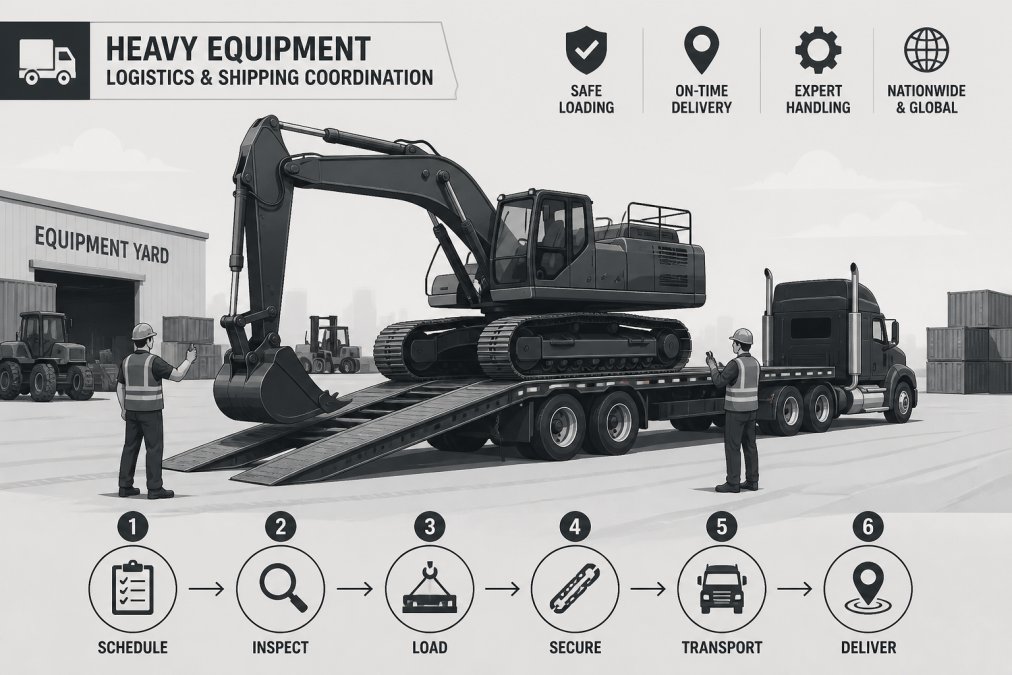
Brokers handle logistics as part of their service. They coordinate with hauling companies, arrange transportation, manage loading and delivery, and ensure equipment arrives safely. They know which carriers are reliable, what permits are needed, and how to handle interstate or international shipping. They also negotiate shipping rates, something a one-time seller can't do.
For buyers, knowing that logistics are handled professionally is a major selling point. They don't have to figure out how to get a dozer from your yard to theirs. For sellers, professional logistics coordination prevents the nightmare scenario where equipment is damaged in transit or delivery fails entirely.
International shipping is especially complex. Brokers understand export documentation, customs requirements, and international transport logistics. They can move equipment globally without you having to navigate unfamiliar regulations.
Handling Paperwork, Title Transfer, and Legal Documentation
Equipment sales involve significant paperwork: title transfers, bill of sale, equipment condition reports, warranty disclaimers, lien searches, and compliance documentation. Getting this wrong creates legal liability, delays sales, or leaves you exposed to post-sale disputes. Brokers manage this complexity so you don't have to.
The Documentation Brokers Handle
A professional broker prepares or coordinates:
- Title verification and transfer: Confirming the seller has clear title, searching for outstanding liens, and ensuring the title transfers cleanly to the buyer. If your equipment has multiple previous owners or unclear history, a broker can often still facilitate the sale by working with lienholders or title companies.
- Bill of sale and purchase agreement: Creating legally sound contracts that specify equipment condition, price, payment terms, and delivery logistics. These documents protect both parties and prevent disputes about what was actually sold.
- Equipment condition reports: Documenting the equipment's condition at the time of sale, including hours, maintenance history, known issues, and any damage. This report becomes the baseline for post-sale disputes.
- Compliance documentation: Ensuring the sale complies with state and federal regulations, including any equipment-specific certifications or safety compliance.
- Lien searches and UCC filings: Confirming no outstanding liens exist and filing UCC terminations if necessary. This is especially important for equipment financed through banks or leasing companies.
For international sales, documentation becomes exponentially more complex. Brokers handle export documentation, customs declarations, and compliance with international trade regulations, work that would take you weeks to navigate alone.
Post-Sale Support: What Happens When Problems Emerge
Here's where many brokers fall short, and where you should ask hard questions before signing: What happens if the buyer receives equipment in different condition than the condition report stated? What if a title issue emerges after the sale closes?
Reputable brokers maintain a post-sale support process:
- Dispute resolution: If the buyer claims equipment arrived damaged or in worse condition than described, the broker mediates between buyer and seller. They review the condition report, inspect photos, and work toward resolution, either repair, replacement, or partial refund.
- Warranty handling: Some brokers offer limited warranties (e.g., "equipment operates as described for 30 days") or facilitate extended warranties through third parties. Clarify what warranty, if any, applies to your sale.
- Title issue resolution: If a lien or title defect emerges after closing, the broker works with title companies or lienholders to clear it. This is rare if the broker did proper due diligence, but it happens, and you want to know the broker will stand behind their work.
- Logistics failure recovery: If equipment is damaged in transit or delivery fails, the broker coordinates with the carrier and insurance to resolve the claim.
Before you list equipment with a broker, ask: "What is your post-sale support process if the buyer claims the equipment arrived in different condition?" A broker that has a clear answer, whether it's a 30-day inspection window, a warranty period, or a dispute resolution process, is more trustworthy than one that says "the sale is final once payment clears."
Payment Security and Fraud Prevention
Brokers also protect you by ensuring payment is legitimate before equipment leaves your possession. They verify buyer financing, confirm cashier's checks or wire transfers, and may hold payment in escrow until delivery is confirmed. This prevents the nightmare scenario where you release equipment and the buyer's check bounces.
For international sales, payment security is even more critical. Brokers familiar with international transactions understand which payment methods are safe (letters of credit, verified wire transfers) and which carry fraud risk (personal checks, unverified transfers).
Why Documentation Matters for Resale Value
Complete, accurate documentation also protects your reputation. If the buyer later resells the equipment, they'll reference your condition report and maintenance history. Equipment with clear documentation and full service records commands higher resale value than equipment with gaps or unclear history. A broker that maintains thorough records helps ensure your equipment retains value through the supply chain.
Risk Mitigation and Fraud Prevention in Equipment Sales
The used equipment market attracts fraud. Buyers misrepresent their ability to pay, sellers misrepresent equipment condition, and scams range from fake cashier's checks to equipment that's never actually delivered.
Brokers reduce fraud risk through buyer vetting. They verify buyer credentials, confirm financing, and establish payment security before equipment changes hands. They know the red flags that signal a bad buyer. They also protect sellers by ensuring payment is legitimate before releasing equipment.
For buyers, a broker's vetting process means less risk of purchasing stolen equipment or equipment with hidden liens. For sellers, it means getting paid by legitimate buyers instead of discovering a check bounced after equipment is gone.
Brokers also document equipment condition thoroughly, which prevents disputes about what was sold. A detailed condition report protects both parties and reduces the likelihood of post-sale claims.
Heavy Equipment Inspection Checklist for Buyers
Even with a broker managing the sale, buyers need to inspect equipment before committing. A thorough inspection checklist ensures nothing critical is missed.
| Inspection Category | What to Check | Why It Matters |
|---|---|---|
| Engine & Drivetrain | Hours, service history, fluid levels, leaks | Determines remaining useful life and repair risk |
| Hydraulics | Hose condition, leaks, pressure test results | Hydraulic failure is expensive; leaks indicate age |
| Structural Integrity | Frame cracks, welds, rust, dents | Structural damage affects safety and resale value |
| Tires & Tracks | Tread depth, sidewall cracks, replacement cost | Tire replacement is a major expense |
| Operator Controls | Responsiveness, calibration, wear | Poor controls indicate heavy use or neglect |
| Safety Systems | Lights, backup alarms, emergency stops | Safety compliance is non-negotiable |
| Documentation | Service records, maintenance history, title | Complete records justify pricing and enable resale |
| Cab & Comfort | Seat condition, climate control, visibility | Operator comfort affects equipment value |
A broker can facilitate this inspection, but the buyer should conduct it themselves or hire a third-party inspector. A detailed inspection protects the buyer and gives the seller confidence in the sale price, both parties know what they're getting.
Frequently Asked Questions
What are the primary benefits of using a heavy equipment broker?
Heavy equipment brokers connect you to a wider market of buyers or sellers, saving weeks of searching. They handle negotiation, appraisal, logistics, and paperwork, reducing stress and risk. Brokers leverage their industry expertise to secure better pricing and faster transactions. For sellers, brokers access millions of potential buyers across multiple platforms, increasing the chance of a strong sale price. For buyers, they source specific equipment within budget and verify condition before purchase.
How do heavy equipment brokers verify the condition of machinery?
Reputable brokers conduct thorough equipment inspections using a heavy equipment inspection checklist covering engine condition, structural integrity, hydraulic systems, tire wear, and operational functionality. They generate detailed condition reports with photos and specifications. Many brokers have certified inspectors or partner with third-party inspection services. This verification protects buyers from purchasing damaged or misrepresented equipment and gives sellers confidence in fair market valuation.
What should you look for when hiring a heavy equipment broker?
Look for brokers with transparent fee structures, no hidden charges, and a track record of successful transactions. Verify they have access to multiple selling platforms and a proven network of qualified buyers. Check references from past clients and confirm they handle logistics, title transfer, and financing coordination. A reputable broker should be willing to explain their process clearly and answer questions about reach, timeline, and expected outcomes for your specific equipment type.
How does a heavy equipment broker simplify the buying process?
Brokers source equipment matching your specifications, negotiate on your behalf, coordinate inspections, arrange financing, and manage logistics. Instead of searching multiple marketplaces, contacting sellers individually, and arranging shipping yourself, a broker consolidates these tasks. They verify seller credibility, handle title transfer and legal documentation, and often provide post-sale support. This reduces your time investment and minimizes the risk of fraud or costly mistakes in heavy equipment procurement.
Selling heavy equipment doesn't have to be stressful. A reputable heavy equipment broker like Ironmartonline handles the exposure, negotiation, logistics, and documentation that make independent sales exhausting. With nine specialized selling platforms, transparent fee structures, and no contracts, Ironmartonline connects your equipment to millions of qualified buyers globally. Get started with Ironmartonline and move your surplus machinery fast, without the headache.
This article was written using GrandRanker