
Table of Contents
- Why Use an Equipment Broker to Sell Heavy Equipment
- Selling Methods: Direct Sale vs. Auction vs. Marketplace
- Determining Fair Market Value and Heavy Equipment Appraisal Tools
- Preparing Heavy Equipment for Sale: Inspection and Maintenance
- How to Write a Heavy Equipment Sales Listing That Attracts Buyers
- How Long Does It Take to Sell Heavy Equipment
- Commission Structures and Listing Fees Explained
- Vetting Buyers and Avoiding Equipment Sales Scams
- Title Transfer and Documentation Requirements
- Tax Implications of Equipment Sales
- Lease-Buyout Procedures and Equipment Liquidation
- Conclusion
Last Updated: August 9, 2026
Why Use an Equipment Broker to Sell Heavy Equipment
When you need to sell heavy equipment, you face a fundamental choice: go it alone or work with a professional broker. Most sellers discover too late that handling the sale independently costs far more in time, missed buyers, and negotiating use than the service fee ever would. A broker connects your equipment to a vastly larger pool of qualified buyers than you could reach alone, handles the logistics of inspections and documentation, and manages the back-and-forth that eats weeks out of your timeline.
But why use an equipment broker specifically? Why use Ironmartonline as your equipment broker? The answer lies in reach and efficiency. A Heavy Equipment Broker like Ironmartonline, for example, leverages nine specialized web-based selling platforms to expose your machinery to millions of potential buyers globally and locally. That multi-channel approach means your excavator or dozer isn't sitting on a single marketplace where it competes with thousands of similar listings. Instead, it appears across multiple platforms simultaneously, each with its own buyer base and search traffic. A broker also handles the vetting process, they know which buyers are serious, which have financing in place, and which are likely to waste your time with lowball offers or no-shows.
The real advantage emerges when you factor in what your time is worth. Photographing equipment properly, writing detailed specifications, managing inquiries, coordinating inspections, handling title transfers, and negotiating payment terms typically consumes 20-40 hours spread across weeks or months. A broker absorbs that workload, which means you stay focused on running your business instead of babysitting a sale. For fleet managers, construction contractors, and rental companies, that freed-up time often justifies the entire service cost within the first week.
This guide covers the full landscape of selling heavy equipment, from valuation and preparation through documentation and tax considerations. We'll walk through each method available to you and explain when a broker makes sense versus when direct sales or auctions might serve you better.
Selling Methods: Direct Sale vs. Auction vs. Marketplace
You have three primary paths to move heavy equipment: private party sales, auction consignment, and online marketplaces. Each carries different timelines, costs, and outcomes depending on your situation and urgency.
Private Party Sales
A private party sale means selling directly to an end-user, a contractor who needs that specific dozer, a farmer looking for a particular combine, or a logistics company seeking dump trucks. The advantage is straightforward: you keep the entire sale price. No commission, no auction fees, no marketplace cut. You negotiate directly with the buyer and pocket whatever you agree on.
The downside is equally clear: finding that buyer takes time and effort. You're responsible for marketing, fielding inquiries, qualifying leads, scheduling inspections, handling paperwork, and managing payment. Many private sales fall through because buyers back out during inspections, financing falls through, or negotiations stall over price. The process typically takes 60-120 days from listing to closed sale, sometimes longer.
Private sales work best when you have a specific buyer in mind or when your equipment is rare enough that motivated buyers will seek it out. They also work well if you're in no hurry and can absorb the administrative load yourself. If you have five dozers to move and limited time, this approach becomes exponentially harder.
Auction Consignment
Auctions provide guaranteed sales with a fixed timeline. You consign your equipment to an auctioneer like Ritchie Bros. or JJ Kane, they market it, and it sells to the highest bidder on auction day, usually within 30-45 days of listing. The certainty appeals to many sellers: you know your equipment will sell, you know the date it will sell, and you know you'll have cash shortly after.
The trade-off is price uncertainty and fees. Auctions typically attract buyers hunting for deals, which means your equipment may sell below fair market value. Auction houses charge seller commissions (often 5-10% depending on the platform and equipment type) plus buyer's premiums that further reduce your net proceeds. A $50,000 piece of equipment might net you $42,000 after fees if bidding doesn't reach your expectations.
Auctions make sense when you need cash quickly, when you have multiple pieces to move, or when you want to avoid the negotiation and inspection process. They're less ideal if you have time to market properly and want to maximize your net return.
Online Marketplaces and Platforms
Online marketplaces like IronPlanet, MarketBook, and My Little Salesman occupy middle ground. You list your equipment, buyers browse and make offers or place bids, and you retain more control than an auction while reaching more buyers than a private sale typically would. Listing fees range from under $50 per month for basic listings to several hundred for featured placements and premium exposure.
The marketplace model works well for sellers with moderate urgency and reasonable equipment condition. Marketplaces attract serious buyers actively shopping for specific types of machinery, which means your listing reaches qualified prospects. However, competition is intense, thousands of similar listings compete for attention, so your photography, description, and pricing must be sharp to stand out.
Marketplaces typically take 30-90 days to generate serious interest, though that timeline varies by equipment type, condition, and market demand. They suit sellers who want more control than an auction provides but don't have the bandwidth to handle a fully private sale.
Determining Fair Market Value and Heavy Equipment Appraisal Tools
Before you list anything, you need to know what your equipment is actually worth. Fair market value isn't what you paid for it, what you think it's worth, or what you hope to get, it's what a willing buyer will pay a willing seller in current market conditions. Get this wrong and you either price yourself out of the market or leave thousands on the table.
Several methods help establish baseline value. The most accessible is researching recent comparable sales on marketplaces and auction results. Look for equipment matching yours in age, hours, condition, and specifications. Track what similar machines actually sold for, not what they listed for, the listing price and sale price often differ significantly. Websites like MarketBook and AuctionTime publish historical sale data that reveals market trends for specific equipment categories.
A more formal approach involves hiring a professional appraiser. Heavy equipment appraisers examine your machinery in person, document its condition, cross-reference market data, and produce a written appraisal that establishes fair market value. Appraisals cost between $300-$1,500 depending on equipment complexity and your location, but they're worth the investment if you're selling high-value items or if you need documentation for financing, insurance, or tax purposes.
Depreciation schedules help contextualize value. Heavy equipment typically depreciates 15-20% per year for the first five years, then slower rates thereafter. A five-year-old excavator is worth roughly 40-50% of its original purchase price. Ten-year-old equipment drops to 20-30%. Understanding this curve helps you assess whether your equipment is overpriced relative to age and condition.
Market saturation affects value too. If your region is flooded with identical equipment, prices compress. If demand exceeds supply, prices rise. Seasonal factors matter as well, construction equipment sells better in spring and summer when contractors are bidding projects. Agricultural equipment peaks during planting and harvest seasons. Timing your sale to match demand cycles can improve your net proceeds by 10-15%.
Preparing Heavy Equipment for Sale: Inspection and Maintenance
Equipment condition drives value more than any other single factor. A well-maintained machine with documented service records commands a premium. Neglected equipment with unknown history sells at a steep discount, if it sells at all.
Equipment Condition Assessment
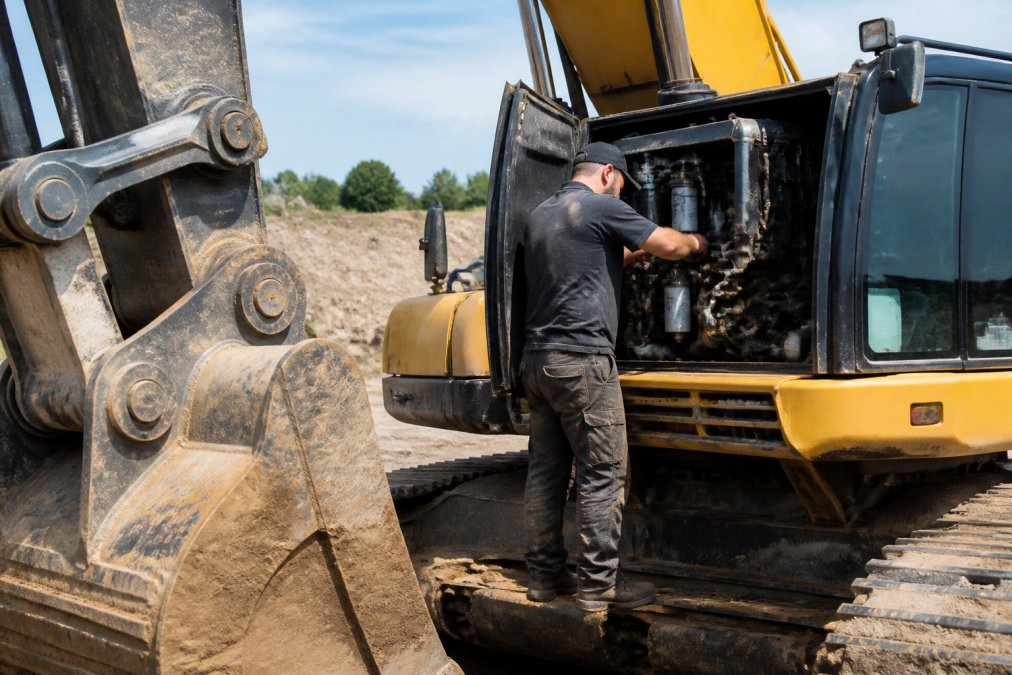
Start with a thorough inspection. Walk the equipment systematically: examine the frame for cracks or bends, check hydraulic lines for leaks, inspect the bucket or blade for damage, test all controls and functions, and review the engine compartment for corrosion or fluid leaks. Document everything with photos. Buyers will do their own inspections anyway, so transparency here builds trust and prevents deals from collapsing when they discover hidden problems.
Get a professional pre-sale inspection if you're selling high-value equipment or if you're uncertain about condition. Independent inspectors provide detailed condition reports that carry weight with serious buyers. These reports cost $400-$800 but often justify themselves by either supporting a higher asking price or by identifying repairs that improve net proceeds more than they cost.
Clean the equipment thoroughly. Pressure wash the exterior, degrease the engine compartment, and remove accumulated dirt and rust. A clean machine photographs better, inspects better, and signals to buyers that the equipment was maintained. Many sellers underestimate how much visual presentation affects perceived condition and buyer confidence.
Service Records as a Value Multiplier
Service records are gold. A complete maintenance history, documenting oil changes, filter replacements, hydraulic fluid flushes, belt replacements, and major repairs, proves the equipment was cared for. Buyers trust machines with documented histories far more than machines with unknown maintenance.
Gather every receipt, work order, and service log you have. If records are incomplete, compile what exists and be transparent about gaps. If you've performed maintenance yourself, document it with photos and notes showing what you did and when. If records are genuinely missing, acknowledge it in your listing and consider offering a reduced warranty period or having an independent inspection done to compensate for the uncertainty.
Equipment with comprehensive service records often sells 10-15% faster and at higher prices than identical machines without documentation. The investment in organizing and presenting these records pays dividends.
How to Write a Heavy Equipment Sales Listing That Attracts Buyers
Your listing is your salesman. It works 24/7, reaching buyers you'll never meet, so it must communicate clearly, honestly, and persuasively.
Photography and Visual Presentation
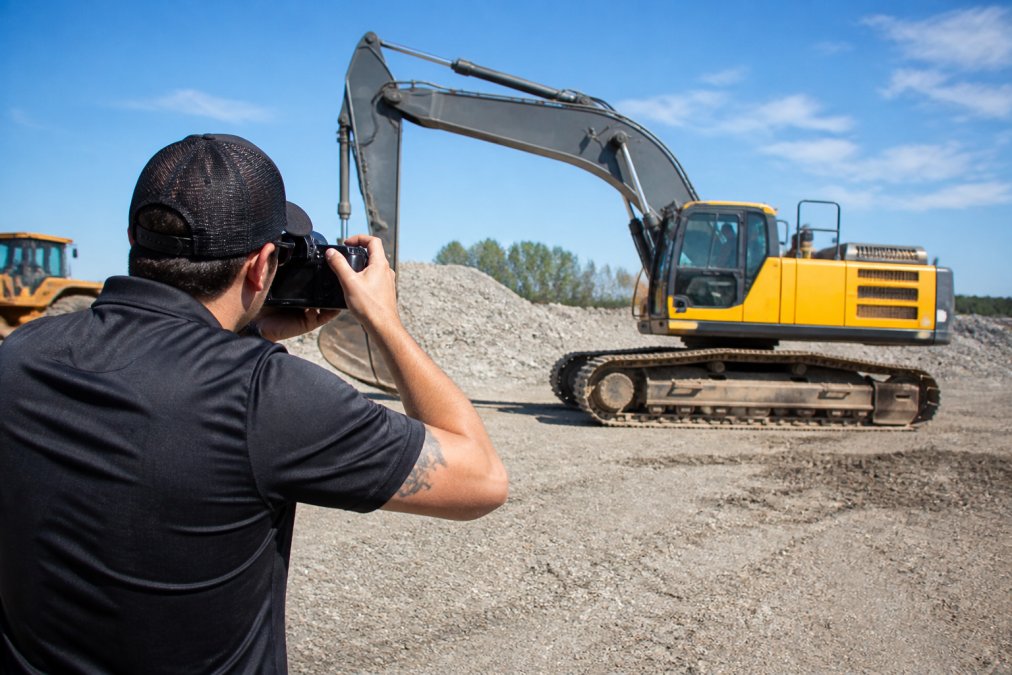
Professional photography is non-negotiable. Poor photos kill sales. Shoot during daylight with clear skies if possible. Photograph the equipment from multiple angles: full side view, three-quarter view, front and rear, close-ups of the cab or operator station, detail shots of the bucket or blade, and engine compartment. Show any damage honestly, buyers will discover it anyway, and transparency builds credibility.
Include photos of the interior if it's a truck or cab equipment. Show the dashboard, controls, upholstery condition, and any wear. For attachments, photograph them mounted and unmounted. For equipment with visible wear, photograph it clearly so there's no surprise during inspection.
Video adds significant value. A 60-90 second video showing the equipment from multiple angles, with the engine running if applicable, reassures buyers and reduces inquiry volume from tire-kickers. Buyers who watch video are more committed and more likely to follow through.
Describing Specifications and Operating Hours
Specifications matter enormously. Include the manufacturer, model, year of manufacture, engine hours (or engine size if hours are unavailable), fuel type, transmission type, hydraulic capacity, bucket capacity or blade width, and any notable attachments or modifications. Be precise: "Caterpillar 320" is vague; "2015 Caterpillar 320D with 6,200 hours, Tier 3 engine, 1.4-cubic-yard bucket, auxiliary hydraulics" tells buyers exactly what they're considering.
Operating hours are critical for used equipment. Lower hours mean less wear and longer remaining service life. Be accurate, misrepresenting hours is a common fraud and will destroy your reputation. If hours are unknown, say so. If you have service records showing hours, cite them.
Describe condition honestly but positively. Instead of "rusty," say "surface rust present, structurally sound." Instead of "worn," say "normal wear consistent with [hours] hours of operation." Buyers expect used equipment to show wear; they're evaluating whether wear is normal or excessive.
Highlight maintenance and upgrades. "New hydraulic seals throughout, replaced all hoses last year, new paint on boom" tells buyers you've invested in the machine. "Recently serviced, all fluids changed, new air filter" signals active maintenance.
How Long Does It Take to Sell Heavy Equipment
Timelines vary dramatically based on equipment type, condition, market demand, and selling method. Setting realistic expectations prevents frustration.
Private party sales typically require 60-120 days from listing to closed sale. The first 2-3 weeks generate initial inquiries. Most serious buyers appear in weeks 3-6. Inspections, negotiations, and financing take another 2-4 weeks. Some sales close faster, 30-45 days for hot equipment in high-demand markets. Others drag to 180+ days if demand is soft or if you're particular about price.
Auction sales are fastest. Ritchie Bros., JJ Kane, and similar auctioneers typically sell equipment 30-45 days after consignment. You know the sale date upfront, which allows planning. However, the sale price may be lower than private sales would generate.
Marketplace sales fall between private and auction timelines. Expect 45-90 days for serious buyer interest. Equipment in high demand (popular models, excellent condition, fair pricing) may sell in 30-45 days. Slow-moving equipment can languish for 120+ days.
Seasonal factors compress or extend timelines. Construction equipment sells faster in spring and early summer. Agricultural equipment peaks during planting and harvest. Winter typically sees slower sales across all categories. Pricing competitively accelerates sales; overpricing dramatically extends timelines.
Commission Structures and Listing Fees Explained
Costs vary by selling method. Understanding the fee structure helps you calculate net proceeds accurately.
Auction commissions typically run 5-10% of the hammer price (sale price), sometimes higher for low-value equipment. Ritchie Bros. and JJ Kane charge seller commissions that reduce your net. Auction houses may also charge listing fees upfront.
Marketplace listing fees range widely. My Little Salesman charges approximately $45 per month for a basic listing, with options for featured placement at higher cost. MarketBook and IronPlanet charge variable fees based on equipment value and listing duration. Some charge per listing, others per month. Premium placements (featured listings, top-of-page placement, email marketing to their buyer list) cost extra but increase visibility.
Broker services handle the sale across multiple platforms simultaneously, which increases exposure and reduces time-to-sale. The advantage is that a broker's multi-platform approach often generates competitive bids that offset the service fee.
Private sales have no marketplace or auction fees, but you absorb all costs: photography, advertising, travel to inspections, and your own time. If you value your time at $50/hour and spend 30 hours managing a private sale, you've invested $1,500 in labor, equivalent to a 3% fee on a $50,000 sale.
Compare net proceeds across methods, not gross price. A $50,000 auction sale minus 8% commission nets $46,000. A $48,000 private sale costs you 30 hours of labor ($1,500 if valued at $50/hour), netting $46,500. The numbers are closer than they initially appear.
Vetting Buyers and Avoiding Equipment Sales Scams
High-value equipment attracts sophisticated fraud. A $75,000 excavator or $150,000 wheel loader is a target for payment scams, title fraud, and financing schemes that can cost you tens of thousands. Understanding fraud patterns and implementing verification procedures protects your sale.
Common Equipment Sales Fraud Schemes
Wire transfer and payment reversal scams are the most common. A buyer arranges inspection, expresses strong interest, and requests you hold the equipment while they "arrange financing." They then wire a deposit or partial payment from a spoofed bank account or stolen banking credentials. The wire appears in your account temporarily, you release the equipment or sign title transfer documents, and days later the wire reverses when the actual account holder disputes the transaction. You've lost the equipment and the money. Wire transfers are nearly impossible to reverse once sent by a legitimate account, but fraudsters use compromised accounts or spoofed transfers that banks eventually claw back.
Cashier's check and certified check fraud follows a similar pattern. A buyer provides a cashier's check for more than the agreed price, asking you to wire the overage to a "logistics company" for shipping. The check clears initially (banks often credit cashier's checks immediately), you wire the overage, and the check bounces days later. You're liable for the full amount.
Title and lien fraud occurs when a buyer obtains equipment through fraud, sells it to you with forged title documents, and the original owner later reclaims the equipment. You lose both the equipment and your payment. This is especially common with titled equipment like trucks and trailers.
Financing contingency collapse happens when a buyer makes an offer contingent on securing financing, you hold the equipment off the market, and the buyer's financing falls through. If you've turned away other buyers, you've lost time and opportunity.
Verification Procedures That Prevent Fraud
Require proof of funds before inspection. Ask buyers to provide a bank statement showing available funds, a pre-approval letter from a lender, or a letter from their accountant confirming financial capacity. Serious buyers have no problem providing this. Scammers typically refuse or provide forged documents. Request documents dated within the last 30 days to confirm current availability.
Use bank-to-bank transfers or cashier's checks from the buyer's bank. For wire transfers, require the buyer to initiate the transfer from their own bank account (not a third-party service). Ask them to provide their bank's wire instructions directly, not instructions they've given you. Verify the bank's routing number independently using the Federal Reserve's routing number database. For cashier's checks, require the buyer to obtain the check from their own bank in person, and verify the check's authenticity by calling the bank's cashier department directly using the bank's main phone number (not a number provided by the buyer).
Hold equipment until payment fully clears. For wire transfers, wait 3-5 business days after the transfer posts to your account before releasing equipment or signing title. Banks can reverse wires up to several days after posting. For checks, wait 10-14 days. For ACH transfers, wait 5-7 business days. This delay frustrates legitimate buyers occasionally, but it's the cost of protection.
Use escrow services for sales above $20,000. An escrow agent (typically a title company or specialized escrow service) holds the buyer's payment in a segregated account until you've transferred the title and the buyer has inspected and accepted the equipment. The escrow agent releases funds only when both parties confirm completion. Escrow costs 1-2% of the sale price but is standard practice for high-value equipment and provides legal protection for both parties. The buyer knows you can't disappear with their money, and you know the payment is legitimate before releasing the equipment.
Verify title and lien status before sale. For titled equipment, contact your state's DMV or use a title search service to confirm you hold clear title with no liens. If you financed the equipment, confirm your lender has released the lien and you've received a lien release letter. Provide the buyer with a copy of the clear title before they transfer funds. For non-titled equipment, provide documentation of ownership (purchase receipts, previous bills of sale, maintenance records in your name).
Meet in person with a second party present. Never meet alone with a stranger to show expensive equipment or conduct a transaction. Meet at your facility, a public location, or with a broker present. Bring a colleague or family member. Trust your instincts, if a buyer's behavior feels off, it probably is.
Document all communications in writing. Use email for all offers, agreements, and payment instructions. Avoid relying on phone calls or text messages that are harder to reference later. Keep records of all communications, offers, counteroffers, and agreements. If disputes arise, written documentation protects you legally and provides evidence of what was actually agreed.
Run background checks on commercial buyers. If a buyer represents a company, verify the company exists and is in good standing. Check the Secretary of State's business database for your state. Search for the company online and verify their address and phone number. Scammers often use fake company names or impersonate legitimate businesses.
Red Flags That Signal Fraud Risk
Buyers who pressure you to move quickly, who want to inspect equipment outside normal business hours, who request unusual payment methods, who ask you to hold equipment without a deposit, or who provide vague answers about their intended use are higher risk. Buyers from out of state who want to purchase sight-unseen and arrange immediate shipping are also common fraud patterns. Legitimate buyers understand that equipment sales require proper procedures and documentation.
Require a non-refundable deposit of 10-20% of the sale price to hold equipment. This signals serious intent and provides compensation if the buyer backs out after inspection. If a buyer won't commit to a deposit, they're not serious.
Title Transfer and Documentation Requirements
Heavy equipment sales require proper title transfer and documentation. Procedures vary by equipment type and state, but the fundamentals are consistent.
Most heavy equipment requires a bill of sale, a simple document stating the seller's name, buyer's name, equipment description (manufacturer, model, year, serial number), sale price, and sale date. Both parties sign it. The bill of sale proves ownership transfer and provides a record of the transaction.
For titled equipment (trucks, trailers, some excavators), you'll transfer the title to the buyer. State DMV procedures vary, but typically the seller signs the back of the title, provides it to the buyer, and the buyer registers it in their name. Some states require notarization. Check your state's DMV website for specific requirements.
Serial number verification is critical. Confirm that the serial number on the equipment matches the serial number on any title or documentation. Mismatches indicate problems and can prevent the buyer from registering or insuring the equipment.
Provide the buyer with all documentation you have: the original bill of sale, service records, warranty information, operator manuals, and any inspection reports. Incomplete documentation reduces the buyer's confidence and may reduce the price they're willing to pay.
If you financed the equipment, confirm that your lender has released the lien before transferring the title. A lien on the title prevents the buyer from registering the equipment and creates legal complications. Coordinate with your lender to ensure the lien is removed and you receive a lien release letter.
Tax Implications of Equipment Sales
Equipment sales trigger multiple tax consequences that reduce your net proceeds. Understanding these before you sell prevents surprises at tax time and helps you price accurately to account for tax liability.
Depreciation Recapture: The Hidden Tax on Used Equipment
Depreciation recapture is the most significant tax impact most sellers overlook. Here's how it works: when you purchase equipment for business use, you claim depreciation deductions on your tax return each year. These deductions reduce your taxable income, lowering your tax bill. However, when you sell the equipment, the IRS requires you to "recapture" (repay tax on) the depreciation you claimed.
Example: You purchase a $100,000 excavator and claim $15,000 in depreciation deductions over three years. You then sell the excavator for $85,000. Your adjusted basis (original cost minus depreciation claimed) is $85,000 ($100,000 - $15,000). Since you sold it for $85,000, you have no capital gain or loss. However, you still owe recapture tax on the $15,000 in depreciation you claimed.
Recapture tax is taxed at ordinary income rates, typically 25% for federal purposes (though rates vary by tax bracket). On $15,000 of recapture, you'd owe approximately $3,750 in federal tax, plus state income tax if applicable. This is a real cash outflow that reduces your net proceeds from the sale.
The recapture tax applies regardless of whether you sell at a gain, loss, or break-even. It's based solely on the depreciation you claimed, not the sale price. This is why equipment that appears to sell at break-even actually generates a tax liability.
Capital Gains Tax
If you sell equipment for more than your adjusted basis, you have a capital gain. The tax rate depends on your holding period:
Long-term capital gains (equipment held more than one year) are taxed at preferential rates: 0%, 15%, or 20% depending on your total income. Most business owners fall into the 15% bracket. A $10,000 long-term capital gain would generate approximately $1,500 in federal tax.
Short-term capital gains (equipment held one year or less) are taxed as ordinary income at your marginal tax rate, typically 22-37% depending on your income level. A $10,000 short-term gain could generate $2,200-$3,700 in federal tax.
Holding equipment for more than one year before selling significantly reduces your tax liability. If you're planning a sale, timing it to exceed the one-year threshold can save thousands in taxes.
Capital Loss Deductions
If you sell equipment for less than your adjusted basis, you have a capital loss. Capital losses can offset capital gains dollar-for-dollar. If you have no capital gains in the year of sale, you can deduct up to $3,000 of capital losses against ordinary income. Excess losses carry forward to future years.
Example: You sell an excavator at a $5,000 loss. If you have no capital gains that year, you can deduct $3,000 against ordinary income (reducing your taxable income by $3,000) and carry the remaining $2,000 loss forward to the next year.
Sales Tax Considerations
Sales tax treatment varies significantly by state. Some states exempt equipment sales from sales tax entirely. Others tax all equipment sales. Some tax only sales to in-state buyers. A few states tax sales only if the buyer is a consumer (not a business).
Verify your state's rules before finalizing a sale. If you're responsible for collecting sales tax, you must remit it to your state's Department of Revenue. Failure to collect and remit sales tax can result in penalties and interest. If you're unsure whether sales tax applies, contact your state's Department of Revenue or consult a tax professional.
Some states allow sales tax exemptions for equipment purchased for resale or for use in manufacturing. If your buyer qualifies for an exemption, they may provide a resale certificate or exemption certificate that relieves you of the obligation to collect sales tax.
Reporting Requirements and Documentation
Equipment sales must be reported on your tax return. The specific form depends on your business structure:
Sole proprietors report equipment sales on Schedule C (Profit or Loss from Business) or Form 4797 (Sales of Business Property) if the equipment qualifies as a Section 1231 asset. Most heavy equipment qualifies as Section 1231 property, which receives preferential tax treatment.
S-Corps and Partnerships report sales on Form 4797 at the entity level, with gains and losses flowing through to owners' individual returns.
C-Corporations report sales on Form 4797 and pay corporate-level tax on gains.
LLCs are taxed as sole proprietors (single-member) or partnerships (multi-member) unless they elect to be taxed as a corporation.
Keep detailed records of:
- Original purchase price and date
- All depreciation claimed (from tax returns)
- Sale price and date
- Buyer's name and address
- Bill of sale and any other transaction documents
- Adjusted basis calculation
These records support your tax return and protect you if the IRS audits the transaction.
Tax Planning Before You Sell
Consult a tax professional before selling high-value equipment. A CPA or tax attorney can help you:
- Time the sale strategically. If you have capital losses from other investments or business activities, timing a gain to offset those losses reduces your tax liability. Conversely, if you have excess capital losses, you might defer a sale to a year when you can use those losses.
- Structure the transaction. In some cases, installment sales (where the buyer pays over multiple years) can spread gains across multiple tax years, potentially reducing your marginal tax rate.
- Evaluate entity structure. If you're selling equipment held by a business entity, the tax treatment differs based on whether you're selling the equipment itself or the entity that owns it. A tax professional can model both scenarios.
- Coordinate with other business transactions. If you're buying replacement equipment, selling old equipment, and managing other business income in the same year, a professional can optimize the overall tax outcome.
A $50,000 equipment sale might generate $5,000-$8,000 in combined capital gains tax and recapture tax, depending on your holding period, depreciation claimed, and tax bracket. Understanding this liability before you price the sale ensures you price accurately and don't underestimate your net proceeds.
Lease-Buyout Procedures and Equipment Liquidation
If you're leasing equipment and want to purchase it at lease end, the buyout process is straightforward but requires attention to detail.
Review your lease agreement to understand the buyout terms. Most leases specify a residual value, the amount you can purchase the equipment for at lease end. Some leases allow early buyout at a negotiated price. Understand the exact terms before committing.
Coordinate with your leasing company. Provide notice of your intent to buy before the lease end date. The leasing company will provide buyout paperwork and title transfer procedures. Some leasing companies handle title transfer directly; others require you to work with the DMV.
Inspect the equipment before completing the buyout. Verify that it's in the condition you expect and that the serial numbers match the lease agreement. If the equipment has undisclosed damage, negotiate a price adjustment or decline the buyout.
For fleet liquidation, selling multiple pieces of equipment at once, consider using an equipment broker or auctioneer. Liquidating a fleet privately is time-intensive. A broker can market multiple pieces simultaneously across multiple platforms, generating competitive offers and accelerating the sale. This approach is especially valuable if you need to clear equipment quickly.
| Selling Method | Timeline | Net Proceeds | Best For |
|---|---|---|---|
| Private Party Sale | 60-120 days | Highest (no commission) | Sellers with time and specific buyers |
| Auction Consignment | 30-45 days | Lower (5-10% commission) | Sellers needing quick sales |
| Online Marketplace | 45-90 days | Moderate (listing fees) | Sellers wanting control and broad reach |
| Equipment Broker | 45-75 days | High (multi-platform exposure) | Sellers seeking maximum visibility |
Selling heavy equipment successfully requires understanding your options, preparing the equipment properly, pricing fairly, and managing the process carefully. The method you choose depends on your timeline, your comfort with administration, and your priority, speed, maximum price, or convenience. A Heavy Equipment Broker's nine-platform approach connects your equipment to millions of potential buyers while handling the logistics, documentation, and buyer vetting that consume time and create friction in private sales. Whether you choose a broker, marketplace, auction, or private sale, the fundamentals remain: honest representation, professional presentation, clear documentation, and transparent communication build trust and drive results.
Frequently Asked Questions
Where is the best place to sell heavy equipment?
The best place depends on your equipment type, timeline, and target market. Online marketplaces like Ironmartonline reach millions of buyers globally without contracts or hidden fees. Auction platforms like Ritchie Bros. guarantee a sale through competitive bidding. Private sales offer more control over pricing but require more effort to find qualified buyers. Equipment brokers handle the entire process, connecting you with serious buyers across multiple platforms simultaneously, which is ideal if you want maximum exposure and professional support.
How long does it typically take to sell heavy equipment?
Timeline varies significantly by method. Private sales can take 2-6 months depending on market demand and equipment condition. Auction consignments typically sell within 30-60 days. Online marketplace listings can generate interest within days to weeks, though closing takes longer once a buyer is found. Equipment brokers using multiple platforms accelerate the process by exposing your machinery to more potential buyers simultaneously, often reducing total time to sale compared to single-platform listings.
What documents do I need to sell heavy equipment?
Essential documents include the equipment title or registration, bill of sale, maintenance records, equipment condition report, and proof of ownership. For financed equipment, you'll need lien release documentation from the lender. Serial number verification protects both parties. If the equipment was leased, obtain the lease-buyout documentation and lender approval. Having complete service records demonstrating preventative maintenance significantly increases buyer confidence and resale value.
How do I determine the fair market value of my equipment?
Use heavy equipment appraisal tools like NADA Guides or equipment-specific valuation platforms that factor in age, operating hours, condition, and market demand. Compare similar equipment listings on major marketplaces to assess current pricing. Professional appraisers provide detailed condition reports that justify pricing. Equipment brokers access real-time market data across multiple platforms, giving you accurate pricing based on actual recent sales rather than estimates.
Should I sell privately or use a broker?
Private sales give you control but require significant time marketing, vetting buyers, managing inquiries, and handling paperwork. Equipment brokers handle lead generation, buyer vetting, negotiations, and transaction security, saving you weeks of work. Brokers with access to multiple platforms expose your equipment to far more qualified buyers than you could reach alone. This typically results in faster sales and better prices, offsetting any commission costs through higher net returns.
What makes maintenance records valuable when selling equipment?
Maintenance records document preventative care, repairs, and service history, proving the equipment has been properly maintained. Buyers view well-documented machines as lower-risk investments with longer remaining lifespan. Equipment with complete service records commands higher resale values and attracts serious buyers willing to pay premium prices. Missing records raise red flags about hidden problems, forcing you to accept lower offers or struggle to find buyers.
This article was written using GrandRanker