
Table of Contents
- Why Use an Equipment Broker to Sell Heavy Equipment Fast
- Determine Your Equipment's Market Value
- Choose the Right Selling Method for Your Timeline
- Best Websites to Sell Heavy Equipment Online
- Prepare Your Equipment for Sale
- Tips for Photographing Heavy Machinery
- Write an Effective Equipment Description
- How Long Does It Take to Sell Heavy Equipment
- Bill of Sale for Heavy Machinery Template and Legal Documentation
- Avoid Scams and Verify Buyers
Last Updated: August 8, 2026
Why Use an Equipment Broker to Sell Heavy Equipment Fast
When you're ready to sell heavy equipment, you face a critical choice: list it yourself across multiple platforms, work with an auction house, or partner with a broker who specializes in connecting buyers and sellers at scale. The question isn't whether you need help, it's whether you can afford the time and complexity of managing the sale alone.
Why use a Heavy Equipment Broker to sell heavy equipment fast? A broker eliminates the fragmentation problem. Instead of posting your excavator or dozer on five different sites, managing inquiries from each platform separately, and hoping the right buyer finds you, a broker leverages specialized networks to reach millions of potential buyers simultaneously. This concentrated exposure dramatically shrinks your time-to-sale.
At Ironmartonline, we understand the pressure contractors, fleet managers, and owner-operators face. You have equipment sitting idle, cash tied up, and depreciation eating into your margins every month. A Heavy Equipment Broker like Ironmartonline connects your machinery to buyers across nine web-based selling platforms without the burden of contracts or hidden fees. You're not guessing whether your listing will reach the right audience, you know it will, because the infrastructure is already built.
The difference between selling equipment yourself and using a broker comes down to reach, speed, and expertise. Brokers have established relationships with buyers, understand current market valuations, and handle the logistics that most sellers underestimate. They know which platforms attract serious buyers versus tire-kickers, how to price equipment competitively, and how to navigate the legal and financial complexities of heavy machinery transactions.
This guide covers everything you need to know about selling heavy equipment fast, from determining market value to avoiding scams and managing the paperwork. Whether you choose to work with a broker or handle the sale independently, the strategies below will help you maximize your net return and minimize your time investment.
Determine Your Equipment's Market Value
The first step to selling heavy equipment fast is establishing a realistic market price. Equipment valuation depends on multiple factors: age, operating hours, condition, maintenance history, market demand for that specific machine, and regional variations in pricing.
Start by researching comparable sales. Look at recent listings and completed sales for the same model and year on major equipment platforms. Operating hours matter more than calendar age, a 2015 excavator with 4,000 hours commands a premium over one with 12,000 hours. Serial number verification helps confirm authenticity and prevents fraud.
Depreciation follows predictable patterns for heavy machinery. A new machine loses 15-20% of its value in the first year, then depreciates more gradually. Understanding where your equipment sits in this curve helps you price realistically. An older machine in excellent condition with low hours often outperforms a newer machine with heavy use.
Documentation strengthens valuation. Service records, maintenance logs, and evidence of regular upkeep justify higher asking prices. Buyers pay premiums for transparency, they want proof that your equipment was maintained properly and operated within design parameters.
Regional demand affects pricing significantly. Construction equipment commands higher prices in regions with active development. Agricultural machinery prices fluctuate with commodity prices and seasonal demand. Freight and logistics costs to deliver equipment vary by location, which impacts what buyers will pay.
Consider getting a professional appraisal if you're selling high-value equipment. An independent valuation provides credibility, especially for insurance claims or capital gains documentation. This investment often pays for itself through better pricing.
Choose the Right Selling Method for Your Timeline
Your timeline determines which selling method makes sense. If you need cash within 30 days, your options differ from someone willing to wait 90 days for maximum price. Each method has distinct tradeoffs between speed, effort, and final proceeds.
Private Party Sales
Selling directly to another operator, contractor, or business owner typically yields the highest price. You eliminate middlemen, and buyers who plan to use the equipment personally often pay more than dealers or rental companies.
Private party sales require significant effort. You'll manage inquiries, arrange inspections, negotiate terms, handle financing coordination, and manage the bill of sale and title transfer. Many buyers want to inspect equipment in person, which means scheduling multiple viewings. Serious buyers conduct walk-around inspections, test operation, and request service records.
The timeline for private party sales typically ranges from 30 to 90 days, depending on equipment type and market demand. Niche equipment (specialized dozers, rare attachments) may take longer. High-demand items (popular excavator models, late-model trucks) can sell in weeks.
Pricing strategy matters. Private party sales allow flexibility, you can accept offers, negotiate terms, or hold firm on price. Many sellers start high and adjust downward if the market doesn't respond within 2-3 weeks.
Auction Houses
Auctions compress the timeline dramatically. Equipment typically sells within 7-14 days of listing, with the auction event itself lasting hours. This speed appeals to sellers who need rapid liquidation.
Auction houses handle marketing, buyer verification, and transaction logistics. You don't manage individual inquiries or negotiate with multiple buyers. The auction creates competitive bidding, which can drive prices up if demand is strong.
The tradeoff: auction houses charge commission fees (typically 8-15% of sale price) and require you to accept whatever the highest bid is. If bidding is weak, you may sell for less than private party pricing. Some auctions have reserve prices, which protect you from selling below a minimum threshold.
Auction preparation requires having equipment in presentable condition, complete documentation, and clear title. Auctioneers often conduct pre-auction inspections and may require equipment to be available for buyer viewings before the event.
Dealer Trade-In
Trading equipment to a dealer offers convenience and speed. You drive equipment to the dealer, they evaluate it, and you walk away with a check. The process takes hours, not weeks.
Dealer trade-in prices are typically 10-20% below private party value. Dealers buy at wholesale to resell at retail margin. However, the convenience and speed appeal to sellers who prioritize liquidity over maximum proceeds.
This method works best when you're purchasing replacement equipment from the same dealer. Trade-in value often offsets some of the dealer's markup on your new purchase, making the net cost more favorable than it appears.
Best Websites to Sell Heavy Equipment Online
Listing on the right platforms reaches the buyers most likely to purchase your equipment. The best websites to sell heavy equipment online combine large audience reach, buyer verification, and search engine visibility.
Major equipment marketplaces include general platforms and specialized vertical sites. Each platform attracts different buyer demographics and geographic regions.
Platform selection depends on equipment type. A bulldozer reaches different buyers than a semi-truck or agricultural combine. Specialized platforms attract users actively searching for that specific category, improving conversion rates.
When choosing platforms, prioritize those offering:
- High-resolution photo uploads (at least 20+ images)
- Detailed specification fields for equipment type, model, year, hours, attachments
- Geographic search filters so buyers can find equipment in their region
- Buyer contact information and verification
- Messaging or inquiry management tools
Free listings attract more traffic than paid platforms, but paid premium listings often rank higher in search results. Many sellers use a mix: free listings on high-traffic sites plus paid premium listings on specialized platforms targeting their equipment type.
Prepare Your Equipment for Sale
Equipment condition dramatically impacts sale price and speed. A machine that looks neglected takes longer to sell and commands lower offers, even if mechanically sound. Preparation work pays for itself through faster sales and better pricing.
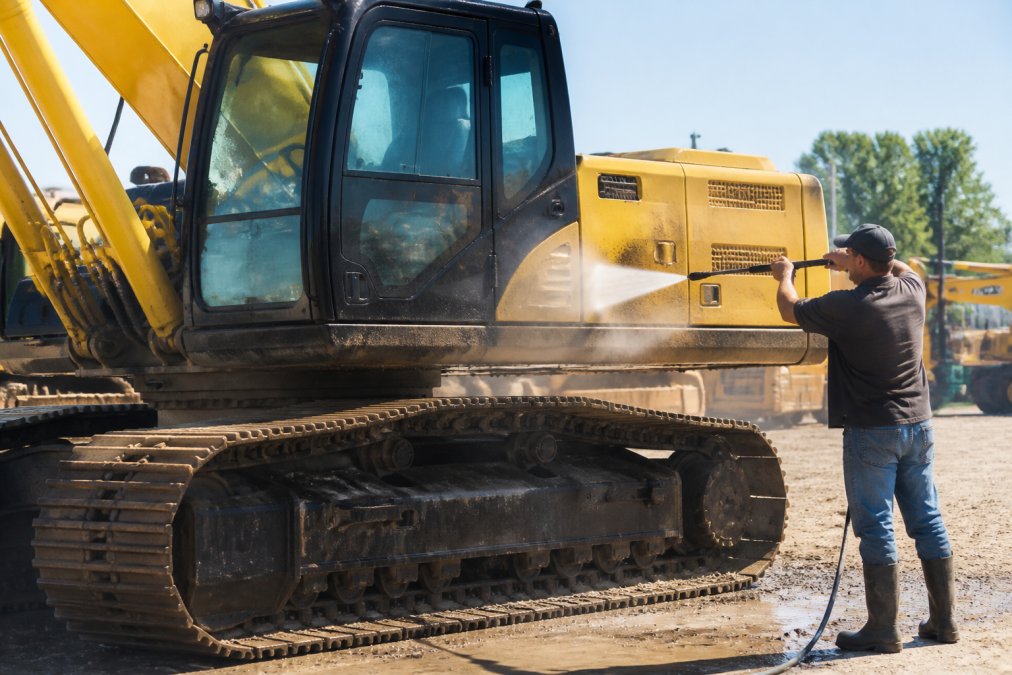
Start with thorough cleaning. Pressure wash the exterior to remove dirt, grease, and accumulated debris. Clean the cab interior, replace missing or broken handles, and repair obvious cosmetic damage. A clean machine creates the impression of proper maintenance, even if the mechanical work happened years ago.
Address minor mechanical issues before listing. Replace worn belts, fix leaking hydraulics, repair broken lights, and ensure all gauges function. These inexpensive fixes eliminate buyer concerns and prevent negotiations from stalling over small repairs.
Fluid levels matter. Top off hydraulic fluid, coolant, and fuel. Check battery condition and replace if needed. Ensure the engine starts reliably. Buyers test-operate equipment, and machines that start poorly raise red flags about overall condition.
Gather complete documentation. Compile service records, maintenance logs, repair invoices, and original purchase paperwork. Organize these chronologically in a folder or digital file. Transparency about maintenance history justifies higher pricing and accelerates buyer confidence.
Verify title and ownership. Confirm you have clear title with no liens. Obtain a bill of sale template and prepare it in advance. Some states require notarization; verify your state's requirements before listing.
Schedule a final inspection walk-through. Document any damage, wear, or mechanical issues honestly. You'll disclose these in your listing, which prevents surprises during buyer inspections and reduces post-sale disputes.
Tips for Photographing Heavy Machinery
Photography directly impacts buyer interest and sale speed. High-quality images attract serious inquiries; poor photos generate low-quality leads or no interest at all. Professional-grade photography is worth the investment for equipment over $15,000.
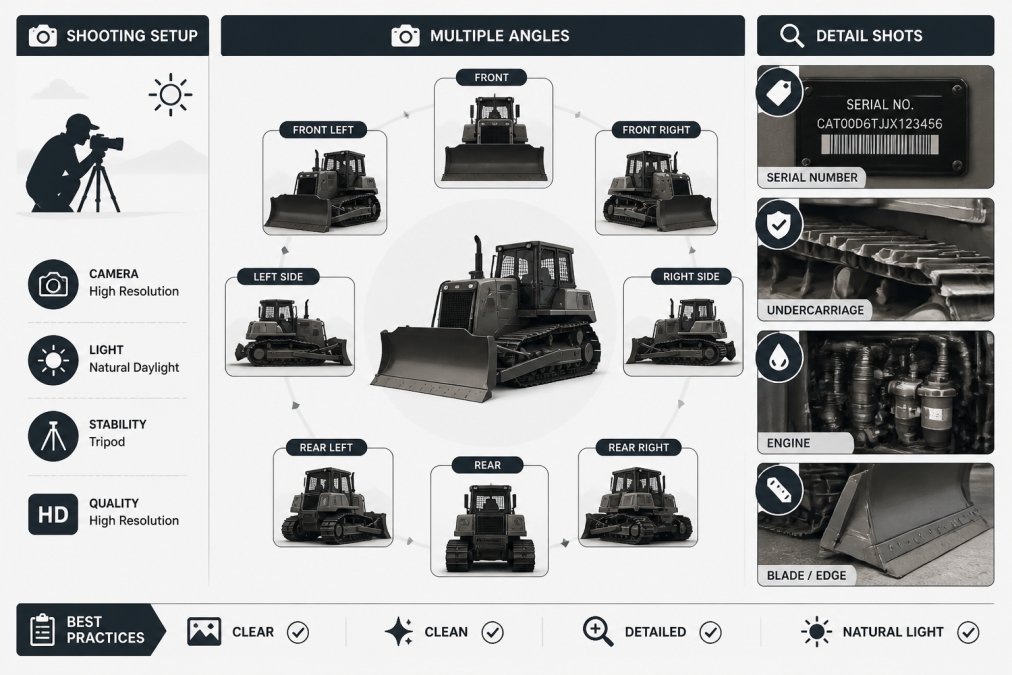
Shoot in natural daylight, ideally during golden hour (early morning or late afternoon). Avoid harsh midday sun, which creates shadows and washes out colors. Overcast days work well for even lighting across the entire machine.
Capture multiple angles: front three-quarter view, rear three-quarter view, both sides, top view (for compact equipment), and close-ups of the cab, controls, and any attachments. Include photos showing serial number plates, hour meter readings, and service labels. These details verify equipment authenticity and condition.
Include detail shots of wear areas. Photograph bucket teeth, blade condition, hydraulic hose routing, and tire tread. Buyers scrutinize these details; transparent photography builds trust.
Video walk-arounds are increasingly expected. A 2-3 minute video showing the equipment from all angles, opening doors, pointing out features, and demonstrating controls provides context that still photos cannot. Many buyers watch videos before requesting in-person inspections, filtering out equipment that doesn't meet their needs.
Use consistent editing. Adjust brightness and contrast to match lighting conditions, but avoid heavy filters or unrealistic color correction. Photos should represent what a buyer will see in person, surprises during inspection kill deals.
Include scale references in some photos. A person standing next to equipment helps buyers understand size, especially for those unfamiliar with the model.
Write an Effective Equipment Description
The description converts interested browsers into serious inquiries. Effective descriptions combine technical specifications, condition assessment, and honest disclosure of any issues.
Start with the headline: model, year, and key feature or condition status. Examples: "2019 CAT 320 Excavator, 4,200 Hours, Excellent Condition" or "2015 John Deere 644K Loader, Recent Engine Rebuild, Ready to Work."
Lead with the most attractive features. If the equipment has low hours, recent maintenance, or valuable attachments, mention these prominently. If it's older but well-maintained, emphasize the service history.
Organize specifications clearly:
- Model and year
- Operating hours or age
- Engine type and horsepower
- Key attachments (bucket size, blade width, etc.)
- Transmission type (manual, automatic, hydrostatic)
- Fuel capacity and type
- Dimensions and weight (if available)
- Last service date and type
Describe condition honestly. Use consistent language: "excellent" (minimal wear, well-maintained), "good" (normal wear for age/hours, maintained), "fair" (visible wear, functional), "poor" (significant wear, needs repair). Avoid vague terms like "nice" or "solid."
Disclose issues transparently. If the machine has a mechanical problem, cosmetic damage, or missing component, state it clearly. Buyers discover issues during inspection anyway, honesty prevents post-sale disputes and reduces negotiation friction.
Include maintenance history. "Service records available," "recent hydraulic fluid change," or "annual maintenance performed" signal responsible ownership. Specific dates strengthen credibility.
Add a call-to-action. "Contact for inspection" or "Available for test operation" invites serious inquiries. Include your preferred contact method and response timeframe.
Avoid exaggeration or misleading claims. Buyers have seen thousands of equipment listings, they recognize hype and discount it. Straightforward, honest descriptions generate higher-quality inquiries.
How Long Does It Take to Sell Heavy Equipment
Timeline expectations vary dramatically based on equipment type, market conditions, asking price, and selling method. Understanding realistic timeframes prevents frustration and helps you plan cash flow.
Equipment in high demand with realistic pricing typically sells within 30-60 days through private party sales. Popular models (common excavator sizes, standard loader configurations) attract multiple buyers, compressing the timeline. Niche or specialized equipment may take 60-120 days.
Auction sales compress the timeline to 7-14 days from listing to sale completion. Dealer trade-ins happen within hours. Online marketplace listings see first inquiries within 1-3 days if priced competitively.
Underpriced equipment sells faster. A machine priced 5-10% below market average attracts immediate interest and multiple offers. Overpriced equipment languishes, even a 10% premium over market value can extend the timeline by 60+ days or result in no sale.
Seasonal demand affects timeline. Construction equipment sells faster during spring and summer building season. Agricultural equipment moves quickly before planting season. Off-season listings take longer.
Market conditions matter. During economic expansion with strong construction activity, equipment sells quickly. During slowdowns, timelines extend significantly.
Complete documentation accelerates sales. Buyers move faster when service records, title, and condition documentation are readily available. Missing paperwork raises red flags and slows negotiations.
Buyer financing affects timeline. A buyer paying cash closes faster than one needing financing approval. Some sellers offer financing to expand the buyer pool, which broadens demand but extends timeline until loan approval and funding.
Bill of Sale for Heavy Machinery Template and Legal Documentation
A bill of sale is the legal document transferring equipment ownership from seller to buyer. It protects both parties by documenting the transaction, price, equipment description, and condition at sale.
Required information for a bill of sale:
- Seller name and contact information
- Buyer name and contact information
- Equipment description (make, model, year, serial number, color)
- Sale price and payment terms
- Equipment condition at time of sale
- Date of sale
- Signatures of both parties (some states require notarization)
A basic bill of sale template:
BILL OF SALE FOR HEAVY EQUIPMENT
Seller Information: Name: ___________________ Address: ___________________ Phone: ___________________
Buyer Information: Name: ___________________ Address: ___________________ Phone: ___________________
Equipment Description: Make/Manufacturer: ___________________ Model: ___________________ Year: ___________________ Serial Number: ___________________ Equipment Condition: ___________________
Sale Terms: Sale Price: $___________________ Payment Method: ___________________ Payment Date: ___________________
Equipment Condition at Time of Sale: The seller represents that the equipment is in the condition described above and free of liens and encumbrances, except as noted: ___________________
Seller Signature: ___________________ Date: ___________________
Buyer Signature: ___________________ Date: ___________________
State-specific requirements vary. Some states require notarization; others do not. Some require title transfer through the Department of Motor Vehicles (for trucks and trailers); others do not. Verify your state's requirements before finalizing the sale.
Capital gains implications apply to equipment sales. If you sell for more than your original purchase price, the difference may be subject to capital gains tax. Consult a tax professional about your specific situation, especially for high-value equipment sales.
Keep copies of the bill of sale for your records. Provide the original to the buyer. If the sale involves financing, the lender may require a copy.
Avoid Scams and Verify Buyers
Equipment sales attract scammers who exploit sellers' desire for quick transactions. Common scams include wire fraud, fake cashier's checks, and financing schemes. Protecting yourself requires verification discipline.
Never accept wire transfers from unknown buyers without confirming their identity through independent channels. Scammers send wire transfer requests claiming to be serious buyers, then disappear after receiving payment. If a deal feels rushed or the buyer pressures you to wire funds before delivery, it's likely a scam.
Verify payment methods before releasing equipment. Cashier's checks can be forged; bank checks can be stopped. Cash is safest, but large equipment sales often involve financing. If a buyer arranges financing through a lender, contact the lender directly to confirm the loan approval before releasing equipment.
Request buyer references. Legitimate buyers (contractors, rental companies, dealers) have business histories. Ask for references from previous equipment purchases and follow up with those contacts.
Meet in person for significant transactions. Video calls or photos don't replace in-person verification. A legitimate buyer will arrange an inspection, test-operate the equipment, and meet face-to-face to finalize the deal.
Avoid buyers who request unusual payment arrangements. Legitimate buyers use standard methods: cash, bank transfer, or financing through established lenders. Requests for gift cards, cryptocurrency, or unconventional payment methods are red flags.
Document all communications. Keep emails, text messages, and call records. If a dispute arises, documentation protects you legally.
Use escrow services for high-value sales. Third-party escrow holds funds until both parties confirm the transaction is complete. This protects both seller and buyer from fraud.
Trust your instincts. If something feels off about a buyer or transaction, walk away. Legitimate buyers respect your caution and will provide verification. Scammers pressure you to bypass safety checks.
Selling heavy equipment fast requires strategy, preparation, and realistic expectations. Whether you manage the sale independently or partner with a Heavy Equipment Broker, the fundamentals remain constant: accurate pricing, professional presentation, transparent documentation, and careful buyer verification determine your success.
Ironmartonline specializes in connecting equipment sellers with qualified buyers across nine web-based platforms, eliminating the fragmentation and effort of managing multiple listings independently. Our approach combines broad reach, professional marketplace infrastructure, and straightforward terms without contracts or hidden fees, accelerating your timeline and maximizing your net proceeds.
Frequently Asked Questions
What is the best website to sell heavy equipment?
The best platform depends on your equipment type, timeline, and target buyer. Specialized marketplaces reach niche audiences, agricultural sites for tractors, construction platforms for dozers. Multi-platform brokers like Ironmartonline connect your equipment across nine web-based selling platforms simultaneously, maximizing exposure to millions of potential buyers without requiring you to manage multiple listings individually. For fastest sales, platforms with active bidder activity and transparent buyer vetting typically close deals quicker than generic classifieds.
How do I determine the fair market value of used heavy equipment?
Market valuation depends on several factors: equipment age, operating hours, maintenance history, current market demand, and condition. Review recent sales of comparable machines on equipment marketplaces to establish a baseline. Consider depreciation rates specific to your equipment type, excavators and dozers typically depreciate 15-20% annually in the first five years. Check specialized valuation resources that track resale values by model and year. If selling through a broker, they can provide market analysis based on actual bidder activity and comparable sales data to help you price competitively.
How long does it take to sell heavy equipment?
Timeline varies by method. Private party sales typically take 2-8 weeks depending on buyer demand and your location. Auction houses can move equipment in 1-4 weeks, though you may accept lower bids for speed. Dealer trade-ins close fastest, often within days, but typically at reduced value. Using multiple online platforms simultaneously accelerates sales, equipment listed across several marketplaces reaches more qualified buyers faster. Properly prepared equipment with clear service records, high-quality photos, and competitive pricing sells significantly faster than poorly presented listings. Expect 3-6 weeks for most online sales when marketed effectively.
What documents do I need to sell heavy construction equipment?
Essential documents include a bill of sale, proof of ownership (title or registration), maintenance records and service logs, equipment specifications (serial number, model, year), and any warranty information remaining. For financed equipment, obtain lien release documentation from your lender. Keep records of major repairs and upgrades, transparent service history builds buyer confidence and justifies your asking price. Environmental compliance documentation may be required depending on equipment age and local regulations. A clear title transfer process protects both you and the buyer and accelerates closing.
This article was written using GrandRanker